

It comes as no surprise that Michael, the biopic chronicling the life of Michael Jackson, has become a global box office phenomenon, grossing an estimated $977 million worldwide and now standing as the highest-grossing biopic of all time, surpassing Oppenheimer ($976.8 million in 2025) and Bohemian Rhapsody ($911 million in 2018). While audiences have flocked to theaters, giving the film a 97% approval rating on Rotten Tomatoes, critics were far less enthusiastic, rating it at 38% and widely criticizing its decision not to address the sexual abuse allegations that surrounded Jackson later in his life.
One element that both fans and critics have largely agreed on is Jaafar Jackson’s portrayal of Michael, his real-life uncle. His performance has been widely praised for its precision, from the vocal mannerisms to the iconic dance moves, capturing the essence of the pop legend with striking authenticity.
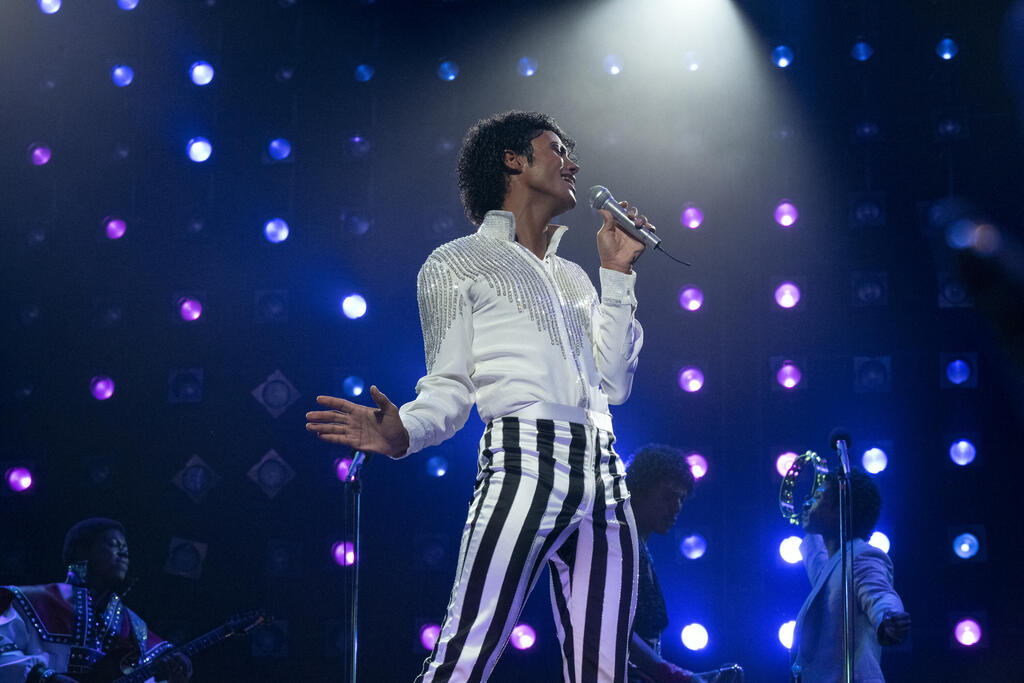
The film intentionally confines its narrative to Jackson’s early years, ending in 1988 before any public accusations emerged. According to director Antoine Fuqua, earlier drafts of the screenplay did include material touching on the allegations, including a planned sequence depicting the 1993 police raid on Neverland Ranch, in which Jackson would have been searched by authorities.
Some of these scenes were already filmed, but were ultimately removed. Fuqua later confirmed in interviews that legal constraints played a decisive role in the decision, with multiple reports indicating that a prior settlement agreement between the Jackson estate and Jordan Chandler, who accused Jackson of abuse in the early 1990s, prevented any dramatization of those allegations. Producers were reportedly unaware of these restrictions until production was already underway, leading to extensive and costly reshoots funded by the estate.
Even though that controversy is not part of the film itself, some members of Jackson’s family have expressed dissatisfaction with its direction, including Paris Jackson, Michael’s daughter, and Janet Jackson, his sister. Paris also said on social media that her script feedback was ignored.
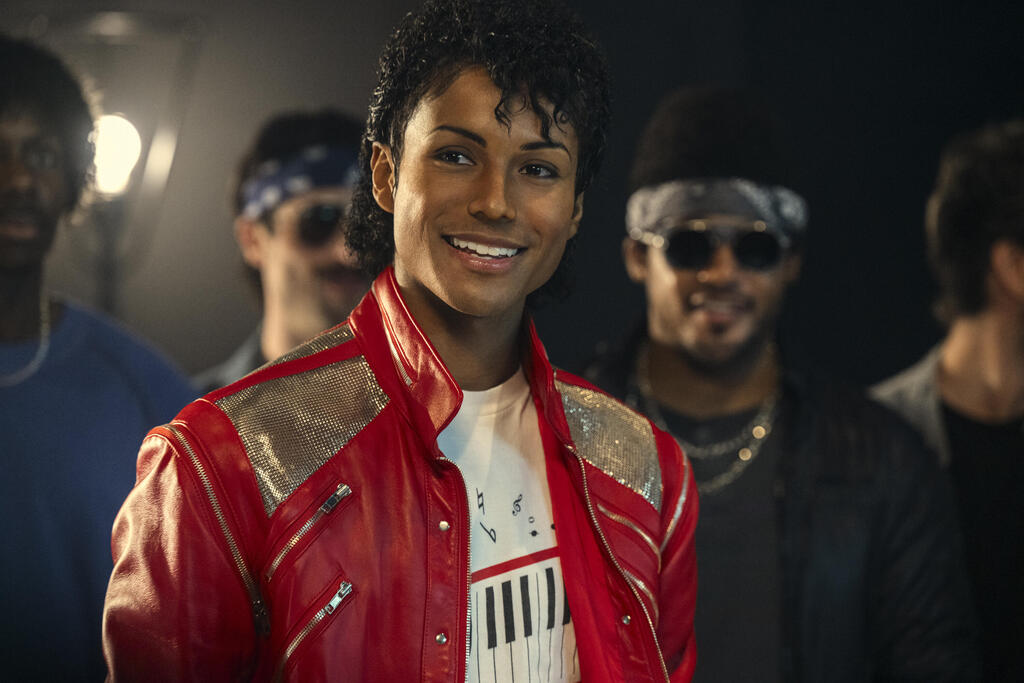
From the film 'Michael'
Jaafar Jackson, 29, had never acted before. He was working mainly in music and had also collaborated with his father. Then came the phone call from Graham King, who invited him to lunch.
“I think he was just really observing me, the mannerisms and things. I think he felt like I was auditioning for him at the lunch when I really wasn't,” Jaafar said.
When King first invited you to lunch, did you think he was going to offer you the role?
“Not really. I knew he had the rights to tell Michael’s story, but I didn’t think it was like, ‘Let me go audition for it.’ I just saw an article and thought, ‘Wow, they’re making a film about my uncle. That’s going to be interesting. I wonder how that’s going to go.’”
Had you met Graham before?
“I’ve known Graham King since I was about 12 or 13 years old. He knew my father back in the late ’80s. I met him in his office when I was young, but I hadn’t seen him for years before this. I believe he saw a clip of me doing a performance with my father for a charity Christmas thing in Europe online. When he invited me for lunch, I thought maybe he wanted my help with some post-production voiceover work or something like that.”
After meeting producer Graham King in 2020, Jaafar Jackson was invited to continue the casting process in an unconventional way. Instead of a traditional audition, he sent King a voice message of himself speaking in Michael Jackson’s voice, which immediately impressed him and moved him further into consideration for the role.
What followed was a two-year process in which Jackson worked intensively on the character, undergoing acting coaching and immersing himself in Michael’s voice, movements, performances, work ethic and personal writings. During that time, as the production explored its casting, he remained deeply committed to the role, dedicating himself to perfecting his portrayal of the King of Pop.
From the film 'Michael'
What was more challenging in your mind, preparing to portray Michael Jackson, the King of Pop, or your own uncle?
“That’s a good question. I would say both were challenging. I wanted to separate myself as a family member and look at everything from the beginning as if I knew nothing about Michael Jackson. So, reading a lot of books, listening to all his music again, from the Jackson 5 to the solo albums, and having a deeper understanding of who he was. Being a family member also allowed me to go into personal memories and speak to family members to get nuances you might not find in books or online. So both were very challenging, and it was about finding a balance between the two.”
How did you navigate the tension between personal memory and performance craft when embodying someone as mythologized as your uncle?
“It shaped my portrayal in the way I started. It began with understanding what acting is, and how to express emotion and tap into Michael’s point of view. That was the most important thing. I immersed myself in his world to the point where I didn’t have to think too much. It became second nature. I consumed what Michael would consume, read what he would read, watched what he would watch. I also studied his work ethic, how hard he practiced and how he always stayed curious. That really informed how I approached the work.”
What was your process for understanding Michael’s physicality and dancing, and how did you develop that aspect of the performance?
“I was never satisfied with how I would embody Michael in the dancing. I always wanted to keep learning. Even on the first day on set, I would go home and keep practicing after we wrapped. If I wasn’t too tired, I’d think, let me go practice because I know the next day we’re going to shoot this.
“That was incredibly challenging because we’re so used to seeing how he performs on stage and the energy he has. And then to try not to copy, but to feel it. It was all about the feeling.
“It took a while to get to that place where I felt confident. It wasn’t consistent for the first two years, but I kept striving to improve and maintain a perfectionist mindset.”
Which choreography or performance demanded the most physical effort, and how much did you rehearse?
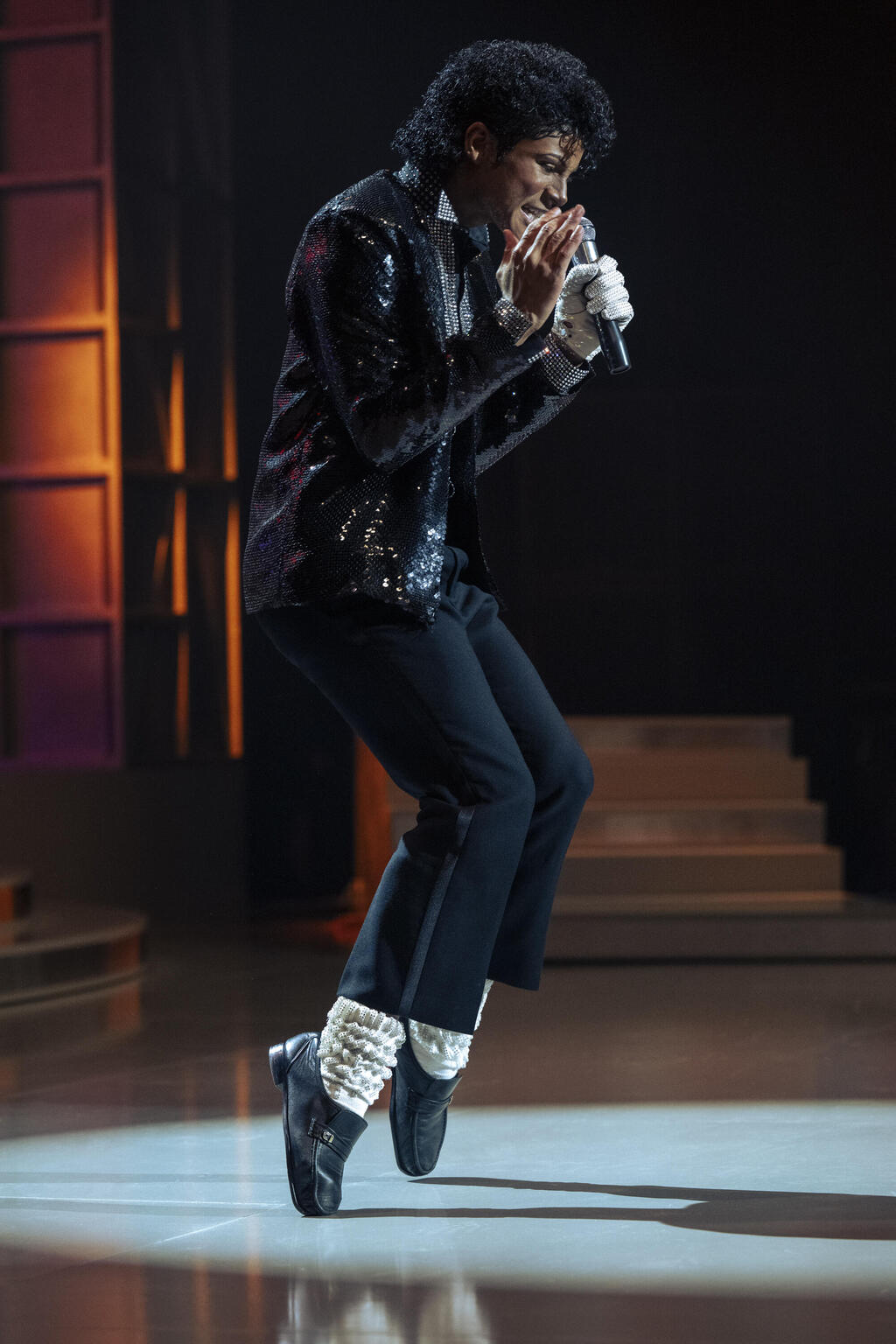
“I’d probably say ‘Billie Jean’ at Motown 25. It was the longest and most detailed, and had to be frame by frame exactly what Michael did.
“I practiced about three hours a day at first and did it at least 20 times a day. By the third year, I could do it over 20 times consistently, even watching it in the mirror to match every detail. I wanted it to feel identical, but still have feeling behind it.”
Can you walk us through how the film’s music was chosen and recorded?
“That was a really fun process. In the beginning, it was challenging for the filmmakers to decide which songs to use from such a huge catalogue. Early on, there were many ideas, and I was excited to get started. When they told me we were doing Motown 25, ‘Bad’ and ‘Human Nature,’ I was really excited. On set, I was not only dancing but also singing into the microphone while performing. A lot of the vocals became a blend, with my voice and Michael’s mixed to make it feel dynamic and authentic.”
Michael Jackson spoke often about maintaining a childlike sense of wonder. What do you think we can learn from that today?
“It’s a beautiful philosophy. Seeing the world through a child’s eyes really helps simplify life. You don’t overcomplicate things, and that’s something I learned in the process, seeing things through innocence and not overthinking.
“From songwriting to dancing, it was about staying curious and not being jaded. That inspired me to apply that to my own work, to ask questions, stay curious and take everything in like a sponge. I think that’s very important and needed more today.”
How did you prepare physically and mentally for the role?
“It was very grueling at the start. I was self-conscious about my body and had to understand the weight shift and the body frame. Over time, it improved, but building stamina was key because performing from start to finish with that energy is a lot.
“Then on set, you might do 10, 15, 20 takes, and you need take one to have the same energy as take 20. My preparation was repetition, doing it over and over until I couldn’t anymore. I got stronger over time.
“By the end, I could confidently go through multiple takes. I also studied the details of his performances, how each song required different energy, and how to pace myself so it felt dynamic and not monotone.”
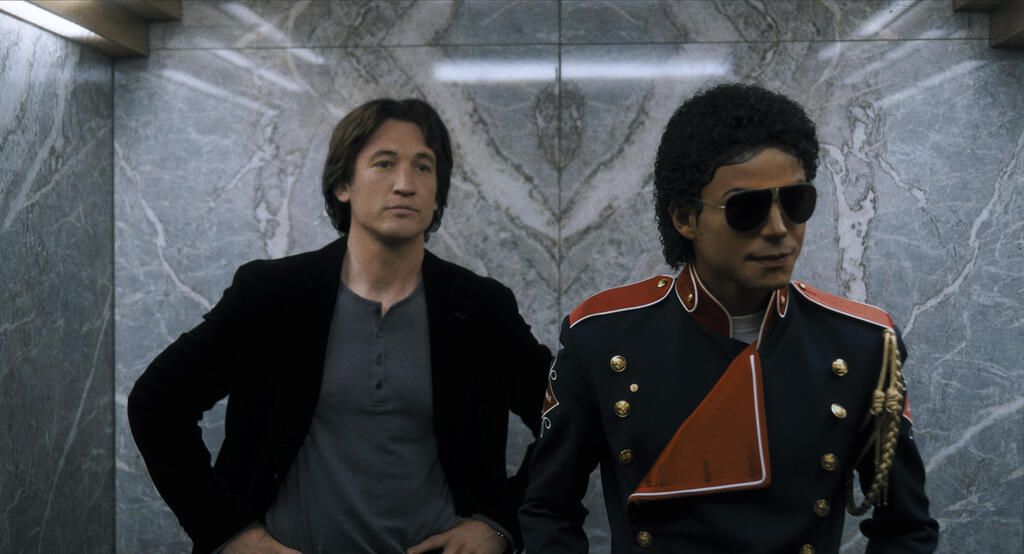
From the film 'Michael'
You are portraying Michael so convincingly. Are you sure you have never acted before?
“No, I never had. I grew up wanting to be a golfer, then got into sports, then music, writing, piano and production. In school, I took one elective drama class because my friends wanted me to join. I was nervous, but it ended up being fun.
“Still, I never saw myself as an actor. This is a completely different mindset now, and I’m fully in the acting space and want to continue.”
How are you seeing the rebirth of Michael’s legacy through the film?
“That’s one of the most rewarding parts, seeing a new generation experience Michael Jackson through his music and message. To see 3-, 4- and 5-year-olds dancing to his music is incredible. That really is the best part.”
What’s your favorite Michael Jackson song?
“It changes every day. Recently it’s been ‘Stranger in Moscow,’ or uptempo songs like ‘Don’t Stop ’Til You Get Enough’ or ‘Baby Be Mine.’ They all change too often.”
What do you think people still misunderstand about Michael today?
“Michael was the most famous person on the planet, and that removes your humanity in people’s eyes. They form their own idea of who you are, especially because he was private.
“What I wanted to do was show his humanity, that he was a human being with feelings like all of us. There are misunderstandings, but I hope the film gives people a deeper sense of him.
“I also read his journals, and he was almost like a futurist, writing about bringing people together through music and art. That was his mission every day, and I don’t think people always understand that.”
Has this experience made you want to release your own music or perform again?
“No. I definitely have the acting bug now. I feel different about music after this film. I still love it, but I don’t want to be an artist performing as myself.
“I feel like I experienced the highest level of artistry portraying Michael. What excites me now is acting, transforming into other characters and exploring parts of myself I didn’t know existed.”
First published: 04:19, 07.05.26