


The Netherlands will return to the Eurovision Song Contest in 2027 after boycotting this year’s competition in protest over Israel’s participation, Dutch public broadcaster NPO announced Wednesday.
The country will send an entrant to the 2027 contest in Burgas, Bulgaria, after sitting out Eurovision 2026.
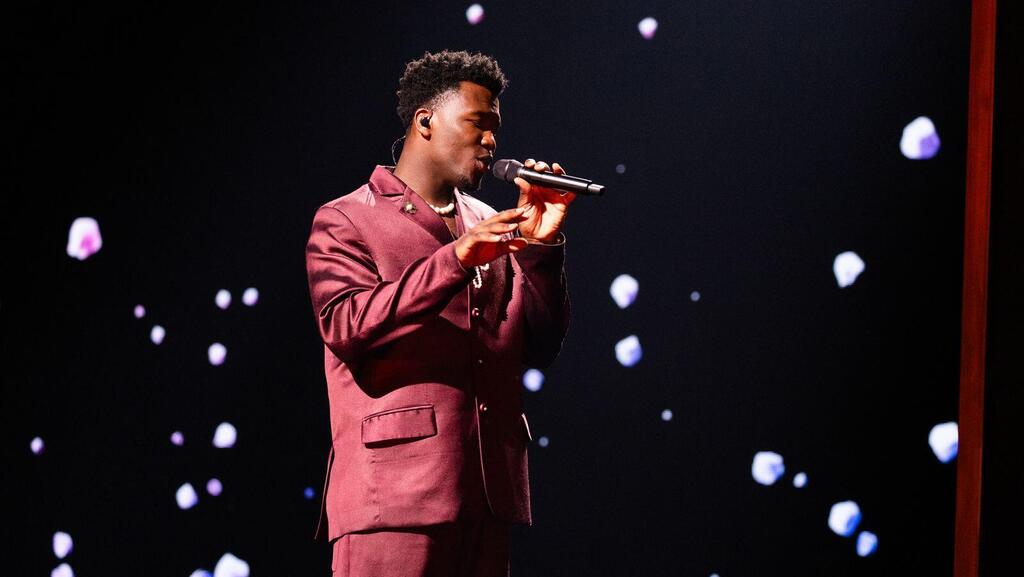
Netherlands’ representative performs in the Eurovision 2025 final
( Photo: Corinne Cumming/EBU)
NPO said the decision followed changes introduced by the European Broadcasting Union, which organizes Eurovision, as well as talks between the Dutch broadcaster and the EBU over the competition’s rules.
Last month, AVROTROS, the broadcaster that had been responsible for the Netherlands’ Eurovision participation, announced that it was stepping away from that role and returning responsibility for the Dutch entry to NPO.
AVROTROS said participation in the contest ‘under the current circumstances’ was incompatible with the organization’s values. NPO has now confirmed that the Netherlands will resume competing from 2027.
In its announcement, NPO said the EBU had taken ‘significant steps’ regarding Eurovision’s rules, adding that some of the changes followed criticism and discussions raised by public broadcasters.
NPO said its talks with the EBU focused on restoring what it described as Eurovision’s original purpose of bringing European countries and peoples together.
‘We understand that participation in Eurovision evokes mixed feelings in the Netherlands,’ the chair of NPO’s executive board said. ‘We explicitly asked the EBU to once again make Eurovision’s unifying character a central part of the event, while recognizing that we are living through a period of geopolitical unrest, wars and polarization.’
‘Eurovision was founded to unite the peoples of Europe after World War II. We now want to rediscover that connection, while paying attention to what is happening in the world and creating space for discussion about it.’
NPO said returning to the contest would allow the Netherlands to once again embrace Eurovision’s slogan, ‘United by Music.’
New system for choosing Dutch entrant
The Netherlands will also change the way its Eurovision participation is managed.
From 2027, responsibility for choosing the Dutch representative will be separated from responsibility for covering the competition. An independent panel of experts will select and guide the Dutch entrant, while NOS will continue to broadcast the semifinals and final independently.
The EBU has introduced a series of rule changes amid the controversy surrounding Israel’s participation.
One new rule means that if a country experiencing a geopolitical crisis wins the contest, victory will no longer automatically guarantee that it will host Eurovision the following year.
Ahead of the 2026 contest in Vienna, the EBU also changed several voting rules after controversy over Israel’s strong showing in the public vote.
Juries were reintroduced in both semifinals, while the number of votes each viewer could cast was reduced from 20 to 10.
The EBU also said voting deemed ‘irregular’ from a particular location or in favor of a particular country could be disqualified. The change followed controversy over votes cast for Israel through the ‘Rest of the World’ category, which combines votes from countries that do not participate in Eurovision.
Another rule allowed promotion of an entry but prohibited what the EBU described as excessive intervention by third parties. The measure came after criticism of campaigns encouraging votes for Israeli contestants, including allegations that Israeli government-linked advertising had promoted support for Yuval Raphael.
The EBU did not formally describe the rule changes as measures targeting Israel.
Ireland still out, Spain yet to decide
Despite the changes, Ireland announced last week that it would again boycott Eurovision.
Spain is also considering staying out. Officials said in recent days that they would recommend that the board of the country’s public broadcaster boycott the competition because of Israel’s participation, although no final decision has yet been made.
The Netherlands has competed in Eurovision since the contest’s inaugural year and has won five times.
Its most recent victory came in 2019, when Duncan Laurence won with ‘Arcade’ at the contest held in Israel.
In its last appearance, in 2025, Claude Kiambe finished 12th with ‘C’est La Vie.’ A year earlier, Dutch contestant Joost Klein was disqualified from the final following a complaint by a member of the production staff.
In 2026, the Netherlands was one of five countries to withdraw from the contest, alongside Iceland, Ireland, Slovenia and Spain.
The Eurovision 2027 semifinals are scheduled for May 11 and 13, with the final set for May 15.