

It all began a few years ago, when a Hollywood agent decided to introduce Julia Roberts to Italian director Luca Guadagnino, who has become a major force in Hollywood. The two met at a party, sat on a couch, talked for two hours — and that was the beginning of a beautiful friendship. That friendship would lead to their new film, "After the Hunt", which premiered to much fanfare at the Venice Film Festival and is now being released in Israel.
In our meeting following the premiere, Guadagnino — who is openly gay — spoke about Roberts with such warmth and admiration that one could easily think he had fallen in love with the Hollywood icon. “Julia is amazing. She’s a friend, a mother, she cares about people,” he said, showering her with praise. “Spending time with her in private life is incredible. Being at her home in San Francisco is incredible. Doing anything with Julia is incredible. Then she shows up on set. And the next day, she knows every crew member by name. She’s genuinely curious. She wants to know and understand everyone deeply. And she makes an excellent banana bread.”
"After the Hunt" – Trailer


"After the Hunt" is set at Yale University in 2019. Roberts plays Alma Olson, a beloved and respected philosophy professor married to a Jewish psychiatrist (played by Michael Stuhlbarg). One of her top students and protégés is Margaret Price (played by actress, comedian and director Ayo Edebiri), a Black woman adopted by a very wealthy Jewish couple who are major donors to the university.
Following a night of drinks, conversation and philosophical debate at Alma and her husband’s home, Alma’s personal and professional life is upended. Margaret accuses one of Alma’s close friends — a fellow faculty member played by Andrew Garfield — of sexual harassment and assault, triggering a dramatic #MeToo reckoning. Margaret also uncovers a dark and disturbing secret from Alma’s distant past and threatens to expose it.
“This is a film about power — who has it, why people want it and why they try to take it from others,” Guadagnino said. “I think we all have a timeless urge to seek power, and it probably comes from a survival instinct. It stems from the idea that in order to survive, you have to be at the top of the chain in any given environment. It’s something the first human realized — that being the dominant one, seeing things from above, is what would help him assess the threat others pose. I think it’s an innate need.”
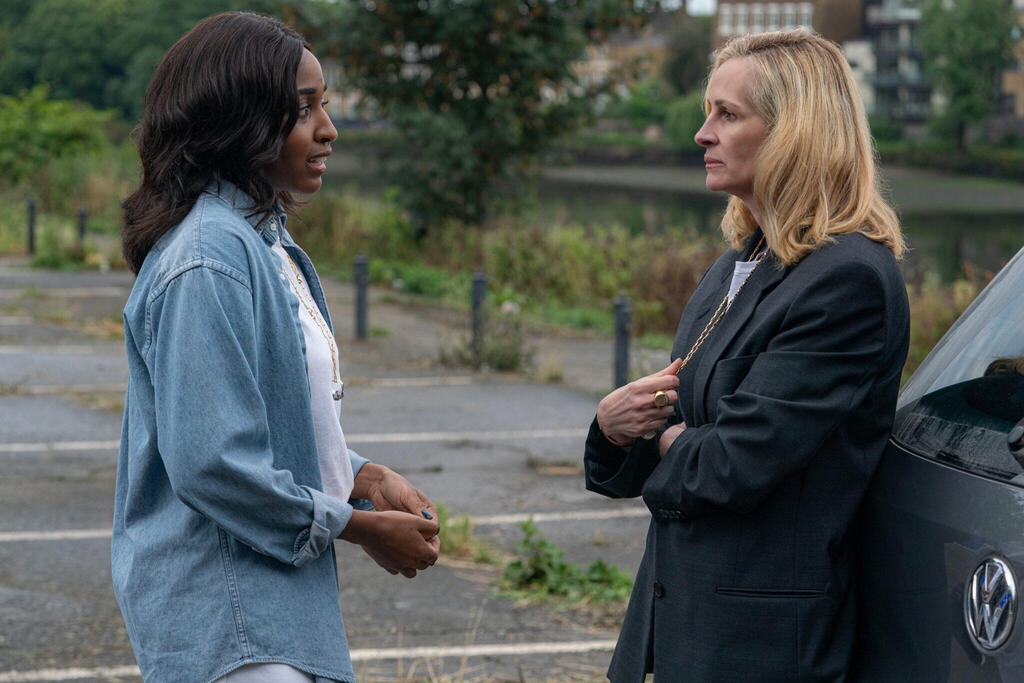
From 'After the Hunt'
(Photo: Courtesy of Forum Film)
“At the same time, culture allows us to distinguish between survival and dominance,” he added. “There’s a drive that comes from the need to succeed, from a desire to affirm oneself in the modern era — and that, I think, is intertwined with the primal need to always be in a dominant position.”
Guadagnino believes we all have a will to win. “After World War II, there was a massive wave of ‘never again,’ and from that came the great social democracies of Europe — and not just in Europe, but in Israel and Japan as well. Then came the backlash — after the collapse of the Soviet Union. In the last 25 years, we’ve seen a sharp retreat from the better place the world once was. That retreat has brought us into a grimly competitive space, which I think — whether we like it or not — affects how we treat one another. But again, that’s just my personal and perhaps naive perspective on the painful shift from the 20th century to the 21st.”
Asked why he chose to close After the Hunt in January 2025, director Luca Guadagnino explained: “All my life, I’ve made period pieces. Even my contemporary films are set a few years back — because you need that distance. In After the Hunt, screenwriter Nora Garrett and I always knew we would fast-forward five years at the end, because of the title itself. We knew there had to be a final conversation between Alma and Margaret. We also wanted to explore the cost of falling into the black hole of success. Setting the ending five years later shows that time can heal — but it can also conceal. And with time, you can discover a lot too.”
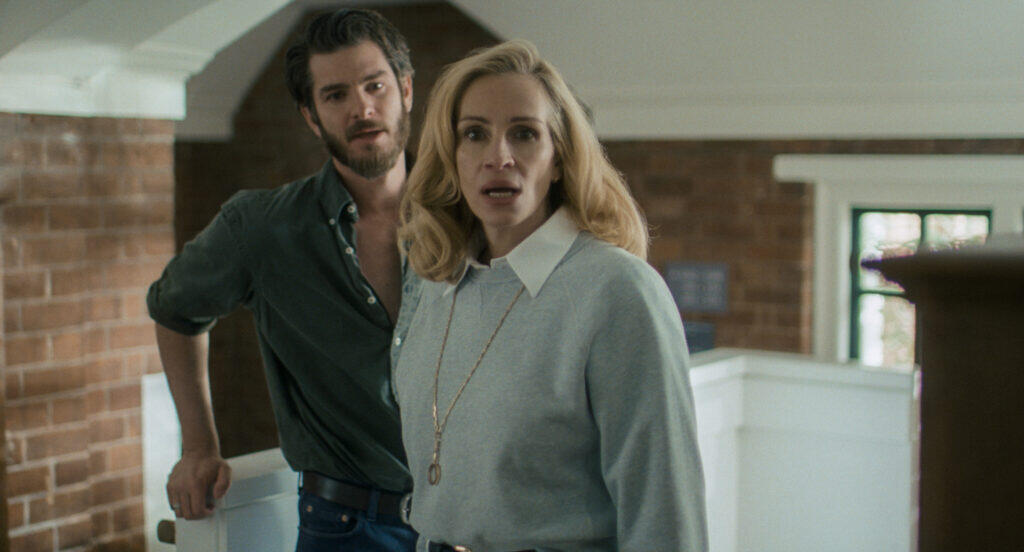
From 'After the Hunt'
(Photo: Courtesy of Forum Film)
While most of the film was shot in 2024, Guadagnino incorporated two dramatic events that occurred in January 2025. “I predicted that Donald Trump would be elected again, but really, you never know — life is unpredictable. You can’t assume everything will be terrible, or the opposite. Then January 2025 arrived, and two major things happened: the first was the tragic wildfire in California. Homes of many friends were destroyed, and they lost everything. That touched me personally. Then, after the election and Trump’s return to the White House, companies began backing away from AI policies, and there was fear about the future of the film industry — and how government might go after it.”
“These two events — nature and culture colliding violently, and politics ignoring what could have been seen as progress — felt essential to "After the Hunt". That’s why I included them.”
Guadagnino, who from 2009 to 2020 was in a relationship with fellow director Ferdinando Cito Filomarino, said the film also gave him a way to explore long-term relationships. “I’m fascinated by why people stay together for so long. My parents were together over 50 years, until my father passed away in 2020. I don’t want to expose my mother’s private life, but when you talk to her now, you realize maybe there were things you didn’t know. Maybe you thought what held them together was one thing, and it was actually something else. What really connects two people? I think it’s an amazing subject to explore.”
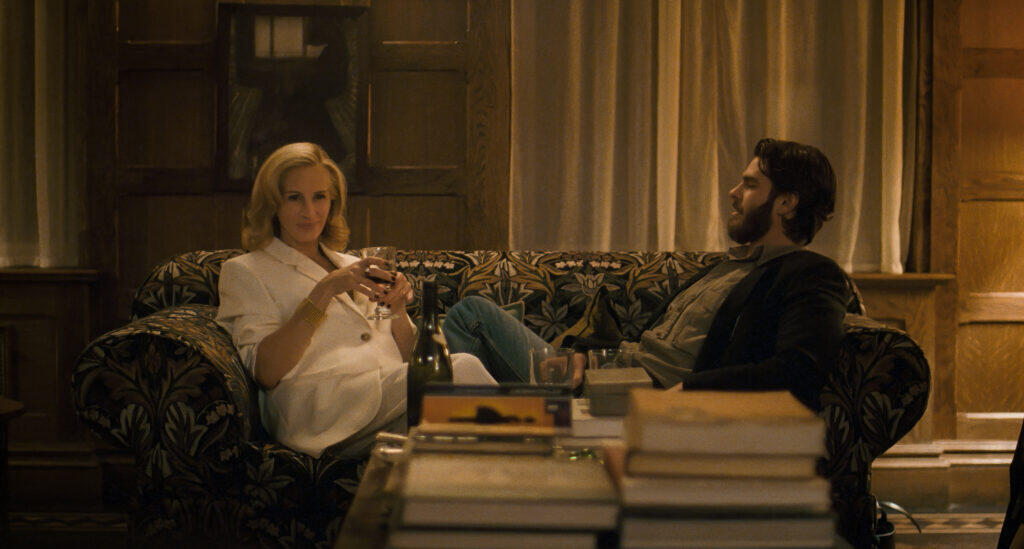
From 'After the Hunt'
(Photo: Courtesy of Forum Film)
Now 54, Guadagnino was born in Palermo, Sicily, to an Italian father and Algerian mother raised in Casablanca. He spent his early childhood in Ethiopia, where his father taught Italian history and literature, before the family returned to Sicily in 1977 due to the Ethiopian civil war.
As a teenager, he joined the Communist Party and worked for its youth newspaper — until a clash with the editor ended that chapter of his life. His love for cinema began at age nine, when he received a Super 8 camera. He studied literature and film at university, writing his thesis on director Jonathan Demme (The Silence of the Lambs).
A pivotal moment came when he met actress Laura Betti (La Dolce Vita, Teorema), who invited him to her house parties, where he cooked for guests including director Bernardo Bertolucci. Food remains a recurring motif in both his personal life and films, including "After the Hunt". “I still love to cook. For me, love and food are nourishing elements.”
His debut film, The Protagonists (1999), screened at the Venice Film Festival and marked the beginning of his collaboration with Scottish actress Tilda Swinton. “In April 1994, shortly after Berlusconi came to power, I saw Tilda in Rome. She was in the middle of a conversation. Like a kamikaze, I walked up and introduced myself and didn’t stop talking. I told her I’d sent her a letter proposing a short film, and she never responded. I’m still waiting for her answer.”
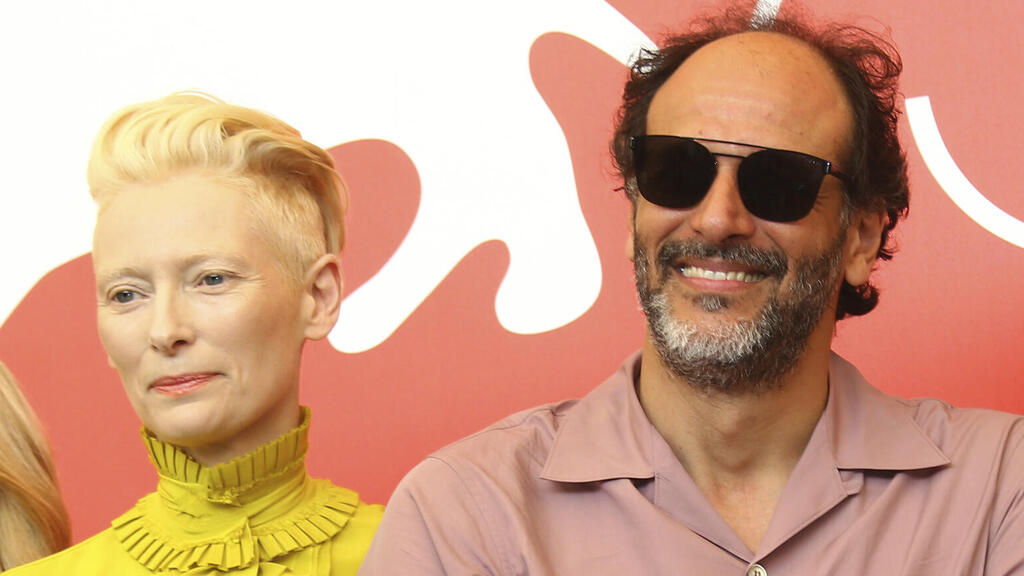
Guadagnino with Tilda Swinton
(Photo: Joel C Ryan/Invision/AP)
Guadagnino and Swinton have since made four films together: The Protagonists, I Am Love, A Bigger Splash and Suspiria. He also developed a strong bond with actress Dakota Johnson, who starred in A Bigger Splash and Suspiria. “Dakota is sharp, light-hearted, dedicated, very feminine and has a certain composure,” he said.
His breakout came in 2017 with Call Me by Your Name, which earned numerous awards including an Oscar for Best Adapted Screenplay. “The Oscar experience? Exhausting — because it’s work. But it was also fun. I made a lot of new friends. After that, I needed a vacation.”
The film tells the story of a young American Jewish academic (Armie Hammer) who enters the lives of a cultured Jewish family in Italy during the summer of 1983, winning the hearts of everyone — including their teenage son (Timothée Chalamet). It is widely regarded as one of the most moving and sensual gay romantic films of all time.
Call Me by Your Name – Trailer
Guadagnino continued exploring queer themes in Queer, an adaptation of William S. Burroughs’s semi-autobiographical novel. Set in 1950s Mexico City, it follows William Lee (Daniel Craig), an aging American who spends his days drinking tequila in bars and his nights chasing men or using heroin — until a romantic and sexual relationship develops between him and a striking young man.
When asked about Hungarian Prime Minister Viktor Orbán’s claim that Queer is “gay propaganda,” Luca Guadagnino laughed. “Is that what he said? That Queer is propaganda? I think Viktor Orbán has really bad PR, and I’ll tell you why. Looking broadly at his policies, and considering he leads a country as important as Hungary, he’s giving far too much weight to a film like Queer, which is an art-house movie. That’s interesting — it means Orbán actually believes this film threatens his agenda.”
Guadagnino recalled a similar moment from decades earlier: “When Pope Benedict XVI first took office, he referenced Judith Butler — a brilliant philosopher and gender theorist who is openly lesbian — and specifically her books. Those books were a revelation for me and are central to today’s discourse on identity. After that happened, I asked myself: why would the pope talk about Judith Butler? She’s a professor at Berkeley who probably sold only 10,000 copies of these dense, philosophical works. But the pope understood that the seeds she planted would grow into the reality we live in today. So if Orbán says Queer is powerful, I take that as a compliment.”
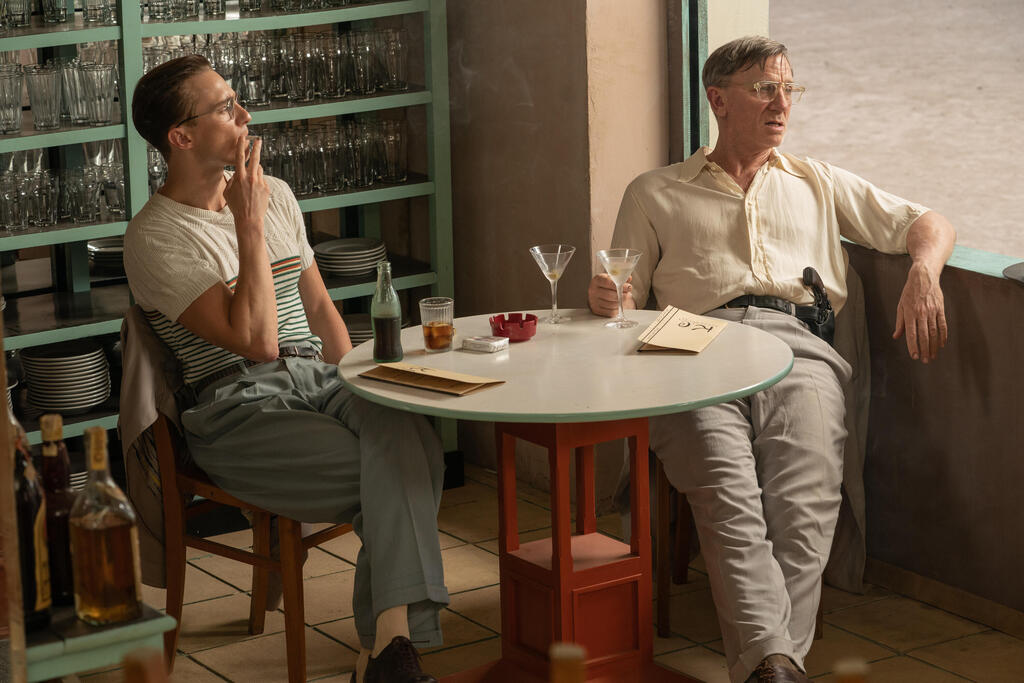
From 'Queer'
(Photo: Courtesy of Lev Cinema)
Why is transphobia so prevalent today? “French actress Jeanne Moreau once said something beautiful: ‘When I listen to the majority, I realize it’s so regressive — and I always find myself siding with the minority.’ I think the ‘phobia’ in ‘transphobia’ tells you more about the person feeling it than the one it’s directed at. These homophobic and transphobic people struggle to accept the stunning range of human possibility because of their narrow-mindedness.
“Transphobia, to me, represents the ultimate violence. It’s an aggressive, brutal attack on a community that is not only extraordinarily diverse and beautiful in its complexity, but that in no way threatens anyone else. And yet transphobes do specifically target them. When I meet a homophobe, I ask, ‘Why are you wasting your time being a homophobe? What’s inside you that drives you there?’”
Guadagnino’s filmography is as eclectic as it is bold — from romantic dramas to art-horror, to a coming-of-age story about cannibals (Bones and All). Hollywood stars now line up to work with him, particularly after the buzz surrounding Challengers, thanks in part to its steamy threesome scene starring Zendaya. “I’m interested in how we get huge stars to fully step into the everyday — to relate to vulnerability, flaws and human weakness.”
His earlier films often focused on desire, physicality and sensuality. In contrast, "After the Hunt" is cerebral. What changed? “Careers are unpredictable. Over time, you change. You meet people, encounter ideas, and evolve. I’m a curious person — I don’t want to confine myself. I’d feel awful if I just kept making variations on what I’ve already done. I follow instinct. I want to explore many subjects.”
“I’ve often explored passion, the body, or the clash between bodies. But now I’m drawn more to questions of power — invisible forces, dominant dynamics — more than to the invisible power of love. That’s not to say I won’t return to it someday, but it depends on the moment and the reason.”
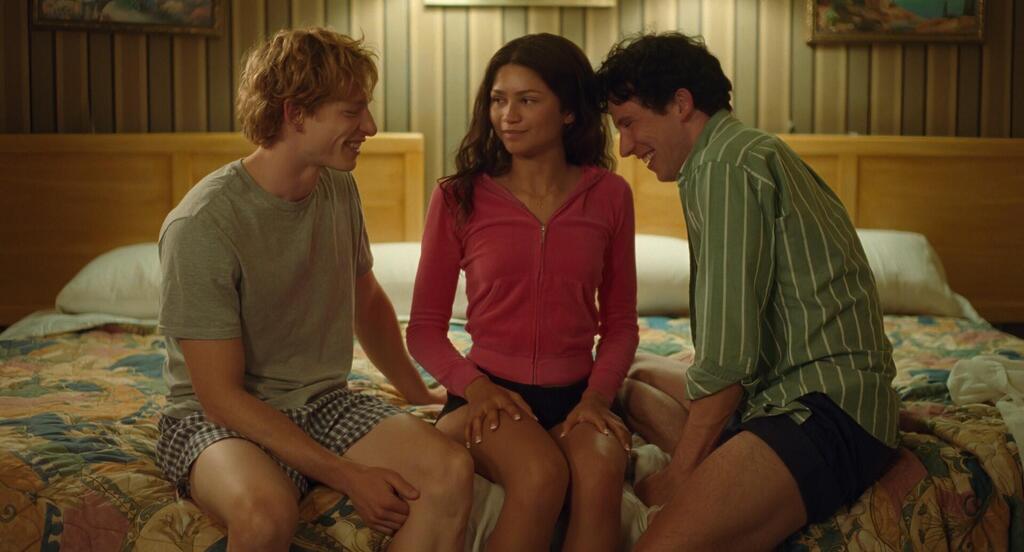
From 'Challengers'
(Photo: Courtesy of Tulip Entertainment))
Guadagnino’s love for cinema is palpable. His encyclopedic knowledge of film history surfaces throughout After the Hunt, which draws inspiration from Who's Afraid of Virginia Woolf? (“A brilliant film about deeply flawed people who hurt each other nonstop”), All About Eve (“About the price we pay to get what we want”), and the work of Woody Allen. Alfred Hitchcock is another major influence — particularly his meticulous attention to detail and color, and the significance he placed on wardrobe. “In cinema,” Guadagnino said, “costume builds character.”
He’s now directing an adaptation of American Psycho, Bret Easton Ellis’s iconic novel about a Wall Street banker who is secretly a serial killer. “I like working. I like people. I love the craft. So I promised myself: if I get the chance to make good films consistently, I’m going to take it. I don’t want to wait and wait.”
“There were years I couldn’t get films made,” he admitted. “Long gaps between productions. I was miserable. I felt awful — like I couldn’t express myself, even though I had the will. Now I have the privilege to make the films I’ve wanted to make for years. Every one of them is part of the most important thing I’m building in life: my filmography. And I’m working hard on it.”
He’s grateful for the pace of his career and the fact that success didn’t come instantly. “I’m happy to be aging,” he said. “Day by day, I feel more comfortable being a grown man. There’s something so cultured and beautiful about aging — understanding how you’ve changed, how your body has changed. I don’t have the same energy I had five years ago, but I say: ‘Hello, I’ve become a new person.’ And that’s fine. I really love it.”
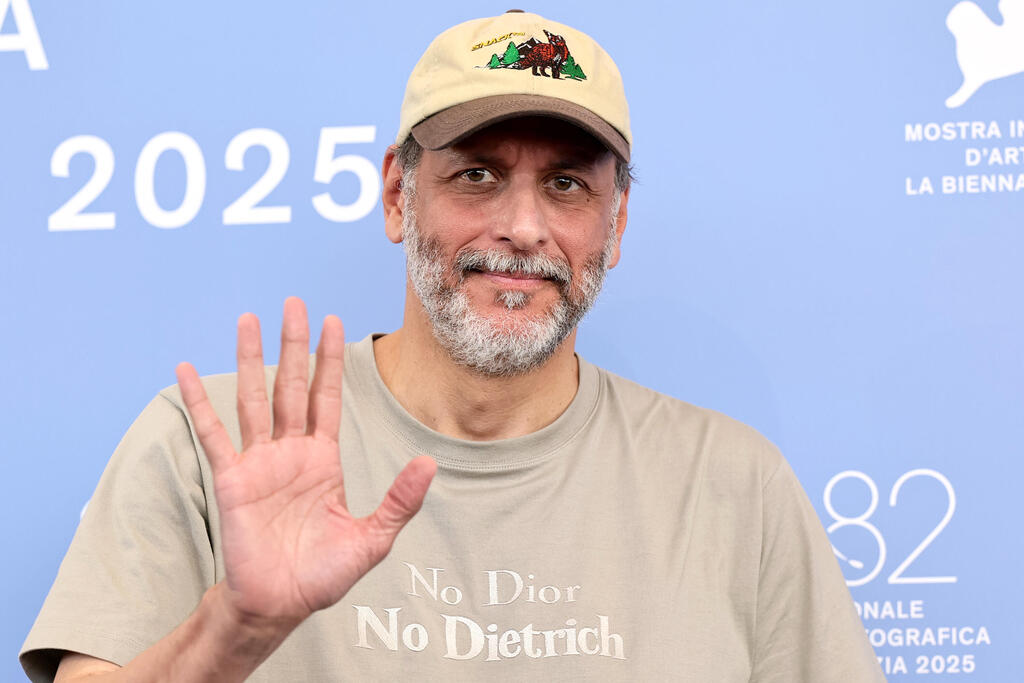
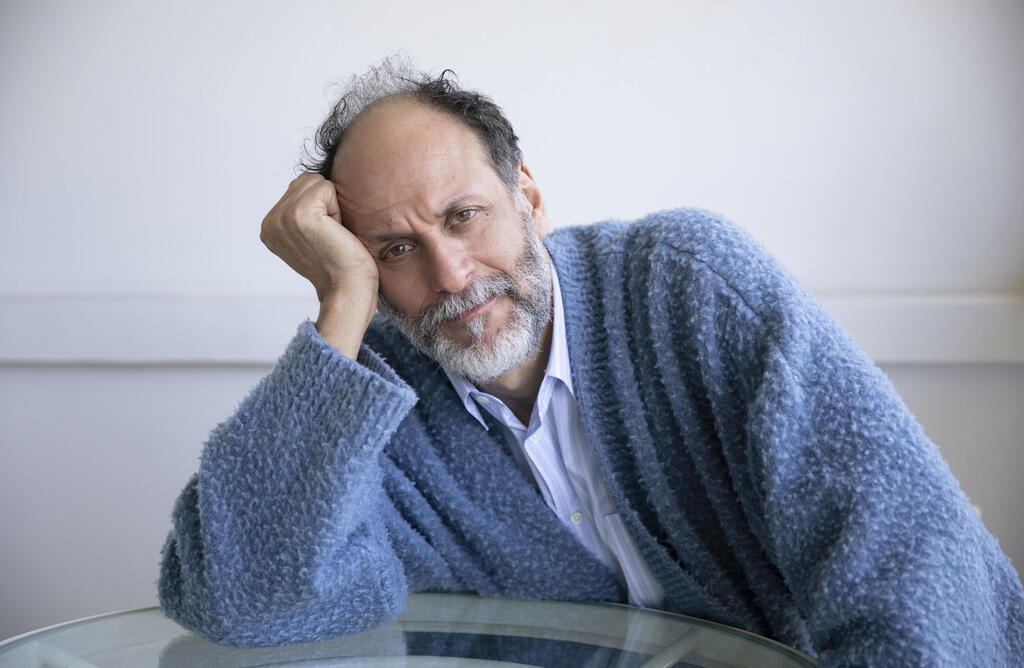
Luca Guadagnino
(Photo: Theo Wargo/Getty Images)
For Guadagnino, aging isn’t just a personal evolution — it’s critical to his artistic growth. “Maturity helps you learn more about human existence. To be a good filmmaker, you need to understand human behavior. But when you’re young, you might not yet have that experience. That’s why I’m glad I didn’t make Queer when I first wanted to. I wouldn’t have been able to understand the protagonist and his complexities back then.”
“I’m grateful I’ve reached a point in my career where I get to work with major actors and have the support of big studios — and I’m not a kid anymore. Success too early can be a double-edged sword. It can isolate you. And I don’t want to be isolated. I want to stay connected. I want to stay mortal. I want to keep seeing people not as archetypes of behavior, but as who they truly are.”
First published: 02:00, 10.18.25