

There are actresses who play unforgettable characters, and then there is Jessica Lange, who turns every role she takes on into an event. Five decades after her big-screen breakthrough, with two Academy Awards, three Emmy Awards, a Tony Award, a Screen Actors Guild Award, five Golden Globes and countless performances etched into the collective memory, Lange shows no signs of slowing down. Quite the opposite. At 77, she is returning to one of the most demanding and complex roles of her career, Mary Tyrone in the film adaptation of Eugene O'Neill's masterpiece "Long Day's Journey Into Night," reminding audiences why she is considered one of the greatest actresses of her generation.
From "Tootsie" and "Frances" to "Sweet Dreams," "Blue Sky" and "Grey Gardens," and her celebrated television comeback in "American Horror Story," Lange has never been an actress willing to compromise. She has never shied away from broken characters, women on the brink, addiction, madness or aging. In fact, she seems most at home in the very places Hollywood would rather look away from.
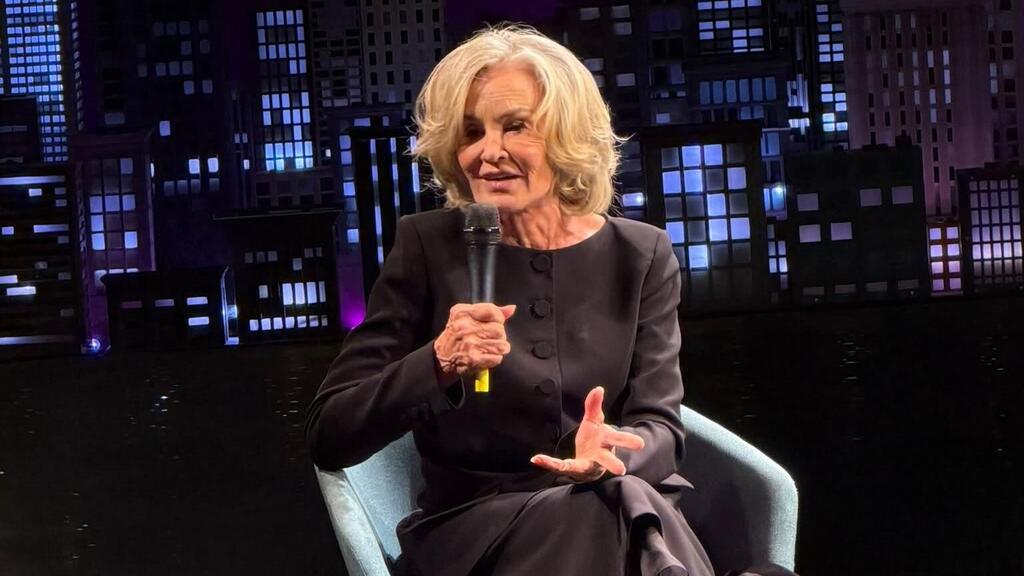
Lange attended the Chelsea Film Festival in New York as the guest of honor, receiving the inaugural Chelsea Icon Award in recognition of her contributions to film and theater. As part of the event, held in partnership with Hollywood entertainment news outlet Deadline, she took part in an intimate conversation ahead of a screening of "Long Day's Journey Into Night."
‘I could keep playing this role for the rest of my life’
The event offered a glimpse of a different side of Lange. She looks wonderful, radiant and charming, with a sharp sense of humor, infectious laughter and a warmth that seems to radiate from her. It is hard not to marvel at the contrast between the cheerful, playful woman sitting before us and the tormented, turbulent women who have become her signature on screen. She speaks openly about her career, the actors she has worked with and amusing personal stories, but there is one character who continues to occupy her thoughts more than any other: Mary Tyrone.
"I think Mary Tyrone is the greatest role I've ever had the opportunity to play," she says without hesitation during the conversation. "It may be one of the most beautiful, complete and extraordinary roles ever written for the theater. It's a bottomless well. I could keep playing it for the rest of my life, and it would never feel old or worn out, and I would never feel that I'd reached the bottom of it."
Lange first played Mary in London in 2000, returned to the role on Broadway in 2016, winning a Tony Award for her performance, and is now bringing the character to the big screen alongside Ed Harris, Ben Foster and Colin Morgan. At the heart of O'Neill's family drama is a woman addicted to morphine, trapped between her husband and two sons, between overwhelming love and relentless guilt, and between an unbearable present and a past she cannot let go of. The play was inspired by O'Neill's own family, and Lange sees it as a work that continues to reveal new layers even after years of exploration.
"When you understand the deeply personal and emotional place O'Neill was writing from, you begin to understand the infinite depth of the play," she explains. "And as you get older, you experience more loss, more grief, and all those things naturally find their way into your work when you're creating a character."
Despite her deep love for theater, Lange admits with sadness that she feels she is now too old to return to the stage. There is something touching about that admission, particularly from someone who speaks of Mary Tyrone as a role she could continue playing for the rest of her life. Fortunately, the camera is still there, allowing her to return to the character she loves so much.
But Mary Tyrone's journey to the big screen was something of a drama in its own right, one that even O'Neill might have appreciated. Six years after the Broadway production, director Jonathan Kent, who had also directed Lange on stage, managed to assemble the cast and secure the funding needed for a film adaptation. The production headed to Ireland, where an elaborate set recreating Connecticut in 1912 was built along the coast. Then, after just one day of filming, everything collapsed.
"On the second day, we arrived on set, and the producer told us, 'We're stopping. The film is over. The financing has fallen through,'" she recalls. "We were all there in Ireland, and every day Ed, Ben, Jonathan, myself, everyone, tried to use every connection we had to find someone who could finance the rest of the shoot. We just wanted enough money to finish the film."
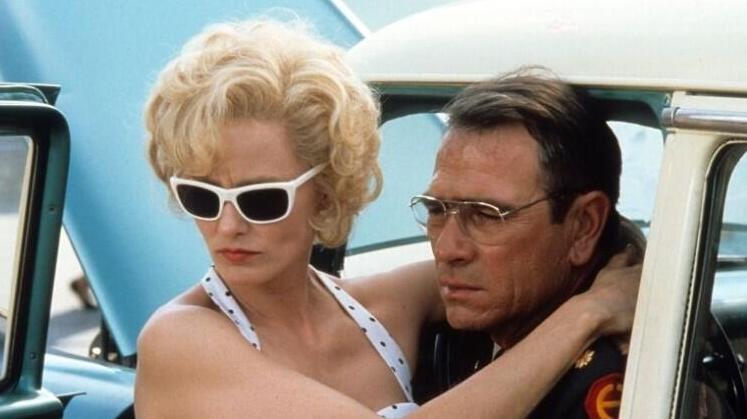
Jessica Lange in ‘Blue Sky’
(Screenshot from the film)
Eventually, through Ben Foster's agents, the production team reached British producer Bill Kenwright, who was no stranger to Lange. "I'd already worked with him three times before, and when he heard what had happened to us, bless him, he found the money so we could continue filming."
Four years after filming wrapped, the movie is finally making its way to audiences, although Lange makes no attempt to hide her frustration with the difficulties surrounding its distribution. "The distributor doesn't have the resources to do what needs to be done, so we're doing everything we can to give people a chance to see it. Because it's a wonderful adaptation of what I believe is the greatest American play ever written."
This is not the first time a film starring Lange has had to wait years before reaching audiences. "Blue Sky," which earned her a second Oscar, was filmed in 1990 but was not released until 1994, after Orion Pictures went bankrupt. "The film just sat in a bank vault for something like three years," she recalls, adding with a burst of laughter, "I just love sitting on my films and making sure the editing is right."
In that film, Lange played Carly Marshall, a passionate, restless woman married to a military officer portrayed by Tommy Lee Jones. "Tommy Lee is one of my favorite actors I've ever worked with," she says, the affection evident in her voice. "He has an extraordinary power as an actor, and he can do so much with so little."
The two also worked together on a television adaptation of "Cat on a Hot Tin Roof," alongside Rip Torn and Kim Stanley. "We had an absolutely brilliant cast, and somehow that production disappeared, too. But that's part of the nature of what we do," she says.
‘That's the most interesting part of acting’
Throughout her career, Lange has shared the screen with some of the biggest names in American cinema, including Jack Nicholson, Robert De Niro, Dustin Hoffman, Dennis Quaid, Gabriel Byrne and Ed Harris. But it turns out that even she had professional dreams that will now remain unfulfilled.
"I would have given anything to work with Robert Duvall or Gene Hackman," she says of the two actors, who died over the past two years. "If I'd had the opportunity to make a film with either of them, it would have meant the world to me."
Throughout her career, Lange has repeatedly been drawn to women the world struggles to accept. The rebellious Frances Farmer, the fragile Blanche DuBois in "A Streetcar Named Desire," Carly Marshall in "Blue Sky" and, of course, Mary Tyrone. Women who refuse to behave themselves, who feel too much, love too much and sometimes destroy themselves along the way.
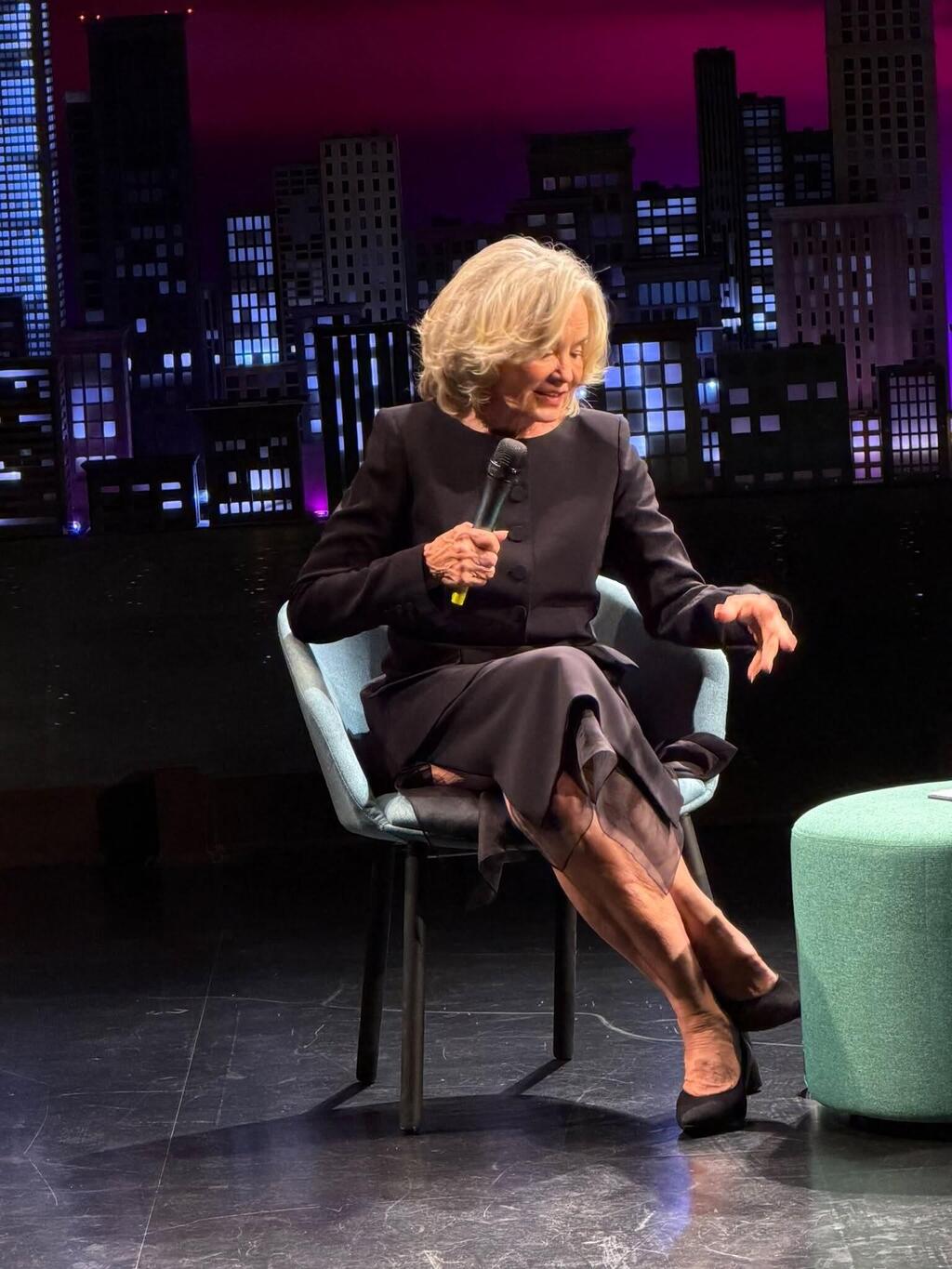
Jessica Lange at the Chelsea Film Festival
(Photo: Shirit Gal)
"I love exploring extreme emotions," she admits. "To me, that's the most interesting part of acting, and I hate to admit it, but it's also the easiest part. Because it's all already there inside you. You just have to find a way to connect with it."
According to Lange, these characters allow her to venture into places she might otherwise never dare to approach. "You discover things about yourself that you almost never have the opportunity to discover. I've been fortunate to play several women like that over the years, and they're very dear to me."
Does Lange worry that portraying so many women on the verge of a breakdown might eventually affect her? As it turns out, the question has already been raised at home. Lange recalls how her youngest daughter, Hannah, who was six or seven at the time, used to accompany her to the theater in London when she was playing Blanche DuBois in "A Streetcar Named Desire."
"One day she asked me, 'Mom, don't you think playing all these crazy women is going to make you crazy, too?'" Lange recalls with a smile. "I told her, 'No. I think playing all these crazy women actually keeps me from going crazy.'"
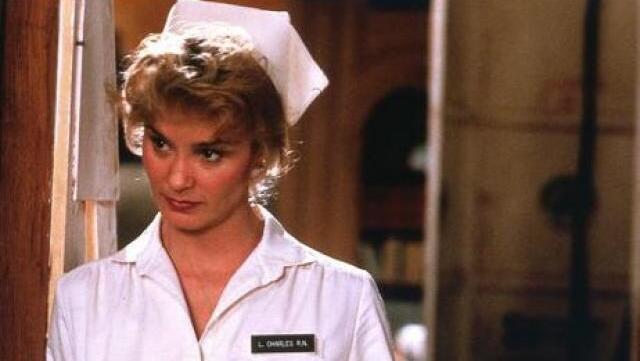
Her granddaughters didn't recognize her; Jessica Lange in ‘Tootsie’
(Screenshot from the film)
Despite all those emotionally demanding roles, it was one of the lighter performances of her career that earned Lange her first Oscar. When Sydney Pollack offered her a role in "Tootsie," opposite Dustin Hoffman, she was far from enthusiastic.
"I thought I didn't want to do it. It seemed so lightweight," she admits. "But Sydney convinced me, and I'll be forever grateful to him for that. I give him all the credit, both for convincing me and for the way he directed me."
And if Lange needed a reminder that two Oscar wins do not necessarily impress the younger generation, she got one from her own granddaughters.
"One evening, we were sitting in front of the television, and I was flipping through the channels when suddenly 'Tootsie' came on. I thought it was the perfect opportunity to explain to them what I do and who I am in all of this," she recalls.
"So we sat down and watched. There I am, young and blonde, and Dustin is dressed as a woman in the most dreadful way, with that terrible hairstyle, those absurd glasses and that little dress. And I'm waiting for the girls to say, 'Hey Grandma, that's you!' But we keep watching, and watching, and watching, and they don't say a word. Finally, in a scene with Dustin and me together, I couldn't help myself and said, 'Girls, that's me.' And they look at the screen and ask, 'Which one?'"