

Three years after Oct. 7, Michael Rapaport has found himself confronting a question Israeli comedians know well: How do you make people laugh when so many in the audience have been living through grief, anxiety and war? The outspoken Jewish New Yorker first visited Israel after Oct. 7 and has since become one of the country’s most visible celebrity supporters, but he admits he initially wondered whether stand-up was appropriate at all.
“I felt almost disrespectful or concerned about doing comedy with everything that's been going on since October 7th,” Rapaport told ynet. But his Israeli friends had a simple answer: “You have to come. We love laughing. We must laugh.”
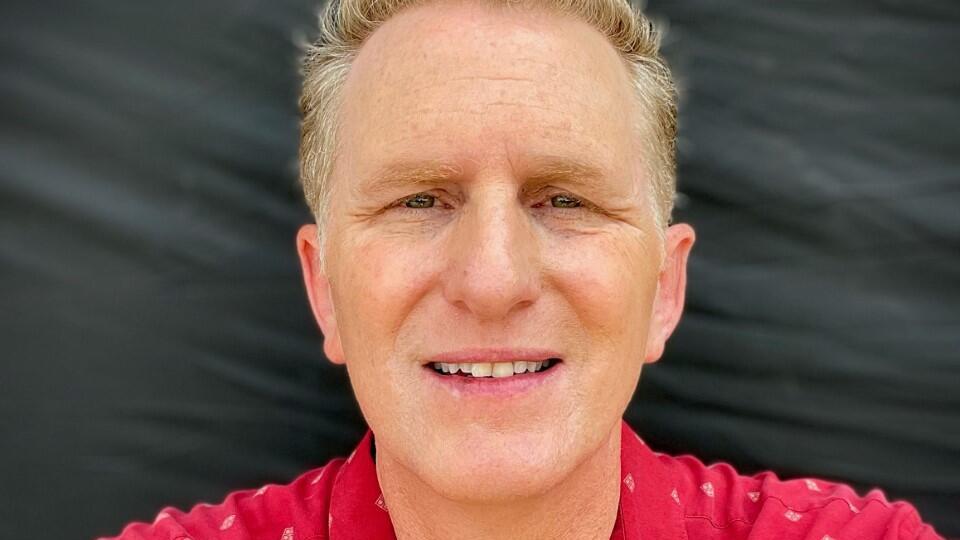
“And it's a blessing and a mitzvah to be able to even perform in front of the people of Israel for me,” he said. “And if I can make people laugh, that's just, it's beyond something I'm proud of.” For Rapaport, laughter has become part of the resilience he sees in Israelis. “They love to laugh and I don't think anything is indicative of shining our light as much as laughter.”
Rapaport will return during Sukkot as part of the Comedy for Koby tour, performing Sept. 29-Oct. 1 in Jerusalem, Tel Aviv and Herzliya. The tour, organized by the Koby Mandell Foundation, comes as the foundation marks 25 years since its establishment in memory of Koby Mandell, who was murdered in a terrorist attack in 2001 at age 14.
Asked whether an Israeli audience forces him to rethink his material, Rapaport said the changes are minimal. “No, just do my regular thing. I mean, the only thing, you know, language stuff. But, you know, the people that come to see me, you know, understand me. And if they don't understand me, they get my sentiment.”
The emotional benefit, he said, may be greater for him than for the audience. “I get more probably than anybody gets. I get more out of it than probably anybody who comes to see me. I really look at it as an honor.” Asked whether the performances recharge him, he replied: “It's charging me, I think.” He added: “I wish more comedians were coming to Israel to perform,” noting that streaming and social media have made comedy far more international than it once was.
‘I definitely have an Israeli soul inside me’
Rapaport’s podcasts, social media accounts and stand-up appearances have become platforms for his outspoken support for Israel and the hostages since Oct. 7. His combative style, blunt delivery and aversion to small talk have also made him feel increasingly at home in Israel.
“I think I definitely have an Israeli soul inside me,” he said. “I love the bluntness.” The adjustment was not immediate. “It took a little time to get used to like the bluntness and the lack of small talk,” he said. “But I understand it now and I'm not taken aback by it. I understand the pushiness and all of it. I get it and I understand it.”
“If you're not used to it could throw you off,” he added. “Once you understand where it comes from and it's not malicious, it's well-intentioned, it's just cultural. It's just a cultural thing. I think it's fine. I like it. I think it's funny.”
Michael Rapaport performing stand-up


Israeli audiences, Rapaport said, also give him license to tease the country in ways he would be more cautious about with an American crowd. “Israeli audience, you can talk about how crazy Israel is. Israel is an insane place. It's insane.” He compares Israelis’ willingness to laugh at themselves to New Yorkers. “I think Israelis, I find them to have very good sense of humor about themselves, similar to like New Yorkers,” he said. “You could, I call it breaking balls, you know, you could talk shit. They get it.”
His upcoming trip will be his 10th to Israel, all of them coming after Oct. 7. “I came in the worst of times and continued coming back. And I felt the need to be there and the need to continue to come,” he said. “As little bit of time that I spent in the first half of my life in Israel, I feel like I'm gonna make up for it in the second half of my life. I have so much to explore about the state and get to know it more.”
During the war, he deliberately avoided some of the more conventional tourist experiences because they did not feel appropriate. “My trips have been so life-changing and meaningful and just, I feel like very blessed to have gone as many times as I've gone and to see what I've seen, the good, the bad and the horrible during that time.”
The reception from Israelis has only strengthened that connection. “The people are very nice, they're very loving, they're very funny,” he said. “I feel like at home and very comfortable in Israel.”
‘The only place the world wants explanation about is Israel’
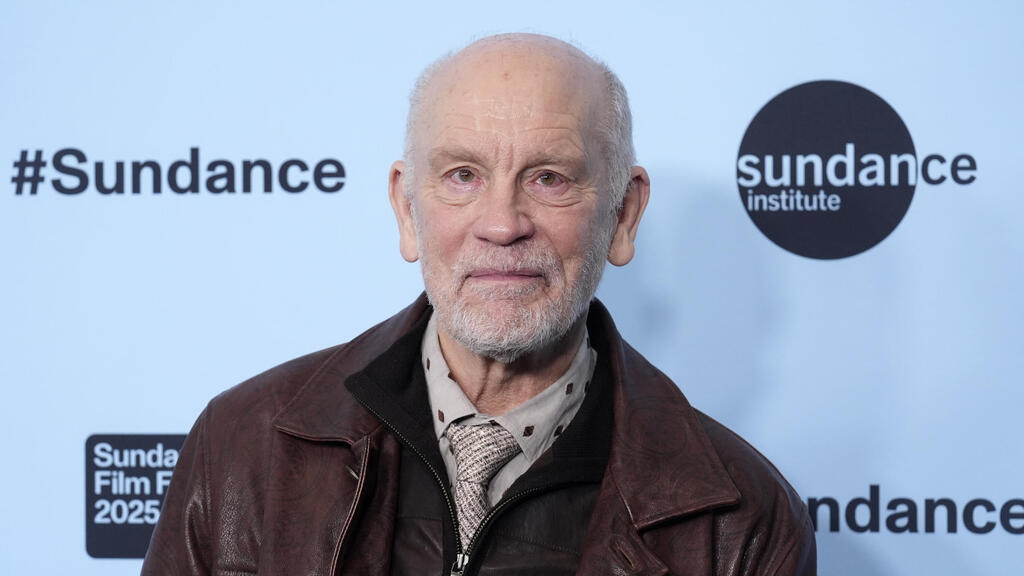
Rapaport was cautious when asked about John Malkovich, who canceled a planned Tel Aviv performance after an Israeli public relations firm circulated comments falsely attributed to him about solidarity with Israel. “I don't know enough about that situation as to why he would cancel it. I'm not sure why,” Rapaport said. “I think it could have been corrected without pulling out of it. I think it could have been corrected.”
He stressed that artists have a right to set their own terms, while saying he did not think the episode needed to end with a cancellation. Later in the interview, he added: “I would love for him to reconsider coming.”
John Malkovich
(Photo: Chris Pizzello/Invision/AP)
More broadly, Rapaport argued that online outrage and cancel culture have been granted too much influence. “People are giving it more credit and more power than it deserves,” he said. He also rejected the idea that an artist performing in Israel should have to issue a political disclaimer.
“Where I'm from New York is not perfect. The United States is not perfect. Israel's not perfect. I am not perfect as a person. My wife, she's not perfect. And my kids aren't perfect. I'm not a perfect dad. My dad and mother are not perfect. No person, no state, no city, no place is perfect,” he said. “And I don't think that you should have to explain that everywhere you go. But the only place that it seems like the world wants explanation about is Israel. It's ridiculous. It's ridiculous.”
Rapaport was considerably less restrained when the conversation turned to Macklemore. “I think he has absolutely no talent. I think he's uneducated,” he said, also accusing the rapper of having a history of being anti-Jewish.
Still, his prescription was for Macklemore to see the region firsthand. “He should come to Israel,” Rapaport said. “And if he doesn't want to perform to explore and get to know the Israel.”
“He should go to Jenin and he should go to Ramallah and he should do everything,” he continued. “He should be in Jerusalem and Tel Aviv. He should go to the North and the South and he should absolutely go to the West Bank and, you know, he should see everything for himself.”

Macklemore
(Photo: Andy Kropa/Invision/AP)
For Rapaport, the issue goes beyond individual performers. “I wish more people came. I wish more performers were coming,” he said. “I know that there's so much misinformation about Israel and anti-Semitism and anti-zionism and all this bullshit and, you know, the people of Israel deserve a lot better.”
Despite jokes about acquiring an Israeli soul, he sees the connection as a natural extension of his New York personality. “I think I have a New York attitude that fits well with with Israel,” he said. “My attitude is very New York and and and you know, I'm myself and you know, and I feel comfortable being myself.”
And his Jewish identity, he said, is not something he feels any need to justify. “I feel very proud as a Jew,” Rapaport said. “I don't debate with people about that. I'm just very comfortable with who I am and I'm very comfortable with what I know.”
Asked about voting in Israel’s elections, Rapaport was equally clear about the limits of his expertise. “I don't know enough about the politics of Israel to really understand it, to be honest with you,” he said. “I'm not an expert on it and I understand enough and I know a good amount. I don't vote in Israel, obviously, and I just want what's best for the people. I really do.”