

“I was in a relationship for almost three years. We broke up and my heart shattered,” Nunu recalls. “I went out with a friend to a bar, looked at guys and thought, ‘How do I even start over?’ I came home completely broken. I turned off the lights, put on headphones and danced alone in the dark to random songs. Then a song I didn’t know came on — something in its intro sparked something in me. I stopped it immediately and thought: this song should go in a different direction. I started humming, ‘Feels like I’m not good with boys.’ Somehow, in the middle of that low point, I made myself laugh. But I didn’t think anyone else would care.”
Naomi Aharoni-Gal, who would soon become known as Nunu, uploaded the track under her new stage name with low expectations. “I picked a random release date. I wanted to upload it to YouTube but the Wi-Fi in my shared apartment was terrible. At the time, I was giving private piano and voice lessons in Herzliya. Between lessons, I tried posting it to Facebook on my laptop, which a student had just spilled juice on. Eventually, it worked. By the end of the day, I checked the views — about 30 likes. I was disappointed. I thought no one got it. It was embarrassing but whatever — life goes on.”
But soon the unexpected happened: people started sharing the song. Comments flooded in: “What is this? Who is she? Is this a joke?” The confusion sparked curiosity. A journalist even asked for a press kit. “I ran to my mom in a panic and asked what a press kit even is!” Then came an invitation from Galgalatz radio. Interview requests followed. “I styled myself, dragged a friend to the Bezalel market to buy outfits and asked her to do my makeup because I had a newspaper shoot.”
The Music Industry’s Highs and Lows
“When I’m on stage, that’s me — but turned all the way up. It’s not an alter ego. I open my wings and just give in to it,” she explains.
Her songs are often mistaken for lighthearted pop but are deeply personal. One track, “Banim,” was written while she was still unsure if a breakup was final. “It’s about that guy — he got a lot of songs,” she laughs. After struggling to get labels on board, she released it independently. “I thought, this probably won’t change my life.”
Suddenly, record labels came calling. “I walked into fancy towers with men in suits. My friend, actor Adam Gabay — who also directs my music videos — came with me. It felt like a dream. But one meeting really traumatized me. I played them songs I’d written about my dad, who died of cancer. They said: ‘If you go with the songs about your dad, the furthest you’ll get is playing the Barby club. But if you go with the ‘boy’ songs, you’ll get a parody on TV. We think you should mix and match and we’ll help you build a model that connects with audiences.’”
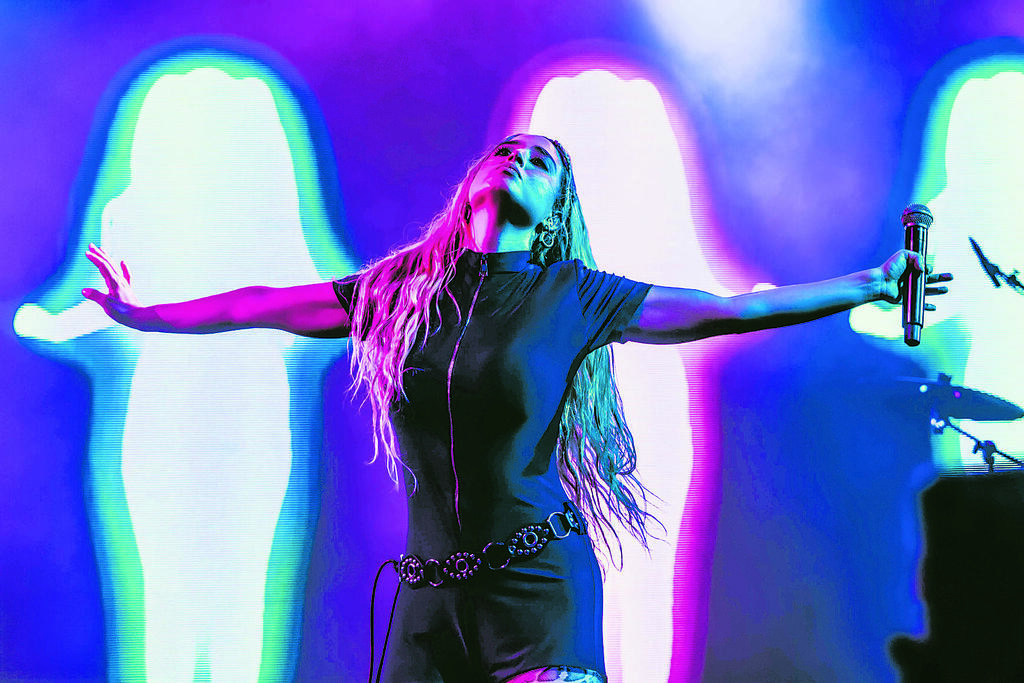
Nunu
(Photo: Alon Levin)
Still a newcomer, Nunu was overwhelmed. “I didn’t understand anything about this world. I just wrote songs for myself. These people in a huge studio gave me opinions that could change everything — your mindset, your inspiration, the magic. They promised money, everything. It took me a while to realize what I wanted. My manager, Asaf Darai, told me, ‘I believe in you. I’m only here to support you.’ That’s when I knew I wanted to work with him.”
Breakthrough and Expanding Reach
One morning, she woke up with a lyric: “Hey boy, what do you have to say to me?” She already had the melody — written a year earlier. The song became the catharsis to all her post-breakup lows. Labels told her the lyrics were too intellectual and confusing. Then two girls posted a TikTok dance to it — and it exploded. “It was storming that night, but the line to my gig stretched to Allenby Street.”
That year was a whirlwind. She was teaching music by day and playing packed shows at night. Her students had no idea she was “Nunu.” Leaving teaching was hard — for her and for them.
Her family was thrilled. “My mom gave me emotional support but I needed my dad. He died within three months of a cancer diagnosis, when I was around 20. I was signing contracts, building a business — and I didn’t have him by my side.”
When she played a slower, more melodic track, her team told her it wasn’t “Nunu” enough. “That song pushed a boundary. It wasn’t just fast-talking pop. It was more emotional.” They named it “Goliath 2,” not wanting to compete with the iconic “Goliath” by Kaveret.
One song was commissioned by the Forever Tel Aviv party line for Pride. “It was the first time I had to write to a brief. I wanted something empowering but not narcissistic. I thought: I turn off the water heater, then leave the house. That felt real and right.”
Another track riffs on soccer chants. “Ilay [Ashdot, her producer] told me he saw a video of a Bedouin girl in Sinai telling Israeli tourists: ‘You here? Not here? Here?’ And I realized — those were my lyrics. I don’t know how many more times I’ll see something like that.”
As her fanbase widened, so did the age range. “Suddenly, adults showed up to Barby. It wasn’t just kids and families anymore.”
Identity and the Cost of Success
“I don’t get on stage and hear ‘Naomi Aharoni-Gal, you’re perfect.’ They’re shouting ‘Nunu’ — a name I gave myself. Maybe it’s a small difference but it matters. My psychologist says if I were more narcissistic, life would probably be easier for me. I’m on the people-pleasing side.”
After nonstop performing, she collapsed — physically and emotionally. In Greece, where she and Ilay planned a writing retreat for her second album, she arrived sick and voiceless. “I begged a local doctor for antibiotics. I said, ‘Please, I’m a singer.’ After two days, my voice came back. We ended up writing nine songs there.”
One song, “OMG,” captured her burnout. The video included a scene with her on a therapist’s couch. She was supposed to act out a breakdown — but ended up genuinely crying and screaming. “I yelled, ‘Why aren’t you protecting me?’ Everyone on set stared. It was a hard moment.”
Grief and Music in a Time of War
The war forced her to shelve dozens of songs. “They didn’t fit the current state of mind.” Then tragedy struck again: her childhood friend’s brother, Yonatan Ditsch, was killed during reserve duty in Gaza. His wife, Moran, had survived cancer. They fought for nine years to have a baby. Yonatan was killed when their son was two.
“At the funeral, Moran said, ‘After all our victories, now we’ve lost.’ I wrote a song that same day. I was scared to play it for them — but they said it was the first time they were able to cry. We released it together.”
“I felt I was bubbling over. I borrowed a friend’s empty house, turned the kitchen into a studio and locked myself in. I forced myself to finish 13 songs. The album is called ‘What Else?’ produced by Gal Oved.”
One of the first tracks she wrote, “Fuck, a Hit,” tackled the anxiety of creating a hit. “All the voices in my head — ‘You need a banger, it has to be a smash.’ Eventually, I just said: Fuck it. I don’t want a hit. Every part of the song is a different voice in my head.”
One track reflects life under frequent rocket sirens. “Even taking a shower became a calculated risk. I had a thought: all I want is to lie on the couch. But then it got deeper. I want to rest — but also be remembered. So I’ll lie on the couch if everyone says I’m the best. The simplest wish — just to lie down — becomes impossible. Because of the war, or because of yourself, or because of your career.”
Reinvention and Reflection
“One song is my life story: cynical Tel Aviv high school, desert ashram, army band, travels in Asia — and suddenly, I’m a pop star. It’s an unexpected twist. But voices creep in: you’ll only be this if you keep hammering while the iron’s hot. If you have at least one hit a year.”
“There are charts every week. You see if your followers drop. Sometimes I delete Instagram just to protect my mental health. You think you’re in control but sometimes it works and sometimes it doesn’t. Even if a song doesn’t go viral, it still deserves love. That’s not an easy truth to live with.”
“After finishing the new album, we sat with my beauty team and asked: what does this sound like, visually? The songs felt different. So we changed the look. I wanted to move on from the pigtails — they felt childish. But I still wanted that pop edge. Blonde felt right. There’s this joke — how do you know a gay guy’s having a crisis? He bleached his hair. That made me laugh. And this album is a crisis — with myself, my career, the country and life.”
Get the Ynetnews app on your smartphone: Google Play: https://bit.ly/4eJ37pE | Apple App Store: https://bit.ly/3ZL7iNv
“In the army, I had severe anxiety. A psychologist referred me to a psychiatrist. I told him, ‘Just don’t turn me into a zombie.’ He said, ‘I treat musicians. This will be gentle.’ But I did become a zombie. I wasn’t anxious but I felt nothing. I watched a movie with my parents where the heroine dies — they cried. I said, ‘What’s the big deal? She died.’ I realized I’d rather suffer and create than feel nothing and write nothing. That’s where the song ‘Pills’ came from. I fully support people taking medication — it helped me too. But I learned where my own line is.”