


A play exposing how ISIS recruiters seduce and manipulate vulnerable women won Russia’s most prestigious theater award. Less than a year later, its playwright, Svetlana Petriychuk, and its Jewish director, Zhenya Berkovich, were arrested for “justifying and encouraging terrorism.”
Apparently, exposing terrorism and endorsing it are now the same thing, provided the state dislikes the person holding the pen.
Gallery
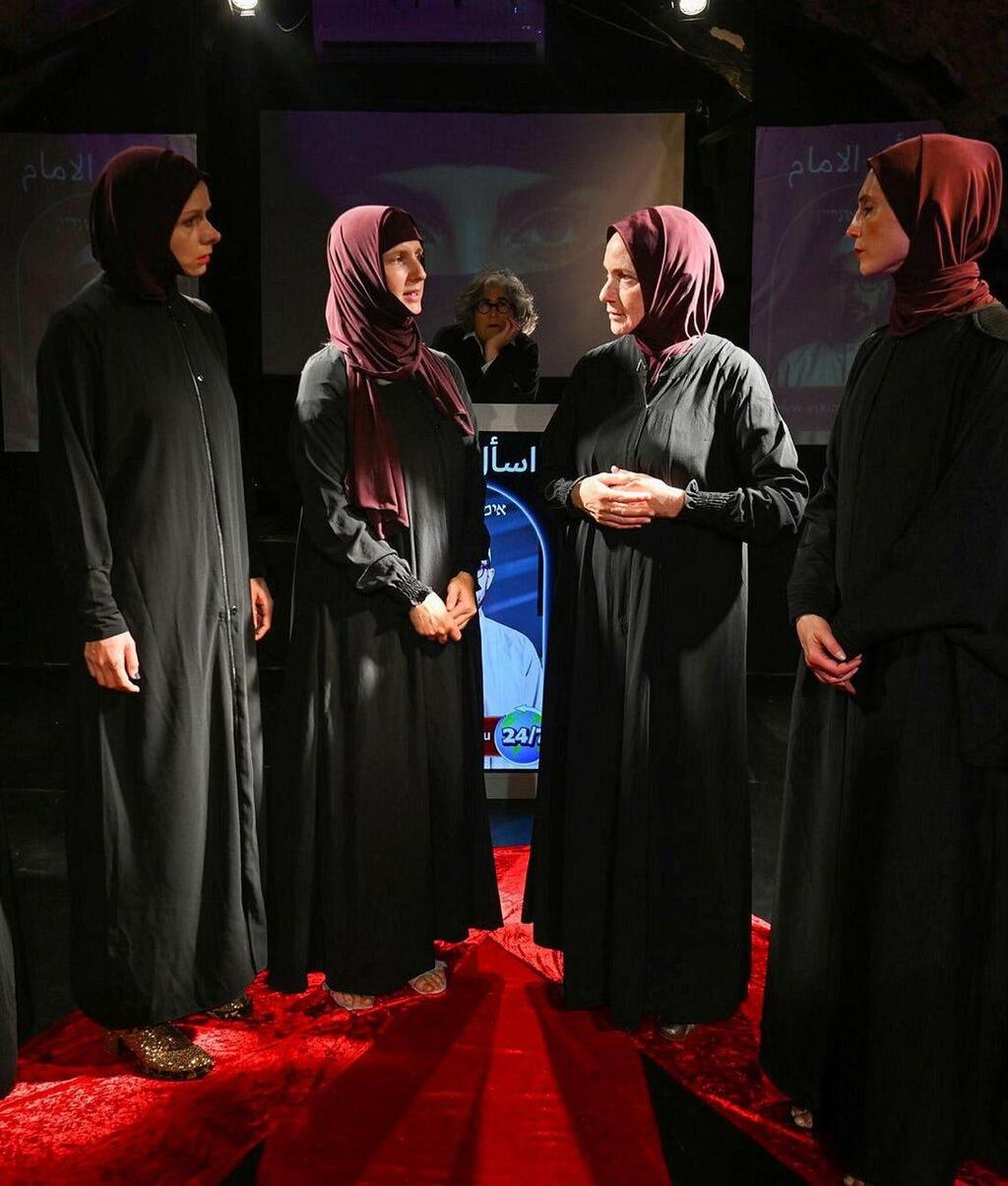
A scene from the Israeli production of 'My Sleeping Handsome,' directed by Roy Horovitz and based on a play by imprisoned Russian playwright Svetlana Petriychuk. The production follows Russian women targeted online by ISIS recruiters
(Photo: Yam Orbach)
Petriychuk and Berkovich were sentenced to six years in a penal colony. Six years... for a play! Three years have passed. While Berkovich’s children (one with special needs) grow up with no mother, the two women remain behind bars, and the play that put them there has largely disappeared from stages outside Russia.
The artists' husbands, friends and colleagues continue trying to keep their story in the public eye, but outrage has a short attention span.
Prof. Roy Horovitz chose not to let the play disappear. He brought it to the Israeli stage, creating an opportunity for the international theater community to turn attention into action.
I went to see the play “My Sleeping Handsome”, and after the show I sat down with Horovitz to ask why he chose it, why now, and what he believes is at stake if the theater world allows this moment to pass.
Where and how did you come across this play?
"In 2024, I took part in an international theater conference in Tirana, the capital of Albania. At one of the events, we were told about the play and a scene from it was read aloud in English. I was immediately drawn in and asked to read the full text."
Why were the creators, Svetlana Petriychuk and Zhenya Berkovich, arrested and imprisoned?
"In 2022, Russia invaded Ukraine and war broke out between the two countries. Petriychuk and Berkovich spoke out on social media against the war and Putin’s policies. Their arrest, trial and harsh sentences were intended to silence them and serve as a warning to other opponents of the regime.
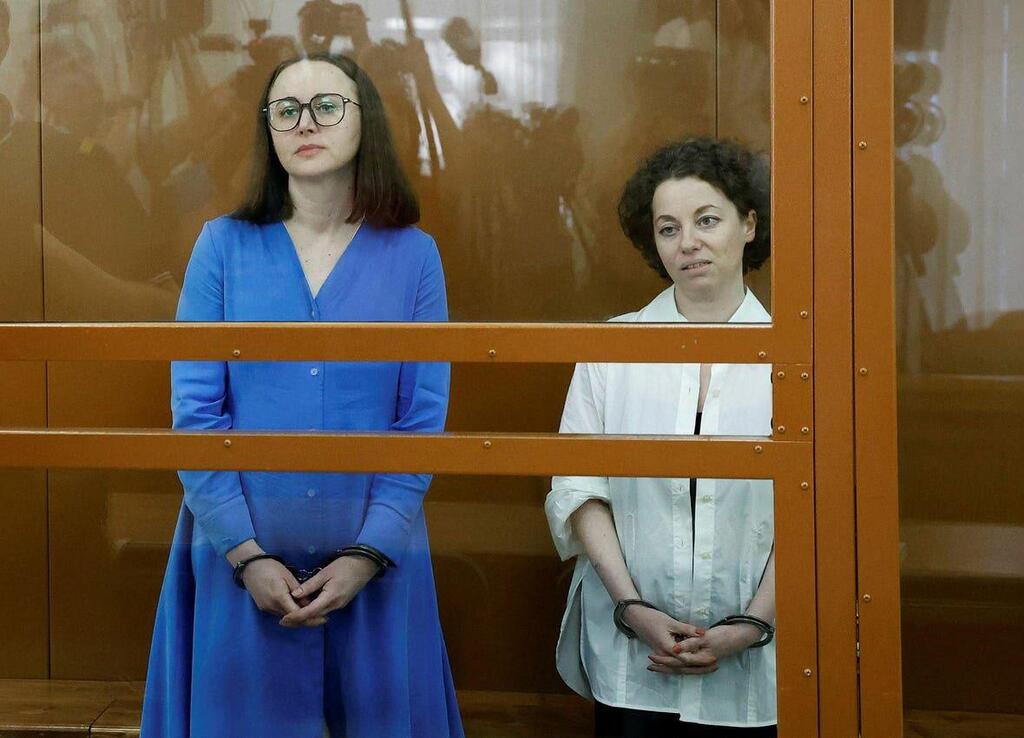
Russian playwright Svetlana Petriychuk and theater director Zhenya Berkovich appear in court in Russia. The two were sentenced to six years in a penal colony over the play that inspired the Israeli production 'My Sleeping Handsome'
"Absurdly, they were accused of creating a work that defames Russia and encourages terrorism. Less than a year earlier, the play had won the Golden Mask for 'Play of the Year,' Russia’s most prestigious theater award.
"Needless to say, it has nothing whatsoever to do with encouraging terrorism. In truth, it does the exact opposite: the play exposes the cruelty of ISIS members and the mechanisms of seduction and manipulation they employ."
What makes the text universally powerful, and when did you know you had to stage it?
"The play deals with the need for love, something we all share regardless of religion, gender, race or nationality. We all 'fall in love,' but the play warns of the danger inherent in idealizing another person, and of the way this human weakness can be exploited.
"In this specific play, ISIS recruiters trap Russian women online by presenting themselves as devoted 'Prince Charmings,' sometimes marrying them before they have even met. The women discover too late what they have fallen into, when they are already far from home and isolated. The rare few who escape and return home face imprisonment themselves, charged with cooperating with terrorism.
"Reading the first scene, I myself 'fell in love' with the play. I envisioned it clearly in my mind’s eye, and I knew there was no way back."
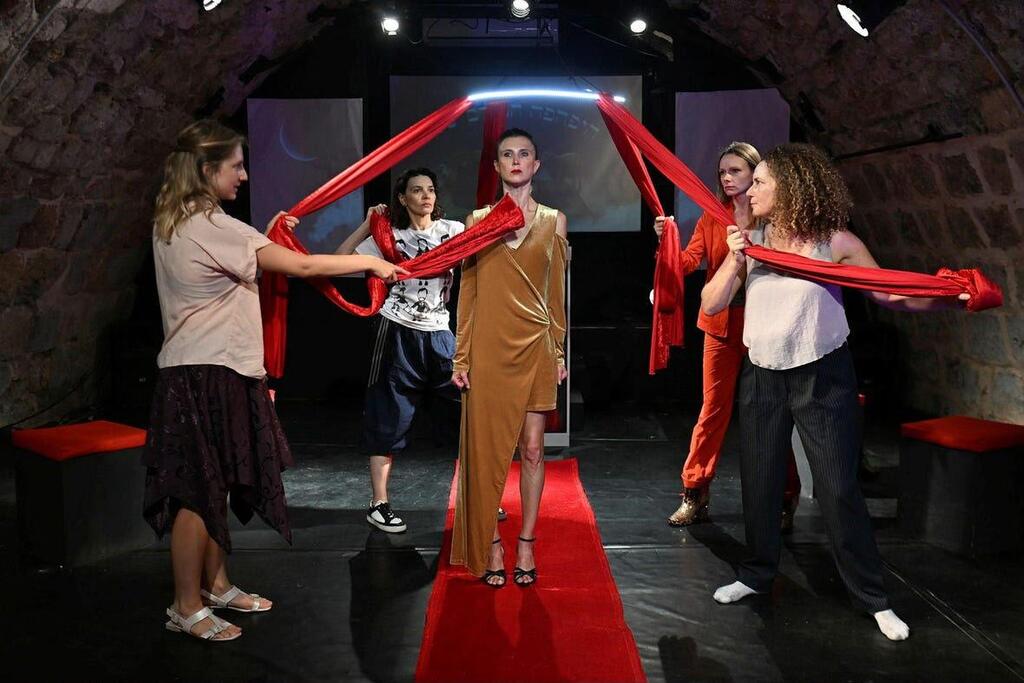
Actresses perform in 'My Sleeping Handsome,' the Israeli adaptation of a Russian play depicting women drawn into relationships with ISIS recruiters. Four of the production’s six actresses are Jewish women who fled Russia or Ukraine for Israel
(Photo: Yam Orbach)
How did you adapt the Russian context and cultural nuances for an Israeli audience?
"The original play is rich with references to Russian children’s fairy tales and folklore. My great challenge as translator was to find analogous cultural references that would resonate with a Hebrew-speaking audience and evoke associations similar to those of the original.
"I replaced 'Finist the Bright Falcon' with 'Sleeping Beauty,' a story familiar to everyone and with a very similar plot. I called the Hebrew version 'My Sleeping Handsome,' reversing the gender of the original title.
"That strengthened the irony: in the fairy tale, the heroine sleeps until her beloved kisses her and awakens her to life. In the cases described in the play, the encounters with the men and the physical contact with them mark the beginning of the women’s downfall. The kiss does not awaken them. It puts their consciousness to sleep."
The personal histories of the actresses add another dimension to the production. Who are the women on stage?
"Four of the six actresses are Jewish women who fled Russia or Ukraine and came to build new lives in Israel. I wanted to give the production an additional layer that I could never have created through direction alone. They are performing a Russian text about women caught between extremism, state violence and exile, while carrying their own experiences of leaving those countries and beginning again here."
You have directed in all the major Israeli theaters. Why did you choose the Acco Theater Center for “My Sleeping Handsome”?
"Well, I rather innocently assumed it would be easy to find a theater willing to produce a play with such a powerful story. I was wrong. I realized I needed to find a theater willing to take the risk with me. There is fear here too.
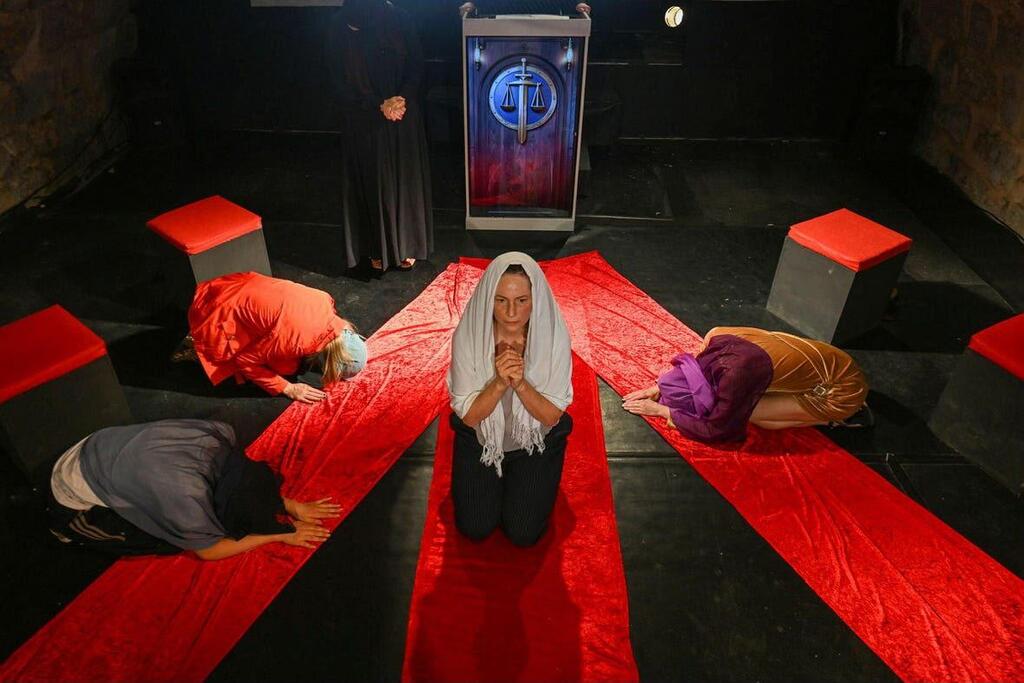
A scene from 'My Sleeping Handsome'
(Photo: Yam Orbach)
"Moni Yosef, director of the Acco Theater Center, deserves enormous credit for having the courage to support it. Thanks to him, the play has a home in Acco. It is also being performed at Malenky Theater in Tel Aviv, run by Michael Teplitsky, who helped me with the translation."
In a story about artistic silence, the institutions and individuals willing to provide a stage matter enormously.
Given that the creators were imprisoned for this exact script, how did that reality shape your artistic choices and your responsibility as a director?
"I chose to stage the play first and foremost because of its many dramaturgical merits, separate from what later happened to its creators. It was the text itself that drew me to the material. The terrible context only reinforced that initial choice.
"The rest of the production team also threw themselves into it with a genuine sense of mission: to stage this worthy play and express solidarity with the wonderful artists behind it, who are suffering a grave injustice.
"I chose to end the production with a slide showing Petriychuk and Berkovich at the time of their arrest and to keep that image on screen during the curtain call. The audience’s applause is therefore directed not only at the six actresses onstage, but at the two imprisoned women as well.
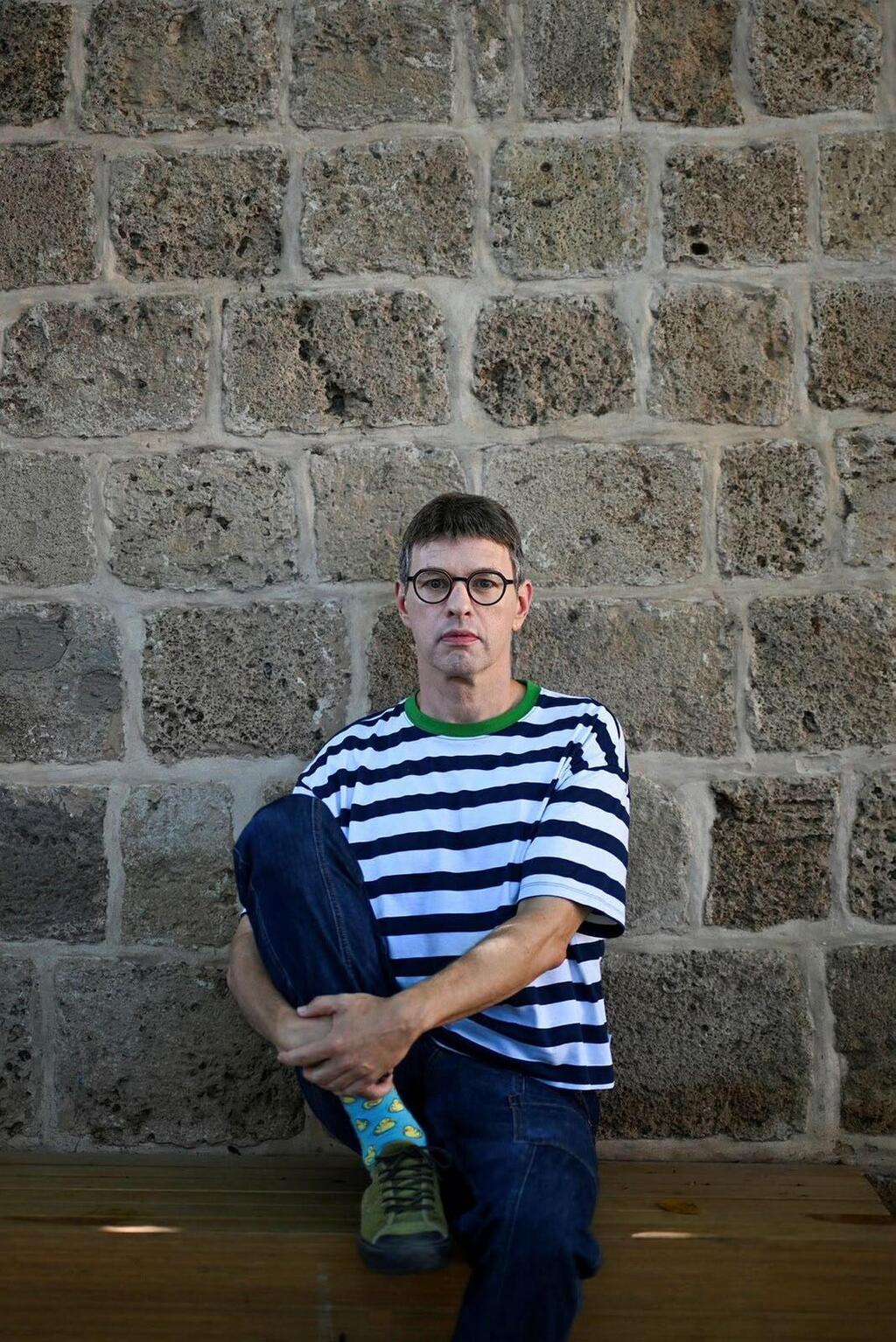
Israeli director and translator Roy Horovitz, who brought 'My Sleeping Handsome' to the Israeli stage after encountering the original Russian play at an international theater conference in Albania in 2024
(Photo: Rami Shloush)
"We hope the Israeli production will encourage further stagings around the world, spark an international campaign, and perhaps help secure their release."
Why do you think almost no other theater in the world has staged this award-winning play?
"The women’s imprisonment caused a great stir, and it is possible that the goal of sowing fear was achieved, with some theaters preferring not to touch this hot potato.
"Cultural boycott may explain some of the silence. Boycotting an entire culture has become a convenient way of cleaning one’s conscience without getting one’s hands dirty with facts. Yet artists are often among the first to challenge violent regimes, and the first to be punished by them.
"A boycott that refuses to distinguish between a regime and the artists it persecutes is not moral clarity. It is throwing out the baby with the bathwater, then congratulating ourselves on how clean the tub looks. In cases like this, it does not resist the regime. It finishes its work.
"Petriychuk is a victim of Putin’s regime, but those calling for blanket cultural boycotts are not interested in nuance. We, as Israelis, are also well acquainted with fanatics who support cultural boycotts without allowing details and facts to confuse them."
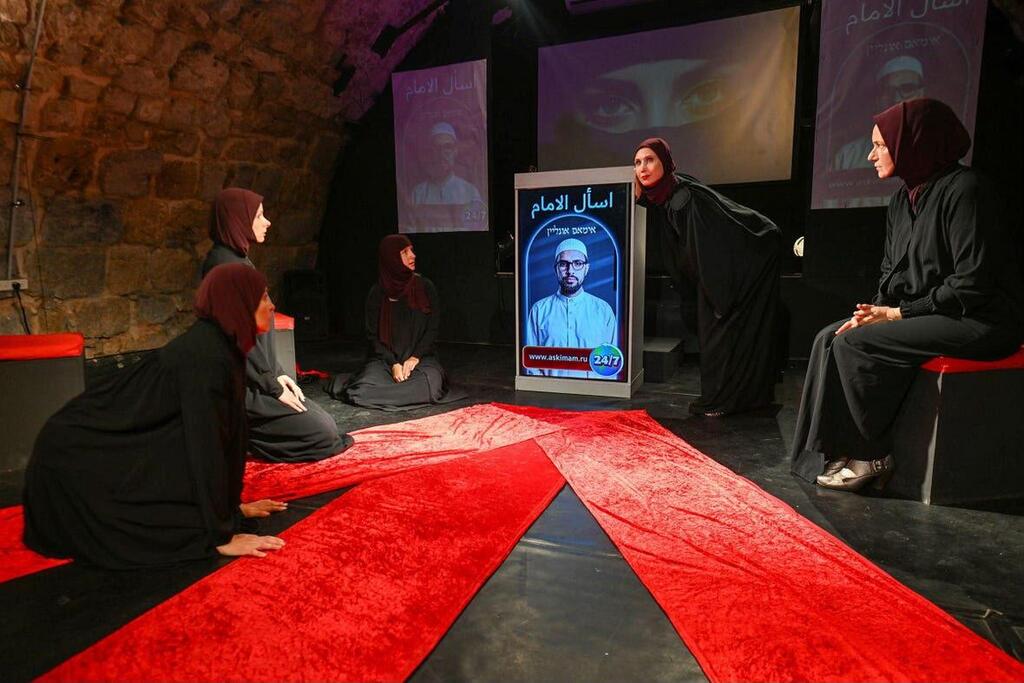
A scene from 'My Sleeping Handsome,' staged at the Acco Theater Center in northern Israel
(Photo: Yam Orbach)
With censorship rising worldwide, what should local audiences and the international theater community take from this production?
"Attempts to silence critical voices have accompanied art since ancient times. We must remember that this is a constant struggle, a long-distance run. We have to breathe deeply and persist in speaking our truth. There is no alternative.
"But applause is not enough. Three years remain. Three years in which theaters around the world can stage this play, speak the women’s names and refuse to let a prison sentence become an artistic disappearance.
"Theater cannot end a war or unlock a penal colony. But it can keep the prisoners visible, their voices alive, and the world from pretending it did not know."