

With the World Cup approaching, the 79th Cannes Film Festival could not ignore the world’s biggest soccer event. This year, the festival is screening two new documentaries about the game, both likely to attract considerable interest.
The first is Cantona, which focuses on a crucial chapter in the life of French soccer star Eric Cantona. In the early 1990s, when Cantona was 25, he announced his retirement after a series of controversies. “The most gifted footballer of his generation looked finished and seemed destined to be permanently exiled from the sport he loved,” say Ben Nicholas and David Tryhorn, the film’s creators.
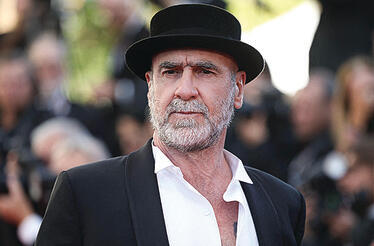
“Cantona was incapable of obedience. He was a free spirit who rebelled against conformity whenever he felt its grip tightening. The French called him unmanageable. Eventually, Cantona signed with Manchester United and led the club to the 1993/94 league title. Our film reveals how legendary coach Alex Ferguson channeled the genius of this captivating and unpredictable athlete. It is a story about friendship and fatherhood.”
Since his retirement, Cantona has become a film actor and an outspoken activist for the Palestinian cause. He also called for a boycott of Israeli soccer teams during the war in Gaza.
The second film is the riveting The Match, which reconstructs the 1986 World Cup quarterfinal at Azteca Stadium in Mexico City between two old and bitter rivals, England and Argentina. The match, charged with political tension in the aftermath of the Falklands War, ended 2-1 in Argentina’s favor and is remembered above all for Diego Maradona’s two goals: one a dazzling slalom through the entire English defense, the other scored with his hand without the referee noticing.
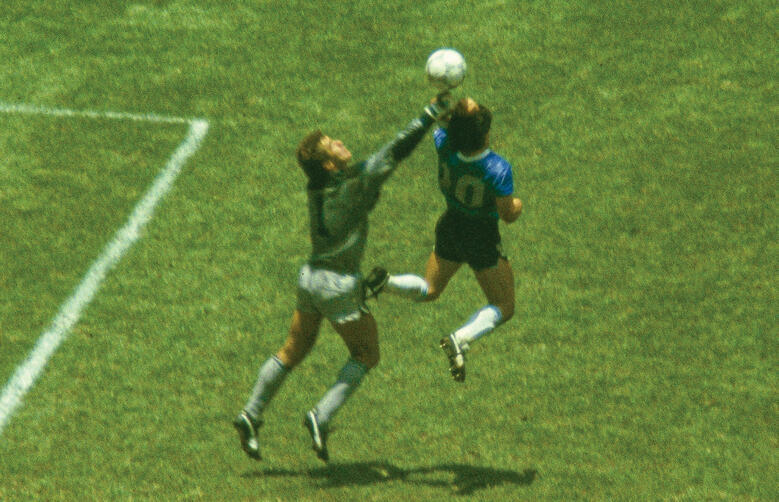
Maradona scores his famous 'Hand of God' goal
(Photo: Getty Images, Getty Images)
Maradona’s post-match remark that the goal was scored “a little with the head of Maradona and a little with the hand of God” gave the goal its iconic nickname: the “Hand of God.”
In The Match, Argentine directors Juan Cabral and Santiago Franco skillfully reconstruct the soccer game and demonstrate its political significance through interviews with some of the people involved.
“It was not easy to convince the players to take part in our documentary, even though they knew they had experienced a historic event of global significance,” the filmmakers told me in an interview. “Gary Lineker, who scored England’s goal, was not especially enthusiastic at first about participating in the film. But after he watched the early versions, he was convinced. Then, when we interviewed him, he imagined what would have happened if Maradona’s goal had been disallowed.”
When I asked the directors who would win this year’s World Cup, Cabral replied: “I have no idea. I’m going to enjoy the World Cup. I have a feeling a team with unexpected power will win this time. Everyone has a chance to win, and that is the beauty of the game.”
"And who is greater, Maradona or Messi?" I ask. “That is a hard question,” Franco replied with a sigh.