

An aging CIA assassin has an unusual theory about geopolitics: The best countries are those that embrace democracy, tolerate homosexuality and produce excellent cheese. France, naturally, passes the test. Russia does not, largely because its cheese is terrible.
The wonderfully outrageous argument belongs to Chris, the veteran American intelligence operative played by John Malkovich in Wild Horse Nine, the new film from writer-director Martin McDonagh. It is the kind of politically incorrect dialogue that has become a signature of the filmmaker behind In Bruges, Three Billboards Outside Ebbing, Missouri and The Banshees of Inisherin.
Wild Horse Nine


But beneath the jokes about cheese lies a considerably darker story about American interventionism, political violence and a man who has spent his life killing for his country and is now struggling with guilt and regret.
Speaking with journalists at the Venice Film Festival, where the film premiered in September, McDonagh explained that the scene was intended to be provocative without necessarily expressing a hateful worldview. His character is a deeply compromised man, but the underlying joke, he suggested, is ultimately an affectionate defense of democracy, gay rights and good cheese.
For Malkovich, who joined the conversation, that willingness to embrace uncomfortable dialogue is an important part of McDonagh's appeal. The actor praised the director's ability to write what he called "incorrect things that we can no longer say."
Gallery
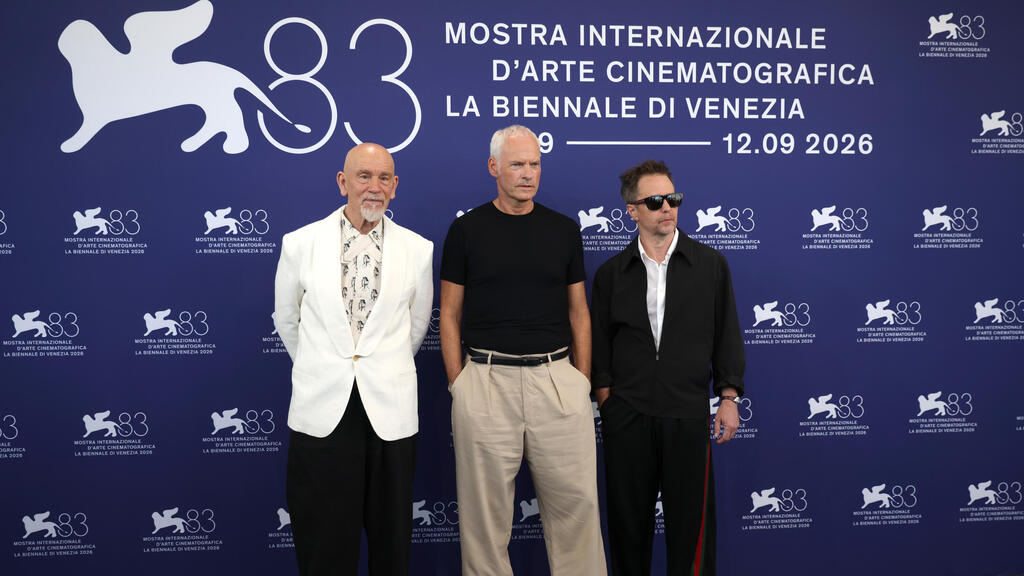
John Malkovich, Martin McDonagh and Sam Rockwell at the Venice Film Festival
(Photo: Carlo Paloni/Getty Images)
Malkovich argued that speech has become increasingly constrained by fears about how others might react, whether those reactions are real or merely anticipated. McDonagh's characters, he suggested, possess the freedom to say things that people increasingly avoid saying in public.
Yet Wild Horse Nine is not merely an exercise in provocation. It is also a film about the terrible things powerful institutions have done in the name of national security, and why McDonagh believes the lessons of that history have become increasingly relevant.
From Chile's military coup to Trump's America
Set in 1973, shortly before the military coup that overthrew Chile's democratically elected socialist president, Salvador Allende, the film follows two CIA agents, Chris (Malkovich) and Lee (Sam Rockwell), stationed in Santiago. Their superior, MJ (Steve Buscemi), sends them to Easter Island, the remote Chilean territory in the Pacific Ocean also known as Rapa Nui.
Against the extraordinary backdrop of the island's monumental moai statues, the two longtime colleagues confront their troubled relationship and the consequences of their violent past. Chris, who is seriously ill and approaching the end of his life, begins questioning the meaning of everything he has done.
The historical setting carries considerable weight. The United States conducted covert operations to undermine Allende's government before the 1973 coup, which brought Gen. Augusto Pinochet to power. His dictatorship subsequently persecuted, tortured and killed political opponents, while thousands of people were forcibly disappeared.
McDonagh said he had been fascinated by American intelligence operations in Latin America since his teenage years. His interest extended beyond Chile to CIA involvement in Guatemala, the Congo and the Bay of Pigs operation against Cuba.
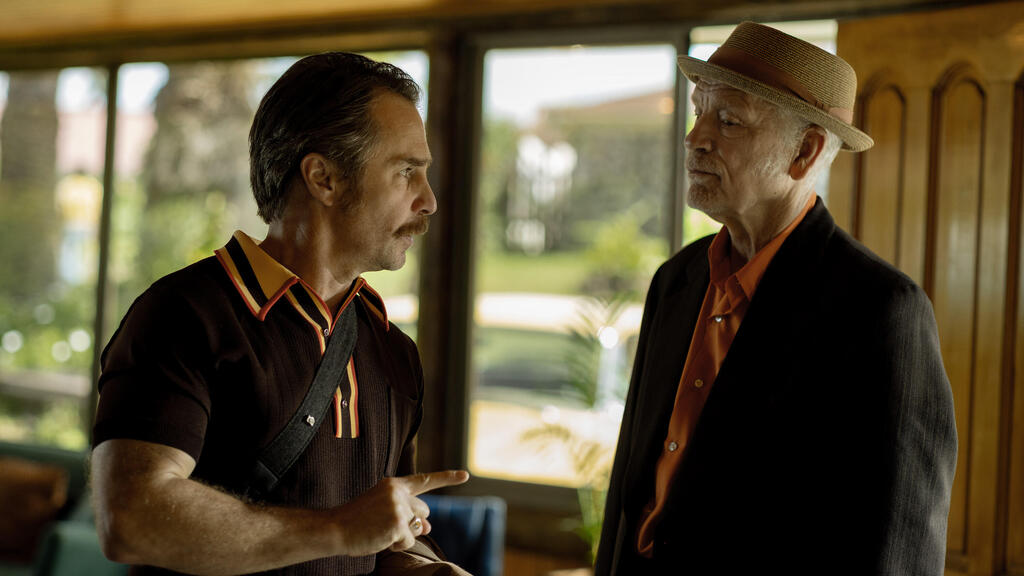
(Photo: Courtesy of Forum Film)
At the Venice press conference, McDonagh questioned why the agency's record has not received greater scrutiny. He argued that Americans have long been familiar with the abuses of the Soviet KGB while paying insufficient attention to questionable actions by their own intelligence services.
For McDonagh, questioning accepted narratives and political authority has always been central to his work, including films that are not overtly political. In Wild Horse Nine, he wanted to use the Chilean coup as the backdrop for a more personal story about a man confronting the consequences of his actions.
But the director also acknowledged that the film's historical subject had acquired an unexpected contemporary significance. Although he did not set out to make a movie about the Trump administration, he said the parallels became increasingly apparent as the project developed.
McDonagh argued that the most alarming difference between past American interventions and present-day geopolitics is that governments no longer appear as concerned about concealing their actions.
At the Venice press conference, he said such operations no longer seemed as covert as they once had, contrasting today's approach with an earlier period when those responsible at least attempted to conceal their activities.
"Things are getting stupider and stupider and stupider," he said.
McDonagh suggested that younger American audiences might be particularly surprised to discover the extent of Washington's involvement in Chile and other countries during the Cold War. He hopes the film will encourage viewers to investigate that history rather than simply accept the familiar narrative of the United States as a defender of democracy.
His argument is not that today's political leaders invented such practices, but that the historical methods of intervention and coercion have become increasingly difficult to distinguish from contemporary events. What was once hidden behind intelligence operations now appears, in his view, more openly.
John Malkovich, mortality and a once-in-25-years role
For Malkovich, 72, the film arrived at a particularly meaningful stage of his life.
The actor said the screenplay appealed to him partly because of its preoccupation with mortality. As he grows older, death has become a subject he thinks about increasingly, although there are still many things he hopes to experience, including watching his granddaughters grow up.
Chris's struggle with his approaching death therefore felt unusually personal. The character is not simply a veteran assassin reassessing his career, but a man discovering that the certainty with which he once lived has given way to doubt.
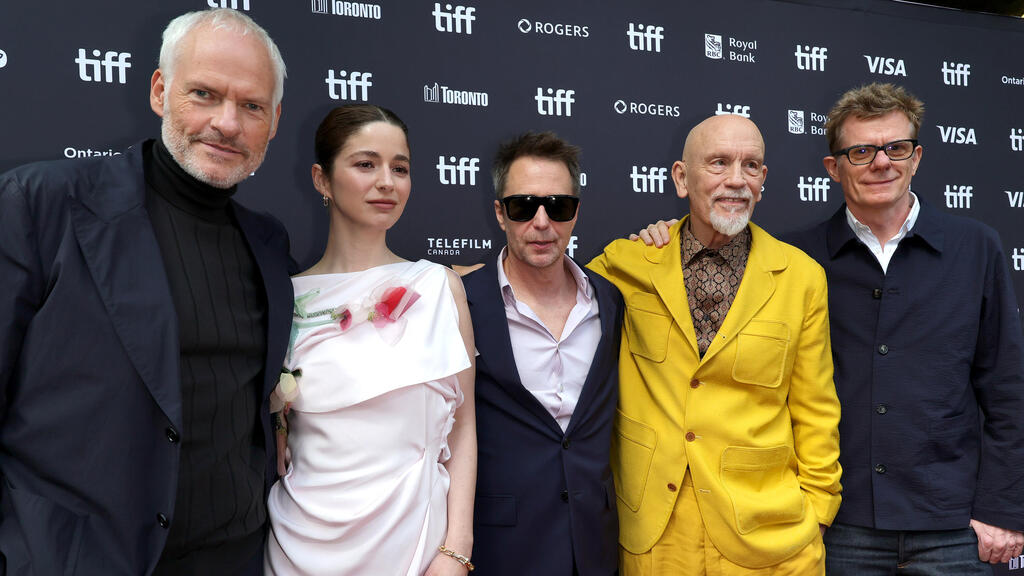
The cast of Wild Horse Nine at the Venice Film Festival
(Photo: Frazer Harrison/Getty Images)
Malkovich said the screenplay stood out even after decades of working with acclaimed filmmakers and appearing in numerous productions. He described such opportunities as exceptionally rare, estimating that a script of this caliber comes along perhaps once every 20 or 25 years.
The actor had previously received other McDonagh projects but had been unable to accept them because of scheduling commitments. This time, he was determined not to miss the opportunity.
His decision has already paid off. At the Venice Film Festival in September, Malkovich won the Volpi Cup for Best Actor for his performance, adding momentum to speculation that the role could earn him another Academy Award nomination and potentially his first Oscar victory.
Malkovich has been nominated for an Oscar twice before, for Places in the Heart and In the Line of Fire, but has never won.
Despite the film's fixation on mortality, Malkovich has no intention of stepping away from acting. At Venice, he said he had spent his life doing what he loves and expected to continue until circumstances made that impossible.
His connection to Wild Horse Nine also extends to the history it depicts. Malkovich was 19 when the Chilean coup took place and remembers the period vividly. He also remembers the assassination of President John F. Kennedy a decade earlier and the profound effect those events had on public life.
The film incorporates references to both events, although its treatment of Kennedy's assassination includes fictional and conspiratorial elements rather than an established historical account.
For Malkovich, humor becomes an essential way to approach such traumatic subjects without diminishing their significance. The absurd exchanges between the two agents expose the moral blindness of men who have participated in extraordinary violence while remaining preoccupied with trivial matters of etiquette.
The controversy over words Malkovich never said
The Venice conversation about political correctness acquired an unexpected irony just days later, when Malkovich became embroiled in a controversy involving statements falsely attributed to him in Israel.
The actor had been scheduled to appear in Tel Aviv in April 2027 with The Music Critic, a theatrical production combining classical music and satire. But after publicity material distributed by an Israeli public relations company attributed enthusiastic remarks about Israel and its audiences to him, Malkovich announced that he would cancel the performance.
In a statement subsequently reported by The Hollywood Reporter, Malkovich said the company had drafted remarks in his name without consulting him or obtaining his approval.
He rejected the statements, saying they did not reflect his feelings, and described the decision to publish them as his own direct quotations as unacceptable.
Malkovich said he could no longer participate in the Tel Aviv performance under those circumstances. The Israeli producer, Alon Yurik, attributed the incident to human error and expressed regret over the cancellation.
The actor also emphasized that his participation in the production had never been intended as an expression of political support for Israel or any other government.
The episode stood in striking contrast to his remarks at Venice about the freedom of McDonagh's characters to speak without worrying about public reactions. In real life, Malkovich found himself confronting the consequences of words he insisted he had never spoken.
Why Easter Island became central to the story
The origins of Wild Horse Nine stretch back approximately 15 years, when McDonagh first traveled to Easter Island and became fascinated by its isolation, extraordinary landscapes and enigmatic moai statues.
The island, situated thousands of miles from mainland Chile, is home to roughly 1,000 moai, the monumental stone figures created by the indigenous Rapa Nui people. Its archaeological heritage and dramatic volcanic scenery made a lasting impression on the filmmaker.

(Photo: Courtesy of Forum Film)
McDonagh initially developed a story about a father and son traveling to the island. He wrote several versions, some of which Rockwell read, but the screenplay never fully came together.
The breakthrough came when he connected the isolated setting with his longstanding interest in the CIA's involvement in Chile. Once the two characters became American intelligence agents operating on the eve of the coup, the story gained a political and emotional purpose that had previously been missing.
Filming on Rapa Nui required extensive planning. Equipment and period vehicles had to be transported to the remote island, while the production needed to establish a relationship of trust with the local community and respect the island's cultural and archaeological significance.
McDonagh said the production worked closely with the Rapa Nui people, emphasizing that the filmmakers wanted to portray the island's beauty without disturbing its heritage. Their guiding principle was to leave nothing behind and take nothing away.
Another distinctive feature of the island also influenced the screenplay: its roaming horses.
McDonagh had encountered them during his first visit and was struck by their beauty, apparent freedom and innocence. The animals became a recurring element in the different versions of the story, eventually giving the film its title.
For Chris, whose professional life has been defined by secrecy and violence, an encounter with a horse offers an unexpectedly gentle counterpoint. The animal represents something innocent and uncorrupted, qualities the aging assassin can recognize but has long since lost himself.
Two assassins who behave like an old married couple
Despite the film's historical and political themes, McDonagh insisted that the relationship between Chris and Lee remains its emotional center.
The two men spend much of the movie arguing, provoking each other and exchanging barbed insults. In another film, their relationship might be presented as a straightforward story of male friendship, but McDonagh wanted something more complicated and less sentimental.
He described the pair as resembling an old married couple, constantly bickering yet bound together by decades of shared experiences. In some respects, he sees their relationship as a love story, although neither character would be comfortable acknowledging it.
The filmmaker praised Malkovich and Rockwell for resisting the temptation to soften their characters or turn difficult emotional moments into easy sentimentality. Their challenge was to make audiences care about two men who had committed terrible acts without excusing those acts.
Malkovich approached the relationship through its moral absurdity. The two agents, he explained, rarely question whether killing people is right or wrong. Instead, they debate whether it is appropriate to kill someone while that person is eating.
The distinction captures McDonagh's particular brand of dark comedy: Men who have lost sight of fundamental moral questions obsess over minor points of etiquette.
That tension is also what makes Wild Horse Nine different from a conventional political thriller. The film is not simply about the CIA's past or America's role in Chile. It is about the ways people justify their actions, the moral compromises they make and what happens when they finally begin to question the lives they have led.
For McDonagh, Chris's growing guilt and regret transformed the screenplay from a potentially amusing story about two quarrelsome men into something darker, sadder and more emotionally resonant.
And as the film reaches audiences in November, the director believes its setting in 1973 may feel less distant than anyone expected when he began writing it. The agents of Wild Horse Nine inhabit a world of secrets, conspiracies and covert operations. The uncomfortable question the film leaves hanging is whether today's world has become any less ruthless, or merely less interested in hiding it.
Wild Horse Nine opens in Israeli theaters November 5 and in US theaters November 6.