

Twenty years after Sofia Coppola’s "Marie Antoinette" premiered in 2006, the teenage queen has once again returned to Versailles. To celebrate the anniversary, the Château de Versailles is hosting a special exhibition, conceived in direct collaboration with Coppola herself.
Inside the Petit Trianon, the small château given to the real historical queen to be used as her private sanctuary in the 1770s, the rooms have been transformed into physical chapters of Coppola's filmmaking process. The film is projected directly onto the walls, and the unmistakable pulse of a post-punk soundtrack echoes down the corridors. Mannequins recreate the iconic scenes, featuring Milena Canonero’s Oscar-winning pastel costumes and the famous Manolo Blahnik shoes. The original scripts, sketches and designs make visitors feel as though they've stepped inside the filmmaker's imagination.
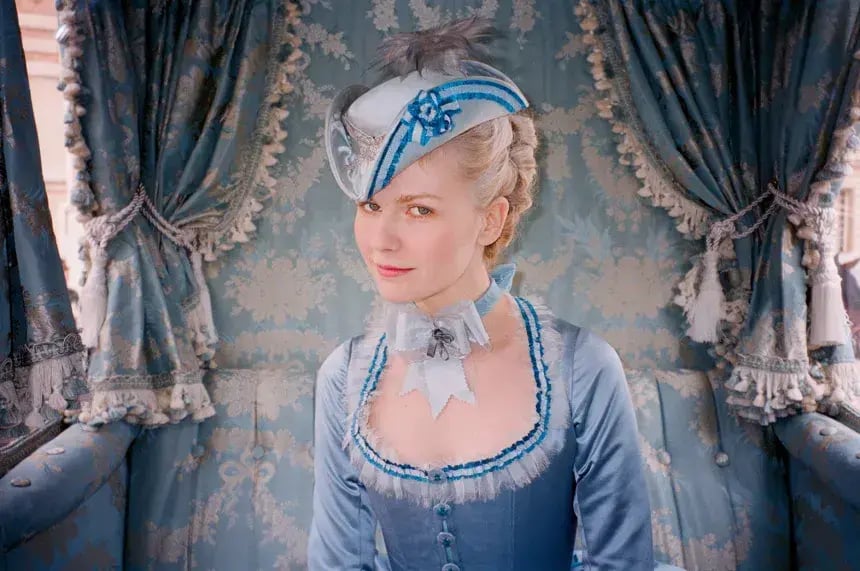
When the film premiered at Cannes, it was famously booed, with many critics dismissing its aesthetics and modern needle drops as a frivolous take on history. Yet, looking at the physical remnants of this cinematic world, it is clear why the movie has evolved into an undisputed cult classic that feels far more resonant today than it did in 2006.
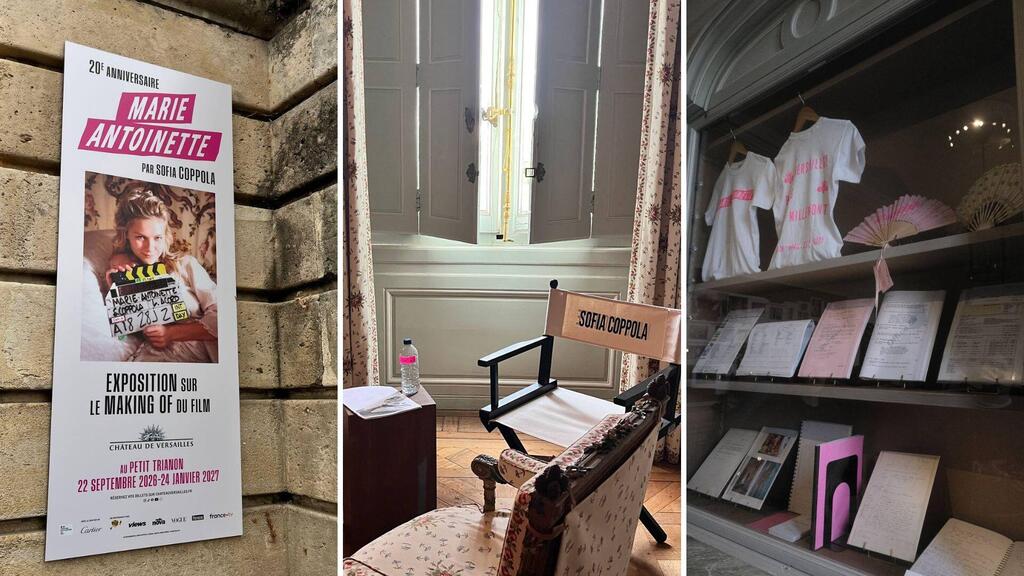
From 'Marie Antoinette' 20th anniversary exhibition
(Photos: Anna Laskov)
The film’s famous anachronisms, like the flash of pale-blue Converse sneakers in the iconic "I Want Candy" montage with its dizzying blur of neon-pink pastries and frantic shoe shopping, were never careless accidents. Coppola wasn't interested in a textbook biopic. Instead, she focused entirely on atmosphere and emotional truth. She painted a timeless portrait, translating the crushing boredom and anxiety of being a teenage girl trapped in a gilded foreign cage into a visual language of consumption modern audiences could instantly feel.
"Her shopping for shoes when she was feeling down, after her husband rejected her physically and court members gossiped and criticized her, didn't seem so different from the women I had seen shopping in Beverly Hills," Coppola writes in her opening message welcoming visitors to the exhibition. She made the distant past visceral and relatable by speaking the universal language of girlhood. By shifting the lens away from a vilified queen and onto an isolated young woman, Coppola transformed how we view both Marie Antoinette and Versailles itself.
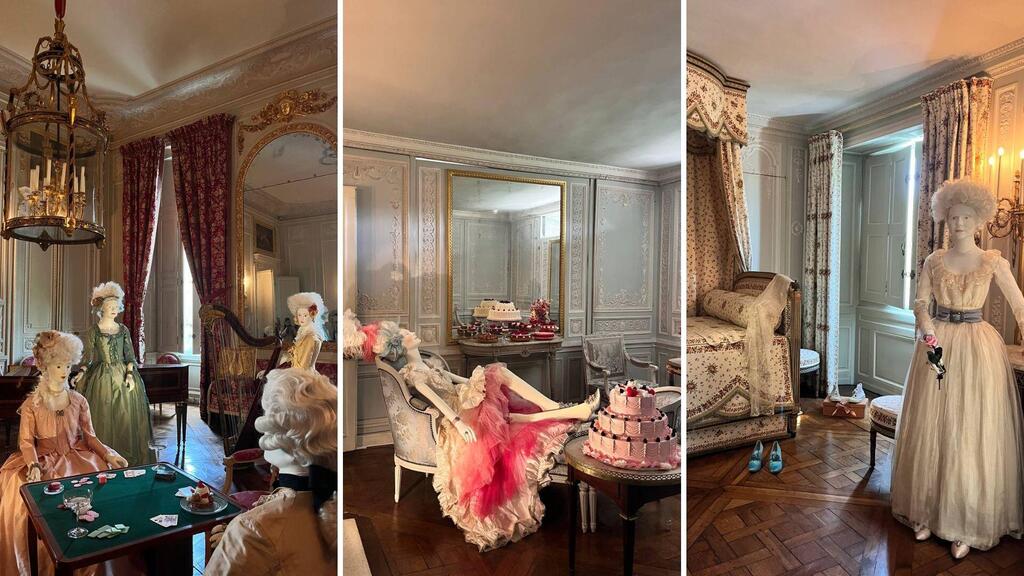
Milena Canonero's Oscar-winning costumes, custom Manolo Blahnik shoes and tucked away Converse sneakers; from 'Marie Antoinette' 20th anniversary exhibition
(Photos: Anna Laskov)
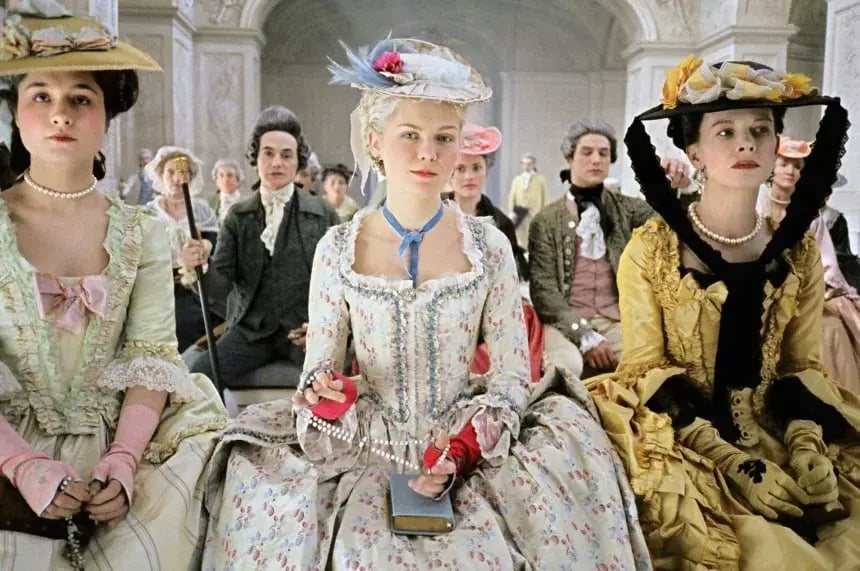
On the set of 'Marie Antoinette'
(Photo: Columbia/American Zoetrope/Sony/Shutterstock)
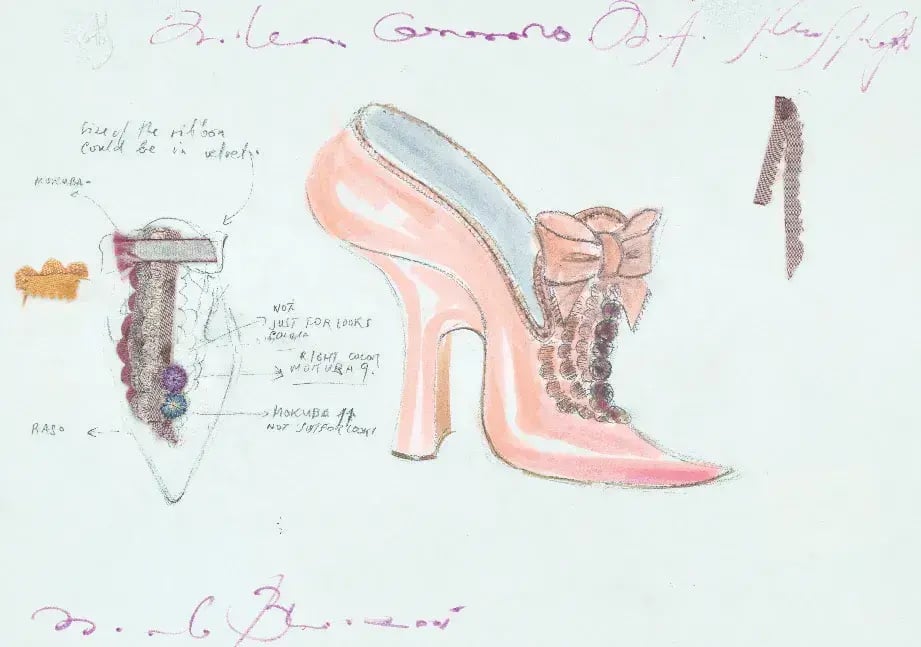
From 'Marie Antoinette' 20th anniversary exhibition
(Photo: Courtesy of Manolo Bahnik)
Wandering through the rooms of the Petit Trianon, you are surrounded by the sheer scale of the production's craftsmanship. All the meticulous details, from early mood boards and scripts to the props and costumes, make it obvious why the film continues to find new life on social media with younger generations who finally see it for what it always was: a sharp statement about youth, public spectacle and media scrutiny. It’s no wonder the film is now receiving a global 4K theatrical restoration and a companion documentary, "Making Marie Antoinette," assembled from hours of behind-the-scenes footage shot by Coppola’s late mother, Eleanor.
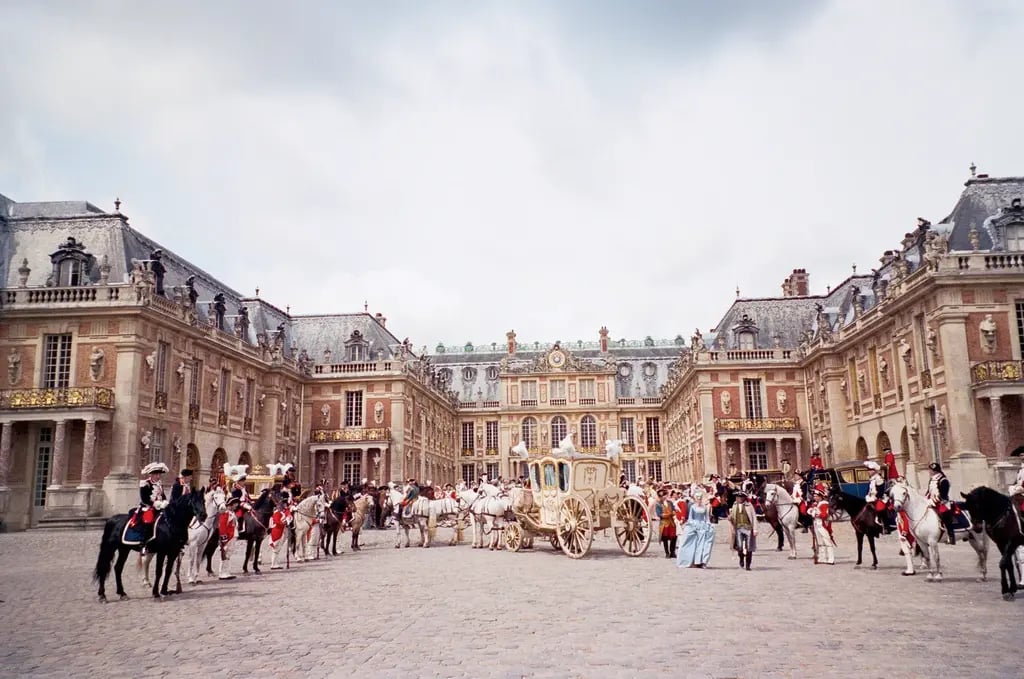
On the set of 'Marie Antoinette'
(Photo: Andrew Durham, MACK)
Amidst the wigs and jewels, one specific item captured my attention. Tucked away in the displays was a letter to Lady Antonia Fraser, the author of "Marie Antoinette: The Journey," the biography that inspired the film. Written by Coppola five years before the film’s release, the letter serves as a clear mission statement.
"Dear Lady Antonia, I'm going to make a film of Marie Antoinette, and as your book is the best one, I would love to work from it. I know I will be able to express how a girl experiences the grandeur of a palace, the clothes, parties, rivals, and ultimately having to grow up. I can identify with her role of coming from a strong family and fighting for her own identity. Your book is full of life, not a dry historical drama, and this is what I want to bring to the film interpretation," Coppola writes. It is impossible to deny that she delivered exactly what she promised.
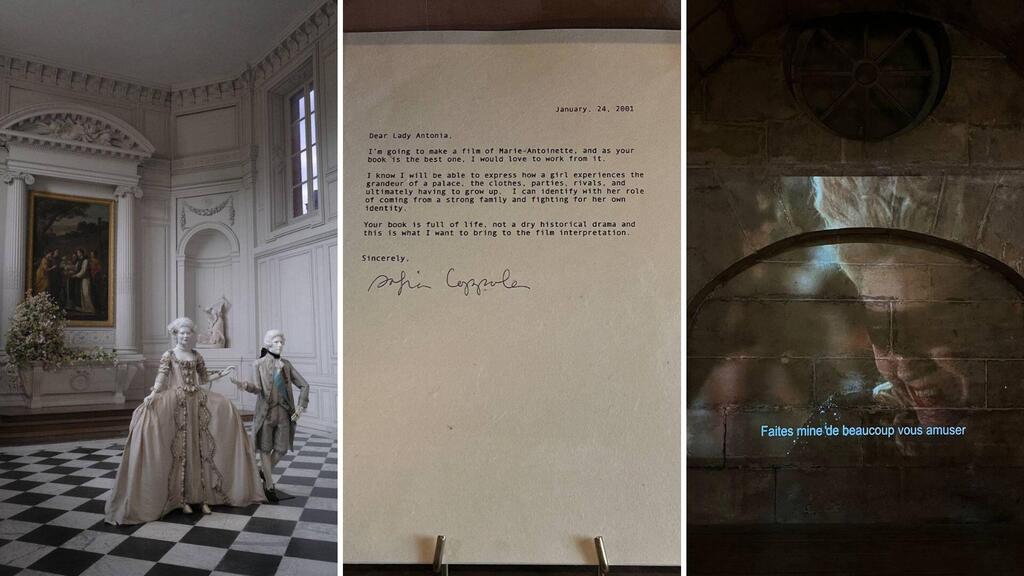
Mannequins wearing costumes from the film; Sofia Coppola's letter to biographer Antonia Fraser; the film projected directly onto the stone walls of the château
(Photos: Anna Laskov)
Yet, the most captivating part of the exhibition might be the collection of behind-the-scenes photography by Coppola’s friend, Andrew Durham. Shot on a pocket-sized Contax 35mm camera, his candid photos capture a fascinating collision of eras: Kirsten Dunst and Jason Schwartzman in full royal regalia huddled over an early-2000s Apple PowerBook, or extras in powdered wigs sharing wired headphones plugged into an iPod Classic. Looking at these images evokes a bittersweet nostalgia, not just for the 2000s, but for an era of filmmaking that feels increasingly out of reach.
In today's landscape of slashed budgets and digital green screens, the idea of an entire cast and crew taking over Versailles for 19 days feels like a fantasy. Standing in the exhibition, you aren't just looking back at the making of a movie; you are presented with a time capsule of cinematic ambition and excess that simply doesn't exist anymore.
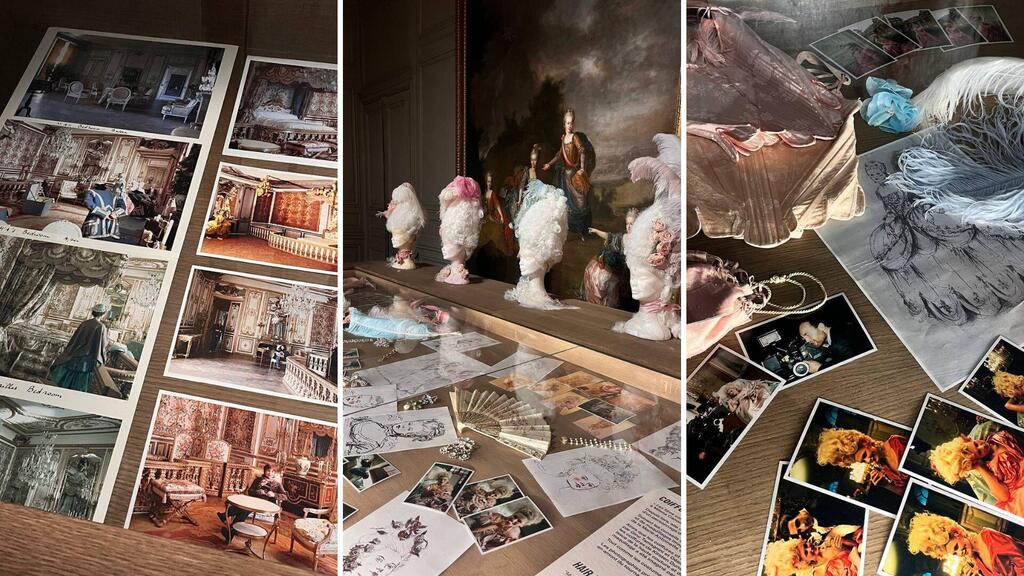
Elaborate wigs and costume details are displayed alongside behind-the-scenes photographs; from 'Marie Antoinette' 20th anniversary exhibition
(Photos: Anna Laskov)
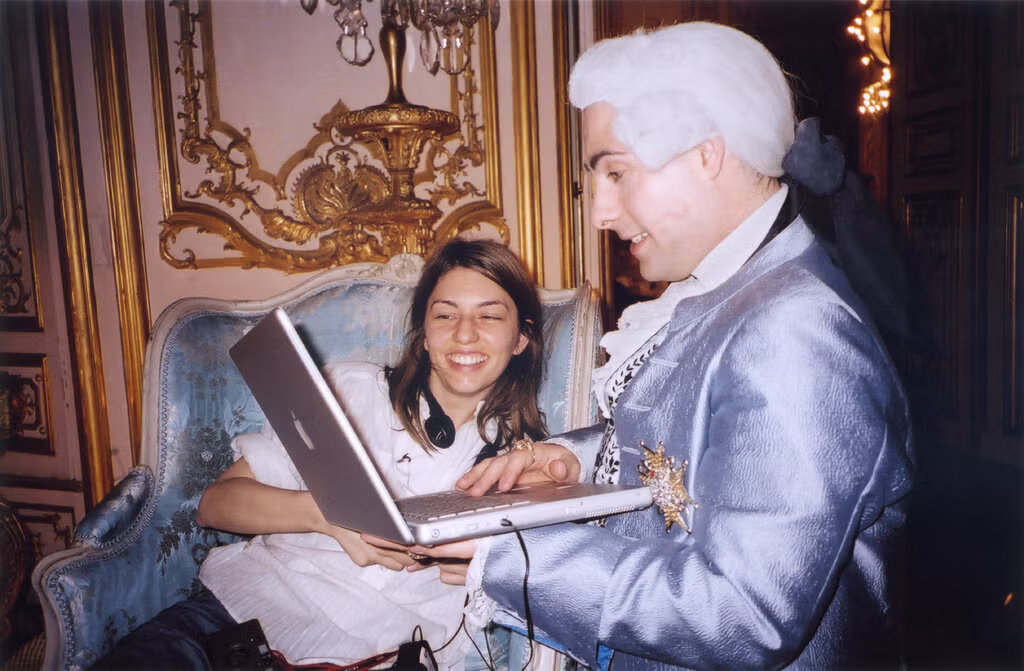
Sofia Coppola and Jason Schwartzman on the set of 'Marie Antoinette'
(Photo: Andrew Durham)
Twenty years later, it is frankly absurd to imagine this movie being booed. For Gen Z audiences, this exact style of filmmaking has simply become the norm. Period pieces set to modern music, characters speaking in contemporary vernacular and deliberately unrealistic, modernized costuming are now beloved staples of the genre.
You can see the DNA of "Marie Antoinette" everywhere: it is the undeniable blueprint for recent Jane Austen adaptations or projects like Netflix’s "Bridgerton," Apple's "Dickinson," Hulu's "The Great" or Amazon's "My Lady Jane." What was once written off is now widely celebrated as fun, multilayered storytelling. Coppola was simply too early. She took the initial critical beating, but in doing so, she kicked the door wide open for an entire generation of creators to play with history.
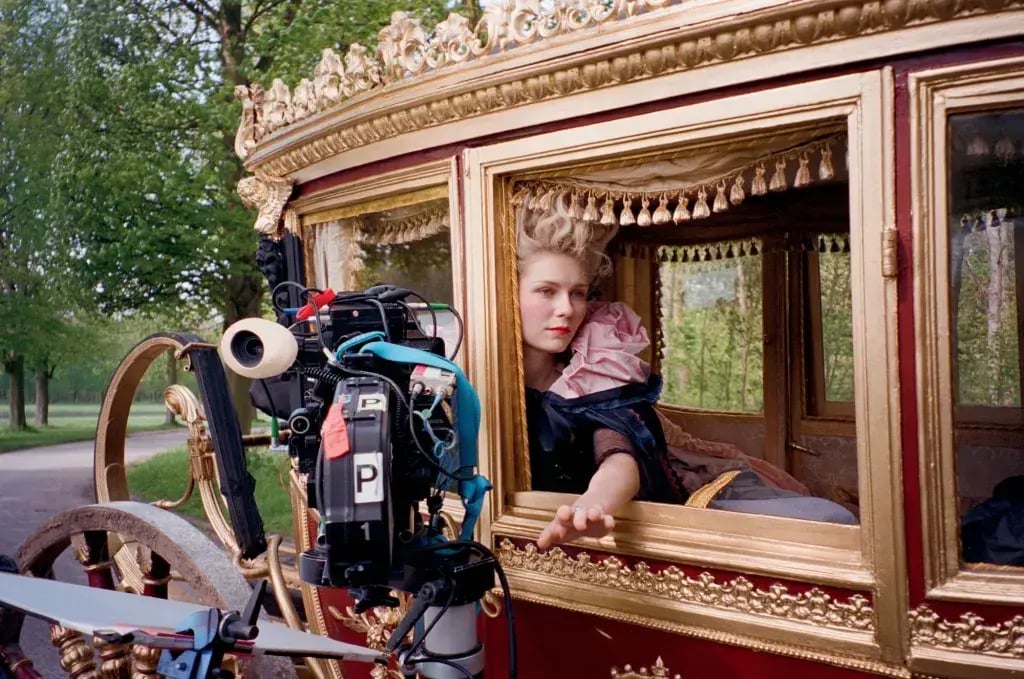
Kirsten Dunst on the set of 'Marie Antoinette'
(Photo: Andrew Durham, MACK)
Coppola herself acknowledges this irony in the exhibition's introductory message. "At the time the movie came out, critics dismissed it as a fluff and were offended by the modern music," she writes, adding that she appreciates that it is still watched today. She notes that Fraser's biography was also considered "radical for looking at the queen as human," dispelling the myth of the heartless monarch who destroyed a country, and replacing it with a teenager navigating extraordinary circumstances.
If you happen to find yourself in Paris before January 24, 2027, this exhibition is an absolute must-see. It offers a chance to step inside a beautifully crafted fantasy while discovering something deeply human and real.