

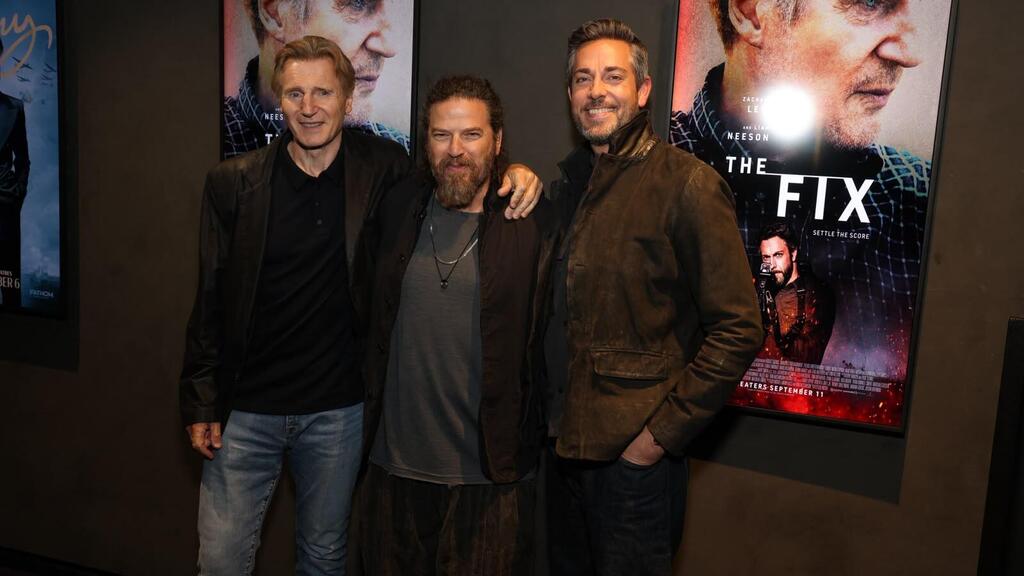
When Israeli director Guy Moshe arrived in New York for a press event promoting his new film, The Fix, he was particularly excited. The filmmaker, who has worked in Hollywood for decades, was joined by the movie's two stars, Zachary Levi and Liam Neeson. "I went to a large studio that produces a lot of online content," Moshe recalled. "There were about 20 to 25 people working on a large floor, young men and women. When I arrived, everyone welcomed me warmly. They all came over to meet me and were very nice. Then the interviews began, and I mentioned a little about my military background because it was relevant to the film. The moment I said I had served in the Israel Defense Forces when I was young, the whole vibe changed."
The atmosphere, he said, shifted dramatically. "Suddenly, you could cut the air with a knife. Everyone looked at me completely differently. I know I wasn't imagining it. Before we started promoting the film, we had joked about whether I should mention my military service, because before October 7, having that kind of background was actually considered an advantage in Hollywood. I served 30 years ago. Who cares? And the film isn't political at all, but it did affect the way people responded to it."
Moshe finds the reaction particularly frustrating because his film is critical of the United States and explores how countries betray the soldiers who serve them. "But suddenly, none of that seemed to matter. There's an Israeli director who once served in the military, and immediately the film is labeled jingoistic. Meanwhile, two Israelis make a film comparing IDF soldiers to Nazis and receive applause around the world. That hurts, and it's deeply unsettling," he said, referring to the film NAZA. "It's not as though I suddenly can't work in Hollywood, but it was one of those 'wow' moments. I'm not eager to talk about it, but I'm not hiding either. I didn't expect it to be like this."
Moshe was in Israel this week, dividing his attention between the elections and the Israeli premiere of The Fix, released locally under the title Code Name Tehran, which opened in theaters Thursday. He has lived in the United States for 29 years, including 24 in Los Angeles, quietly building a steady career as a producer, writer and director in Hollywood. By the time he was discharged from the IDF's Samson unit, which operated in Gaza before the Oslo Accords, he already knew he wanted to move to the other side of life and become an artist and filmmaker. But first, he had one more test to pass.
"I immediately received two pretty crazy job offers," he recalled. "One was to train soldiers in Congo, and the other was to serve as a bodyguard for some oligarch in Russia. As a frontline combat soldier, I earned 400 shekels a month during my regular service. Then I left the military and suddenly people were offering me $10,000 and $15,000 a month. For a split second, it was tempting. It was almost like being Humphrey Bogart in Casablanca, only in real life."
Beyond the money, Moshe admits there was something profoundly seductive about the security world itself. "Two years into my military service, I really loved it. People talk about being gung-ho, but I think that misses the point. There's something philosophical about waking up in the morning believing you're working for the good guys. It's not political at all. Everyone believes they're working for the good guys. Even then, when I was young, I knew that if I'd been born on the other side, I would have become a fighter there. You have a mission, a purpose, a calling. You know that, ultimately, you're trying to save lives, and we really did save a lot of people."
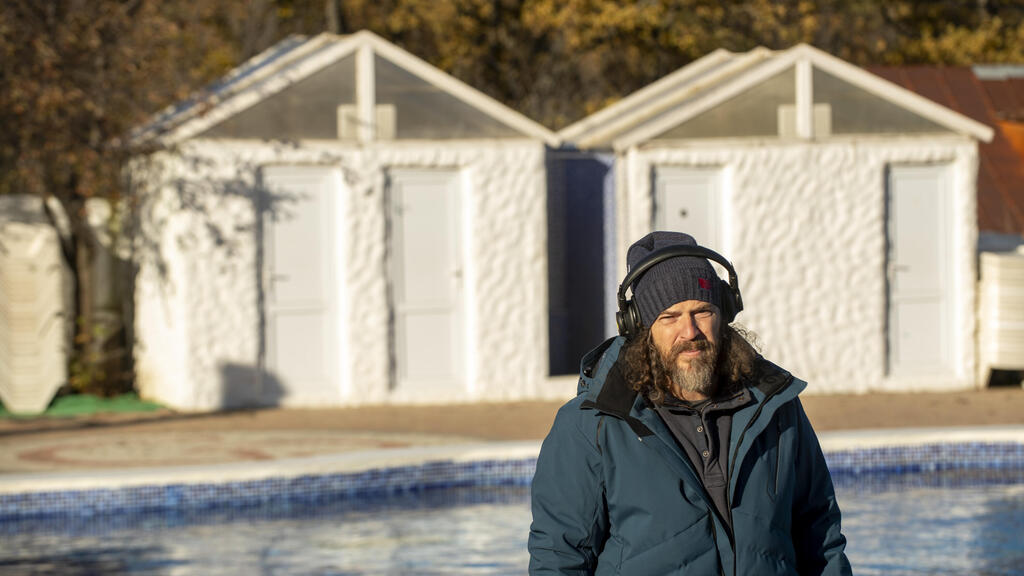
'Suddenly, you could cut the air with a knife. Everyone looked at me completely differently': Guy Moshe behind the scenes of The Fix
(Photo: Courtesy of Tulip Entertainment)
But that sense of purpose also came with an intoxicating feeling of invincibility. "Every time you come back from a mission unharmed, which is entirely a matter of luck, you subconsciously begin to feel invulnerable, as though nothing can touch you. It's an intoxicating sense of power, almost like a drug. So for quite a long time, I thought I'd be happy to devote my life to the security establishment because I simply loved that feeling. When you grow up in Israel and watch Rambo, instead of wanting to become a movie star, you can actually want to become Rambo himself."
In Israel, unlike Hollywood, there is even a path toward that kind of life. Moshe believed he was following it during his compulsory military service, until the rapidly changing situation in Gaza made him question the chain of command and the obligation to obey orders. "I was only 21, and it bothered me. I decided to pursue art, and for a long time I was reluctant to deal with those subjects. When I arrived in Hollywood and people knew a little about my military past, I didn't want my manager to start marketing me that way. Only in recent years have I felt that enough distance has developed between me and that past, and that I finally have something to say."
The soldiers a country leaves behind
Moshe's reflections on military service have found their way into a film that has nothing to do with Israel. The Fix was inspired by an urban legend he heard from a CIA agent. According to the story, following Iran's 1979 Islamic Revolution, two CIA agents fled the American Embassy carrying a large amount of cash. They checked into a hotel, broke through a wall and buried the money inside. The legend has it that the money remains hidden there to this day. "I thought, 'That sounds pretty cool,'" Moshe recalled. "But then I was handed this enormous screenplay that was trying to be Ocean's Eleven. I politely told them, 'I really like the premise, but I don't think the script is good.' I managed to convince them to let me rewrite it completely from scratch."
The Fix follows a group of veterans from an elite U.S. military unit who return angry and emotionally shattered by the disastrous American withdrawal from Afghanistan in 2021. They channel their frustration into a decision to travel to Tehran and recover the legendary millions. Naturally, things get complicated, and the men discover that they cannot truly escape moral questions or their own identities. There is also a major twist. Levi plays the tough, trauma-haunted leader, while Neeson portrays the aging commander they all admire. "I wanted to make a film that would still be fun and entertaining," Moshe said, "but also give it a little more depth and explore what it means to belong to a group of men who have been through so much together in war."
The film takes a clear-eyed look at how countries treat soldiers returning from the places they have been sent to fight. Yet Moshe insists he does not harbor anger toward the people who sent him into combat. "It's very easy to criticize governments and politicians, no matter which side of the political spectrum they're on. Even when you understand why your enemy sees you the way they do, ultimately, if you have no choice, you have to defend your own people. The people a country chooses to put on the front lines sacrifice an enormous amount, but they're probably also suited to that role because something within them, in their psychological makeup, actually wants it. Certainly if they do it for a long time."
Still, his reflections suggest a deeper struggle with the relationship between soldiers and the political decisions that determine their fate. "They say war is an attempt to achieve diplomacy by other means. Toward the end of my military service, my eyes were opened, and I realized that we're essentially pawns on a diplomatic chessboard. It has nothing to do with left or right. You're a grain of sand in this diplomatic hourglass, and until a solution is found, someone has to fight and die. The war between Ukraine and Russia will eventually end, too, and by the time it does, two million people will have been killed, and the solution won't be any different from one that could have been reached two years earlier. That doesn't mean I think nothing is worth fighting for. The philosophical conflict the film raises is that, in certain circumstances, someone has to do that job."
In the film, that conflict manifests itself through veterans so embittered by their experiences that they decide to take money that does not belong to them, convinced they deserve compensation for everything they have endured. Moshe sees parallels in real life, where former soldiers who initially served out of idealism later enter the private sector and earn millions in security-related work. "The more you sacrifice, the more you develop this feeling that you deserve something in return. In the film, we give them a little reward that appeals directly to their egos. They try to do something good so they won't feel too dirty about what they're doing."
Working with Liam Neeson and Zachary Levi
As is often the case in Hollywood's independent film industry, the road to the screen was a long nightmare. Moshe wrote the first draft in late 2022 and began putting together financing. The screenplay started circulating among agents and eventually reached Zachary Levi, who had built his career playing characters such as the superhero in Shazam! and the title character in the television series Chuck. Not exactly the kind of actor associated with undercover military operations.
"I met him and saw this guy who's 1.94 meters tall (6 feet 4 inches), a very imposing man, intelligent and extremely opinionated. I wouldn't say arrogant, but very self-confident, almost excessively so. And that fit the character I'd written perfectly. I immediately asked, 'How has nobody cast you in a role like this before?'"
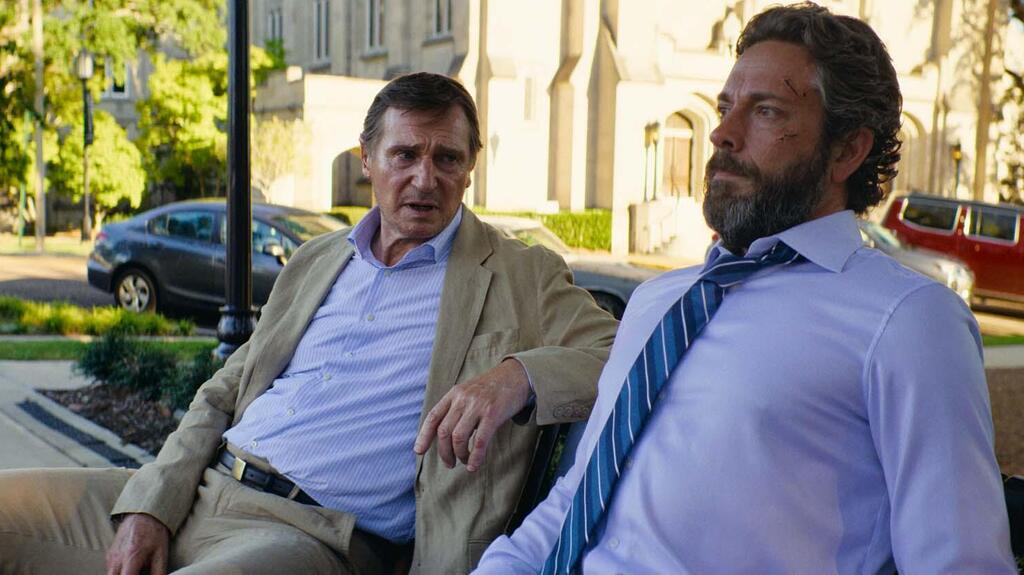
The Fix
(Photo: Courtesy of Tulip Entertainment)
Moshe has a track record of securing substantial budgets and attracting major names to his films. His 2010 action-fantasy film Bunraku starred Josh Hartnett, Demi Moore and Woody Harrelson. His 2020 dystopian science fiction drama LX 2048 featured Delroy Lindo and James D'Arcy. This time, he landed Liam Neeson, an actor whose screen presence could lend the project considerable weight even in a supporting role.
"This isn't a classic Liam Neeson movie where he saves the world," Moshe said. "He doesn't even hold a gun, but he brings all his gravitas to the role. We wanted to cast a big name, and he was at the top of our list. I didn't believe he'd agree because he hardly ever takes supporting roles. But I've been fortunate enough that when I offer someone a script, they take it seriously. He read it, and we spoke on the phone for two hours. They say you should never meet your heroes, but this was the opposite. I don't have enough words to describe how much I loved him as a person. Generous, intelligent, sensitive, charming, without any pretensions. What I've discovered throughout my career is that the more accomplished actors are, and the more comfortable they are with themselves, the more willing they are to listen, provided they feel the director knows what he's doing."
On set, Neeson proved meticulous about everything from costumes and props to rehearsals. Moshe described him as a consummate professional, despite a career that has included highly lucrative films in which, by his own account, he did not always invest the same attention in his performances. After they became better acquainted, Moshe cautiously asked him about those projects.
"He told me, 'At the beginning of a film, I test the director, and I have a lot to say. But if I come in and try to offer some input and the director dismisses me, then he's not worth my effort, and I switch into a different mode.' He says his job is to stand in front of a camera and make you feel as though there's no camera there, and that every line he delivers sounds like something real coming out of a real human being. That's incredibly difficult to do. Working with him was a pleasure, and we're looking for something else we can do together."
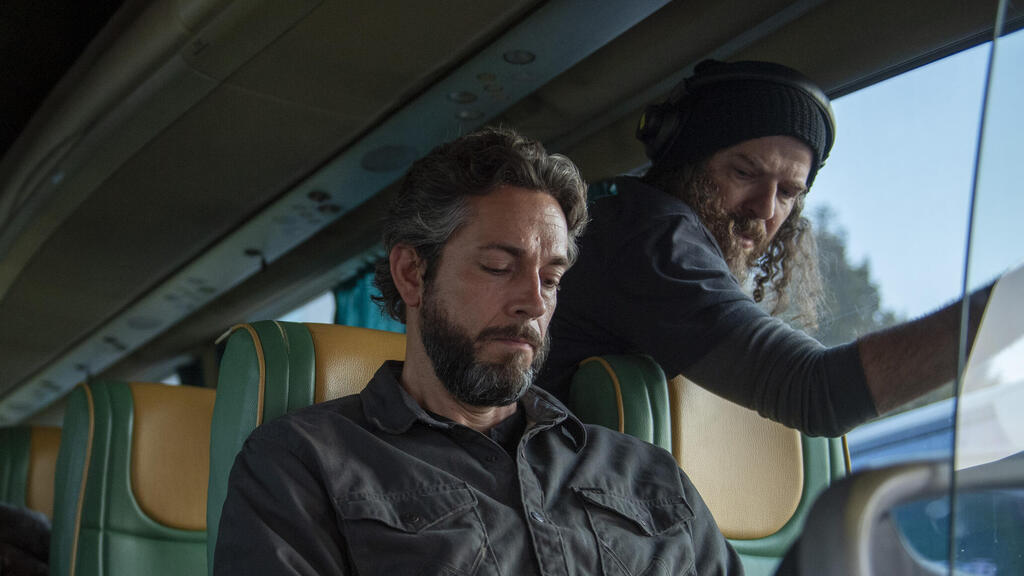
Guy Moshe and Zachary Levi on the set of The Fix
(Photo: Courtesy of Tulip Entertainment)
Part of Moshe's ability to attract major actors to independent productions, he believes, stems from an unusual experience early in his career. While studying filmmaking in New York, he worked as a security guard at the Israeli consulate to finance his education, a job that brought him into close contact with prominent figures, including Hillary Clinton. "It's a fascinating dynamic. You're standing next to someone famous whom you don't know personally, and you're there, potentially, to take a bullet for them. So they respect you, even though you're essentially a fly on the wall. I worked with Hillary Clinton and other major figures, and you realize that, at the end of the day, everyone is human."
That experience shaped the way he approaches actors. "From the beginning of my career, I've tried to meet these people as equals and respect them as I would respect anyone else, while respecting myself just as much. I don't diminish myself, and I always arrive with confidence. Liam Neeson is in his 70s, so I immediately have respect for someone older than me. He's gentle and generous, and I'm aware of his standing. Zachary Levi has a completely different personality, so working with him is a different process. Ultimately, it's about trust. These actors need to feel that you'll protect them and won't embarrass them with the final result."
October 7, his son's decision and Hollywood's changing culture
On October 7, 2023, Moshe began calling friends in Israel to find out whether he could return to military service. "Of course, they laughed at me," said the 52-year-old filmmaker, who is married to Karin and has three children. "One friend told me, 'Stay there and send money.'" Someone who did take those conversations seriously was Moshe's son, then 15, who decided to immigrate to Israel and pursue service in an elite military unit. "He was born in the United States. He's completely American. He wasn't obligated to do anything," Moshe said. "And I'm the last person in the world who would have pushed him in that direction. I guess it's in his DNA."
Although the October 7 Hamas attacks did not directly shape the film, Moshe said his son's decision weighed heavily on him throughout production. "By that stage my son had already begun the process of moving to Israel, and I knew he was heading into something very dangerous. It was constantly on my mind. Although there are situations in the film drawn from my own military experience, and characters who are composites of real people I've known, I was very careful to make sure I was creating something authentically American rather than forcing American characters into Israeli experiences."
To ensure that authenticity, the production employed former U.S. Navy SEALs as military advisers. Their approach sometimes differed sharply from Moshe's own experience in the IDF. "We had advisers who had served in the Navy SEALs, a little younger than me. There was one scene where they told me, 'This doesn't make sense. We would never enter a house where there's that level of danger.' And I'm looking at them thinking, 'What are you talking about?!'"
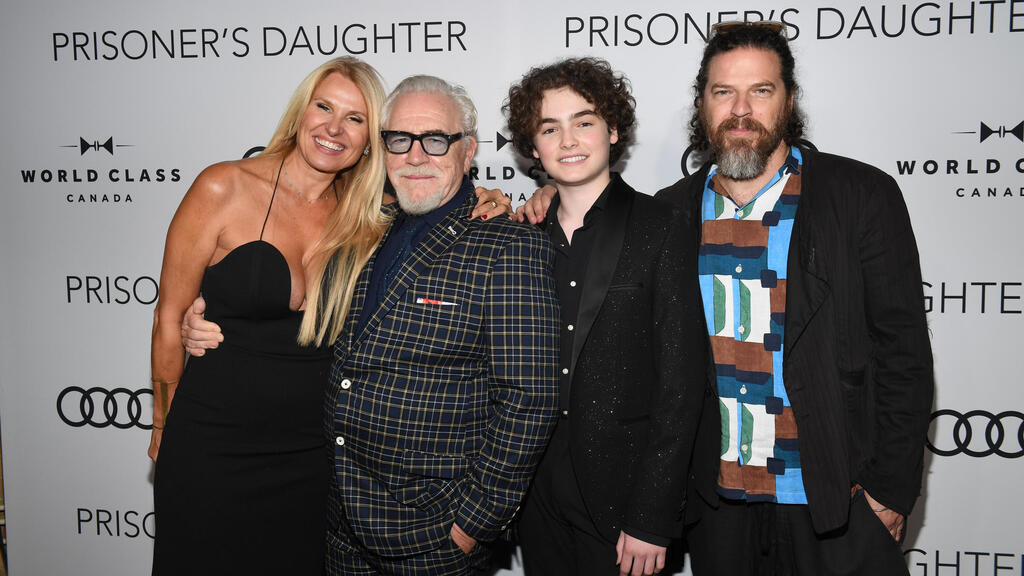
Guy Moshe, right, with actors Brian Cox and Christopher Convery and producer Marina Grasic
(Photo: Sonia Recchia/Getty Images )
His visit to Israel has also given Moshe time to consider the future. He is working on several projects, but he is increasingly troubled by the direction cinema is taking, particularly what he sees as an industry unwilling to tolerate moral complexity or uncomfortable perspectives. "My entire love of filmmaking, and everything that made me want to work in cinema, came from a desire to create thought-provoking films. But today everything is black and white. There's no room for gray. I'm trying to figure out where the kind of cinema I most love to watch has gone."
Moshe points to the hostile reaction surrounding Digger as an example of the problem. "It really pains me to see a film like Digger come out and everyone trying to destroy it. If people keep responding to films like that, all we'll be left with is Batman 25, or Top Gun, a movie where they go off to attack a country that doesn't even have a name so nobody gets into trouble."
Despite building his career in the United States, Moshe remains eager to make a film with Israeli actors, particularly in Hebrew. He has explored several possibilities over the years, though none has materialized. The biggest obstacle, he suggests, may be the Israeli industry's own perception of filmmakers who have established themselves abroad.
"It took me a while to understand that the Israeli film industry looks at you with a certain suspicion if you work in Hollywood and suddenly want to make a film here. You say, 'I want to do something here,' and everyone immediately thinks, 'Wait a minute, why is he replacing the engine in his car? What's going on? Is something wrong? Why does he want to work here if he's already working in Hollywood?'"