

This is a real earthquake at the most prestigious club in Israeli sport. On Thursday, Maccabi Tel Aviv’s future looked completely transformed when ynet revealed that the Federman family had reached an agreement in principle to sell their shares in the Maccabi Tel Aviv basketball club to the Wilf family, Jewish‑American billionaires. After decades during which the Federmans—first David and later his son, Danny—were a major force in the club’s management, the club is now clearly headed toward a new era. But plenty of questions remain: How will the buyers enter? How will the ownership structure change? How much will the deep‑pocketed purchasers invest? And is this just the first step toward full American takeover of Maccabi Tel Aviv?
The mechanism by which the Federmans will transfer control of their 29 % stake in Maccabi Tel Aviv is via a joint company. The share transfer will proceed on a club valuation of $150 million. According to Yedioth Aharonot, this partnership will not be symmetrical: the Wilf family—brothers Mark and Zygi, and their cousin Leonard—will hold control, and the Federmans will become limited partners.
Gallery
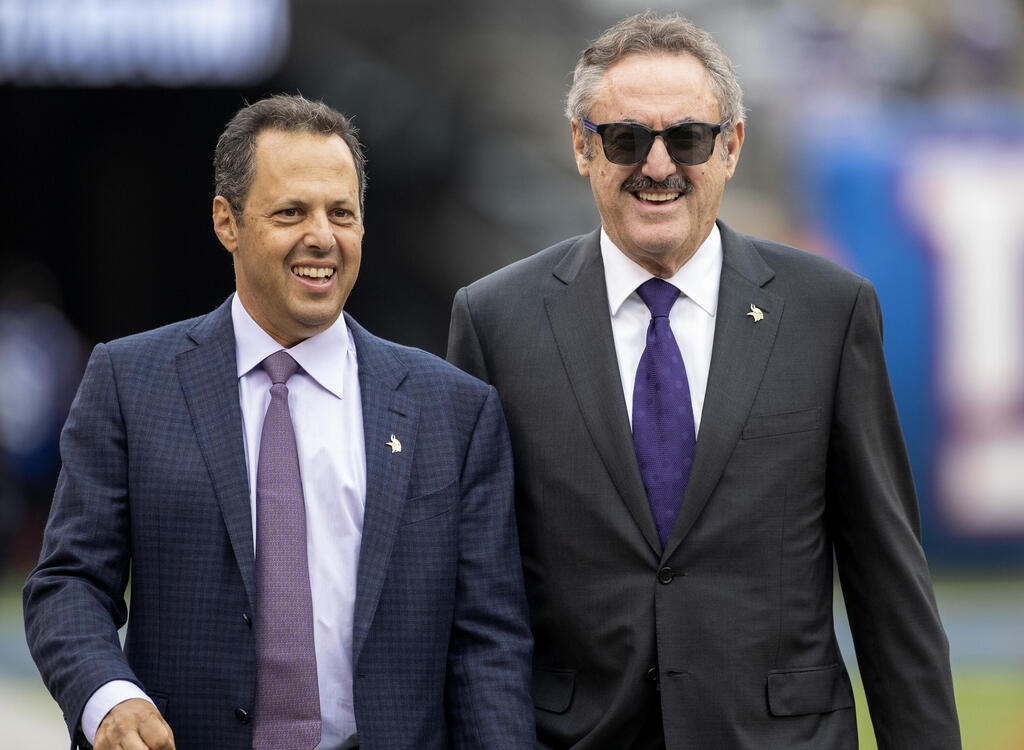
Brothers Zygi and Mark and Wilf are candidates to buy Maccabi Tel Aviv
(Photo: Carlos Gonzalez/Star Tribune via Getty Images)
The implication: the Americans will make the decisions in that company, and in effect will control 29 % of Maccabi Tel Aviv’s shares; while the Federmans are not totally out of the club, they will no longer hold shares directly nor bear decision‑making responsibility—neither in the club itself nor in the new company that the buyers will establish.
If the deal indeed goes through, this could be the first swallow of a massive revolution at Maccabi Tel Aviv. The Wilf family may not immediately obtain full control of the club, but many within the club believe they will not be satisfied with what the Federmans are relinquishing, and intend to purchase additional shares from other owners until they dominate the club.
Discordant owners and financial crisis
Currently the ownership structure is complex and convoluted: the Federman family holds 29 %, as does the Recanati family (Oudi and his son Shai). The Jewish‑American businessman Richard Deitz holds 17.5 %, the club chairman Shimon Mizrahi holds 14.5 %, and the Israeli‑American businessman Ben Ashkenazy holds 10 %.
In truth, since Deitz and Ashkenazy joined in 2013 there has been no change in ownership. The other owners—the Federmans, the Recanatis and, of course, chairman Mizrahi—have led Maccabi Tel Aviv for decades. That level of stability is extremely rare in the sports world. Over the years they received multiple offers from Israeli and foreign businessmen wanting to join the club, and they turned them all down.

The other owners: Mizrachi, Federman, Ashkenazy
(Photo: Oz Moalem)
Yet, the multiplicity of owners and the way the finances have been managed in recent years have greatly hindered the club—especially when it comes to decision‑making and owner investment. Under the agreement between them, any decision to inject private funds into the club (to increase the budget or cover deficits) requires all owners to put money in, each according to their share. In other words, if the budget rises by 10 %, the Federmans and the Recanatis must contribute more than the other owners.
This kind of ownership structure hampers the club in a time when not only EuroLeague clubs are increasing their budgets and spending huge sums on players, but also during a war that has lasted two years and severely damaged revenues. Maccabi Tel Aviv cannot keep pace with EuroLeague growth, and this is visible both in the quality of the roster it can field and its sporting achievements. Its professional decline also hurts the brand — which, for decades, was not just Israel’s strongest sport team but one of Europe’s most prominent basketball clubs.
Maccabi Tel Aviv has suffered heavy financial losses in recent years. According to individuals in the club, already during 2016‑2019 it endured an average annual deficit of 20 million shekels, which the owners had to cover. Next came the COVID period, and after that the war deepened the financial hole to about 30 million shekels a year. As a result, the owners increased their private investment, yet that only sufficed to maintain the club’s financial status quo — even as European basketball entered an arms‑race of ever‑higher budgets.
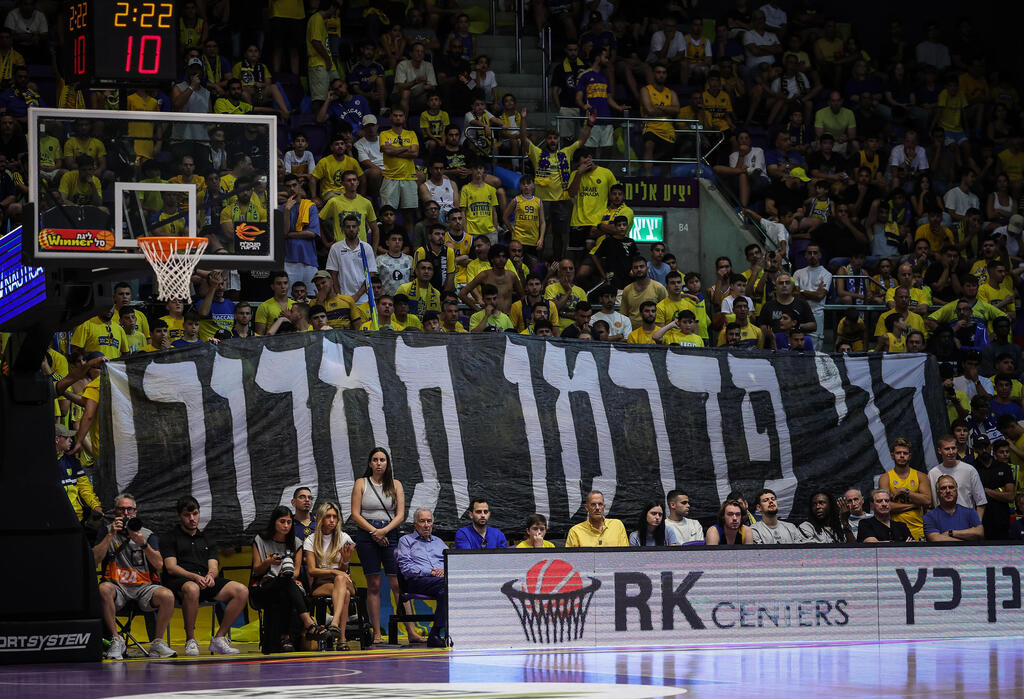
Maccabi Tel Aviv fans have directed their anger toward the Federmans
(Photo: Oz Moalem)
As if that were not enough, the relationship between the leading owners—Federman and Recanati—fell into serious crisis. Their relations have been troubled for years, but the economic and professional difficulties caused deterioration, and completely severed in March. The two sides exchanged accusations over disagreements around owner investments, and the Greek site Gazeta even reported that the Federmans were considering diluting their stake and selling some shares to one of the other owners.
The Federmans denied the report at the time, but they already understood that there was no escape from a significant change in ownership, and that if it did not occur Maccabi Tel Aviv would reach a dead end, and the professional and financial crisis it was in would worsen.. The condition of the father, David, aged 81 and who suffered a heart attack in 2019, also contributed to his decision to begin stepping out of one of his life’s projects. In parallel, the growing anger of the fans over the club’s management was directed mainly against Danny Federman.
New blood and big money
Shortly after the report in Greece, it became clear via ynet that a businessman was interested in acquiring control of the club—but while the Federmans agreed to sell their part, the Recanatis and Mizrahi refused to change the ownership structure. Even then it was already about the Wilf family: talks between them and the Federmans began about six months ago.
Only recently have the parties reached a principal agreement—but in a format different to the one offered half a year ago. Contrary to the original proposal—transferring the core of control entirely to the American buyers—a Wilf‑Federman partnership will be established that does not require approval of the other owners. In doing so, according to people familiar with the deal details, a real opportunity is created not only to bring new blood and money into the club, but to conduct a revolution that will elevate Maccabi Tel Aviv and bring it back to its former heights.
The Wilf family’s estimated value is about $10 billion—owners this rich have never entered Israeli sport before. And it isn’t just deep pockets: the fact that the family has owned the NFL’s Minnesota Vikings (valued at over $6 billion) for 20 years and from 2021 also the MLS team Orlando City SC shows they know what they’re doing in managing high‑profile sports clubs. People at Maccabi Tel Aviv believe they are not entering the club just to perpetuate a situation where it doesn’t even compete for a EuroLeague playoff spot—but to enact a dramatic change that will return it to the top of the EuroLeague, both financially and athletically.
If that is indeed their intention, it will make it easier for them to complete, later on, the takeover of Maccabi Tel Aviv. The Wilf family will be able to push for greater financial injections into the club. The other owners will likely be unable or unwilling to contribute similar sums and will need to dilute their shares—or sell their shares completely. Otherwise, Maccabi Tel Aviv will remain stuck, especially if the EuroLeague spending spree continues apace.