

The phone call came early on Oct. 7, and it was blunt.
“My partner called me and said he was wounded and at Ichilov Hospital,” recalled Gali Shachar. “He’s a combat officer who was fighting that day against Hamas terrorists near the Gaza border.”

When she arrived at the hospital, she learned how close he had come to being killed. A bullet roughly 2 centimeters long had entered through his nose and stopped near his eye socket. “His life was saved by a miracle,” she said. After a little more than a week, he returned to fighting.
Around the same time, Shachar, then 22, began feeling unwell. At first, she brushed it off.
“I had stomach pains, but honestly, who didn’t in those days?” she said. The symptoms worsened. Her abdomen swelled. She developed diarrhea, night sweats and crushing fatigue. She attributed it to stress, sleepless nights and constant worry about her partner, who remained in combat.
“I had nightmares that something would happen to him,” she said. “I was exhausted all the time, but I linked it to not sleeping.”
Eight months later, when her partner was finally released from service, Shachar thought the worst was behind her.
“I told my mom, ‘I’m in the best period of my life,’” she said. She was preparing to fly to Italy with her family. Before the trip, her partner insisted she get checked. “He said, ‘It doesn’t make sense that you’re still in pain from stress. I’m already home.’ I listened.”
Just before boarding the plane in May, Shachar received her diagnosis by email. She was 23.
“I opened the CT report,” she said. “Because I live in the world of sports and the human body, I understood what I was reading. It said ‘lymphoma,’ with a question mark.”
She immediately messaged her closest friend, who had previously battled Hodgkin’s lymphoma herself. “I wrote, ‘Is it possible I have the same cancer as you? What are the chances?’ It was black humor, but it was also shock.”
Shachar was diagnosed with Hodgkin’s lymphoma, stage 4.
“The injury to my partner on Oct. 7 put everything into perspective,” she said. “I understood that anything is possible. The human body can handle far more than we think. It’s stronger than we imagine.”
Shachar, a model and fitness, yoga and Pilates trainer based in Tel Aviv, has just completed chemotherapy treatments. She was born and raised in Ness Ziona, the younger of two daughters in a family of high-tech professionals. She began modeling at 13 and went on to appear in campaigns for American Eagle, Top Ten, Panta Rei, cosmetics and hair brands, television commercials and commercial projects.
After serving as a physical training officer in the military, she began studying sport therapy at Ono Academic College. Years before her own diagnosis, she supported her best friend through lymphoma and encouraged her to write a book about recovery. “Today, strangely enough, it’s helping me,” Shachar said.
After her friend recovered, Shachar was recommended as a personal trainer for cancer survivors and for patients still undergoing treatment.
“I became a caregiver before I became a patient,” she said.
She began working with people coping with lymphoma and women recovering from breast cancer, even opening a dedicated training group. One comment from a trainee stayed with her.
(Photo: Michal Sharon)
“She said, ‘You feel like you’re living in a body that isn’t yours. Cancer takes everything that felt like it belonged to you,’” Shachar recalled.
Asked whether she identifies with that feeling, Shachar paused.
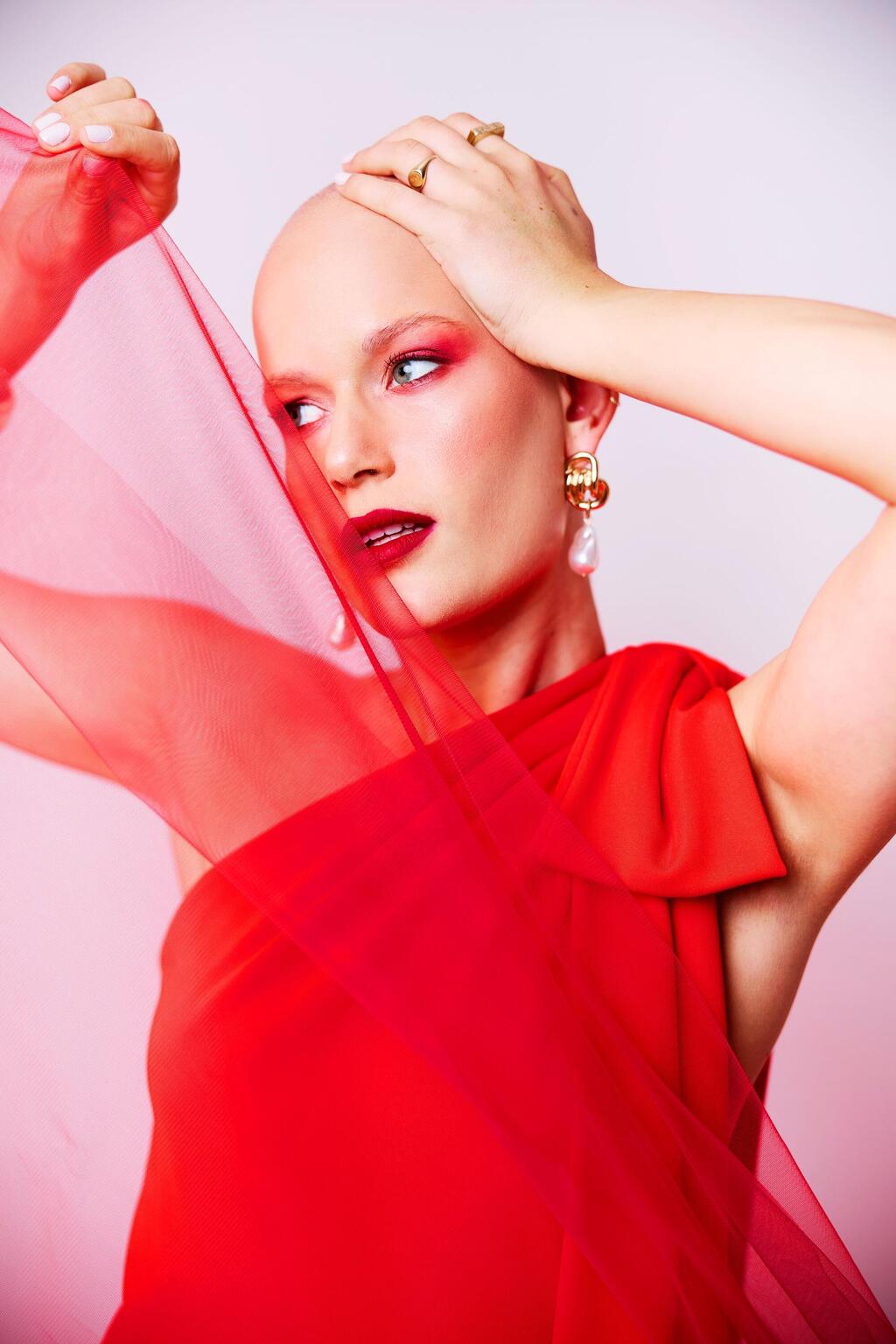
“It’s not simple at such a young age,” she said. “I’m only 23. Losing your hair is a shock, no matter how much you prepare. Hair is the most feminine thing about a woman’s body.”
The diagnosis also affected her career. “Some companies stopped working with me,” she said. “Once they saw me bald and understood I had cancer, they stopped calling.”
Her family struggled with the news. “My parents were terrified,” she said. Her partner, she added, offered unwavering support. “He told me he would walk with me for life, and then said, ‘Gali, I’m alive.’”
In recent months, Shachar has begun sharing her story on social media. The response, she said, was overwhelming.
“I realized how big this phenomenon is,” she said. “So many young people wrote to me that they are sick. In the past two years, morbidity has risen. Today, 10 people between the ages of 18 and 45 are diagnosed with cancer every day in Israel.”
Doctors have told her stress may be a contributing factor, particularly for her type of cancer. Shachar is cautious about such explanations.
“I live an extremely healthy lifestyle,” she said. “Sports have always been my life. During treatments, I even pedaled on a stationary bike in the hospital while chemotherapy was being injected. I eat well, I take care of my mental health — and I still got cancer.”
“So is it because of stress from the war? Maybe,” she said. “But the truth is, we don’t really know.”
In the modeling world, opportunities eventually returned — and with a new focus. Shachar has worked with sports brands and awareness campaigns promoting physical activity during illness, including the “Braid of Strength” project in partnership with Pantene.
(Photo: Michal Sharon)
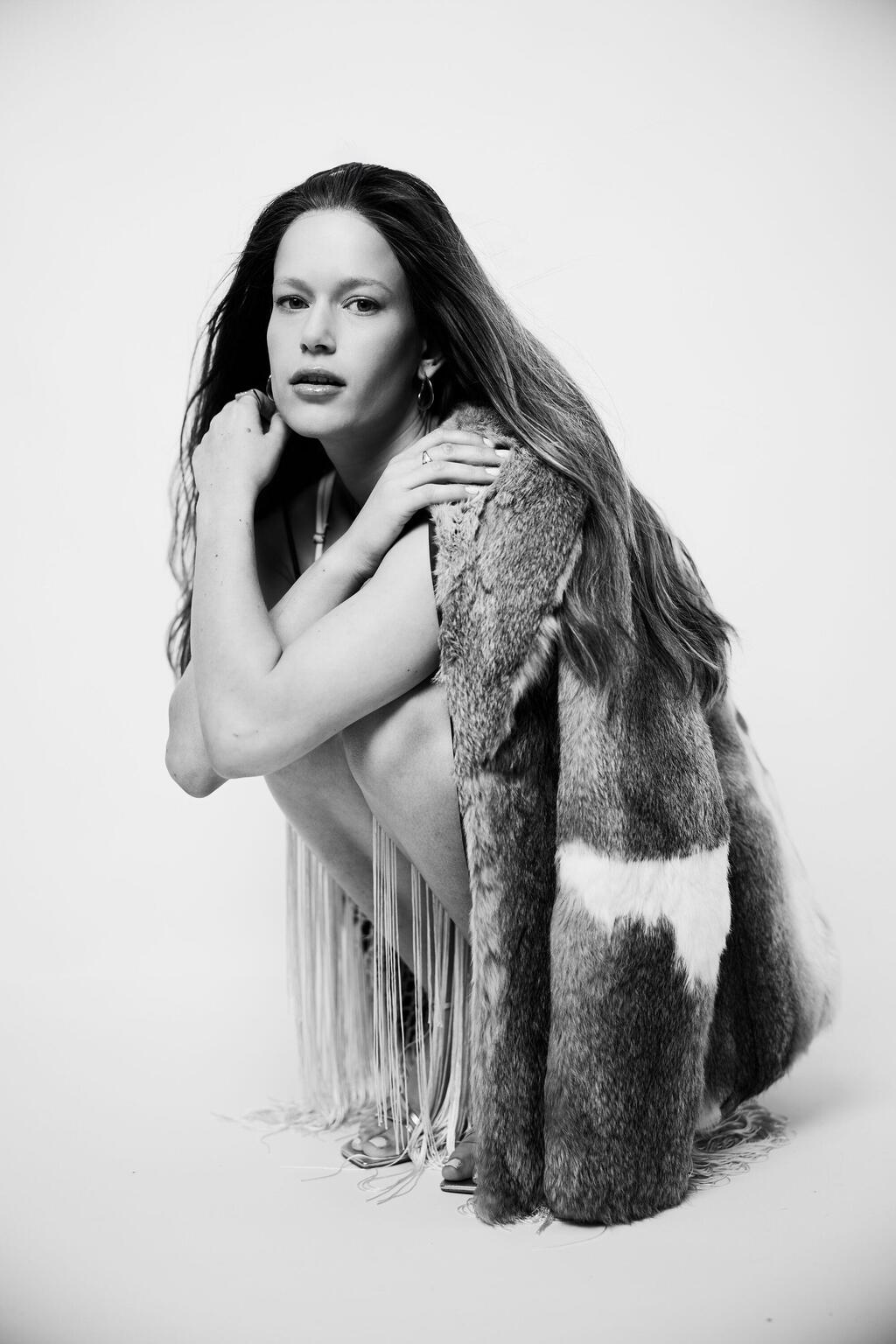
Asked whether she goes out bald or wears a wig, her answer is simple: both.
“There are days when the bald look feels right,” she said. “Today I wear it with pride. I’m comfortable, even more stylish. Losing my hair gave me courage to wear clothes I never wore before.”
On other days, she chooses a wig. “Sometimes I don’t want people to see that I have cancer. I want to give my surroundings a break from the disease.”
Shachar has made awareness her mission. “The message I want to send is to get checked when your body signals pain,” she said. “I was diagnosed at stage 4. If I had checked earlier, the diagnosis would have been earlier and the treatment less aggressive.”
She also wants to challenge perceptions of femininity. “A woman can be feminine, strong and radiant even after losing her hair,” she said. “Nothing can take your femininity away.”
Looking ahead, Shachar has clear goals.

“I want to open an oncology gym,” she said. “There are places like this abroad, and I want to be the one to bring it here.”
And there is one more dream. “I want to travel with my partner,” she said. “Our post-army trip was canceled because of my cancer. After five years, two of them spent fighting on all fronts, we both deserve a real journey.”