

A long four-year wait is coming to an end: Harry Styles is finally returning with new music. On Friday, the singer is set to release his fourth studio album, "Kiss All The Time, Disco Occasionally". But longtime fans should take note: the musician appears to be preparing a musical shift that may disappoint many of you.
During the album’s promotional campaign over the past two months, Styles has behaved more like an obscure fringe artist than the biggest pop star in the world. Is this a deliberate decision meant to shake off some of the stardust he carries and become “indie”?
One of the clearest signs of this major shift in Styles’ status can be seen in the reception of the album’s first single, "Aperture." In the lead-up to the new album, the musician’s team placed mysterious billboards across major cities around the world bearing the phrase “We Belong Together,” before eventually announcing the first single, released in late January.
"Aperture" is not an easy pop treat. The track stretches beyond five minutes and is built around electronic synthesizers reminiscent of dance-floor music. On TikTok, Styles’ fans described it as “German techno” or “’90s rave,” unsure how to label the new style, which clearly draws inspiration from those worlds.
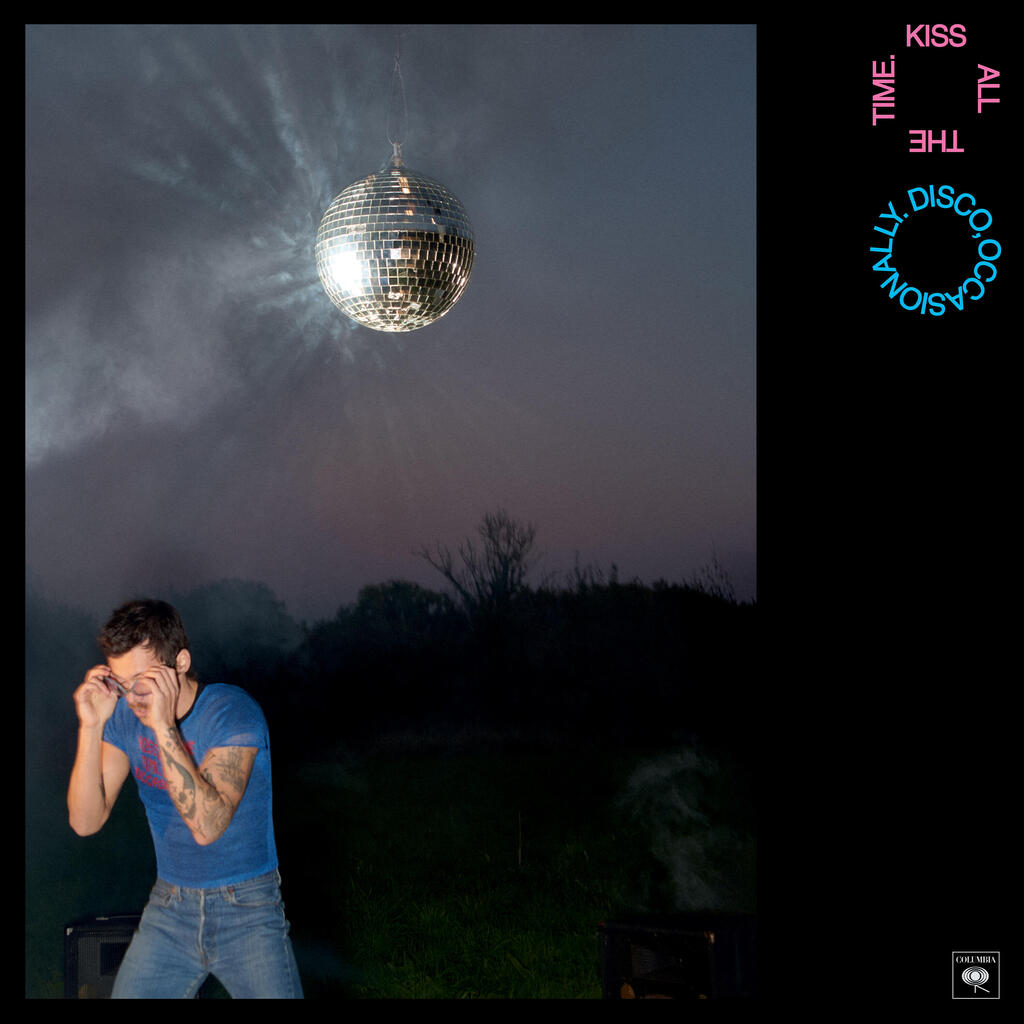
Cover of Harry Styles' new album 'Kiss All the Time. Disco, Occasionally'
In interviews, Styles said he was heavily influenced by the band LCD Soundsystem — and it is far from certain that his audience overlaps with theirs. Still, the song carries a sense of euphoria that Styles’ fans may connect with, somewhat reminiscent of the hits from his 2022 album "Harry’s House." The world had eagerly awaited new music from Harry Styles, but it seems it may not have been entirely satisfied with what it heard.
Upon release, the song debuted at No. 1 on the prestigious Billboard Hot 100, surpassing hits by Olivia Dean and Taylor Swift as well as chart regulars like Alex Warren, Bruno Mars and Sombr. The start looked promising — but a week later the song had dropped to No. 12, and the following week to No. 24. For Styles, this was a sharp and almost embarrassing fall. The world anticipated it, listened — and then stopped listening. By comparison, "As It Was," the lead single from his previous album, spent 15 weeks at No. 1 and a total of 61 weeks on the Billboard chart.
Time out
To understand how the world’s biggest star seems to be turning somewhat away from his devoted fan base, it helps to go back to the end of 2023. That was when Harry Styles wrapped up Love On Tour, his hugely successful tour, after 167 shows and nearly five million tickets sold.
The sweet pop sound of "Harry’s House," which drew inspiration from Japanese music of the 1970s, proved enormously popular and critically acclaimed. Styles won Album of the Year at the Grammys, the BRIT Awards, the MTV Video Music Awards and Canada’s Juno Awards. And then he disappeared completely.
There were no Instagram posts, no updates or photos from the studio, no side projects, and not even hints about what might come next.
The only connection between Styles and his vast fan base came through paparazzi photos taken across Europe. In one video that surfaced online in 2025, he was seen helping a fan parallel park a car in central Rome. In other clips, he encountered a pair of tourists, took their photo with his film camera and later sent it out to them on Instagram after developing it.
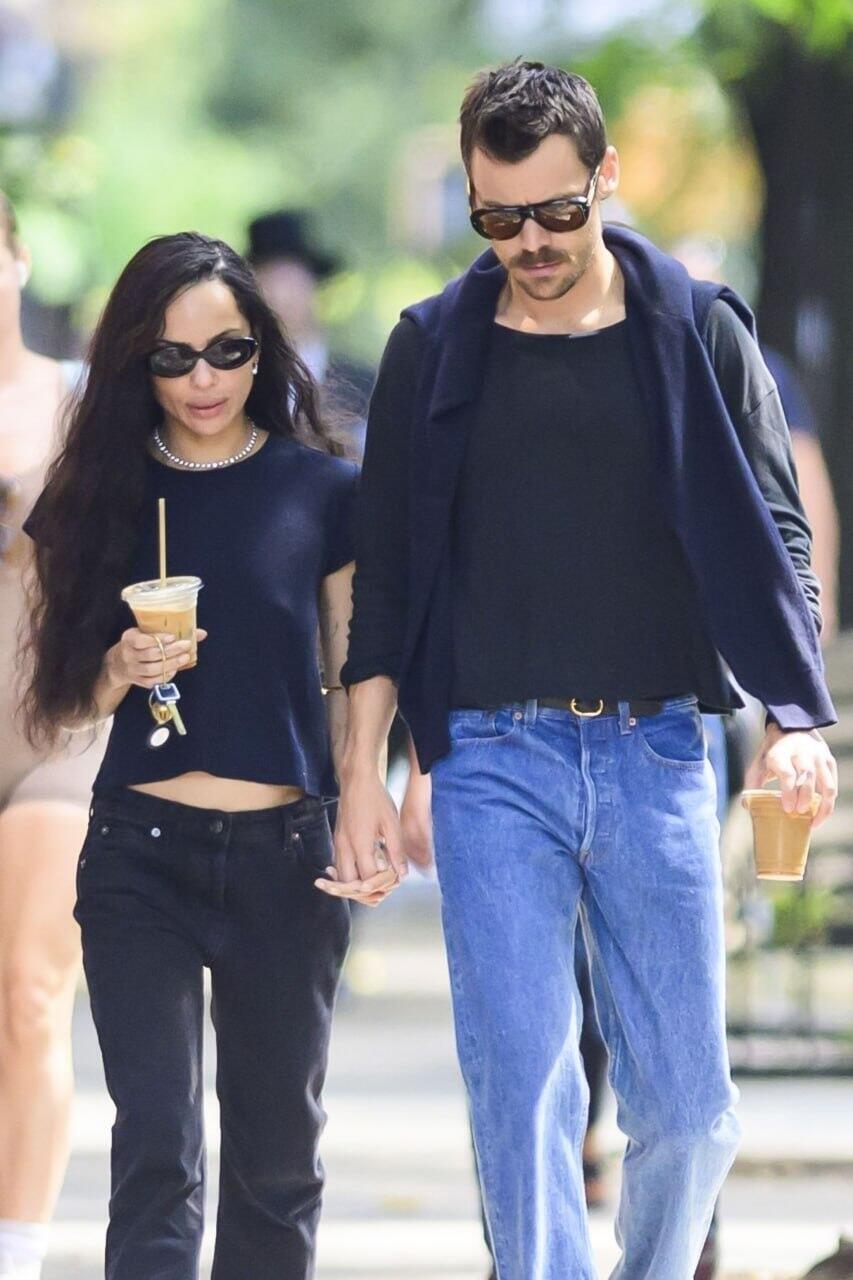
Styles with long-time girlfriend Zoe Kravitz
(Photo: The Image Direct / BACKGRID)
At the beginning of 2026 he was photographed among the crowd attending the inauguration of the new pope. In recent months he has also been spotted around the city with his partner, filmmaker and actress Zoë Kravitz.
Styles also surprised fans when he was documented completing marathons — in Tokyo in early 2025 and Berlin later that year. He registered for both races under a pseudonym and achieved strong, consistent results.
These experiences, he explained in a new interview with The Sunday Times, filled the space left by the pause in his music career.
“Since I was 16, I’ve always had a schedule in my life,” he said. “Part of this period was learning how not to work all the time. Being constantly scheduled isn’t natural, but neither is doing nothing. I looked for something I could achieve, something that would give me fulfillment and structure — but wouldn’t be work. In my early 20s I used to run, but I didn’t take care of myself and I couldn’t complete a marathon… succeeding in running proved to me that I can accomplish complex goals on my own.”
In an interview conducted by his stylist Harry Lambert, Styles said he spent many months in Italy and for the first time felt “like a normal person.”
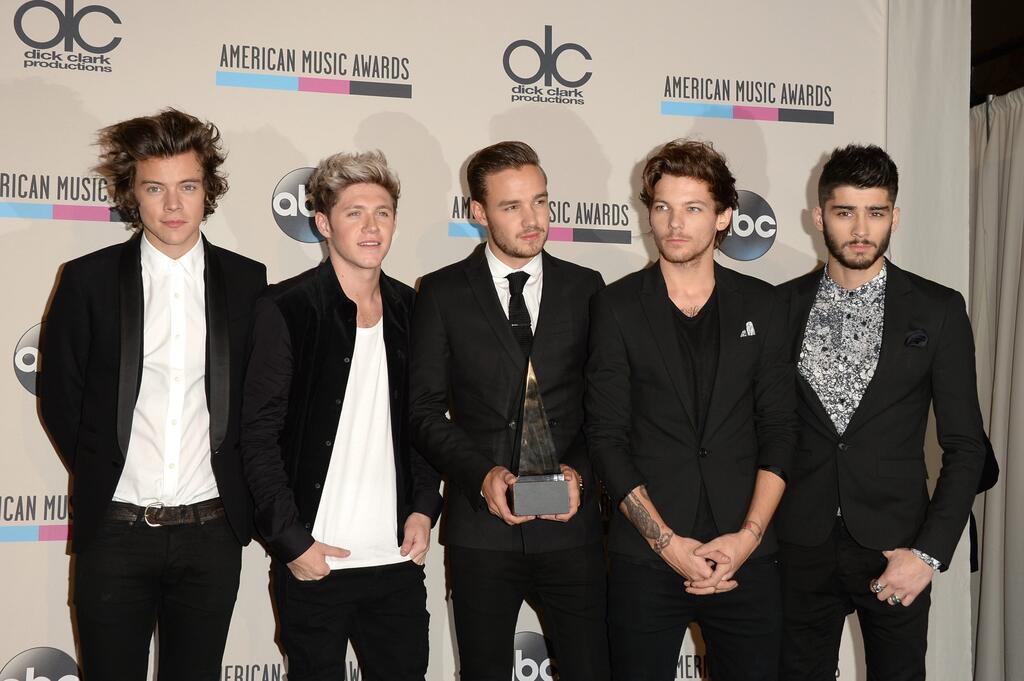
Harry Styles as part of 'One Direction'
(Photo: AFP)
At 16, when he was a teenager working in a bakery, he auditioned for the British talent show The X Factor. Despite a fairly shaky audition, Simon Cowell spotted his potential and grouped him with Louis Tomlinson, Zayn Malik, Liam Payne and Niall Horan. The five became One Direction, finishing third in the competition.
Since then, his star has only risen — both within the band, which became one of the most successful in the world, and in his solo career, which ultimately surpassed that of his bandmates. But Styles the person felt he could no longer recognize himself.
“I always thought — or hoped — that I wasn’t someone who needed the dopamine this job often gives,” he said. “I was never really disconnected from it. Living life and discovering who I am — away from that world — was a powerful experience. There’s no doubt it affects what I create now, because it comes from a place of complete freedom. Since I was young I’ve seen myself through other people’s reflections. Only when I was disconnected from everything could I finally have deep conversations with myself.”
Additional photos that surprised fans showed Styles and his friends — including Kravitz — leaving the famous Berlin techno club Berghain in December 2025. Styles had also visited the club alone earlier that year, when TikTok users reported that he tried to quiet anyone who approached him to ask what he was doing there, danced enthusiastically and stayed for hours.
It is difficult to imagine other pop stars like Sabrina Carpenter or Taylor Swift — or even Styles’ former One Direction bandmates — blending anonymously into a crowd of “normal people” in such a setting.
Quiet listening, smaller shows
The “new Harry Styles,” some fans claim, seems to have forgotten the true size of the audience that loves him.
Shortly after the release of "Aperture" in January, Styles announced a new tour titled "Together, Together." But, unlike the previous tour, which included 160 shows, the new one will feature only 67 performances in seven cities worldwide: London, Amsterdam, New York, Mexico City, São Paulo, Sydney and Melbourne.
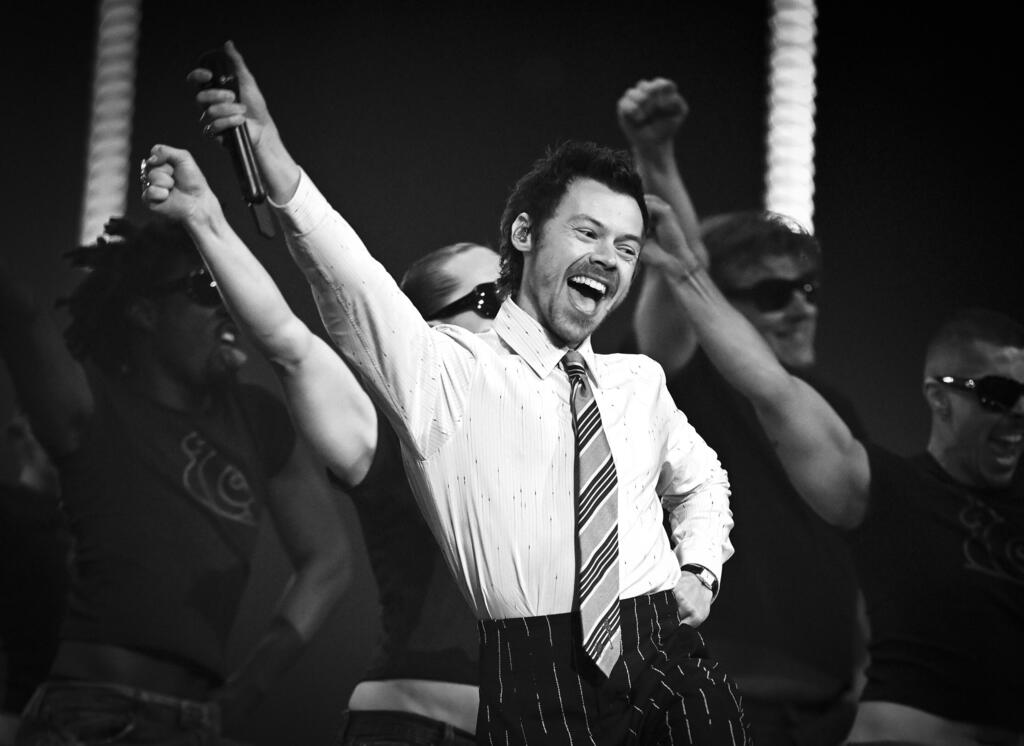
Mesmerizing choreography. Harry Styles at the Brit Awards
(Photo: Gareth Cattermole/Getty Images)
Instead of a sprawling American tour, the plan includes 30 shows at Madison Square Garden over three months this coming fall.
Holding many shows in one location rather than spreading them across numerous cities does not benefit fans. In addition to the high ticket prices — which have soared into the hundreds and even thousands of dollars — the fact that Styles is performing only in New York significantly raises travel costs for fans.
In the past, bands and musicians would crisscross the road and travel anywhere they could meet their audience. This time, Styles seems to want the audience to come to him. In an interview with British radio, he said he wanted to spend more time in each city, get to know it, and avoid rushing from place to place and waking up on a tour bus without knowing where he was.
Fans have criticized this choice as well. On Twitter, many joked about the irony of the tour being called "Together, Together" when the astronomical ticket prices, the limited number of shows and the additional cost of flights to the few cities where Styles will perform make it nearly impossible for fans to actually be “together” with him.
The first glimpse of the new style of his performances came at the recent BRIT Awards, where he performed the single alongside a large group of dancers executing strange, synchronized movements that turned into a long, hypnotic free-form dance.
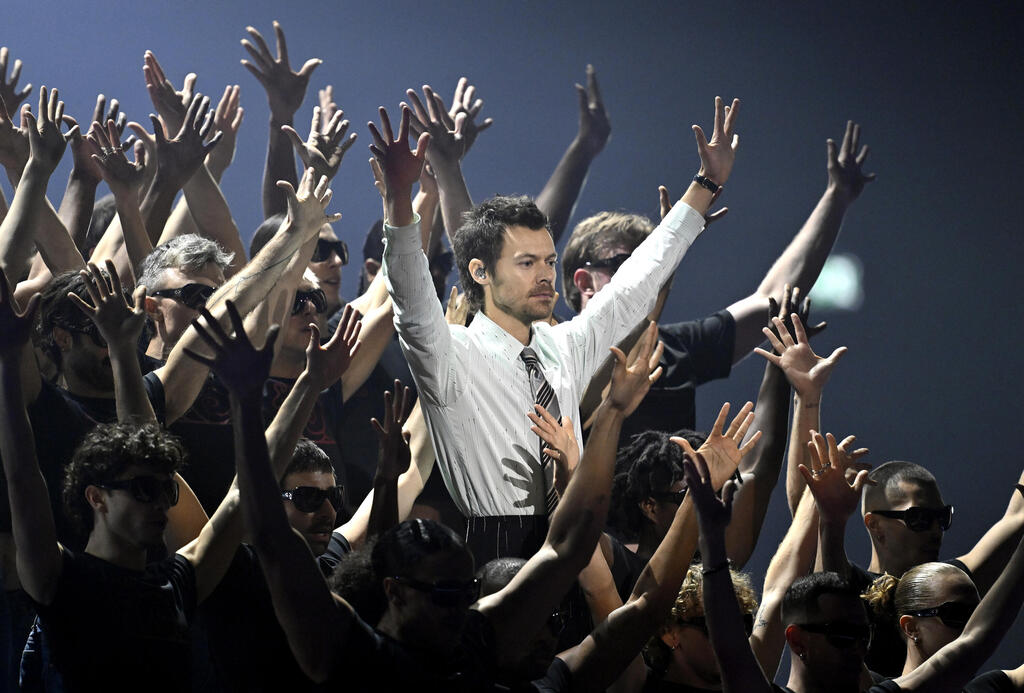
Harry Styles at the Brit Awards
(Photo: Gareth Cattermole/Getty Images)
Styles has also been named curator of the annual Meltdown Festival in South London — a role previously held by artists such as David Bowie, Nile Rodgers, Patti Smith and Yoko Ono. The small festival will likely include a performance by Styles himself in a venue with only a few thousand seats — far smaller than what his celebrity status might suggest.
Another promotional strategy for the album has been listening parties, where fans gather in cities around the world to hear the album in full in a room — without their mobile phones.
On the album’s release day, Styles will perform at the Co-op Live arena in Manchester, where tickets were carefully distributed and cost just £20. The show will be released to Netflix viewers a few days later, on March 8.
Even in this move, Styles’ strategy is evident: he is not necessarily interested in meeting all of his fans in person, but rather sending them to small, intimate listening experiences.
It is not entirely clear that this is how a pop star behaves. These choices seem more typical of indie-rock artists who are unaware of the size of their fan base.
Perhaps all of this is part of a calculated effort by Styles to shrink his audience and appeal only to those who connect with the “new Harry.” As one of the few male pop stars in a world currently dominated by young female superstars, this is a broader cultural moment worth paying attention to: what happens when a teen idol refuses to remain one?