

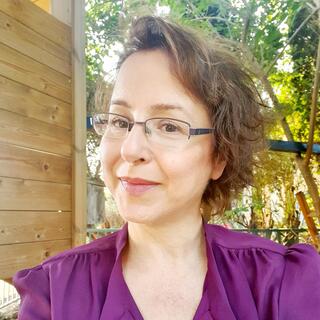
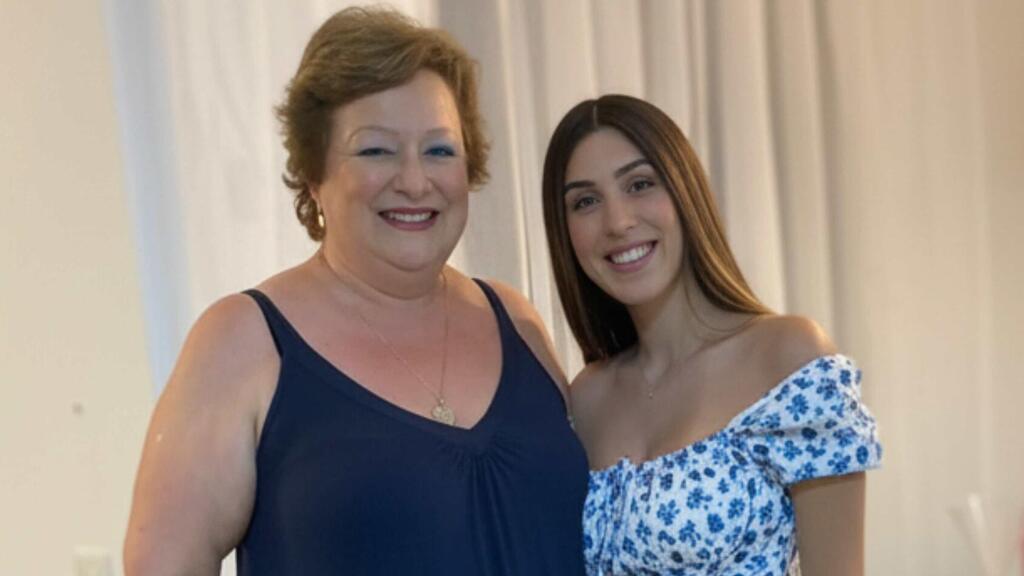
What are the odds that one family would have two writers in the romantic-erotic genre? That is the situation in the Defsames family — specifically with Chen Defsames and her mother-in-law, Or-El Maor.
Chen, 31, works in digital marketing and social media management and is now also an author. She is married with two children (three and a half and two) and lives in Or Akiva, where she was born and raised alongside five siblings, the daughter of a bus driver and a real-estate agent.
At age 12, she began reading fantasy novels and dreamed of publishing a book of her own. “I never told anyone about that dream because it didn’t seem realistic,” she says. “I grew up in a classic Soviet household. My parents wanted me to be financially secure, and I’m not stupid — I know you don’t make money from writing books.”
When she was 15, her parents divorced. “I took it well. They’re happier apart.” While the rest of her family listened to Turkish music, she listened to heavy metal and adopted a gothic look. After graduating from Atidim High School, she served on an Air Force safety and rescue team. After her discharge, she moved to Kfar Saba and worked in sales and marketing. “The dream of becoming a writer faded. I was busy with other things. I read a lot, but I didn’t feel like writing.”
At 27, she married — “we met as kids and every few years he checked in again” — and returned to her hometown. When her eldest daughter started kindergarten a year ago, she finally had time and began writing the book she describes as a dark romance. “At first, I wrote just to get the idea out of my head. Suddenly, it became real, so I thought it should be published. I consulted a literary editor who said the book was too depressing, the main character too cruel, and that it wouldn’t work. I thought she might be right and softened the character and the book a bit.”
Realization after miscarriage
Last March, she had a natural miscarriage and grieved for a month. “It was hard to accept. I felt like a failure. As I told more women, I realized every second or third woman goes through a miscarriage,” she says. “After a month in bed, I had an epiphany: if I’m publishing a book, I want to write exactly what I want — not what I think will suit the audience. I’m a gothic, slightly dark woman, and people can take it or leave it. I reverted to the original version.”
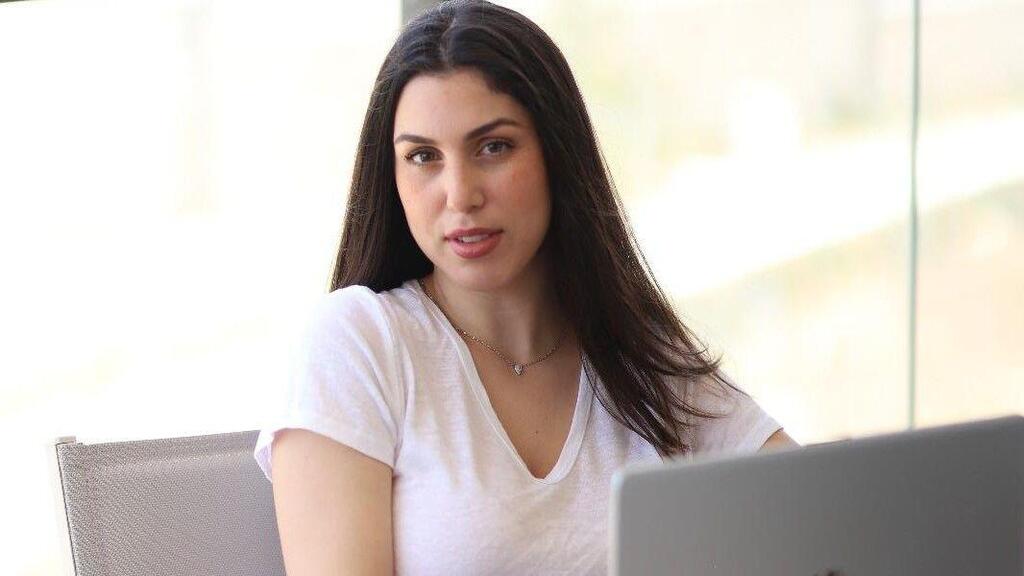
Chen Defsames
(Photo: Sapir Ben Hamo Studio)
Now, The Ryan Curse is being released as the first title from Luna, an imprint of Yediot Books devoted to romantic fiction. Its cover describes it as “a dark romantic fantasy telling the story of Ryan, Kiera and Loren — a sweeping saga of forbidden desire, an ancient curse and impossible choices.”
The book is published under the name Chen Def.
“I’m not hiding. I wanted a separation between myself as a writer and myself in everyday life. Also, Chen Def sounds sexier and more international.”
How did your somewhat conservative environment react to your erotic writing?
“My husband was a little embarrassed but dealt with it for my sake. He wants me to fulfill myself and doesn’t really care how. Even if it wasn’t easy for him, he expressed it gently. At one point, I asked my mother-in-law whether I should use Defsames or my maiden name, Godov, so my husband might feel more comfortable, because he comes first. She answered right in front of him: ‘Absolutely not! You are Defsames!’ She really supports me.”
And the extended family?
“I’m not embarrassed, and nobody cares. If I talked about the book in a shy voice, people might raise an eyebrow. But if I say loudly and clearly, ‘It’s a sexy erotic romance,’ nobody reacts.
Not long ago, at a shiva, my cousins asked what the book was about. I told them it’s an erotic romance. They asked, ‘Erotic, really?’ I said, ‘Not the whole book, but yes. And if you don’t want to get pregnant, don’t read it.’ Everyone laughed.”
“For some reason, erotic literature has a bad reputation. People hear ‘sex’ or ‘erotica’ and think the book is lower quality or lacks a plot. It annoys me. Stop shaming everything connected to erotica — we’re not in the Middle Ages.”
The message: courage
Chen’s mother-in-law, Or-El Maor, 61, is a multidisciplinary healer, instructor of therapy courses, painter and writer. She is divorced, a mother of five and a grandmother of seven. She was born in Nizhny Novgorod in central Russia to novelist Yulia Arakova, who published ten books. She says that even as a child, she sensed her spiritual abilities, receiving messages that later came true. “I had to hide it because it sounded strange and I had no one to talk to,” she recalls.
As an adult, she completed a master’s degree in psychology and early-childhood education. She immigrated to Israel at 26, married, with two children and pregnant with her third. She ran a kindergarten in Ofakim for 14 years. After moving to Or Akiva, she suffered a medical event that left her in a coma. “When I woke up, I understood I needed to start doing what I want — or the next time I might not wake up.” Since then, she has studied extensively in alternative medicine, shamanism, spiritual and business coaching and conscious sexuality. For the past six years, she has lived in Sandanski, Bulgaria, where she moved following a spiritual message. “It turns out it’s a very powerful healing place.” In her large home overlooking the mountains and town, she hosts retreats that include excursions to “high-energy places,” courses and personal treatments, and she treats patients on Zoom in Russian or Hebrew — “including lead-pouring cleansing rituals.”
She has written two books in Russian: the short story collection Patchwork Quilt, published eight years ago, and an erotic novel that remains unpublished. “I’m not ashamed to publish it. I’m just not sure it fits the Russian-speaking readership in Israel. And I already know my children won’t read it.”
Do you have an explanation for why both of you write erotica?
“We’re continuing a line of women who know what they want and follow their path. My mother-in-law was a psychiatrist who spoke freely in Soviet Russia. My own mother faced plenty of criticism for her books and said, ‘If I’m afraid, I won’t write anything.’ Chen published a romantic-erotic novel. The message of being brave, authentic and free has passed down through the women in our family, and I’m proud of it, because erotica is a harmonious part of human nature.”
Did you share your writing processes with each other?
“No. Chen writes in Hebrew and I write in Russian. When she told me she was writing a book, I was thrilled and encouraged her to continue. I didn’t give her tips because each of us has our own way. I’m very supportive. For me, it’s a great privilege to be in her space and support her. I’m sure this is only the beginning for her.”