

With theaters redesigned as a 1930s Berlin nightclub, alcohol flowing among the audience, stickers covering phones, and 360-degree staging, Cabaret has in recent years become one of the most exciting and innovative phenomena in the world of musical theater. Well-known performers such as Eddie Redmayne, Adam Lambert, Madeline Brewer (The Handmaid’s Tale), Aimee Lou Wood (The White Lotus), and Auliʻi Cravalho (Moana) have taken on the lead roles in West End and Broadway productions for limited runs, breathing new life into the canonical musical for contemporary audiences.
Gallery
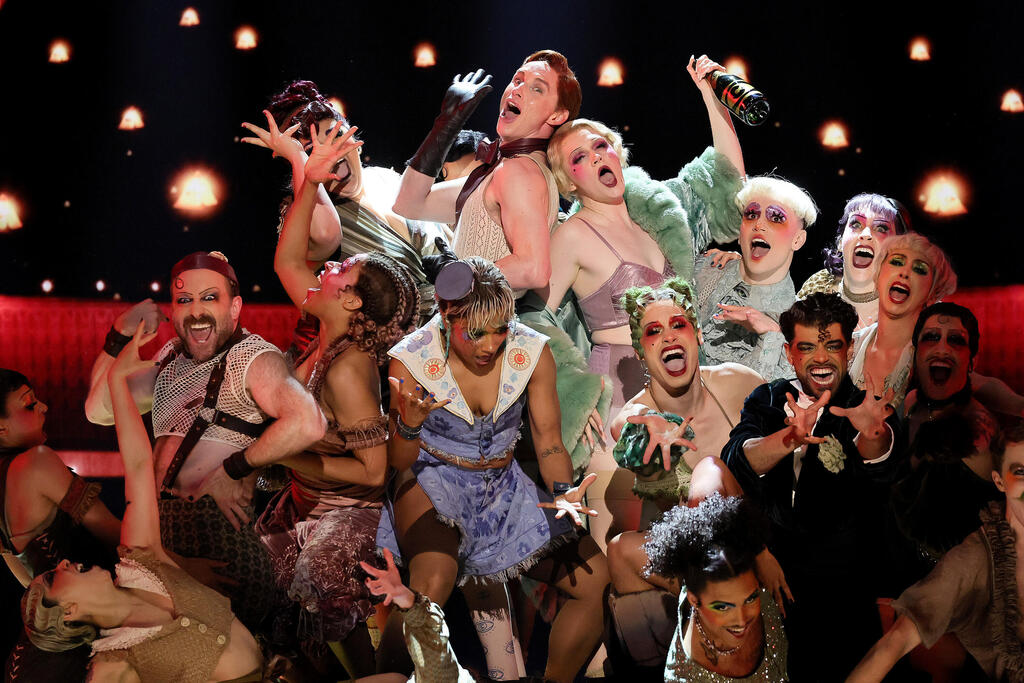
Gayle Rankin and Eddie Redmayne with the cast of Cabaret, the 2024 Tony Awards
(Photo: Theo Wargo/Getty Images)
Now this revival has reached Israel as well: the Cameri Theatre is staging Cabaret on a 360-degree stage, with Ran Danker, Lihi Toledano, Hani Furstenberg, and Nadav Netz stepping into the leading roles — more than a decade after its previous run there in the main hall, featuring the unforgettable Itay Tiran. But just before that — while you are still sitting at home and the trumpet calls — it is worth returning to the story of a musical that premiered six decades ago, deals with the rise of Nazism in the 1930s, and has proven that no matter the era, life is always a cabaret.“
She doesn’t look Jewish at all”
Since its debut, Cabaret has been regarded as one of the most iconic and influential works in the history of the genre. Six years after opening in New York, it was adapted into a film starring Liza Minnelli, which became a box-office hit and won eight Academy Awards. Yet, to the disappointment of many fans, the differences between the musical and the film were significant.
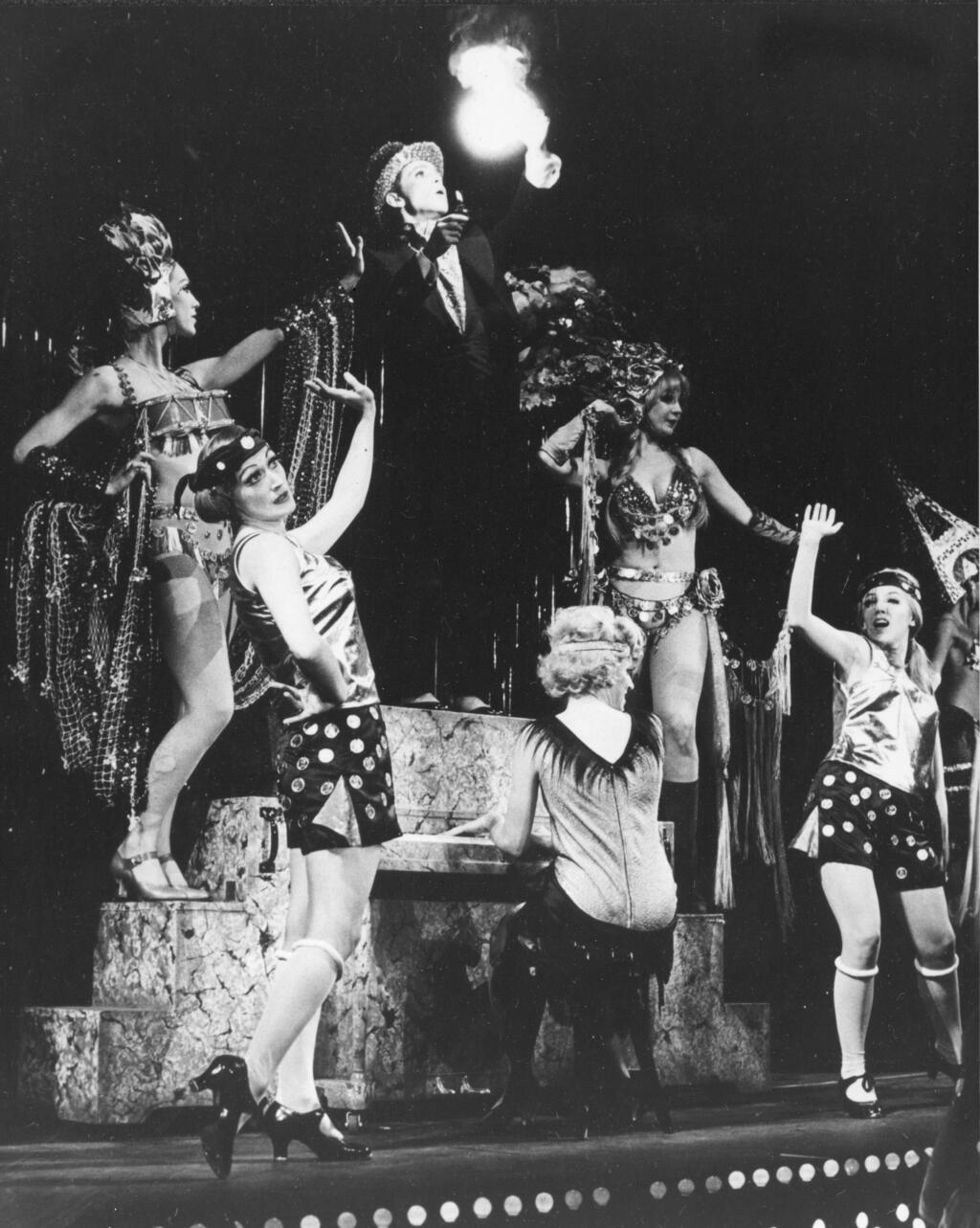
Joel Grey in the original 1966 production of Cabaret
(Photo: AP)
Entire storylines were left out: the tragic love story between Fraulein Schneider and Herr Schultz, the Jewish fruit seller, was replaced with a new romance; Sally Bowles was changed from British to American (due to Minnelli’s casting); and Cliff Bradshaw became Brian Roberts. Musically too, songs were added, removed, and altered — with some of the new ones, including Mein Herr, Maybe This Time, and Money, Money, later incorporated into the stage version as well — and rightly so.
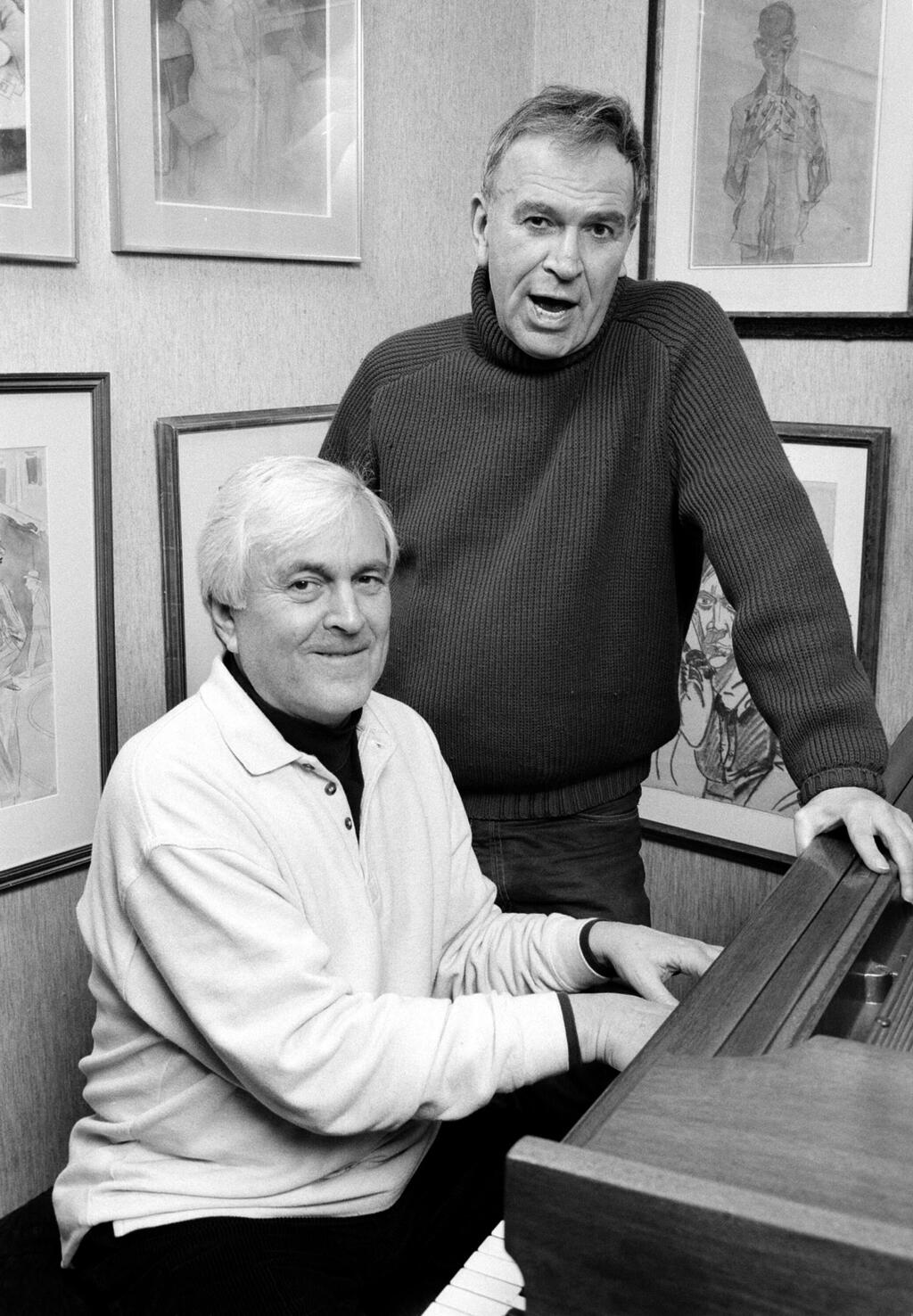
We also wrote antisemitic songs.” Fred Ebb (right) and John Kander
(Photo: AP)
“We also wrote completely provocative songs,” John Kander told Vanity Fair, noting that the pair originally composed around 60 songs for the show. “We even wrote antisemitic songs — like ‘Good neighbor Cohen, lend me a loan.’ But we didn’t get far with that.”
Some ideas were abandoned, others softened — and in one case condensed into a song that became one of the musical’s most powerful political moments. In If You Could See Her, performed by the Emcee and considered by the creators themselves as the peak of the work, he appears on stage with a gorilla and tells the story of their love. In early stage productions, after intense backlash to the use of the word “Jewish,” Fred Ebb replaced the final line with the Yiddish slur Meeskite, then considered less offensive. Only in the film was the original line restored — She wouldn’t look Jewish at all — turning the number into a direct and unapologetic metaphor for antisemitism.
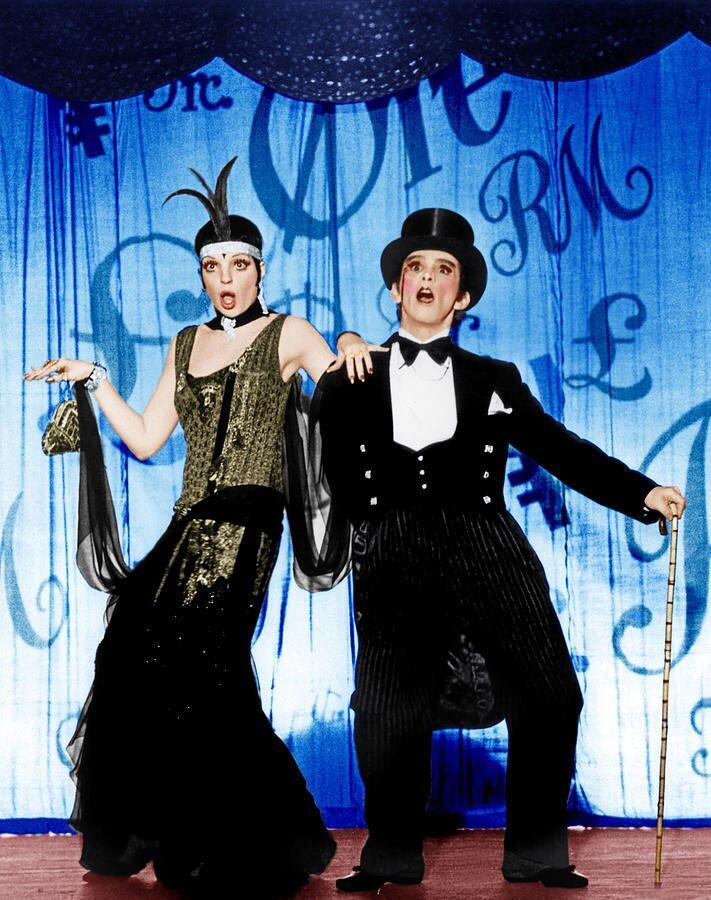
From 'Cabaret'
(Photo: ABC)
For similar reasons, the musical’s name was changed from Welcome to Berlin to Cabaret, after a ticket seller warned that Jewish customers would not buy tickets to a show with “Berlin” in its title — only about 20 years after the war, when many of the city’s Jews had survived. According to the story, the name Cabaret was chosen after librettist Joe Masteroff noticed two successful shows at the time — Carnival and Camelot — both began with “C” and had three syllables.“
He chose Berlin because of the sexual atmosphere”
When the musical premiered in the 1960s, its creators operated within the limitations of the time, especially regarding the protagonist’s sexuality, based on writer Christopher Isherwood. While early stage productions emphasized mainly his relationship with Sally Bowles, the film broadened the portrayal, presenting a more complex character with clear attraction to both men and women — a shift that later filtered back into stage adaptations.
Isherwood, a British-American novelist and playwright, was best known for his works about Berlin in the early 1930s. Born into an aristocratic family in northwest England, his father was a British Army officer killed in World War I. He came to Germany to be with his friend, poet W. H. Auden — who was also openly gay.
“Auden’s father offered to fund what we would now call a gap year,” Professor Norman Page once told the BBC. “I think he chose Berlin because of the sexual atmosphere.”
Isherwood originally planned to write a sweeping novel about Berlin, “but as a writer he was a sprinter, not a long-distance runner,” Page added. Instead, he published two shorter works based on his experiences: Mr. Norris Changes Trains (1935) and Goodbye to Berlin (1939). In these stories, later collected into Goodbye to Berlin, he wrote that he came to the city for one reason only — “boys.” Yet because they were published in the 1930s, he could not write openly about his sexuality, and so the stories are told from a narrator who distances himself.

Ahead of Cabaret at the Cameri Theatre
(Photo: Ohad Romano)
He described the colorful characters he met, recounting how he lived in a shabby boarding house alongside questionable tenants who later inspired his work. Though Isherwood did not in reality have a romance with a British cabaret singer, he acknowledged Sally Bowles was based on a real woman — English journalist Jean Ross. According to his description, Sally’s chief talent was capturing wealthy older men.
Ross herself was far from the tragic femme fatale of the musical. She was a journalist, film critic, and radical political activist — a committed Stalinist and lifelong member of the British Communist Party. She wrote political commentary, worked as a film critic, and served as a war correspondent during the Spanish Civil War.
During her time in Weimar Berlin she worked as a cabaret singer and aspired to an acting career, where she met Isherwood. In 1931 they briefly shared an apartment, and he based many details of Sally on her life — including pregnancy and abortion — even delaying publication until he received her approval, fearing a libel suit. Later adaptations, however, stripped the character of Ross’s political and intellectual complexity.
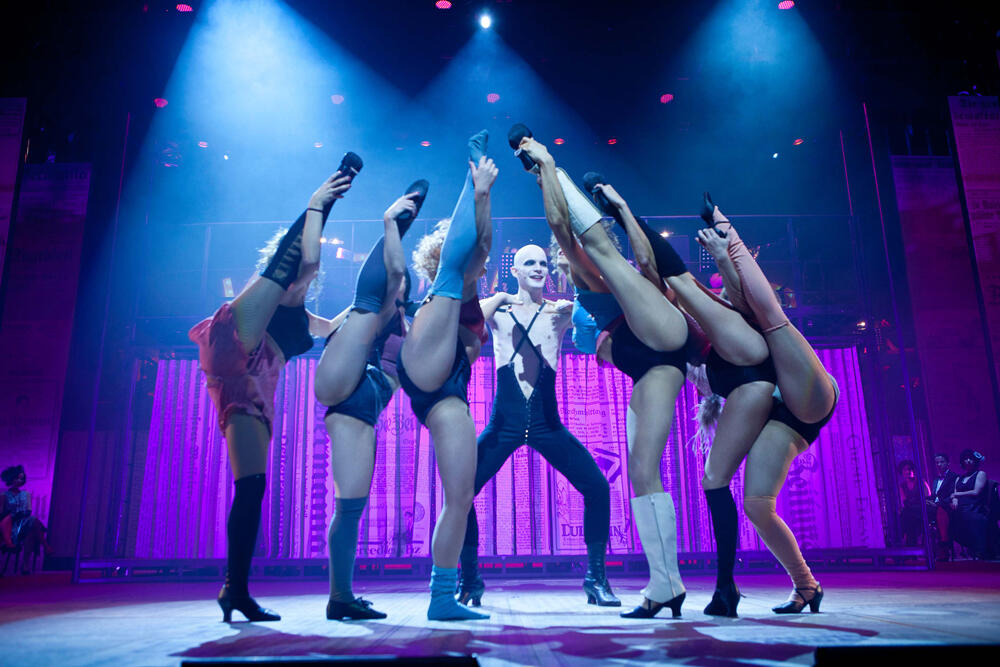
Itay Tiran in Cabaret at the Cameri Theatre
(Photo: Gerr Alon)
Ross died in 1973 and rarely spoke about being the model for Sally. Her son, journalist Alexander Cockburn, told the BBC: “Jean was a wonderful woman, warm and gentle. She could not have been more different from the thin, somewhat empty Sally Bowles. She was intelligent, politically sharp, and full of life. Isherwood’s portrait probably annoyed her.”
“Near the end of his life, Isherwood admitted he no longer truly remembered Jean Ross,” added Professor Page. “The memories were layered over by all the actresses who portrayed her. He operated on the seam between fiction and autobiography.”
“I thought my career was over”
One of the few characters created almost entirely from scratch was the Emcee. Within the story he hosts the Kit Kat Klub, but in reality he narrates the entire show, breaks the fourth wall, and mediates between stage entertainment and outside reality. The character was conceived by Harold Prince, who produced and directed the original production, and whose career also included West Side Story, Fiddler on the Roof, and The Phantom of the Opera.
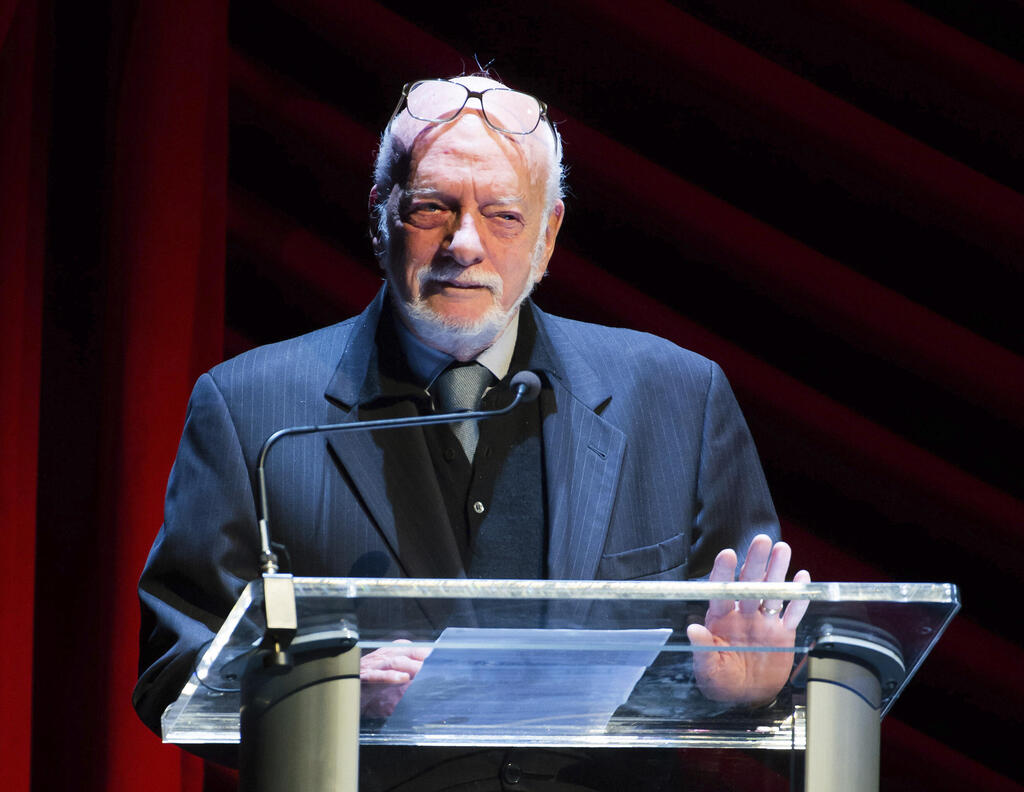
Harold Prince
(Photo: Charles Sykes/Invision/AP,)
Prince recalled his time as a soldier in Stuttgart in the 1950s, visiting nightclubs where a host with white makeup and ambiguous sexuality ruled the stage. John Kander encountered a similar figure at a Marlene Dietrich performance in Europe. “A small man, heavily made up, swayed on stage and said: ‘Willkommen, Bienvenue, Welcome,’” he told Vanity Fair. Thus the musical’s first song, Willkommen, was born.
Prince cast his friend Joel Grey — then a struggling nightclub performer — as the Emcee. “He knew I was finished,” Grey recalled. “I wanted to quit the business.” At first he struggled to shape the role, until he remembered a comedian telling crude, offensive jokes. He mimicked him during rehearsal — groping actresses, shocking everyone. “I thought my career was over. Then Prince came out of the dark, put a hand on my shoulder, and said: ‘Joely, that’s it.’
”How could this happen?
Cabaret premiered at Boston’s Shubert Theatre in 1966, with Jill Haworth as Sally Bowles, after Julie Andrews turned down the role over concerns about the character’s morally questionable image. Success came quickly: Grey had to pause the show during the opening number because the applause would not stop. The musical won eight Tony Awards, ran three years, and film rights sold for a record $1.5 million.
Director Bob Fosse later took on the film adaptation. He even tried to replace Joel Grey, but the studio insisted on keeping him. The role of Sally went to 26-year-old Liza Minnelli, daughter of Judy Garland. She famously shaped the character’s iconic look — black hair, dramatic lashes — inspired by 1930s film stars. The film became a massive success, though Kander and Ebb initially disliked it. “We realized it was a masterpiece — it just wasn’t our show,” Kander said.
Since then, Cabaret has gone through countless revivals. Actors like Alan Cumming, Neil Patrick Harris, and Emma Stone have taken on its iconic roles, and every generation has found new meaning in it.
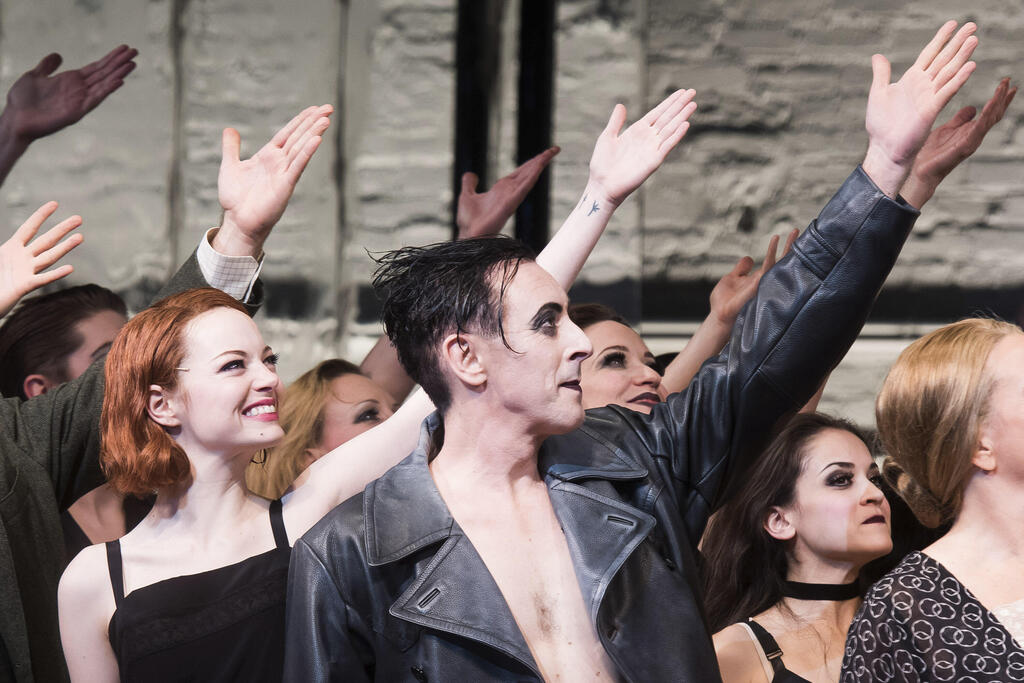
Warning signs against a crumbling reality. Alan Cumming and Emma Stone in Cabaret on Broadway, 2014
(PHoto: Charles Sykes/Invision/AP)
“In the end, the greatest question of the 20th century is: ‘How could this happen?’” director Sam Mendes once said, explaining why Cabaret still resonates. Watching modern productions, one wonders whether audiences truly grasp the story of Nazism’s rise — as they applaud at the end. But perhaps that is the point: closing one’s eyes to injustice, warning signs, and a crumbling reality is not a relic of the 1940s — it exists in every “tomorrowland.” Auf Wiedersehen.