

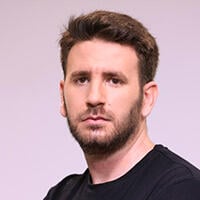
Assaf Blecher lives in Los Angeles, but when he speaks with us he is in Cancun, filming a reality show about weddings in exotic destinations. A month earlier, he was at Eurovision in Vienna. Such is the life of the Israeli-American producer, who says that even now, after years in the industry, the scale of his own journey can still overwhelm him.
“I’m walking around the set here and tears come to my eyes,” he says in an interview with ynet’s weekend magazine. “I didn’t know what answer to give you about how it all started, and how I even do what I do. How did I get here? To tell you a story about the little boy from Petah Tikva who got on a plane, and then jump 20 years forward to me filming a reality show in Mexico that will air on an American TV channel I co-run? It’s unbelievable when I think about it that way.”
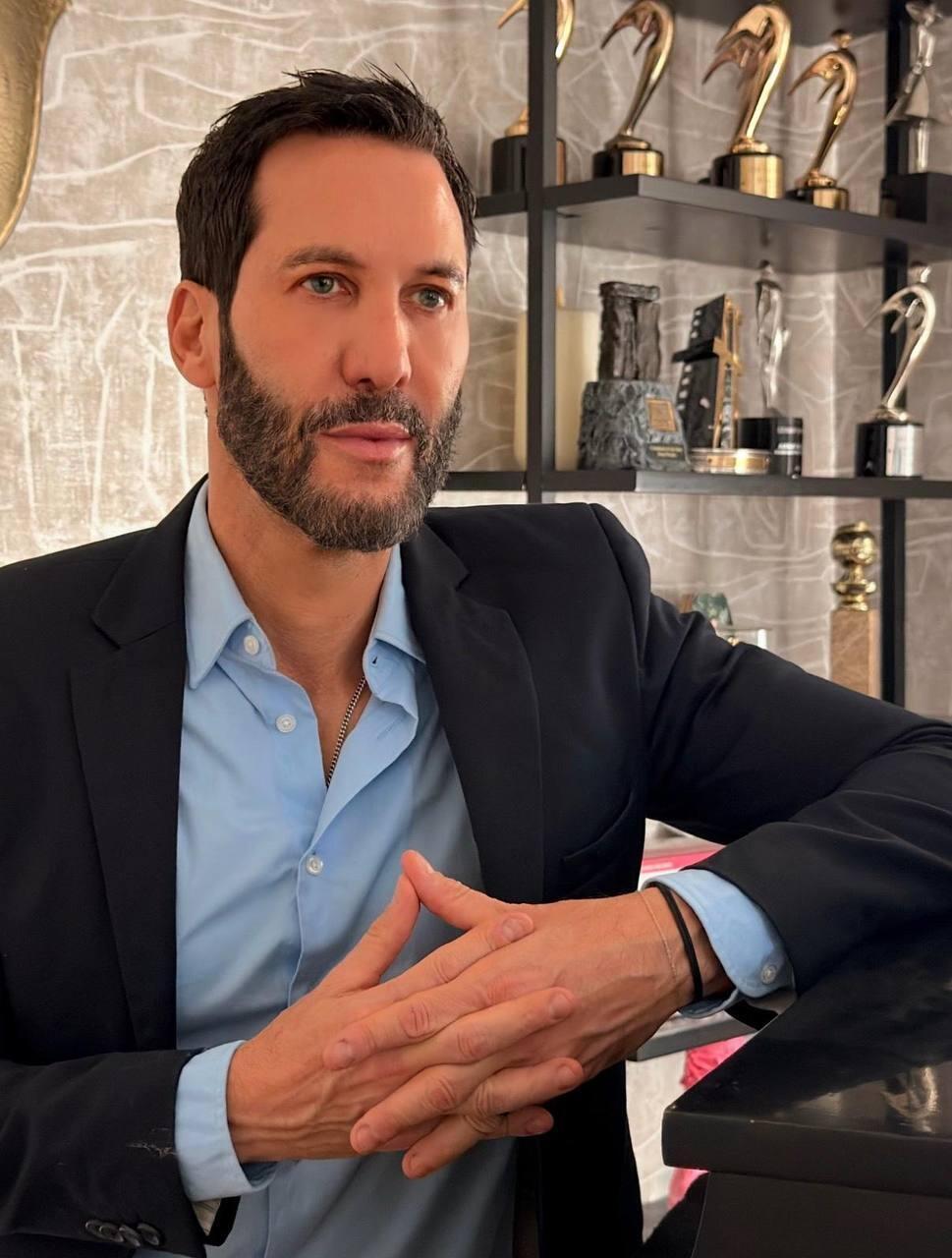
For Blecher, the emotional punch comes from the distance between the boy he was and the career he built. “I say to myself, fuck, I can’t believe it. I’m the kid who watched Eurovision from a young age, before anyone knew I was gay and we only told ourselves I was ‘creative.’ I’m the kid who sat with his father and watched Miss Universe, each of us for his own reasons,” he says with a laugh. “And I produced Miss Universe in Israel. It really is looking back and feeling proud.”
Blecher does not reveal his age. He is divorced from his former wife, has one son and now lives in Los Angeles with his French partner. Israeli audiences know him from his appearance on the Channel 13 docu-reality series “The Americans,” but his production résumé includes far bigger international milestones: work on the Emmy Awards, producing Miss Universe in Israel in 2021, mediating between Madonna and the Eurovision production in Israel in 2019 and other global entertainment projects.
His path began with risk. “I was young and I took chances,” he says. “Today, when you are a little older, you ask yourself whether it is worth it and what the consequences are. But when you are a kid in your 20s moving to Los Angeles with a dream, not the dream I am living now, because I didn’t dare dream this big, you just go. I get emotional about myself because I really ask how I got here. Was it luck? Did I meet someone? Am I that good at what I do? I think it is really a combination of personality and charm. I am a little Israeli and a little American.”
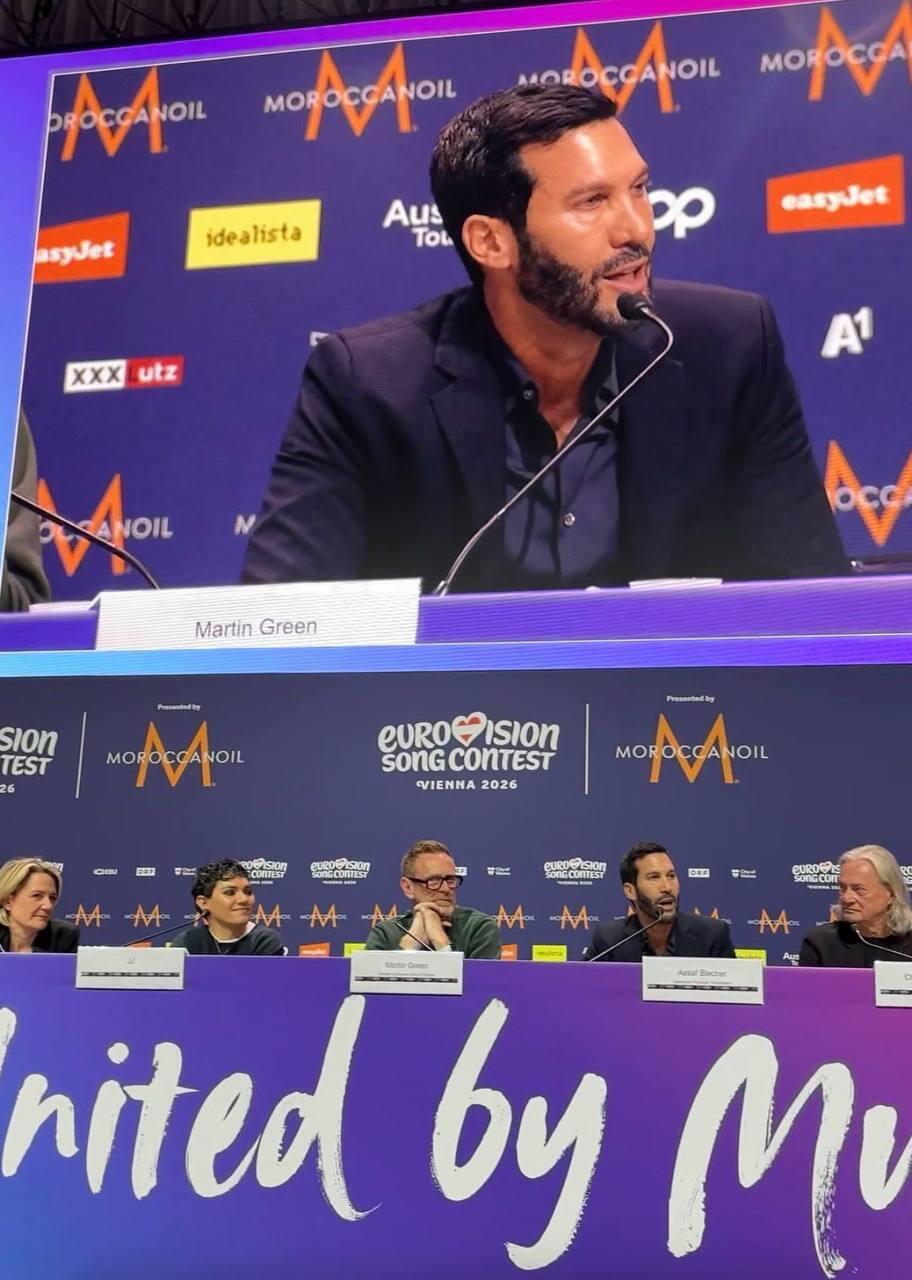
(Photo: Kenita Sianta)
He credits his parents with giving him the courage to try. “Luckily, I have parents who always supported me. They told me, ‘Whatever happens, the worst case is that you have a room at home in Petah Tikva, and we will always support you.’ My family always said it would be OK.”
Blecher speaks from the set of the new show in Mexico with obvious affection for reality TV, a genre he says still excites him because it is built around people. The show is being made for JOURNY, a small U.S. channel that he co-runs. It follows couples who decided to marry and are flown to unfamiliar destinations, while expecting something far closer to a regular wedding.
“You enter a sensitive place with people because you are playing a little with their heart and mind,” he says. “These are couples who decided to get married, who have almost never left the United States, and we fly them to new places while they are expecting a normal wedding. We, as a production, come with the goal of returning with interesting material and good content.”
Blecher insists that does not mean provoking people for the sake of damage. “Not to create provocation or, God forbid, make them divorce, but yes, to tell an interesting story. If everything happens exactly as expected, it is probably less interesting.”
His relationship with the ethics of reality TV has changed over time. “Today I have more of a conscience. Once, I had less,” he says. “Reality used to be very different. I worked on productions like ‘Rising Star’ abroad and ‘Born to Dance.’ They sent us, as producers, to bring the biggest drama possible, and part of that meant pushing into very dramatic and dark places, doing a little manipulation. Reality was not always real, but that was the genre eight or 10 years ago.”
Today, he says, the audience is sharper and less forgiving. “Because there are so many channels and so much content, viewers know how to identify what is not real, what the production pushed. They zap away from it. So now we really try to find how to tell stories with drama and with a good promo, but as authentically as possible.”
Still, Blecher makes no attempt to pretend that reality TV is a neutral camera on a wall. “We are not a fly on the wall. The moment there is a format, there is intervention. If the format says that in the first episode you need to eliminate five people, you are intervening. In ‘Married at First Sight’ or Netflix’s ‘Love is Blind,’ the very fact that you make someone marry a person they have never met is intervention. You justify it, of course, with a process they go through, a psychological journey.”
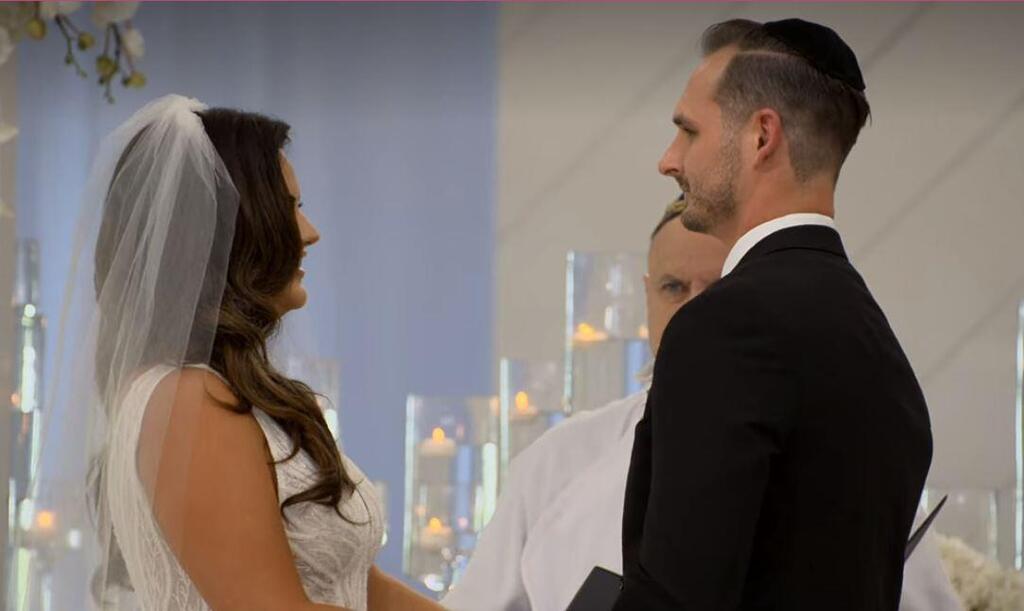
‘Married at First Sight’
Blecher sees a major difference between Israeli and American television. Israel, he says, knows how to make television “amazingly,” but the stakes are different. “Television in Israel right now is mostly global formats like ‘Big Brother,’ ‘The Amazing Race,’ ‘The Masked Singer,’ ‘Dancing with the Stars.’ When I moved back to Israel after 15 years away and came to be a VP, it was an amazing life lesson in many ways. Unlike the United States, in Israel there is much more thought and the risk is much bigger. A show that starts in Israel will air even if it fails. If you filmed 30 episodes, you will broadcast it even if it is bad. In the United States, I had shows that failed and were taken off the air.”
When Blecher speaks about less successful shows that still aired, he includes “The Americans,” the Channel 13 docu-reality series in which he appeared. He says it is impossible to separate the show from its timing: it was filmed before the October 7 massacre and aired almost three years later, after Israel and Israelis had changed.
“It was hard for me to objectively watch Assaf the person living like that, disconnected from reality,” he says. “The life experience was not authentic anymore. We are people who live in Los Angeles, as if in an ivory tower and disconnected, while there is a war in Israel. We end up talking about champagne and caviar while the situation in Israel is what it is. That is why it is important for me to say it was filmed before the war.”
Appearing on camera also gave him a new understanding of the people he produces. “One of the reasons I did it was to understand what my talents go through,” he says. “When you suddenly enter it yourself, even though you think you know what the producer wants, you understand the format works because I decided to let go. I told myself that if I do this, I cannot be ‘Assaf the producer,’ because it is not fair to them and it is not fair to me. I would not really go through the experience.”
He and his partner decided not to manufacture a version of themselves. “We said we would not try to show something that is not us. We are not renting a bigger house just for filming. We are who we are. It took me two or three days to be inside it and forget the cameras. We said in advance that we would not fight in front of the cameras, and then you live your life and suddenly there are small fights, suddenly you see that I can be a little tough, a little impatient.”
The ratings did not crush him. “I do not live in Israel, so I never thought for a moment it would turn me into a star or influencer. That is not my life. I knew where the show was airing and what its abilities were. It did not surprise me, but it was an experience to see it. For my brothers and nieces and nephews, I became the star at home, and that was fun. But I did not have too many expectations. I did not think it would have ‘Big Brother’ or ‘The Amazing Race’ ratings. It is a docu-reality show on a specific channel. In the United States, for example, it would never have aired on a broadcast network, maybe on some cable network.”
(Photo: Reuters)
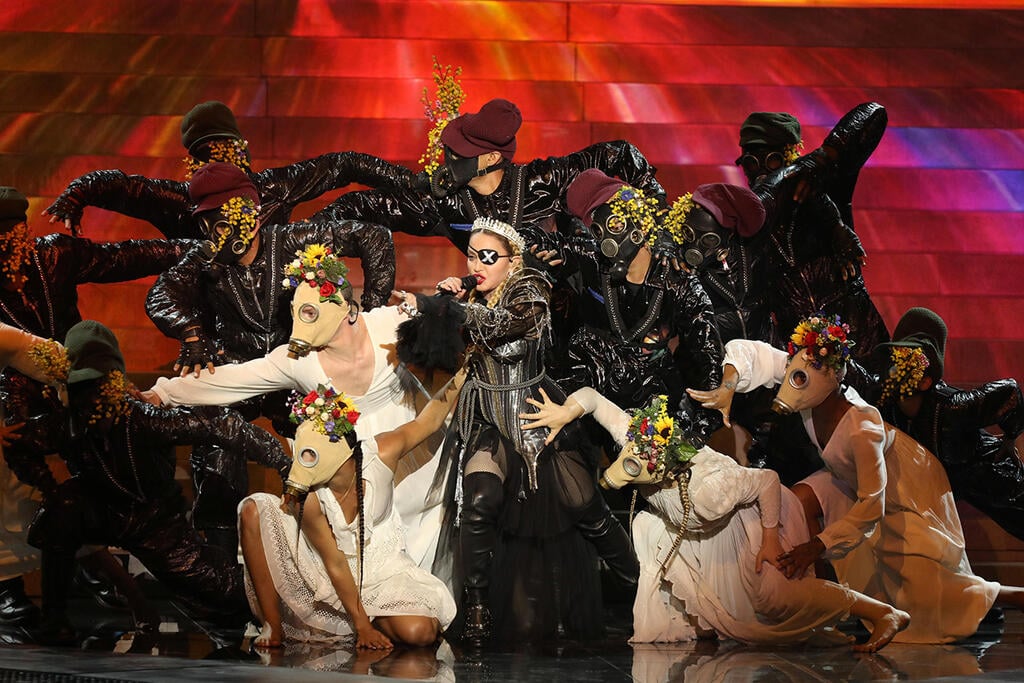
Aside from producing Miss Universe in Israel, two of Blecher’s most visible career achievements are tied to Eurovision. In 2019, he was the person who connected Madonna with the Eurovision production in Israel, bringing the queen of pop to perform in Tel Aviv. The idea of bringing an international artist to the contest came up at the Israeli Public Broadcasting Corporation in conversations involving then-CEO Eldad Koblenz, director Yuval Cohen and attorney Ayala Mizrahi. Blecher handled the relationship with Madonna and her team.
“When Eurovision came to Israel, it moved me in many ways,” he says. “First, I love Eurovision. Second, it was in Israel, and I thought about how I could help.”
He believed that if any global star would come to Israel, it would be Madonna. “There were, I think, other artists on the list, and then you start marking all the no’s, who will not come. I said I could bring Madonna. I knew her not only from the entertainment industry, but also from Kabbalah. I went there for many years. I said with full confidence that I could bring Madonna, but I did not really have such a solid basis. I knew I could reach them and at least create interest.”
He called Madonna’s manager, Guy Oseary, and asked how well he knew Eurovision. The timing helped: Justin Timberlake had performed at the competition two years earlier, and Madonna had just released a new album. A live performance in front of 200 million viewers could be useful. But the process quickly became complicated.
“There was a whole mess around it because she wanted to perform only new songs, and the European Broadcasting Union did not agree,” Blecher says. “Guy spoke with Madonna, she was interested, but he came back with the amount the production would need, and I did not know whether we could meet it.”
Blecher says he cannot discuss the reported cost, which ynet at the time put at $1.5 million. “I was only the one who made the match. I do not bring the money,” he says. The funding eventually came from Sylvan Adams. Once the money and date aligned, the hard part began: deciding what the performance would actually include.
“With all due respect to Eurovision, this is Madonna,” Blecher says. “A difficult negotiation began. How long could she perform, for example? They wanted to give her four minutes. She said, ‘Not happening.’ They told her, ‘Sing only hits.’ She said, ‘Not happening.’ It was a long and exhausting negotiation. It almost fell apart 200 times. She wanted a 12-minute performance. In the end, they gave her seven minutes and 58 seconds.”
His official title was simple: “I was ‘in charge of Madonna.’”
The behind-the-scenes clashes reached a peak when Madonna was held up at the entrance to Expo Tel Aviv by the Eurovision production, which claimed she had not yet signed the contract. “Eurovision is a very strong organization, and you have to accept the rules,” Blecher says.
Less than a decade later, Blecher has become the most senior Israeli figure in the Eurovision world. He was appointed executive producer of Eurovision Asia, which is set to be held for the first time in November. During Eurovision week in Vienna, he accompanied Asian professionals to show them how the contest works.
“We have been working on Eurovision Asia for a very long time,” he says. “It is really about teaching an entire territory what Eurovision is. There are Asians who know, but it is not as if you ask farmers in Cambodia or rice pickers in Nepal who Netta Barzilai was in 2018 and they know,” he jokes.
Building one final evening is only part of the challenge. “The real event is building the system of what you would call a national selection in each country. Unlike Europe, where every country is responsible for itself, in Asia we are responsible for the pre-selection competitions in every country. The number of times I have flown to Asia to deal with this is insane.”
For the first year, the target is 12 to 14 countries. Negotiations are being held with Japan, while South Korea, the Philippines and Vietnam are already involved, and talks continue with other major countries.
The question of Israel’s place in the Eurovision map also follows him. During Eurovision week, ynet reported that there had been talks about moving Israel to the Asian competition. Blecher says he does not see that happening.
“As far as I am concerned, it cannot happen,” he says. “There are countries that will participate in Eurovision Asia that are not fans of Israel, and second, Israel is very dominant in Europe. It would be a huge statement to do something like that, with all the problems involved.”
He declines to discuss whether he knew about such talks, but says Israel remains central to the Eurovision ecosystem. “I know they spoke among themselves and decided how to respond to it. Israel is a very central figure in the Eurovision puzzle.”
Blecher is also aware that in the international rooms where he works, his Israeli identity is never invisible. “My name is Assaf, not Jennifer. One quick Google and you know where I come from,” he says. “But we are professionals, and Eurovision is a place where people from all over the world work. It is hard for me to forget where I am from.”
He sees the Asia project as historic. “I feel I am making history. I am going to be the first producer to do Eurovision in Asia. I will be remembered as the first who ever did it. Maybe they will write on my gravestone: ‘The first to produce Eurovision Asia.’”
In conversations with countries such as Malaysia and Indonesia, Israel does come up, he says, but he prefers not to elaborate because he approaches the work from a professional place. Emotionally, however, it is different.
“No matter how many years I live outside Israel, we carry our Israeliness with us,” he says. “My partner is French, and he also left France about 15 years ago. If someone says something bad about France, he does not take it hard. With me it is different. We defend our country.”
In professional meetings, he cannot always respond the way he might want to. “If someone says something bad about Israel in a meeting, I cannot say, ‘Do not talk that way about Israel,’ but inside it hurts me. I am not Noa Tishby. I am not the voice of Israel. But I am Assaf. I am a person who was born in Israel and served in the army. I am a person who had a reason to want to bring Madonna and Miss Universe to Israel: because of my love for it.”