

In recent weeks, at nearly every public appearance or television interview, former Prime Minister Naftali Bennett has looked like the high-tech entrepreneur he once was, wearing jeans and a black T-shirt — a dress code associated with hi-tech office complexes. This is not just a wardrobe change in the sweaty month of August, which is hardly suited to a suit and tie. Bennett’s new casual look is a political statement.
Bennett is deep into the campaign for the 26th Knesset with his Together party, which is struggling in the polls, and he appears to be trying to bring with him a new-old spirit. Beyond the desire to project a younger, more accessible “one of us” look, the choice of a T-shirt and jeans signals to potential voters that he is offering politics that are 180 degrees different from those of Prime Minister Benjamin Netanyahu, who maintains a formal, establishment-style look with a tie.
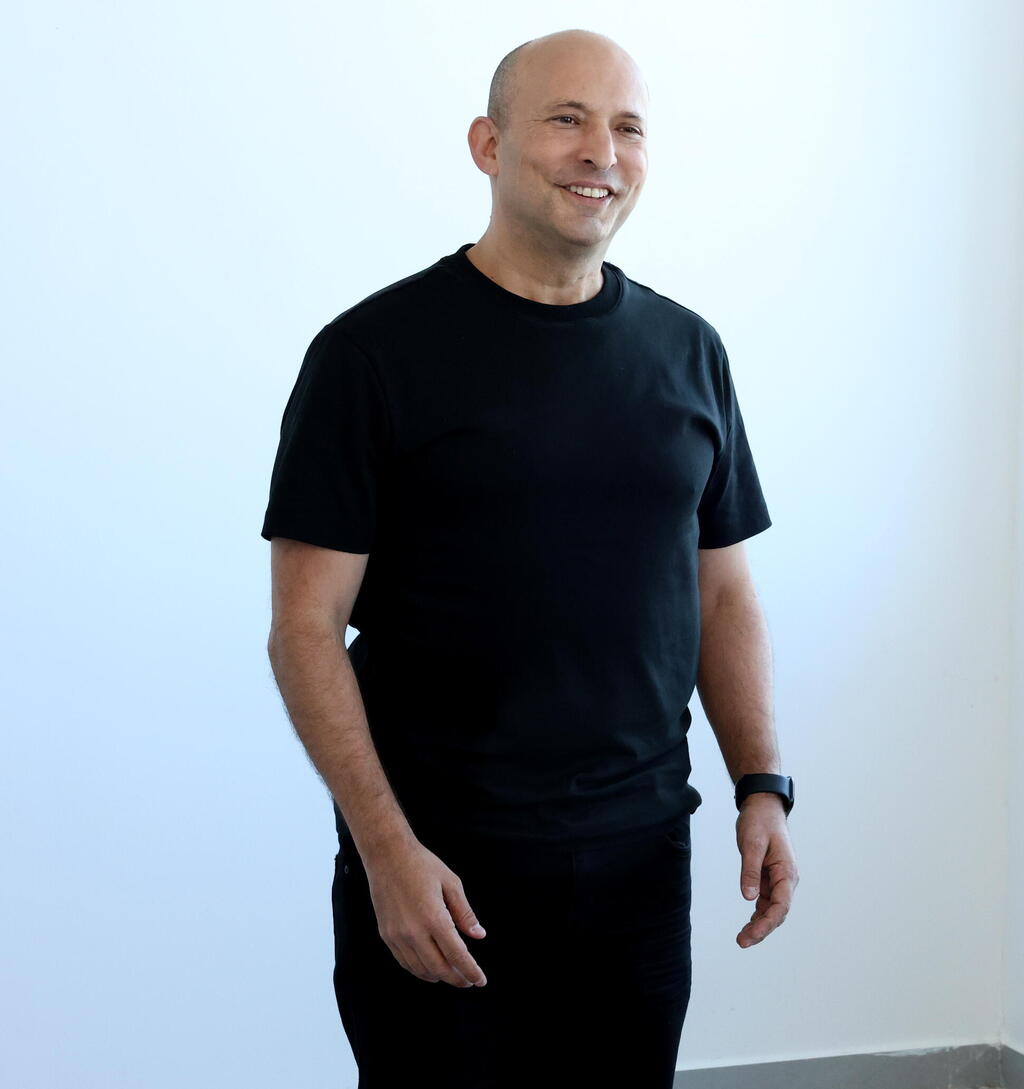
Similar to the ease projected by the appearance of Yashar party chairman Gadi Eisenkot in polo shirts, the two are also seeking to visually present a new kind of politics. Not one connected to the business dress code of a suit and tie, but an approach rooted in the ground and the seashore, as Eisenkot appeared this month. It is a choice that symbolizes not only the new narrative they are offering, but also marks the main rival of both men: Netanyahu. In that sense, the T-shirt is not merely an aesthetic marker.
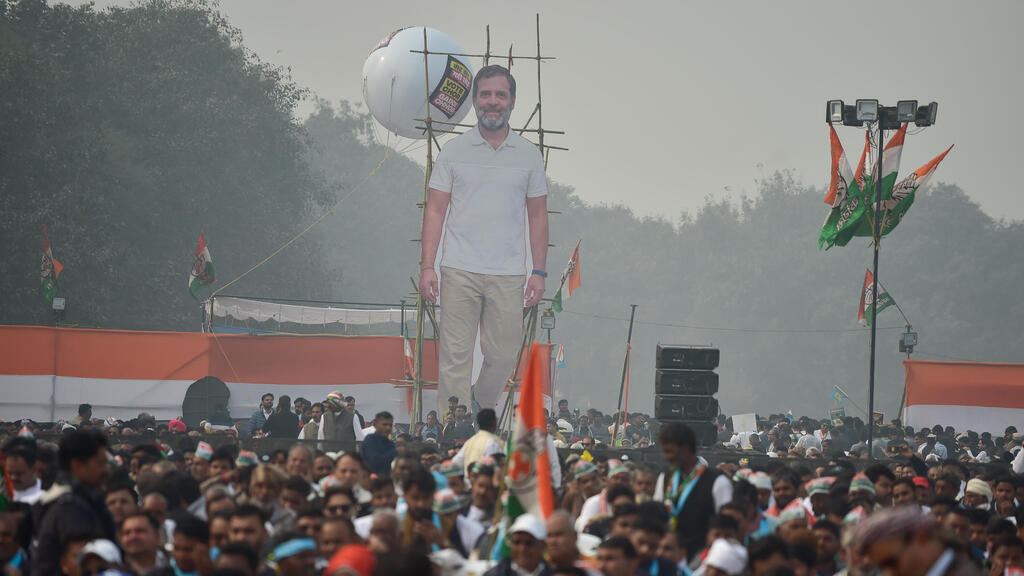
Indian opposition leader Rahul Gandhi built himself a public image based largely on a white polo shirt
(Photo: Ritesh Shukla/Getty Images)
Bennett himself was asked about his fashion choice in an interview on “Meet the Press” earlier this month. “Honestly, to be free,” he replied when asked what message he was sending. “I travel around, I crisscross the country, and this is more comfortable for me.” He added: “I know that in three months I’ll have to dress like you, so let me enjoy these last moments of grace.” In other words, he will be forced to readopt the official dress code of a suit and tie.
In an interview Friday evening on the television show “Ofira, Ohana, Seri,” which he entered wearing his new uniform, Bennett also addressed the T-shirt that projects “simplicity” — though from his mouth and from the interviewers who admired it, it sounded about as authentic as a thick layer of makeup — as someone who is “crisscrossing the country.” “Is this what matters now to the people of Israel?” he wondered aloud when the interview opened with questions about fashion.
T-shirts from Ukraine to Britain
In fact, Bennett did not invent anything. He is joining a growing club of young politicians who have discovered the electoral power of the T-shirt. Ukrainian President Volodymyr Zelenskyy turned the simple shirt into wartime attire with the outbreak of the Russia-Ukraine war. Indian opposition leader Rahul Gandhi built himself a public image based largely on a white polo shirt. It is a more Western look, in contrast to the Nehru vest, a traditional Indian jacket, regularly worn by Prime Minister Narendra Modi, whose jacket has become associated with his name.
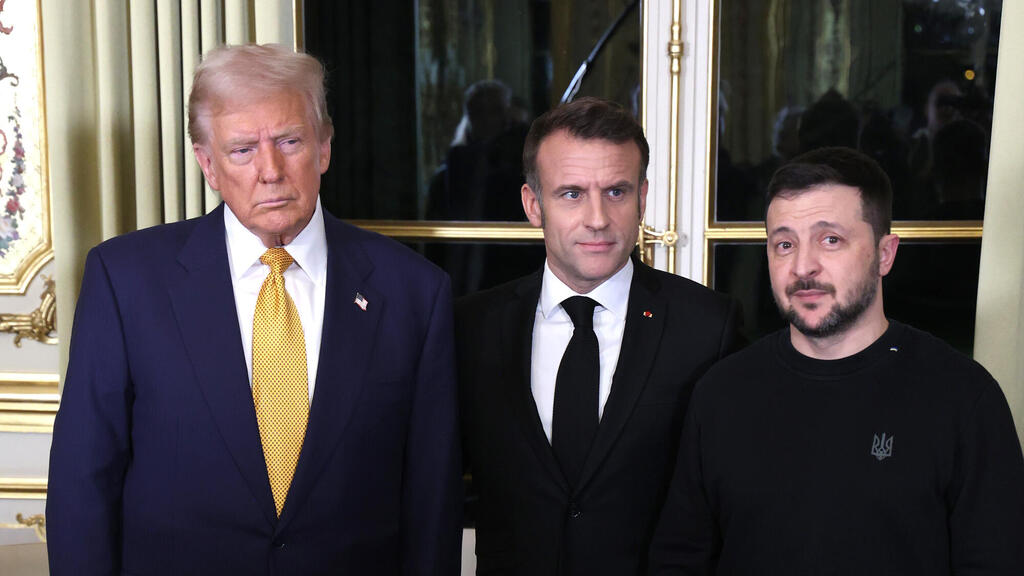
Ukrainian President Volodymyr Zelenskyy turned the simple shirt into wartime attire
(Photo: Oleg Nikishin/Getty Images)
In Britain, the trend is being led by incoming Prime Minister Andy Burnham, who for years cultivated a look made up of a dark T-shirt, jacket, jeans, sneakers and square glasses. The Financial Times devoted an entire article in June to the relationship between his wardrobe and his politics, arguing that Burnham wants to be perceived as “a rule-breaker and modern man of the people. A politician who wants to do things differently.”
Monocle magazine even praised his fashion choices, all from the brand Private White V.C., the last independent clothing factory in Manchester. The brand makes every item by hand, and 90% of its raw materials come from within 20 miles of the factory, helping support British businesses. The price of a T-shirt is 80 pounds, about 320 shekels, which is similar to the price of a high-quality T-shirt from a premium brand.
In an era when a suit symbolizes old politics, sometimes the way to look like change is simply to take off the tie
The choice to support British brands that manufacture from local raw materials sends a message of patriotism. Imagine, for example, what would happen if Bennett boasted that he wears local brands such as Ata or Holyland, or turned to Israeli designers such as Doron Ashkenazi or Eliran Nargassi to design several items for him, and how much resonance that would add to fashion brands in Israel.
“If more public figures, politicians and celebrities supported British industry, craft and businesses, Britain would be in a far better place economically, logistically and operationally than it is today,” James Eden, founder and CEO of Private White V.C., told the magazine. “It is wonderful that Prime Minister Burnham does this consistently. I genuinely struggle to see how anyone could say anything negative about a British leader supporting and wearing British-made clothes.”
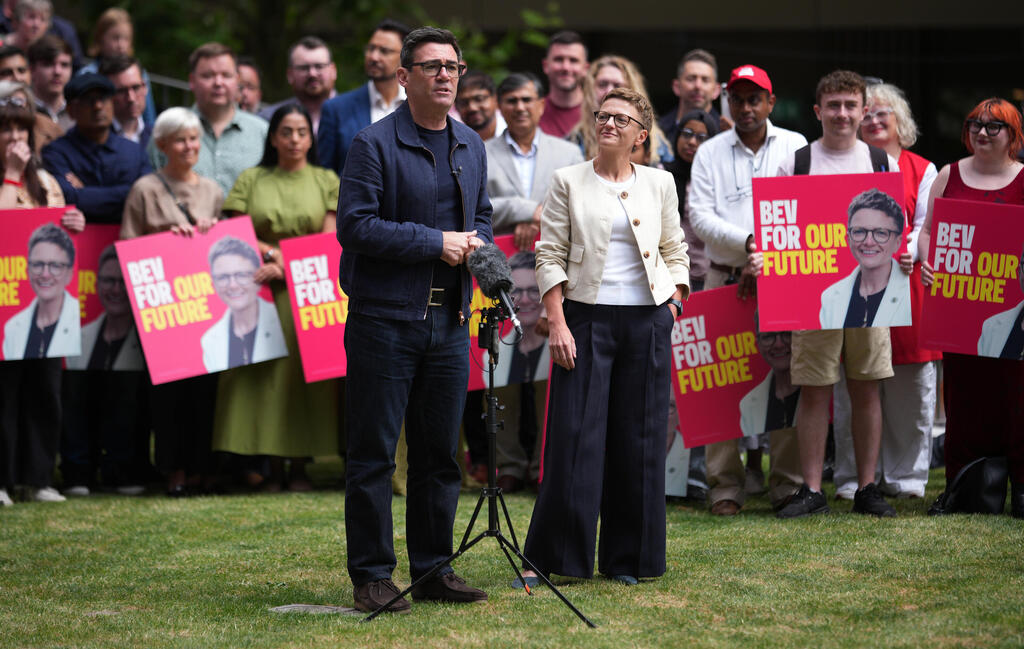
The clothes of new British Prime Minister Andy Burnham are a tool through which he signals distance from London and the political elite
(Photo: Christopher Furlong/Getty Images)
Burnham, who served for a decade as mayor of Manchester, built his career on opposition to what he calls the “Westminster bubble” and on emphasizing his northern identity. That is why his clothes, too, became a tool through which he signals distance from London and the political elite. In a speech in Manchester, he even joked that he had received “special permission” to wear what Westminster people call “my Manchester clothes.”
After Conservative leader Kemi Badenoch called him “a pair of eyelashes and a black T-shirt,” he posted a short video in which he looked at the shirt and clarified with a wink: “Actually, it’s navy.” The video went viral and helped position him as accessible and down-to-earth, and even more so, as a politician who also knows how to use social media with humor.
Like Bennett, who said the T-shirt has a limited shelf life, Burnham’s T-shirt also disappeared when he entered the prime minister’s residence at 10 Downing Street. On his first day as Britain’s prime minister, Burnham abandoned the T-shirt in favor of a dark suit and tie. That transition underscored just how much the clothes were part of the story: The T-shirt framed his image as someone outside the establishment; the suit is Burnham’s new uniform now that he stands at its head.
'Minimalist look, maximalist politics'
After Ukraine, Britain and Israel, this fashion politics also conquered the United States this month with Abdul El-Sayed’s victory. The Democratic Senate candidate in Michigan, who won the primary after a campaign that presented him as the antithesis of the party establishment, is identified by a black T-shirt with a tiny V-neck that stretches across his muscular arms.
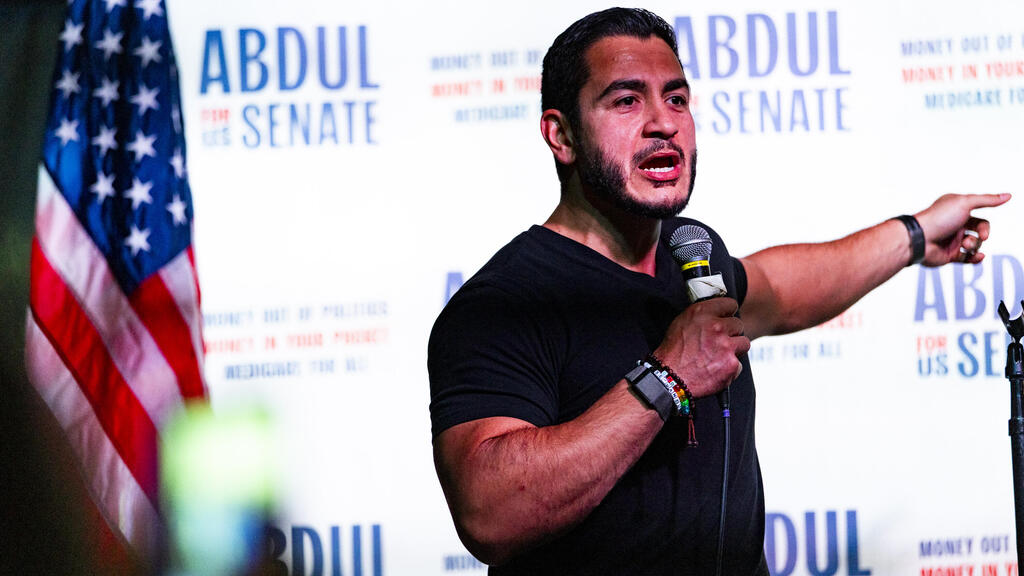
Democratic Senate candidate in Michigan, Abdul El-Sayed in his trademark black V-neck T-shirt
(Photo: Emily Elconin/Getty Images)
“Minimalist look, maximalist politics,” El-Sayed described his clothing in a video he created with stylist Sophie Strauss, who offers him a range of garments while loading them with the agenda he seeks to promote. For example, a green jacket emphasizes values of sustainability, a colorful plaid button-down shirt references the LGBTQ community — so ugly that it is hard to believe anyone in the community would be willing to wear it themselves — while he said a keffiyeh was “definitely on brand for me,” and a camouflage vest, in his view, symbolizes war.
One can take with a grain of salt the unfashionable choices Strauss offers, which look more like a jumble of clothing items than a style statement. Still, here too she demonstrates and emphasizes how El-Sayed, like other young politicians of his generation, uses clothing and social media to present an image that opposes old politics and tailored suits from luxury Italian brands such as Brioni or Zegna, which politicians in power such as Donald Trump, Netanyahu and Putin boast of wearing.
Ultimately, in a world where politicians are judged not only by what they say but also by how they look in the feed, on television broadcasts and in the street, the current discussion about the T-shirt is not really about the shirt, but about what the suit represents and the desire to distance oneself from it. But it also points to an inherent paradox: Bennett, Burnham and El-Sayed may come from entirely different places, but they all understand the same thing: In an era when a suit symbolizes old politics, sometimes the way to look like change is simply to take off the tie.