

Any new television series could use the best publicity department there is: reality. But in the case of "Cupertino," there was no need for a late-night brainstorming session. A legal drama about Silicon Valley's invisible victims in the age of artificial intelligence gets fresh ammunition every other day, as it becomes increasingly clear just how dangerous the toy placed in the hands of billionaires raised on the motto "Move fast and break things" can be. For Robert and Michelle King, among the most successful and influential television creators working today thanks to "The Good Wife," "The Good Fight," "Elsbeth" and "BrainDead," the titans running the business, or perhaps being run by it, are the gift that keeps on giving.
And just days before "Cupertino" premiered (the series is available in Israel on yes, HOT and Cellcom TV), none other than Sam Altman, CEO of OpenAI and the man behind ChatGPT, volunteered to provide the show with the most effective tagline it could ask for: "The world should accept some bad things happening for the benefits of this technology." In its own clever, witty and entertaining way, "Cupertino" shines a spotlight on precisely those "bad things."
Robert listens to Altman's quote and laughs. "Can we point out that they're behaving really stupidly?" he says in an exclusive interview with ynet. "They're their own worst enemies. They need a crisis manager to sit them down and say, 'You're not always going to have a friendly audience.' They always have a friendly audience, an accommodating interviewer who won't ask them anything controversial. And then they get into territory where the price is much higher... They reveal who they really are: robotic, inhuman nerds who never got laid in high school and are now kind of crazy with power, self-importance and a sense of entitlement."
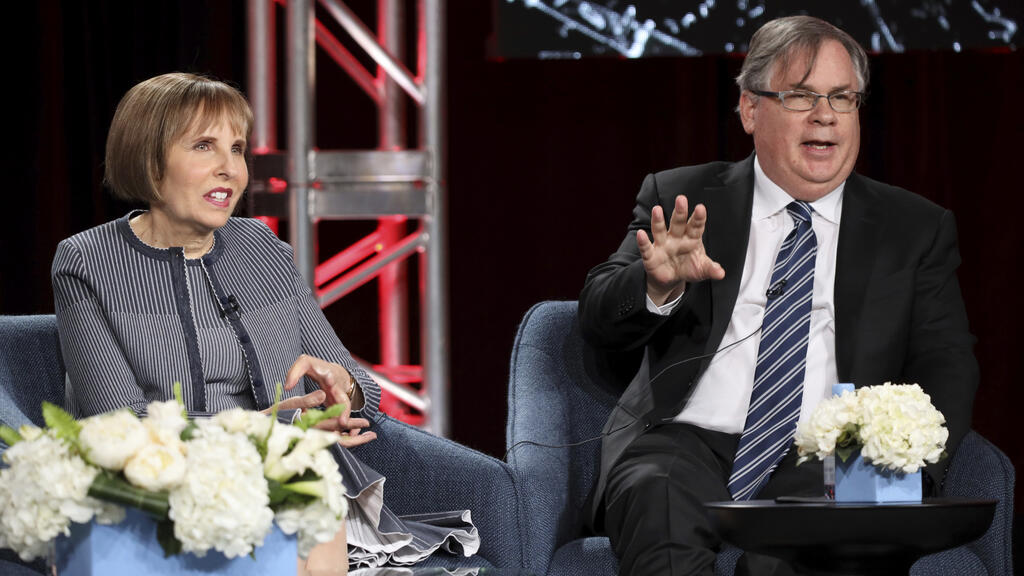
As you might imagine, "Cupertino" is unlikely to make the Kings particularly popular on the campuses of Google, Meta, Apple, Amazon or the AI companies. Nor will it win them many friends at much smaller corporations where greed has overtaken entrepreneurship and innovation, even as executives convince themselves they are merely embodying the spirit of Ayn Rand. And that's before the series tackles issues such as sexism, worker exploitation, conflicts of interest, exclusive inner circles and more.
"Silicon Valley is a place with an enormous amount of power, but it's still kind of a small town, so a lot of people know each other," Michelle says. "That's very good for drama."
Are you at all concerned about becoming a target yourselves? As the series shows, these people aren't exactly nice.
Michelle: "Every episode is named after one of the people who's been hurt because we wanted to tell a David-versus-Goliath story. So unlike other shows, we're not necessarily focusing on the oligarchs."
Robert (laughing): "Since tech now controls Hollywood, Michelle and I have already made our retirement plans."
'AI is very good at information, less good at putting emotion into a script'
The idea of setting a legal drama in Silicon Valley took shape in the Kings' minds long before taking shots at the new-money elite became fashionable.
"Toward the end of 'The Good Wife,'" Robert recalls, "CBS ordered a spinoff to launch its streaming service. We thought about sending Diane's character [Christine Baranski] to Silicon Valley, but there was no interest, so we forgot about it. Then, two years ago, our show 'Evil' was canceled, and we started thinking about what to do next. AI was obviously part of the conversation. We realized it was a room with lots of doors, and for a series with 20 episodes a season, the more doors, the better."
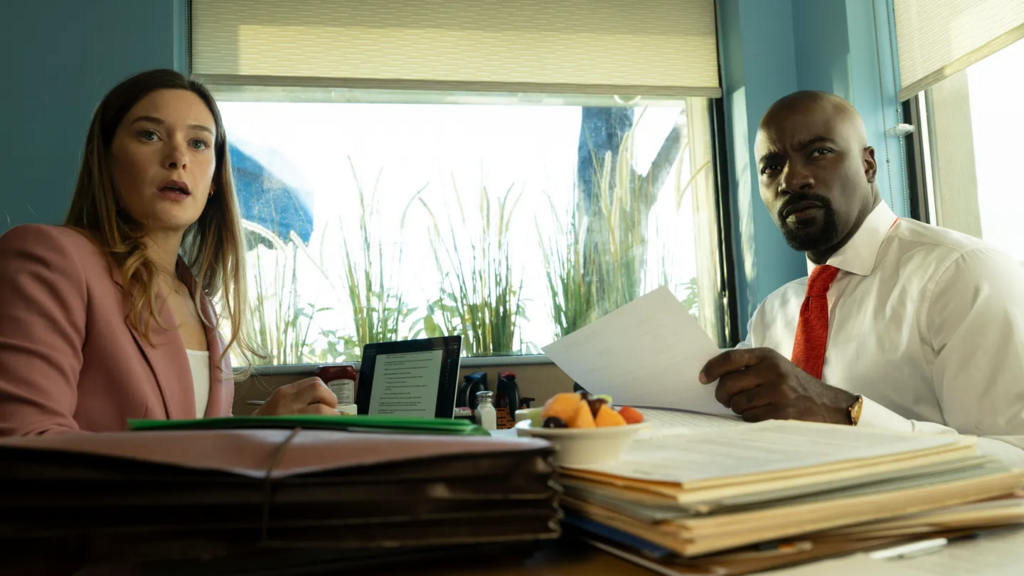
From 'Cupertino'
(Photo: Courtesy of yes, HOT and Cellcom TV)
And so the Kings returned to their original idea, this time without any connection to "The Good Wife" universe, although they brought along a few familiar actors.
The protagonists of "Cupertino" are Michael (Mike Colter, who played a drug kingpin on "The Good Wife" and Luke Cage in the Marvel universe), an experienced attorney who was fired from the startup he founded and decides to use his insider knowledge to help the industry's downtrodden, and Olivia (Rachel Keller, "Legion," "Fargo"), a junior attorney fired from the same company on the same day who joins forces with him.
Together, they open a law firm representing Silicon Valley's invisible people, those crushed under the weight of wealth and power. Each episode centers on a different case, alongside continuing storylines that reflect the profound crisis facing the political and legal systems as technology advances at breakneck speed, and the enormous damage it can cause in the wrong, and unscrupulous, hands.
For Robert, exploring Silicon Valley's darker side also carries personal significance.
"I grew up in San Jose, California, and watched it all develop," he says. "My father worked as a computer programmer, and I saw how every generation of technological development pushed out the generation before it. There was something about the people coming out of Palo Alto. You could see how they used mathematics to make money and create weapons.
"Michelle and I thought it was incredibly interesting, so we started researching the legal side because we knew we wanted to make a legal drama. We were amazed by how few prosecutions there were for white-collar crimes in Silicon Valley, while at the same time the value of these companies was growing by trillions of dollars. It's like the Gold Rush. You see money creating an atmosphere where there is no law."
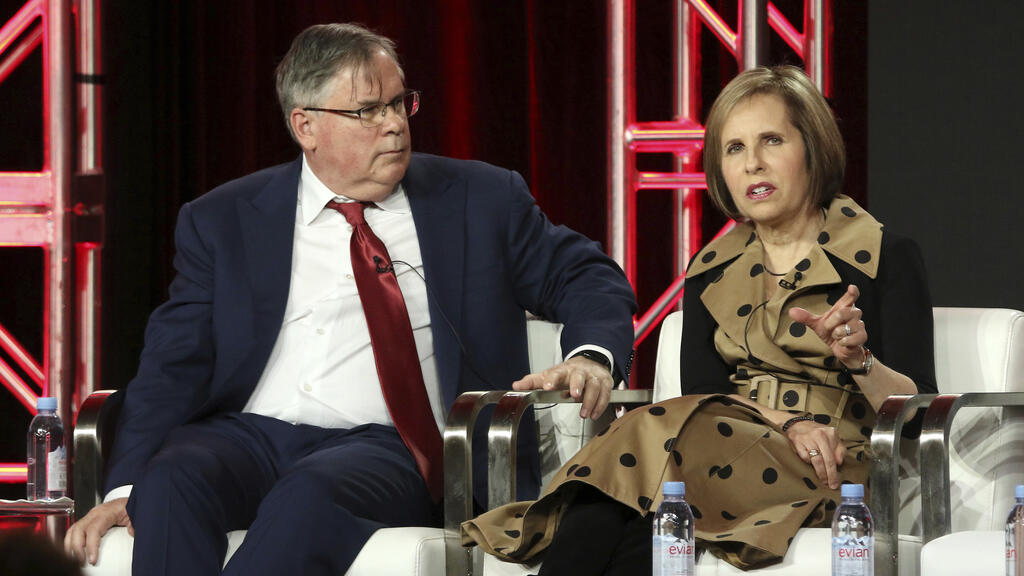
Robert and Michelle King
(Photo: AP)
But you also approach it in a humorous way.
Robert: "Because we're basically clowns. I mean, Michelle, you weren't the class clown, were you? But whenever we're worried about getting too serious, we go for a joke, and that can turn something offensive into something less offensive.
"I'd say it's hard to throw a punch at someone who's telling a joke, although then again, there's Trump. But what I mean is that when you're entertaining people, they lower their defenses a little."
Is there a fear that AI will eventually replace writers too? Is that something you feel around you while working on a series like this?
"I sense that fear among creators and writers, but especially among production people, those who do effects and things like that. There's a fear that AI is already starting to eat away at the edges. But writers understand that, for now, AI is pretty limited when it comes to replicating wit and recognizing what makes a bad script. I think AI is very good at information and less good at understanding how to put emotion into a script."
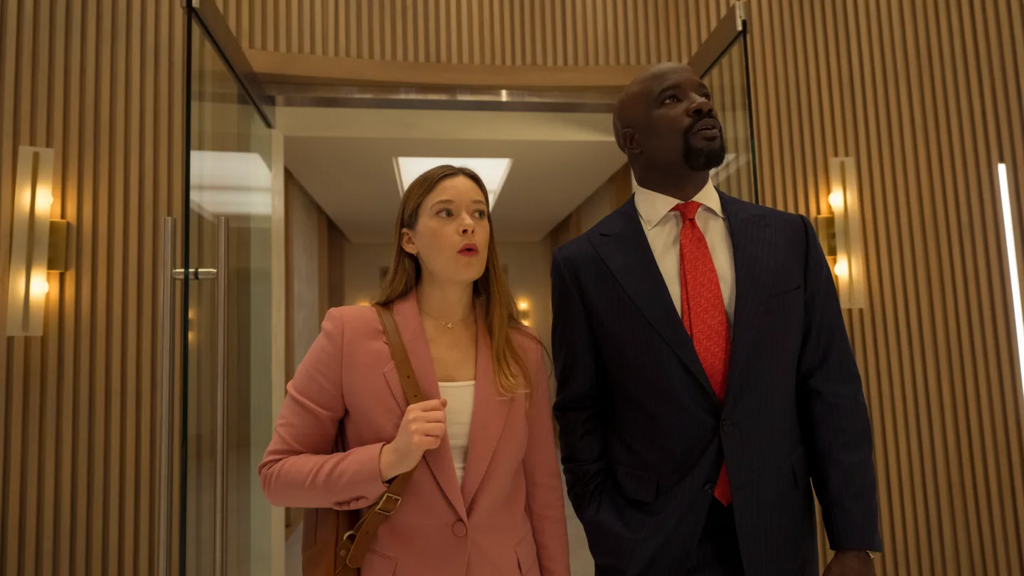
From 'Cupertino'
(Photo: Courtesy of yes, HOT and Cellcom TV)
How much AI was involved in writing a series about AI?
Michelle: "There's an episode about a romance with a chatbot, and for that, one of the writers experimented with that kind of interaction with AI. But other than that? Zero interest."
Another issue troubling Hollywood is the merger of Paramount and Warner. You have a major deal with CBS, which belongs to Paramount. Where do you stand on that?
Robert: "There's a lot of trust on both sides after 17 years of working together, going back to 'The Good Wife.' I understand people's fear of conglomerates and of having one fewer player in the market. Suddenly you get bad coverage somewhere and you're finished in this town. But good scripts will always find their way. It's a bit of a cliché, but I believe it's true."
Michelle: "We haven't had even a minute of pushback on anything we've done with this series, and you can see that it goes pretty far toward the end. They haven't had a problem with anything we're doing."
How do a married couple make television together?
Robert King, a Catholic, and Michelle Stern, who is Jewish, met in a shoe store in Los Angeles in the mid-1980s, when both were students trying to find their way into the film and television industry.
Next year, they will celebrate 40 years of marriage, a partnership that has produced one daughter and several of the most successful and acclaimed television series of the 21st century.
Chief among them, of course, is "The Good Wife," recently named by The New York Times as one of the 100 best television series of the millennium. Its spinoff, "The Good Fight," was no less accomplished and considerably more daring, reflecting America's descent into madness through the events unfolding at a Chicago law firm with deep ties to the Democratic Party, which was being eaten away from the outside by Republican populism and from within by the progressive movement.
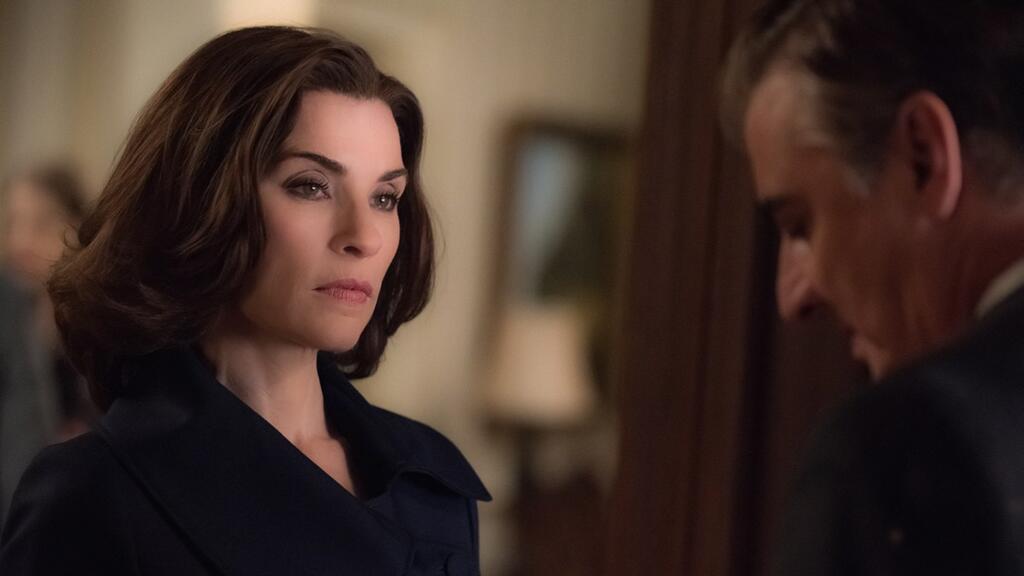
From 'The Good Wife'
(Photo: CBS)
Accordingly, Israel also entered the mix more than once, prompting accusations that the Kings were promoting Zionist propaganda. Their role as producers of the American adaptation of the Israeli series "Your Honor" probably didn't help.
In the masterful final season of "The Good Fight," which aired in 2022 and now looks, in retrospect, like a nightmare prophecy that came entirely true, rising antisemitism became a central theme, and even the cultural boycott of Israel was brought into the discussion.
Marissa, a character who began on "The Good Wife" and continued on "The Good Fight," even boasts about her time serving in the IDF and ultimately marries a man named Ze'ev.
When I tell the Kings that the season offered a rare moment when I felt seen, and suggest a Marissa and Ze'ev spinoff, they laugh but avoid getting into the subject.
"That was a fun season," Robert says. "As awful as that period was, it was fun."
They are much more comfortable answering what is perhaps the most intriguing question about their partnership: How do you work together for 30 years without driving each other crazy?
"It's like having another half of your brain that can also tell people what to do on your behalf," Robert explains. "Michelle does the casting, I do the editing, and we're both in the writers' room. We're never in a situation where we disagree with each other."
Michelle adds: "I know there are people who make television without their loved ones. Frankly, I have no idea how they manage."