

Pokémon is no longer just a childhood memory. In Israel, it has quietly evolved into a serious collecting culture - one that blends nostalgia, finance, community and pop history. All encapsulated in what can only be described as Israel’s unofficial Pokémon museum.
Dor, a long-time Pokémon collector, grader and community builder, has a collection that spans rare cards, sealed vintage packs, graded memorabilia and even VHS tapes and soundtracks from the franchise’s early years. Walking into his space feels less like entering a hobby room and more like stepping into a curated archive.
At the center of the conversation is a single card that defines the Pokémon collecting universe: Charizard. Specifically, the First Edition Charizard from 1999. “This is the card everyone is chasing,” Dor explains. “It represents Pokémon itself.” In near-mint condition, a graded example can be worth around $12,000. In a perfect PSA 10 grade, the same card can reach close to $400,000. The gap between grades, Dor explains, can mean the difference between a collectible and a life-changing asset.
Grading is where the conversation deepens. Much like diamonds, Pokémon cards are evaluated by strict criteria: centering, surface condition, corners and edges. Each card receives a score from 1 to 10, with 10 representing near perfection. “A card coming straight out of a pack doesn’t mean it’s a 10,” Dor says. “Printing flaws, handling, even factory issues can lower the grade.” In recent years, he notes, print quality has declined due to massive demand, making perfect cards even rarer.
Gallery
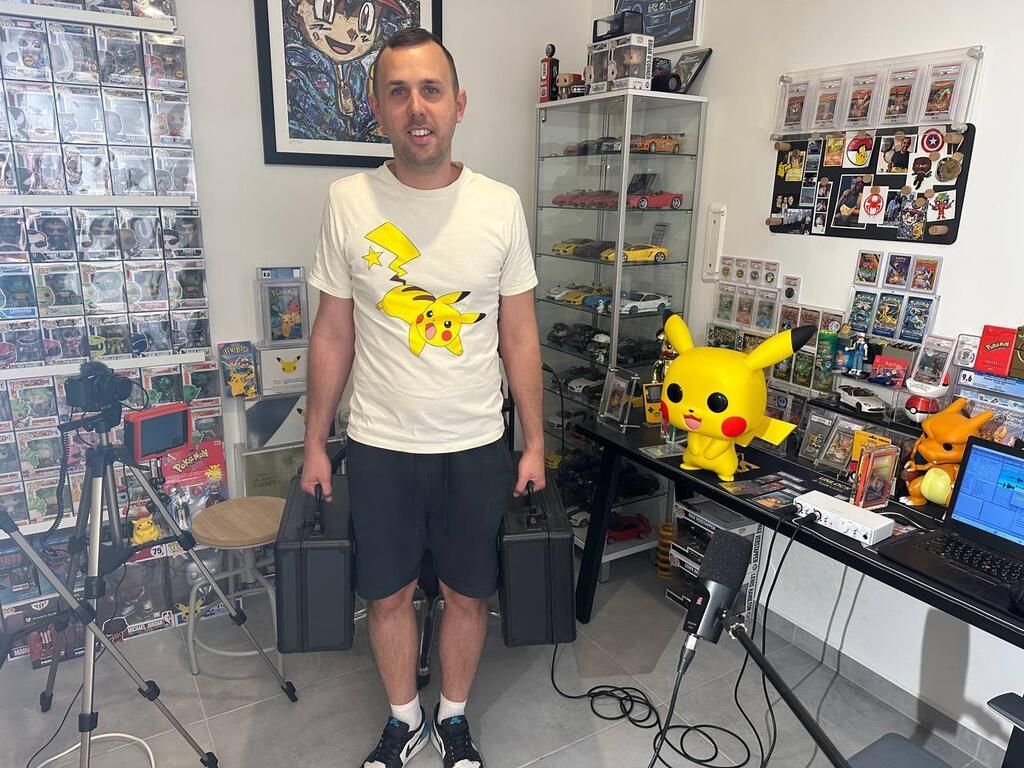
Dor, a longtime Pokémon collector and grader, stands in his collection room in Israel, holding two cases of trading cards. His space, filled with rare memorabilia, has become a hub for Pokémon collecting culture
(Photo: Bar Gindy)
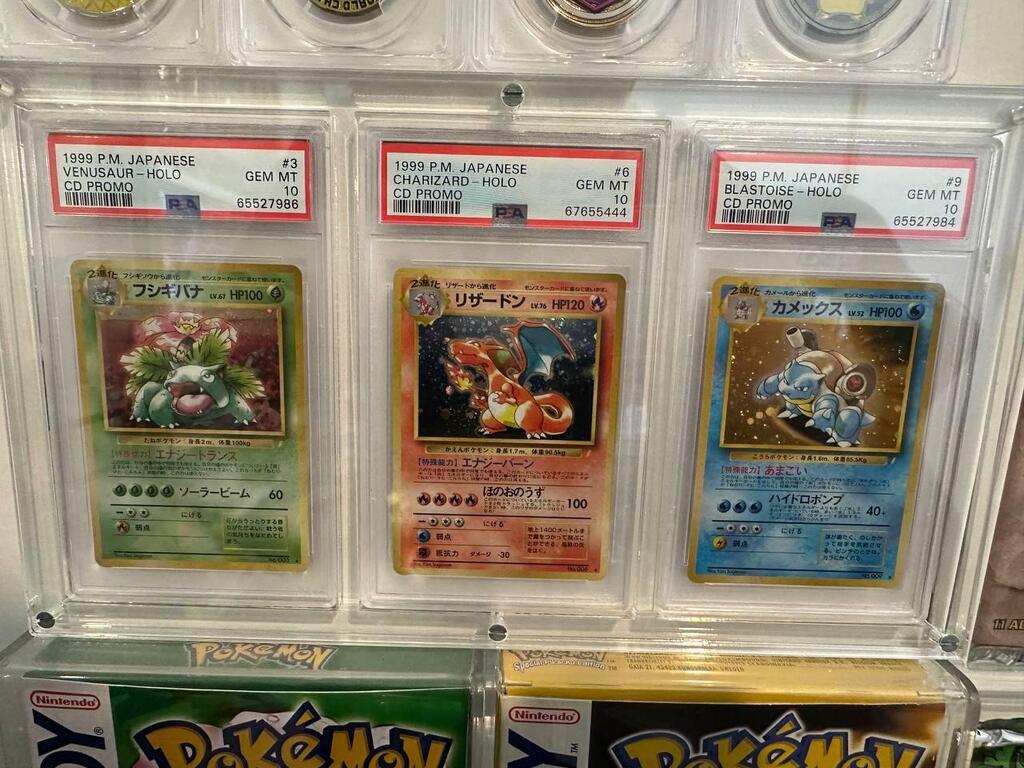
A close-up of three graded 1999 Japanese holographic Pokémon cards—Venusaur, Charizard and Blastoise—each graded GEM MT 10 by PSA
(Photo: Bar Gindy)
This technical reality has helped fuel a booming grading industry. International companies like PSA, Beckett and CGC dominate the global market, while newer AI-based grading systems are beginning to emerge. Dor himself operates a dual system: facilitating grading submissions abroad while also running an Israeli grading service focused on Hebrew-language collectibles, local sports stickers and items international companies refuse to grade due to lack of data.
The Israeli angle is key. While Pokémon is a global brand, Dor believes Israel is still at an early stage of its collecting curve. “We’re seeing American-style collecting culture arrive here,” he says. Events, conventions and weekly store meetups are becoming common. At recent gatherings, children and adults negotiate trades in dollars, flipping cards with the confidence of Wall Street brokers. “You see kids with briefcases,” he quips. “They’re already traders.”
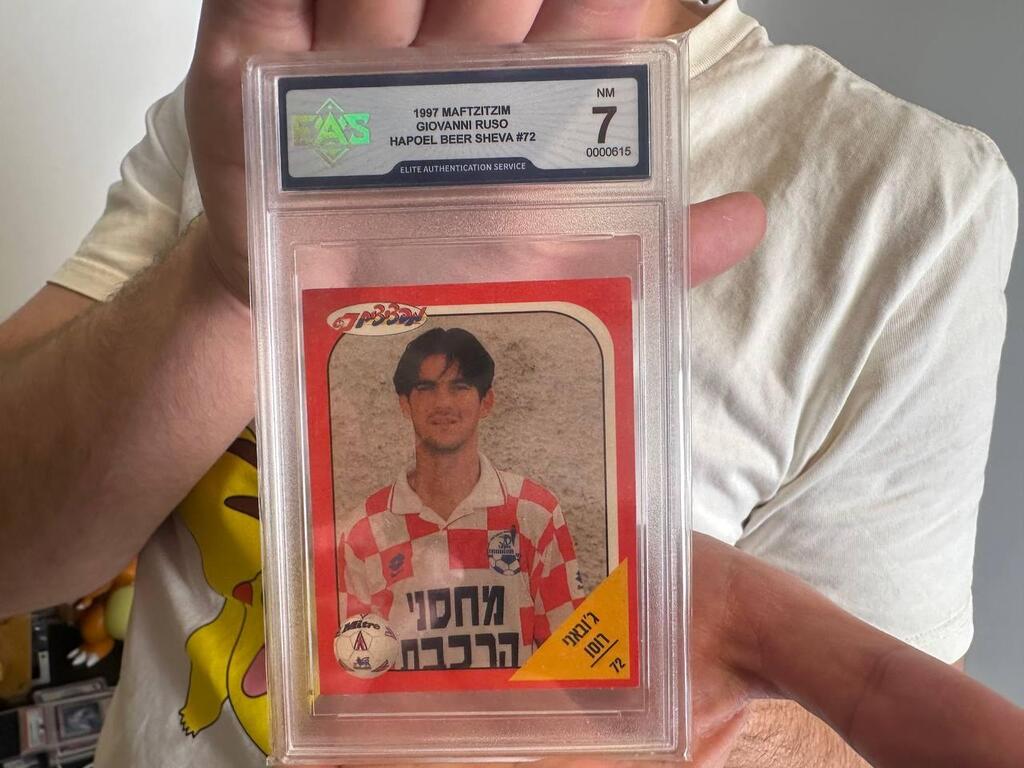
Dor holds a graded 1997 Giovanni Russo soccer sticker from the Mafzizim collection, part of his efforts to preserve local collectibles overlooked by global grading companies
(Photo: Bar Gindy)
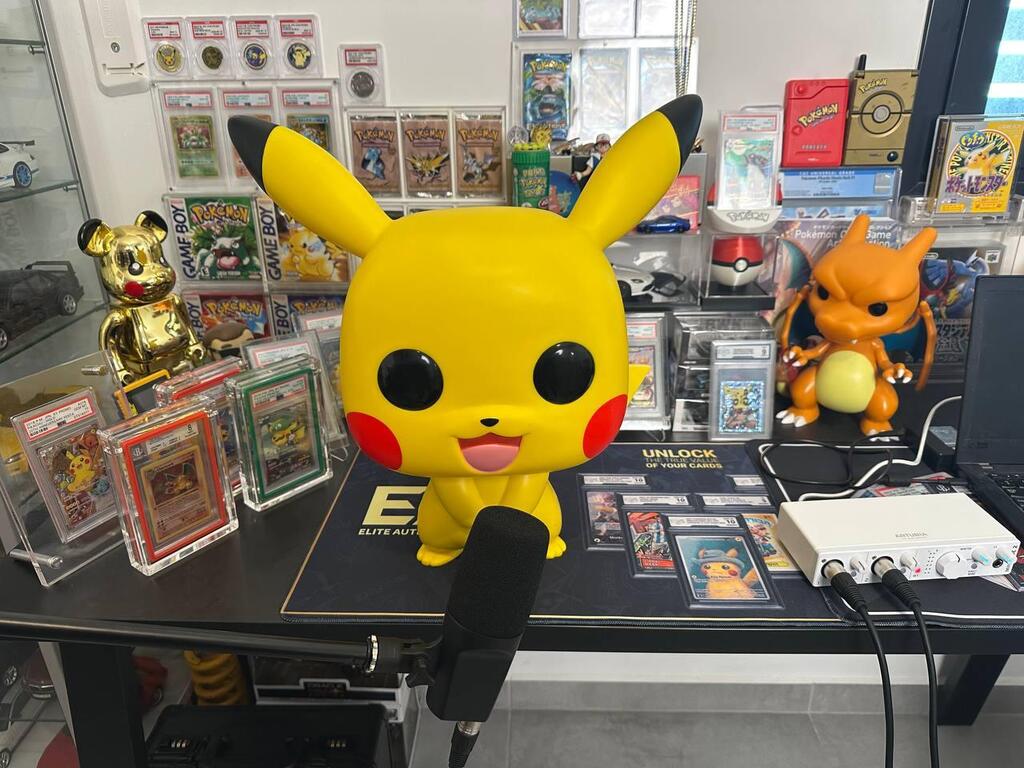
A large Pikachu figure sits on Dor’s desk, surrounded by rare graded Pokémon cards and collectibles
(Photo: Bar Gindy)
That rise has not been without tension though. Dor discusses scalpers - buyers who clear shelves to resell products at inflated prices - and the backlash they’ve created. In response, many stores now limit purchases to protect collectors and children alike. Still, demand continues to grow, driven by YouTube breaks, livestream pack openings and celebrity involvement.
No name looms larger than Logan Paul. His purchase of a rare Pikachu Illustrator card, graded PSA 10 and valued at over $5 million, brought Pokémon collecting into mainstream headlines. But Dor is quick to point out that value is not always about hype. “Some cards are valuable because they’re rare. Others because of cultural meaning. The best ones have both.”
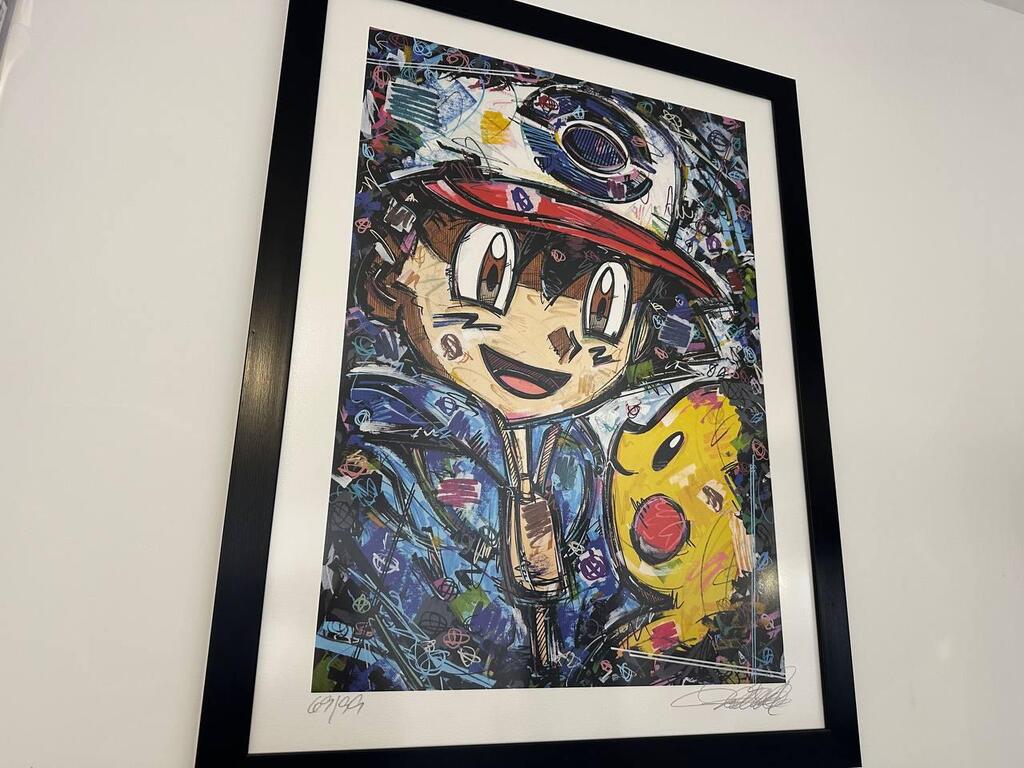
A framed artwork of Ash Ketchum and Pikachu hangs in Dor’s collection room, blending pop culture and personal nostalgia in Israel’s growing Pokémon collecting scene
(Photo: Bar Gindy)
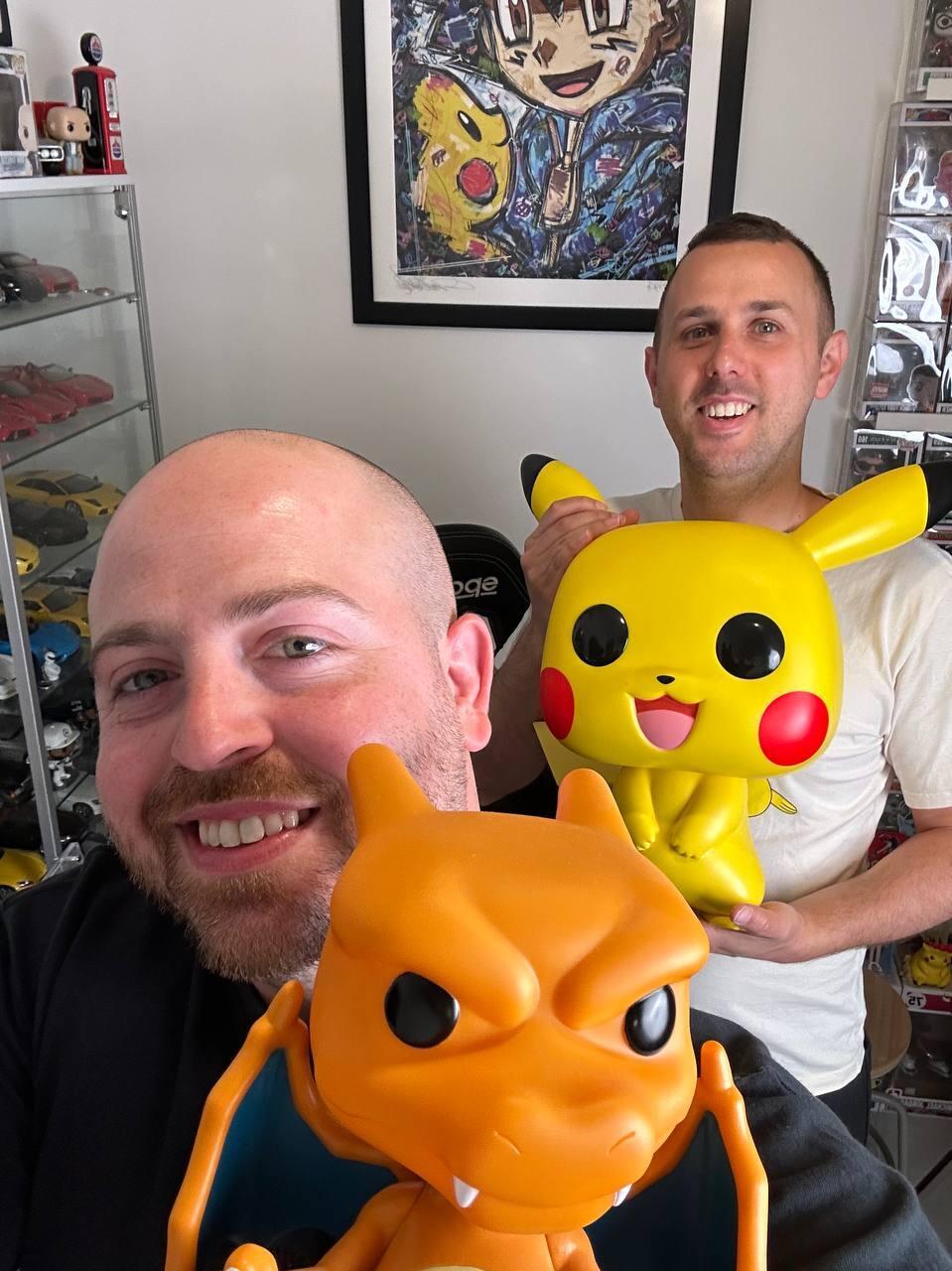
Bar Gindy, host of the People & Collectors Podcast, takes a selfie with collector Dor, holding oversized Pikachu and Charizard figures in Dor’s Pokémon collection room
(Photo: Bar Gindy)
Pokémon’s strength, Dor argues, lies in its permanence. Unlike digital assets or trends, it is a physical, emotional object. “NFTs can disappear,” he says. “A card in your hand is real.” That belief drives his philosophy as a collector: preservation, grading and storytelling matter more than speculation.
Pokémon has become a cultural phenomenon. From Pokémon GO’s global takeover in 2016 to Japan’s cafés, city branding and upcoming 30th anniversary in 2026, the franchise shows no signs of slowing down. “Pokémon is stronger than Bitcoin,” Dor says without hesitation. “Bitcoin might disappear. Pokémon won’t.”
This demonstrates how objects become mirrors of identity, memory and ambition. Pokémon cards may be cardboard and foil, but in the hands of collectors like Dor, they become cultural artifacts.
- For more stories from Dor and other collectors, check out the People and Collectors podcast. The full interview is available with subtitles in English and 50 other languages.