

Wolf Creek (2005): a nightmare in the Australian Outback
Australia is a land of enormous open spaces, highways stretching hundreds of kilometers between settlements and vast stretches of wilderness where a person can disappear without a trace, especially if a hungry dingo gets to what remains of the body. For most travelers, that isolation is part of the appeal. For others, it can become hell on Earth. Australia has a long tradition of survival thrillers and horror films that transform its dusty, desolate landscapes into arenas of madness, terror and the stripping away of the civilized masks people wear to conceal the predators lurking beneath.
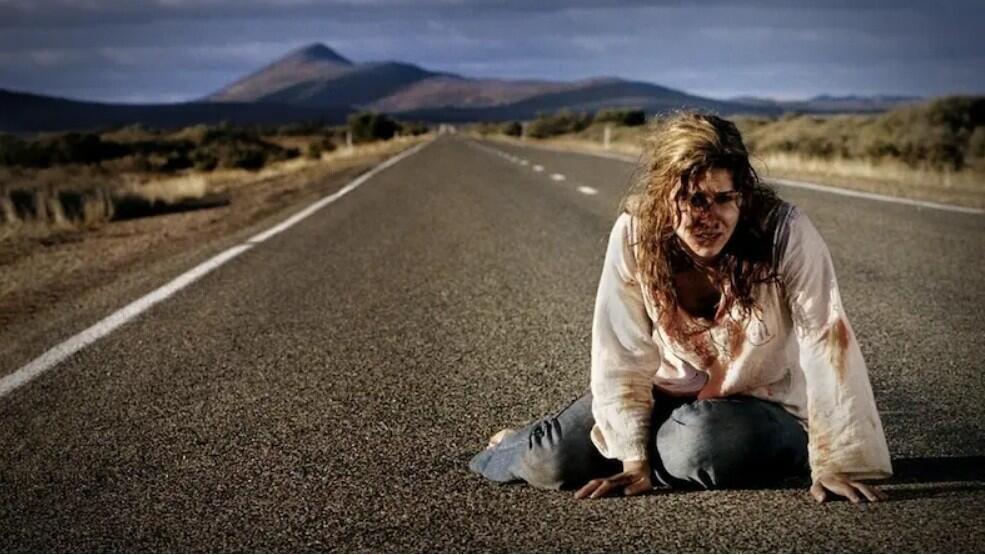
It is hardly surprising, then, that one of Australia's most notorious serial killers became an inspiration for several of these films. Between 1989 and 1992, Ivan Milat murdered seven backpackers in Belanglo State Forest, south of Sydney. He targeted travelers on isolated roads, offered them rides and exploited their vulnerability to attack them. His crimes included sexual violence against female victims. Investigators made a breakthrough after a British backpacker who had escaped an encounter with Milat contacted police. Milat was arrested in 1994, convicted of seven murders and sentenced to seven life terms. Investigators suspected that his killing spree, which may have begun years earlier, extended well beyond the crimes for which he was convicted.
Milat's personal history offered plenty of material for a horror filmmaker. He was the fifth of 14 children raised in poverty in a rundown Sydney suburb. His father, of Croatian descent, was an alcoholic whose violent temper deeply affected the family. Ivan stood out even among his siblings, displaying disturbing behavior from an early age, reportedly including attacks on animals with machetes. He spent much of the 1960s moving in and out of prison for various offenses. In 1971, he was wanted in connection with the alleged rape and robbery of two female hitchhikers he had picked up, but fled to New Zealand. He returned to Australia two years later and kept a low profile, eventually committing the crimes that would make him infamous.
When Australian director Greg McLean made his chilling 2005 horror film Wolf Creek, he was not attempting a straightforward recreation of the Milat murders. The story of three backpackers who fall into the trap of a seemingly friendly local, only to discover that he is a sadistic monster, is fictional. But McLean acknowledged that Milat's crimes helped shape Mick Taylor, the film's terrifying villain.
Another influence was the 2001 disappearance of British backpacker Peter Falconio in the Australian Outback. Falconio vanished while traveling with his girlfriend, Joanne Lees, who escaped their attacker, Bradley Murdoch. Murdoch was subsequently convicted of Falconio's murder.
Anyone looking for another film that echoes these horrors can turn to Netflix's Apex (2026), in which Charlize Theron plays a woman fighting for survival in the Australian wilderness while being pursued by a serial killer played by Taron Egerton. It is another encounter with a thoroughly depraved predator who sees an isolated traveler as prey.
The Town That Dreaded Sundown (1976): young couples in the killer's sights
In the spring of 1946, a series of terrifying attacks began around Texarkana, a city straddling the border between Texas and Arkansas. The attacker, dubbed the Phantom Killer by the press, preyed on young couples in secluded locations. His face was concealed, and he assaulted his victims with extreme violence. Some survived to describe their encounters with the mysterious figure. Others were not so fortunate.
The first known attack occurred on February 22, 1946, when Jimmy Hollis and Mary Jeanne Larey were sitting in a parked car. A masked man forced them out of the vehicle, beat Hollis with a pistol and sexually assaulted Larey. About a month later, Richard Griffin and Polly Ann Moore were found shot to death in their car.
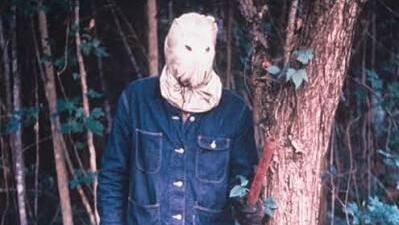
The Town That Dreaded Sundown: Before the legendary Halloween
(Photo: screenshot)
On May 3, Virgil Starks was shot and killed at his home. His wife, Katy, was also shot but managed to escape and survived. In all, five people were killed and three others wounded during the series of attacks. The killer was never conclusively identified, and the case remains unsolved.
Thirty years later, director Charles B. Pierce transformed the case into a horror film that became one of the earliest recognizable examples of the modern slasher genre. The 1976 movie opens with a declaration that the story is true and that only the names have been changed.
But reality and cinema did not always match. Pierce altered details of the attacks, rearranged events, changed their circumstances and introduced scenes designed to heighten the horror. He also modified the geography, presenting incidents that occurred on the Texas side of Texarkana as though they had taken place in Arkansas.
None of that prevented the film from leaving a lasting mark on the emerging genre, whose origins can be traced to earlier classics such as Alfred Hitchcock's Psycho and Michael Powell's Peeping Tom.
The Town That Dreaded Sundown helped establish several conventions that would become familiar to generations of horror fans. There were young victims seemingly punished for their sexuality, beginning with a couple who drove to a secluded lovers' lane for some privacy, and an anonymous killer whose mask concealed his identity.
Two years later, John Carpenter released Halloween, refining those elements and transforming them into a full-blown cultural phenomenon.
A new version of The Town That Dreaded Sundown arrived in 2014, adopting a clever metafictional approach. Rather than simply remaking the original, it imagined a world in which Pierce's 1976 film existed, and where the killer depicted in it might still be active. The result was a sequel of sorts, one that played with the boundaries between a real unsolved crime, its cinematic retelling and the mythology that developed around both.
The Girl Next Door (2007): horror in suburbia
Not every movie monster hides in an isolated cabin or stalks backpackers through the desert. Sometimes the monster lives in an ordinary house, in an ordinary neighborhood, surrounded by children and adults who continue with their daily routines while an unimaginable crime unfolds under their noses. Sometimes, some of those people even participate in it.
Sylvia Likens was 16 when she was placed in the care of Gertrude Baniszewski in Indianapolis during the summer of 1965. Her parents, who worked at a traveling carnival, left Sylvia and her 15-year-old sister Jenny at the Baniszewski home in exchange for payment.
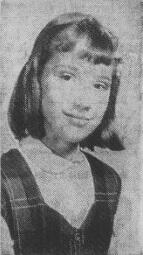
Sylvia Likens
At first, the arrangement seemed temporary and unremarkable. But within weeks, Sylvia's situation deteriorated catastrophically. Baniszewski, a mother of seven, began abusing her. Eventually, some of her children and other youngsters from the neighborhood joined in. Sylvia was beaten, starved, burned with cigarettes and imprisoned inside the house.
The postmortem examination documented more than 150 injuries, including burns, bruises and severe damage to her body's tissues.
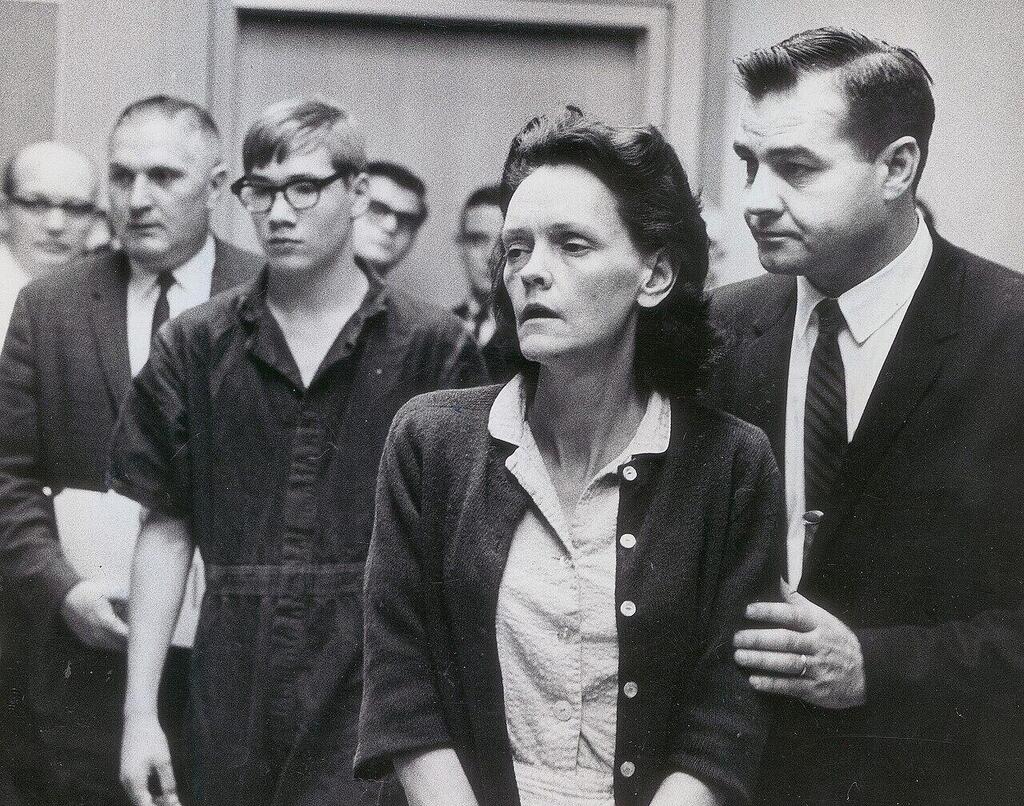
Convicted killer Gertrude Baniszewski in court. Richard Hobbs, wearing glasses, is visible in the background
On October 26, 1965, Sylvia was found dead. The official cause of death included a subdural hemorrhage resulting from a blow, together with shock and malnutrition. The subsequent investigation exposed the extent of the abuse and the participation of other young people. Some children had actively taken part, while adults who might have protected Sylvia failed to stop what was happening.
Baniszewski was convicted of first-degree murder. After serving approximately 20 years in prison, she was paroled in 1985, moved to Iowa and died of lung cancer on June 16, 1990, at the age of 61.
Four other defendants were convicted in connection with the case: her daughter Paula, her son John Baniszewski Jr. and two neighborhood boys, Richard Hobbs and Coy Hubbard.
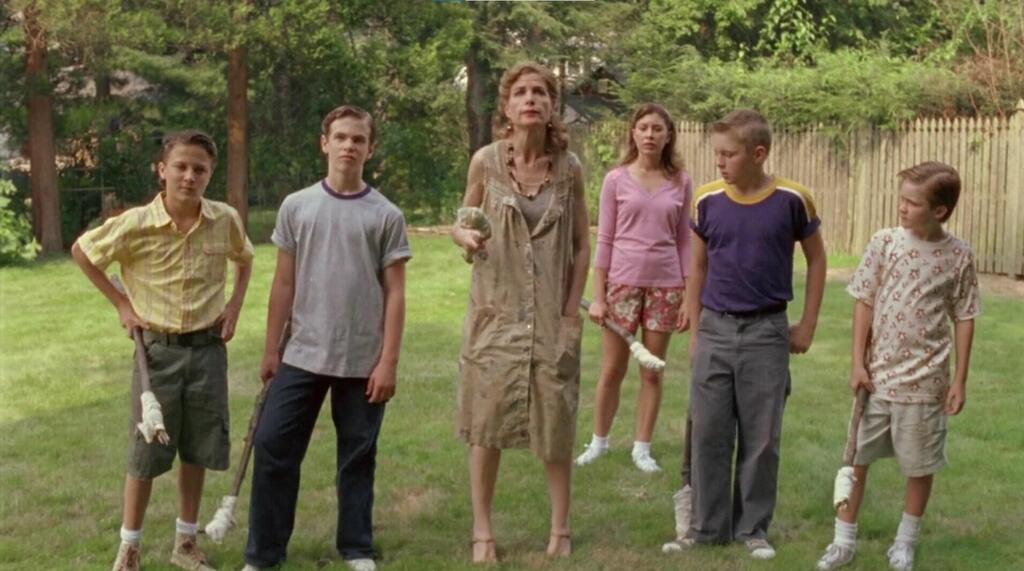
A scene from The Girl Next Door
(Photo: screenshot)
The 2007 film The Girl Next Door, which received limited distribution because of its disturbing subject matter, is not a documentary reconstruction of Sylvia's murder. It was adapted from Jack Ketchum's notorious 1989 novel, itself inspired by the crime.
The story takes place in a fictional setting and unfolds through the perspective of a boy who witnesses increasingly horrific abuse. Names and details have been changed, but the film retains the essential horror: a defenseless girl falls into the hands of adults and children alike, and the home that should have protected her becomes a prison.
Unlike many horror films, this one had no need to invent a devastating ending. Reality had already supplied it.
The Exorcist (1973): the supposedly possessed child behind a horror classic
Few horror films have penetrated the public imagination as deeply, or become such enormous hits, as William Friedkin's The Exorcist. Since its release in 1973, the story of young Regan MacNeil, played by Linda Blair, who falls under the influence of a demonic force and terrorizes her mother and the priests attempting to save her, has become one of the genre's defining works.
Yet behind the fictional story was an actual case from the United States nearly a quarter of a century earlier, one that raised enduring questions about the boundary between faith, medicine and fear.
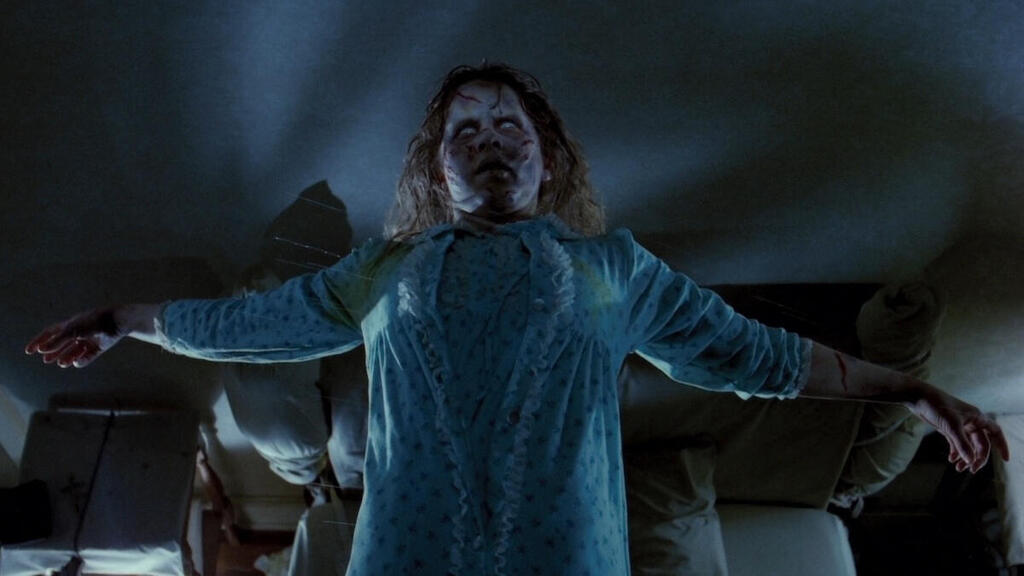
The Exorcist: An all-time horror classic
(Photo: screenshot)
In 1949, a family from Maryland began reporting unusual behavior by their 14-year-old son, whose identity was long protected under the pseudonym Roland Doe. According to accounts of the case, the boy experienced fits of rage, made strange noises and displayed behavior that relatives interpreted as evidence of a supernatural presence.
When attempts to address his condition failed to produce the results the family hoped for, they turned to the Catholic Church. Jesuit priests subsequently performed exorcism rituals on the boy.
The case attracted attention from clergy members and researchers, and reports eventually reached the press. One of the priests involved was William Bowdern.
Years later, author William Peter Blatty recalled encountering the story while studying at Georgetown University. The case inspired his 1971 novel The Exorcist, which Friedkin adapted into the landmark film two years later.
Blatty, however, substantially transformed the original account. The teenage boy became Regan, a 12-year-old girl, and the action moved into a comfortable family home where a demonic entity gradually takes control of everyday life.
The film intensified the events, adding shocking physical manifestations and turning the struggle for the girl's soul into a cinematic confrontation between science, religion and absolute evil.
Was the boy actually possessed? There is no evidence that he was. The practice of exorcism, not only within Christianity, is well documented, but the existence of such rituals does not establish the supernatural explanations offered for the behavior of those subjected to them.
That uncertainty is precisely what makes the story fascinating. One of the most frightening films ever made grew out of a real case, but the monster that turned it into a legend was ultimately a creation of cinema.
The Amityville Horror (1979): a family massacre becomes a haunted-house legend
On November 13, 1974, six members of the DeFeo family were murdered in their home in Amityville, a town on Long Island, New York. Ronald DeFeo Jr., 23, shot his parents and four siblings while they slept.
The murders shocked the local community. Nobody could have imagined that the house where they occurred would become one of the most famous properties in horror-film history.
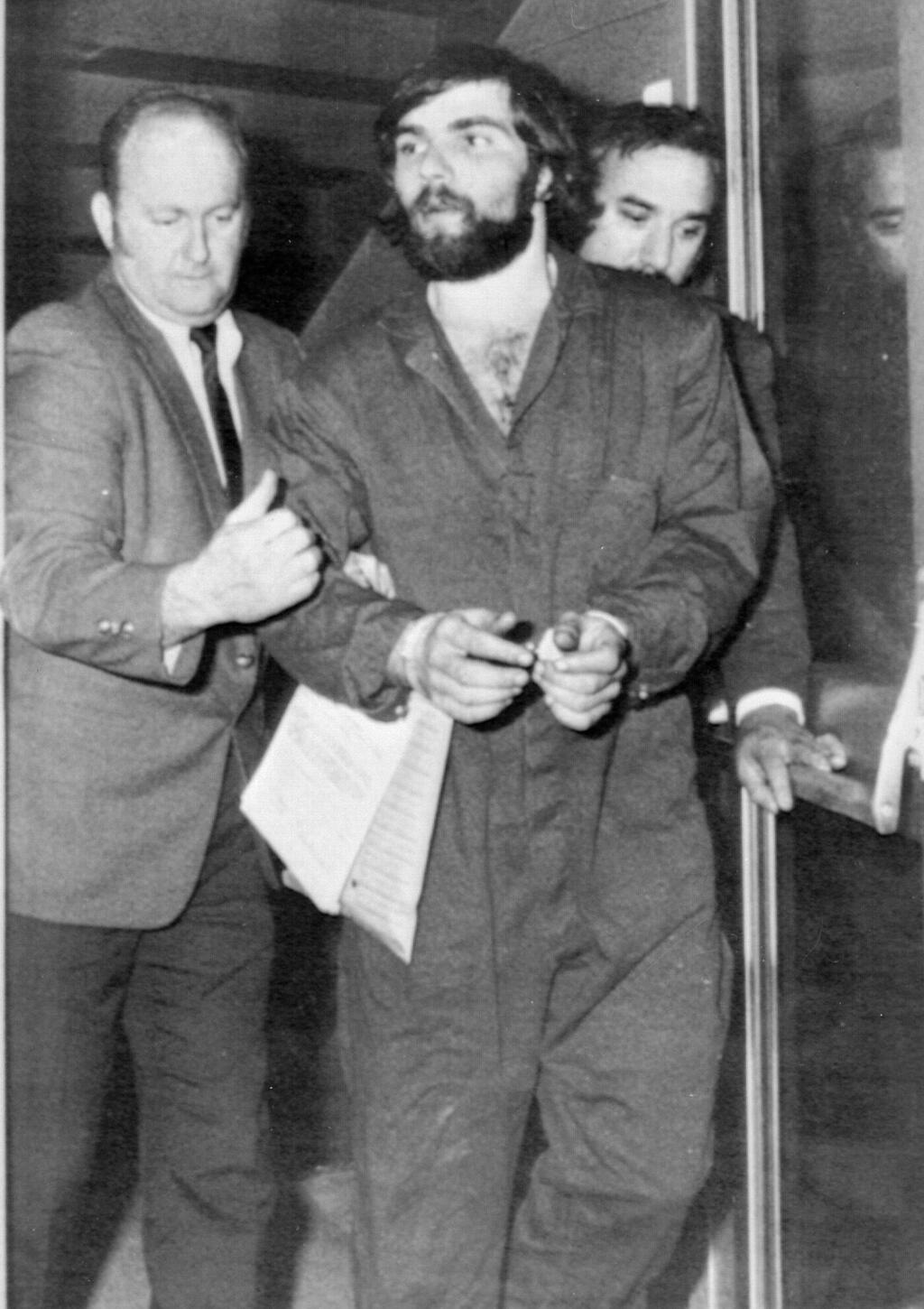
Ronald DeFeo Jr.
(Photo: AP)
DeFeo was convicted of the murders and sentenced to six consecutive life terms. He died in prison in 2021.
About a year after the killings, George and Kathy Lutz purchased the house, which was already burdened by its violent history. They left just 28 days later, and in considerable haste.
According to their account, strange and inexplicable events had occurred during their stay: mysterious noises, unusual phenomena and a persistent feeling that a threatening presence inhabited the property.
Their story became the basis for Jay Anson's book The Amityville Horror, published in 1977 to enormous commercial success.
Two years later, director Stuart Rosenberg adapted the book into a film about a family that moves into a new home, only to discover that the evil associated with the previous murders has not departed with the killer.
The house itself becomes a force threatening its occupants, and what begins as ordinary family life gradually turns into a nightmare of fear, madness and violence.
The film was a major success, grossing more than $86 million against a production budget of less than $5 million. It spawned an exceptionally long series of sequels, remakes and other adaptations. In Israel, the original film was inexplicably released under the title The 19th Night.
There is, however, an important distinction between two very different stories.
The first is the murder case, which unquestionably happened and was extensively documented. The second is the tale of a haunted house, which remains deeply disputed.
Over the years, allegations have surfaced that the Lutz family's account was exaggerated or even fabricated for financial gain. Various details of their testimony have been challenged, and some critics have claimed that the book incorporated ideas suggested by DeFeo's attorney.
The Lutzes consistently maintained that they had experienced terrifying events inside the house. Questions surrounding the credibility of their account, however, did little to prevent the story from developing into a thriving cinematic franchise.
The last relatively major installment in the series, Amityville: The Awakening, was released in 2017. Since then, numerous independent films have appeared under the Amityville name, including titles as bizarre as Amityville Vampire, Amityville Apocalypse and Amityville Bigfoot.
And the franchise appears nowhere near finished. Another relatively high-profile reinvention is in development, with director David F. Sandberg attached to a new Amityville Horror project at Amazon MGM Studios.
When a real crime generates a sufficiently compelling legend, Hollywood has demonstrated that it can keep returning to the scene indefinitely.
The Sacrament (2013): when reality is more terrifying than any demon
Not every horror film inspired by true events needs ghosts, demons or supernatural forces. Sometimes, ordinary human beings, a charismatic leader and a community that gradually cuts itself off from the outside world are more than enough.
That is what makes The Sacrament, directed by the talented Ti West, whose credits also include X and Pearl, so profoundly disturbing. Behind its fictional story lies one of the most devastating tragedies in modern American history.
On November 18, 1978, the story of Jonestown, the settlement established in Guyana by Peoples Temple leader Jim Jones, reached its catastrophic conclusion.
Jones began his career as a preacher in the United States and attracted hundreds, then thousands, of followers. He presented his community as a refuge from racism, poverty and oppression.
Over time, however, the community became a place where its leader exercised increasingly comprehensive control over residents' lives, while reports of coercion, abuse and restrictions on personal freedom continued to mount.
In November 1978, US Congressman Leo Ryan traveled to Guyana in response to concerns raised by relatives of people who wanted to leave the community. His visit ended in bloodshed.
Ryan and four others were murdered at a nearby airstrip when members of Jones' organization opened fire on the congressional delegation and people attempting to escape.
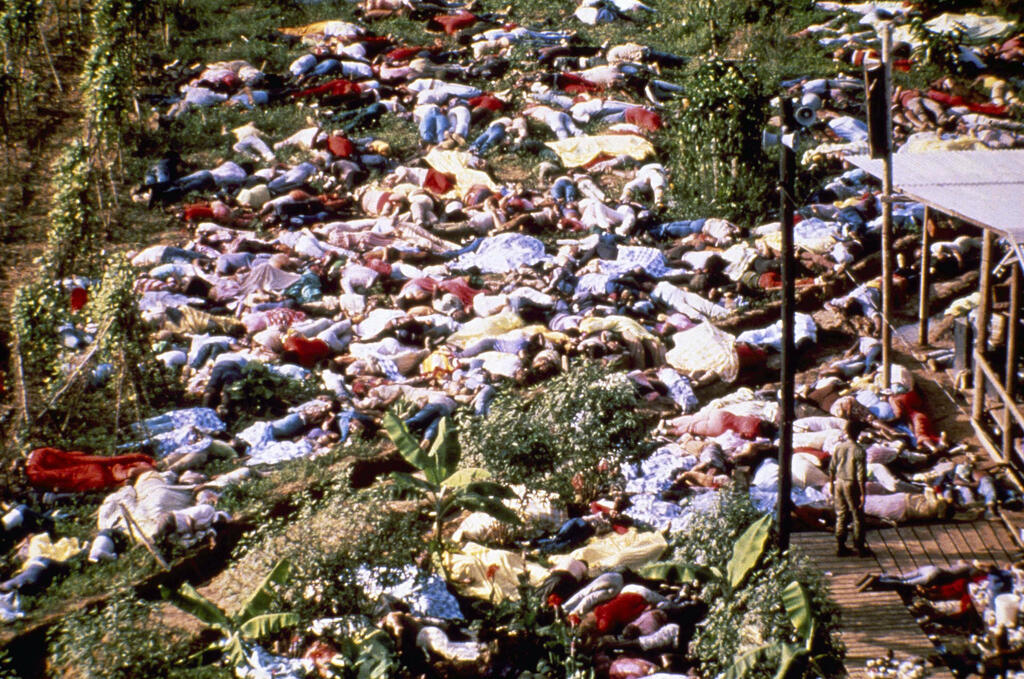
Jonestown
(Photo: AP)
That same day, Jones ordered members of the community to gather at Jonestown. More than 900 people died in the mass killing that followed, among them hundreds of children.
The tragedy involved coercion, threats and murder on a massive scale. Many victims were forcibly poisoned, while others died under circumstances that make it impossible to describe the entire event as a voluntary mass suicide.
West used these events as the foundation for The Sacrament, an underrated horror film that deliberately avoids recreating the historical case in exact detail.
Instead, the film follows three journalists who travel to a secluded religious community known as Eden Parish. One of them has come to visit his sister, who has joined the group.
At first, the community welcomes the visitors with smiles and generous hospitality. Gradually, however, a deeply disturbing relationship emerges between its leader, known simply as Father, and the people who have entrusted him with their lives.
Father, played with chilling effectiveness by Gene Jones, is not an exact replica of Jim Jones, but the inspiration is unmistakable. West himself has explained in interviews that he used Jonestown as the historical framework for the story, particularly the community's final 48 hours.
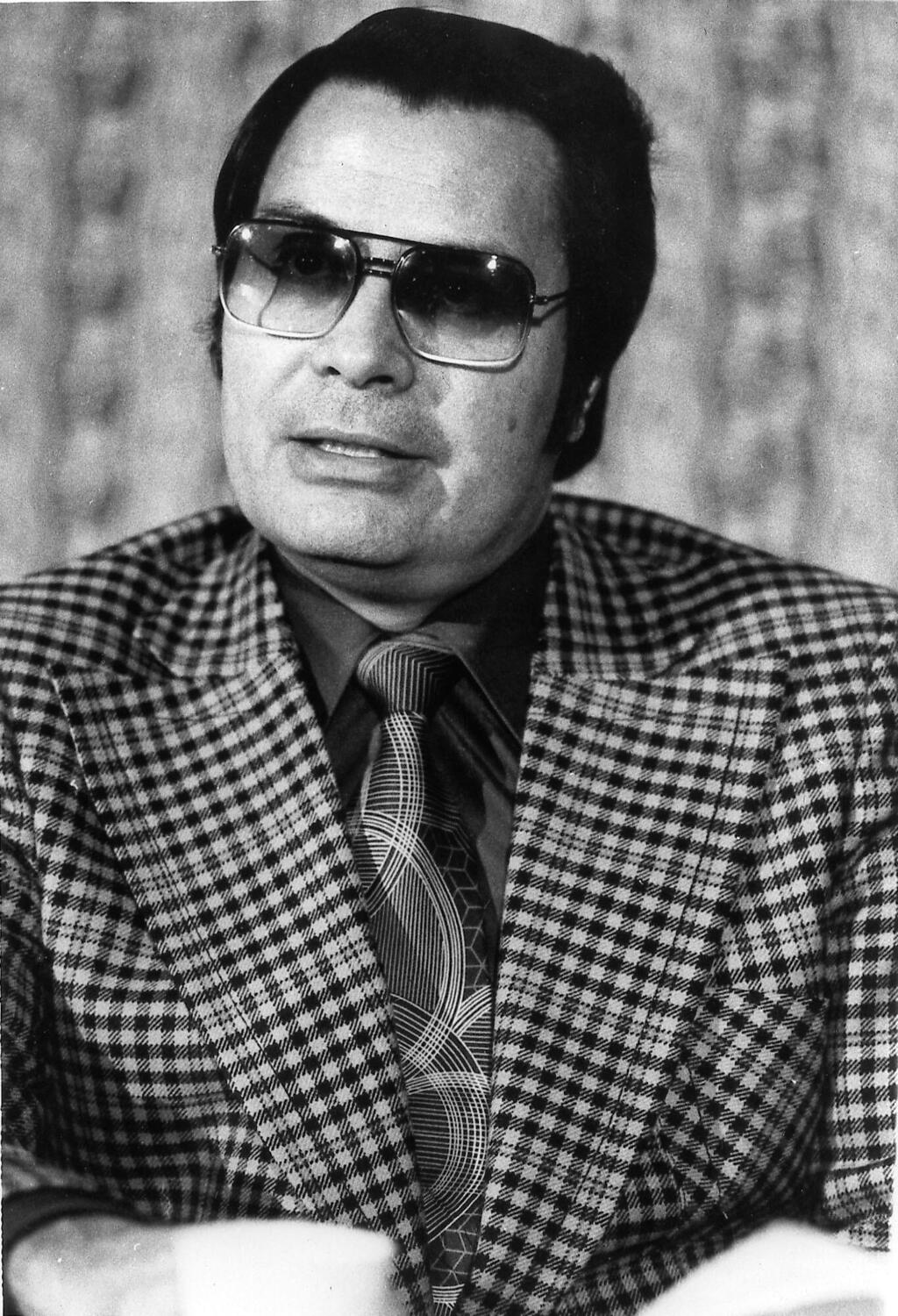
Jim Jones
(Photo: CHR/AP)
He changed the characters, circumstances and setting while preserving the disturbing dynamic of a leader who exploits his followers' vulnerabilities and trust to tighten his grip on them.
The mock-documentary style gives the film the unsettling feeling of a journalistic investigation collapsing before the viewer's eyes.
It has no need for supernatural effects because its horror arises from a simple realization: ordinary people searching for belonging, meaning or a better life can find themselves trapped within a system that gradually destroys their ability to resist.
And by the time they understand the full extent of the danger, it may already be too late.
The Sacrament is not a literal account of Jonestown, and its characters are fictional. Yet precisely because it does not attempt a scene-by-scene reconstruction, it succeeds in illuminating the human mechanisms that made the historical catastrophe possible.
This is a horror film in which the monster does not hide in the darkness. He stands in the center of the room, speaks softly, makes extravagant promises and convinces his victims that the world outside is their true enemy.
Go on, drink the Kool-Aid. Salvation awaits.
The Golden Glove (2019): the little bar that gave rise to a monster
During the 1970s, Fritz Honka was a regular at the Golden Glove, a bar in Hamburg's St. Pauli district, an area known for its nightlife, sex clubs and marginalized communities.
Honka, an alcoholic night watchman, would meet women living in poverty or on the margins of prostitution, invite them for drinks and take them back to his apartment. Between 1970 and 1975, he murdered four of them.
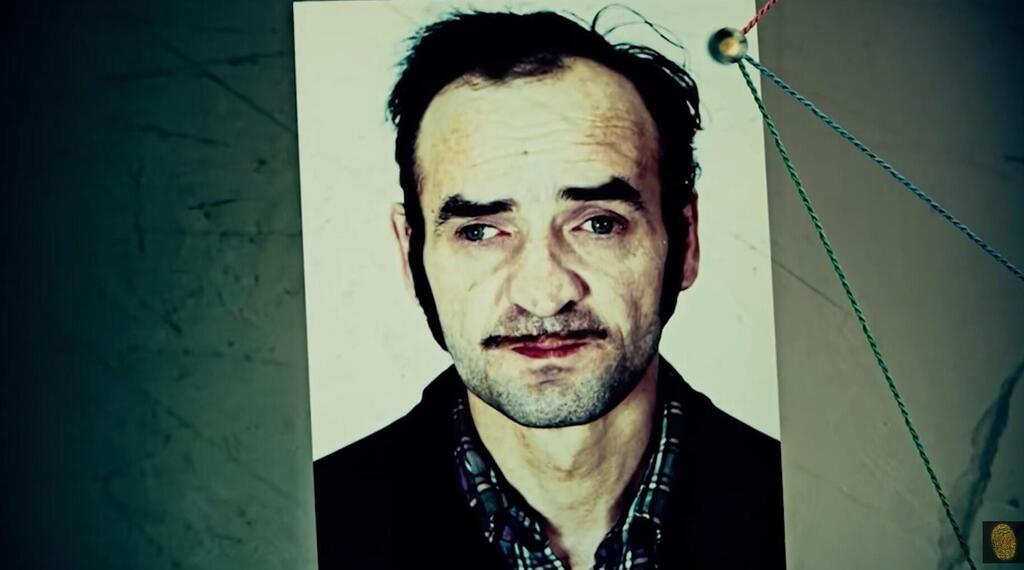
Fritz Honka
(Screenshot: YouTube/Real Crime)
The victims were Gertraud Bräuer, Frieda Roblick, Anna Beuschel and Ruth Schult. All were vulnerable women living without substantial networks of support.
Honka murdered them in his apartment, dismembered their bodies and attempted to dispose of their remains. Some body parts were concealed inside the apartment, while others were discarded elsewhere.
For years, the full extent of his crimes remained hidden. In July 1975, a fire broke out in the building where Honka lived. Emergency workers and police discovered human remains in his apartment, leading to his arrest and the exposure of the murders.
Award-winning German director Fatih Akin, who is of Turkish descent, adapted Heinz Strunk's novel about the case into a film that is anything but a conventional slasher.
Rather than following a group of young people pursued by a killer, The Golden Glove focuses on Honka's daily existence and the bleak social environment from which his victims emerged.
Jonas Dassler portrays the murderer beneath heavy makeup, and the film makes no attempt to transform him into a charismatic villain or a brilliant criminal mastermind. Instead, Honka is presented as a repellent, violent and deeply disturbing man who exploits the desperation of women whom society barely notices.
Consequently, watching The Golden Glove is hardly the kind of liberating, perversely exhilarating experience that horror cinema can offer at its best. Quite the opposite.
The film is grim, repulsive and emotionally draining, an ordeal that relatively few viewers will find easy to endure.
Many critics objected to what they perceived as a lack of purpose or psychological depth. Akin, they argued, seemed to make little effort to understand his central character or explore the motivations behind his monstrous behavior.
But that is precisely the point of this cinematic nightmare.
Akin concentrates on the mundane routine of the monster that Honka was. He records his behavior in almost clinically dry detail, creating a nauseating portrait of a serial killer whose very presentation to the audience becomes the film's central purpose.
Here you are, then: a dreary, prosaic horror film without cheap thrills, reminding us that human monsters can exist anywhere.
Look carefully around you.