

Just over an hour’s drive from Tel Aviv lies “Bedouin Land,” a place largely unfamiliar to most Israelis. Invited to a wedding, Dan Lazar discovered a multi-day celebration filled with horse races, traditional dancing, boundless hospitality and a yearning for normalcy. “Inshallah, sanity returns soon."
According to Bedouin tradition, if a young man is interested in a woman, he dismounts his horse (making sure she notices), ties two leaves to a nearby bush, and rides off. If, when he returns an hour later, the leaves remain tied, it's a sign she's interested too, and the path to matchmaking begins. If the knot has been undone, there's no interest, and both move on as if nothing happened.

A Bedouin man once shared this charming story with me atop a hill in the El Kassum Regional Council, in the scattered Bedouin communities in southern Israel, between Be'er Sheva and Arad. I was reminded of it on my way to a Bedouin wedding earlier this month. While horses still hold an important place in Bedouin culture, courtship and matchmaking today look quite different.
The drive to the village is as enchanting as the stories themselves, revealing stark contrasts in living conditions and how quickly one can shift worlds just over an hour from central Tel Aviv.
The moment you leave Highway 6 for Highway 31, you enter “Bedouin Land,” an arid landscape dotted with Bedouin villages and towns, unmistakably no longer Tel Aviv. It’s not another planet, but it's certainly unfamiliar territory for most Israelis.
As I neared the village, I found myself wanting to play Barclay James Harvest’s Child of the Universe. It just felt right.

Bedouin settlement of Makchul, El Kassum Regional Council
(Photo: Dan Lazar)
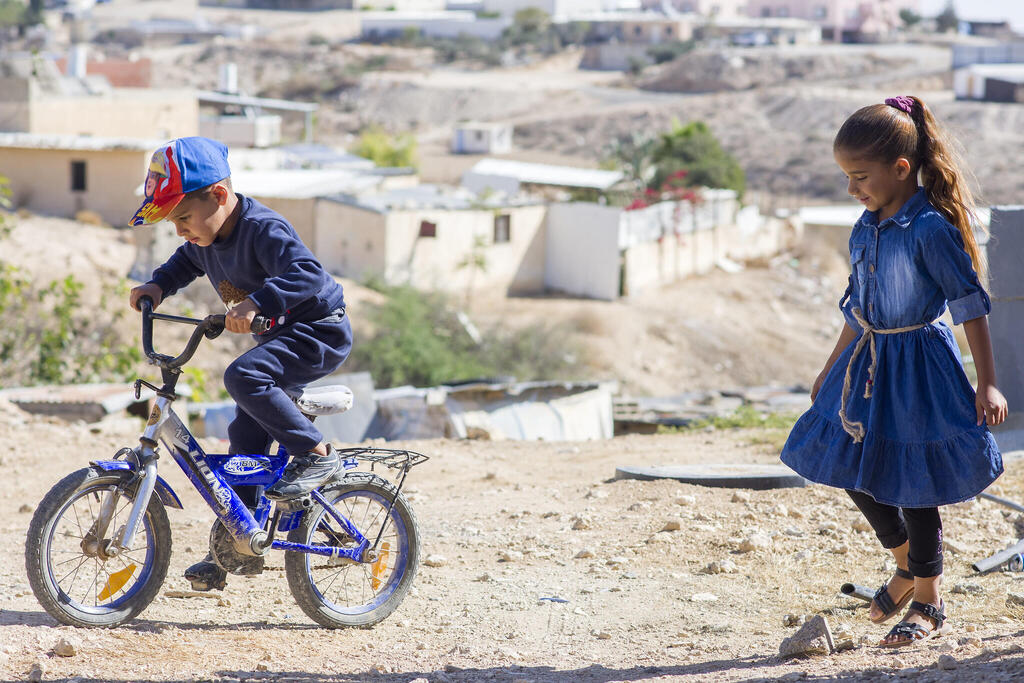
Unknown to Israelis
(Photo: Dan Lazar)
Traditionally, Bedouin weddings lasted nearly a week. Today, modernization and economic pressures have condensed them to two or three days, usually starting on Wednesday or Thursday and ending Friday.
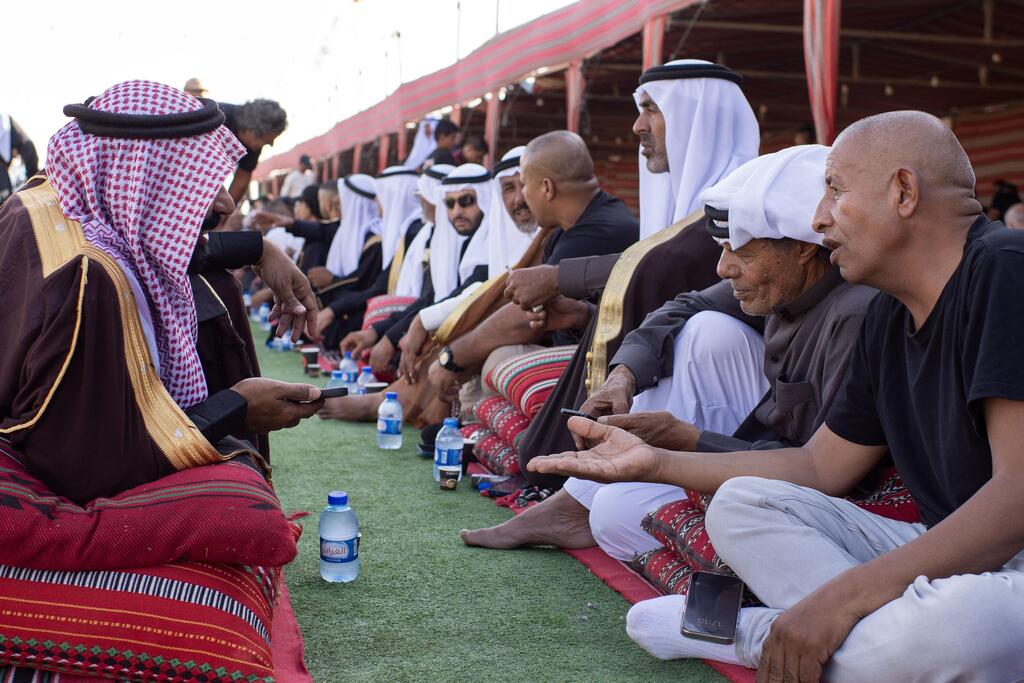
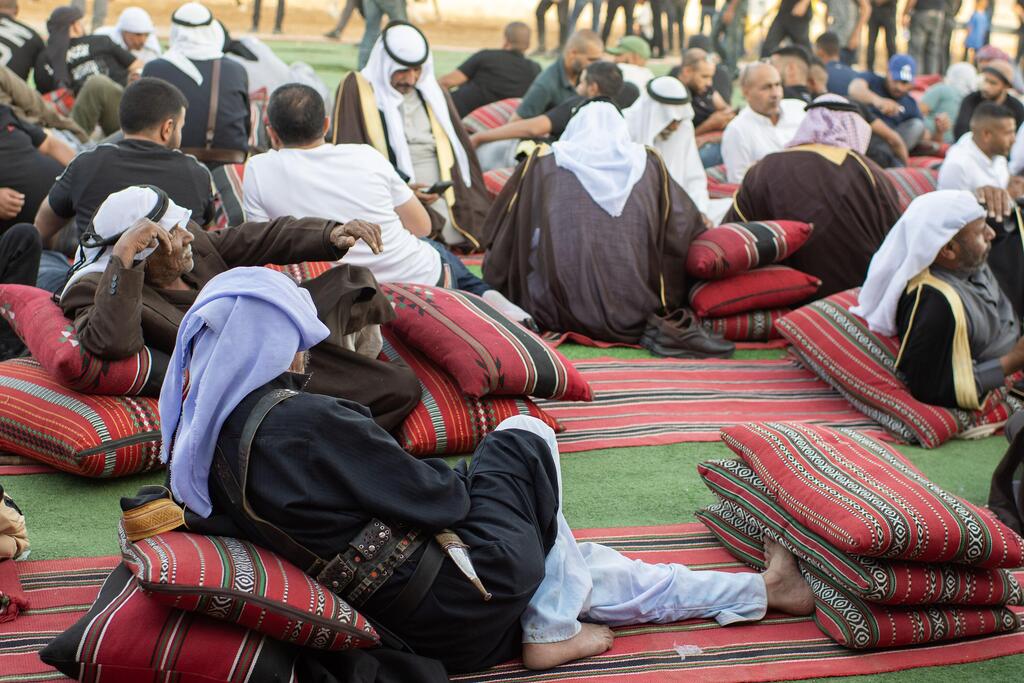
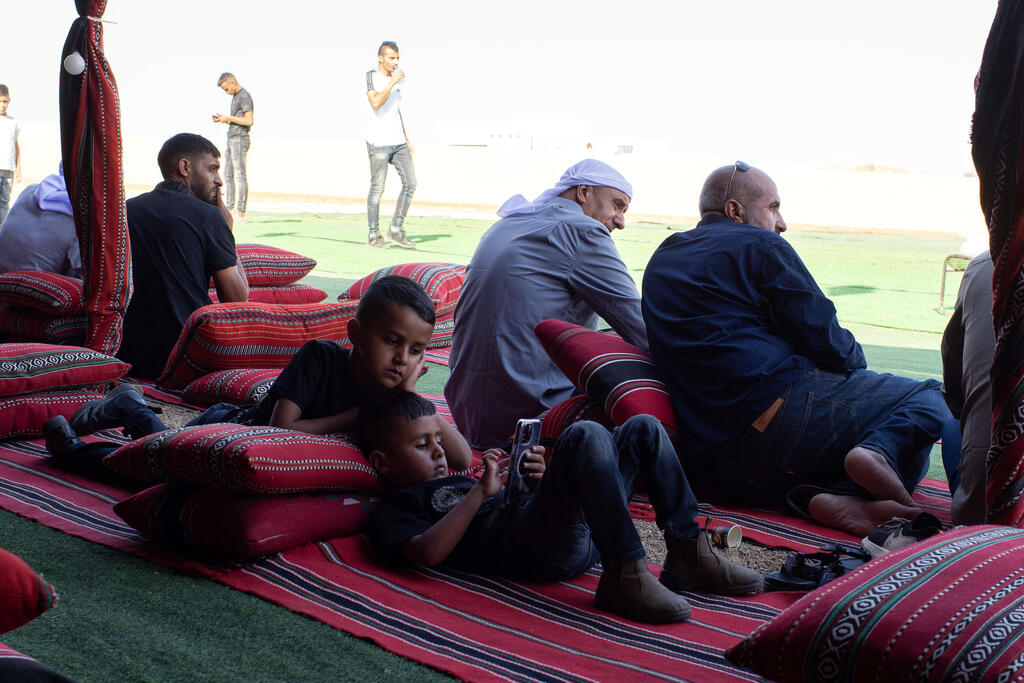
Men and women celebrate separately. The women gather at the bride’s family home, while the men convene in a nearby tent in the groom’s area, where tea, coffee and meat are served throughout the festivities. The men also deliver speeches, pray and sing songs.
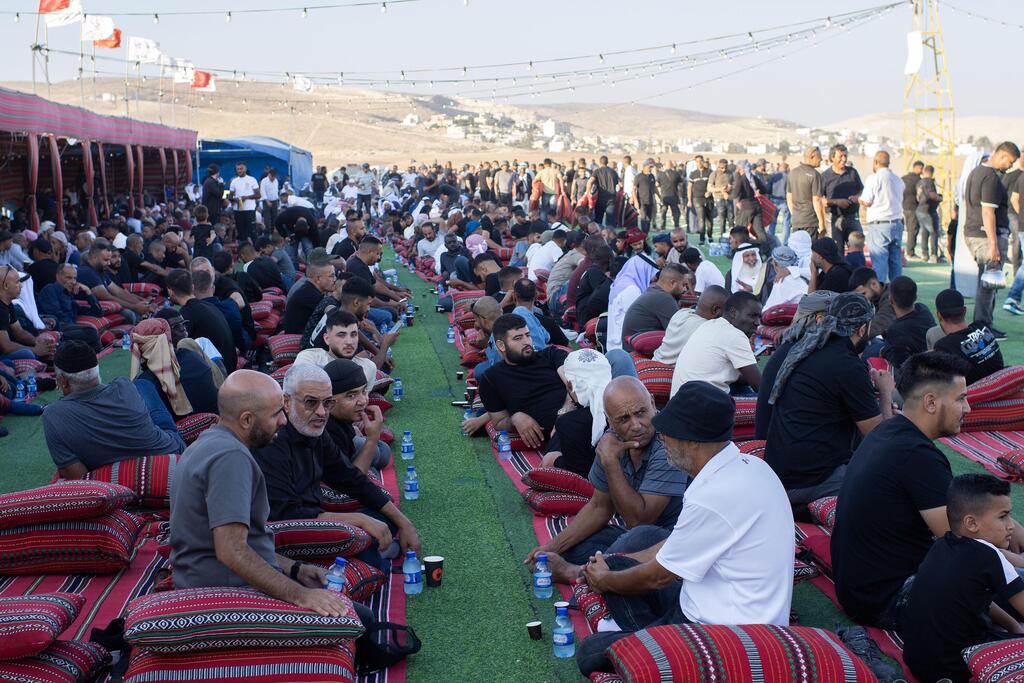
The men's section at the wedding, Makchul
(Photo: Dan Lazar)
(Photo: Dan Lazar)
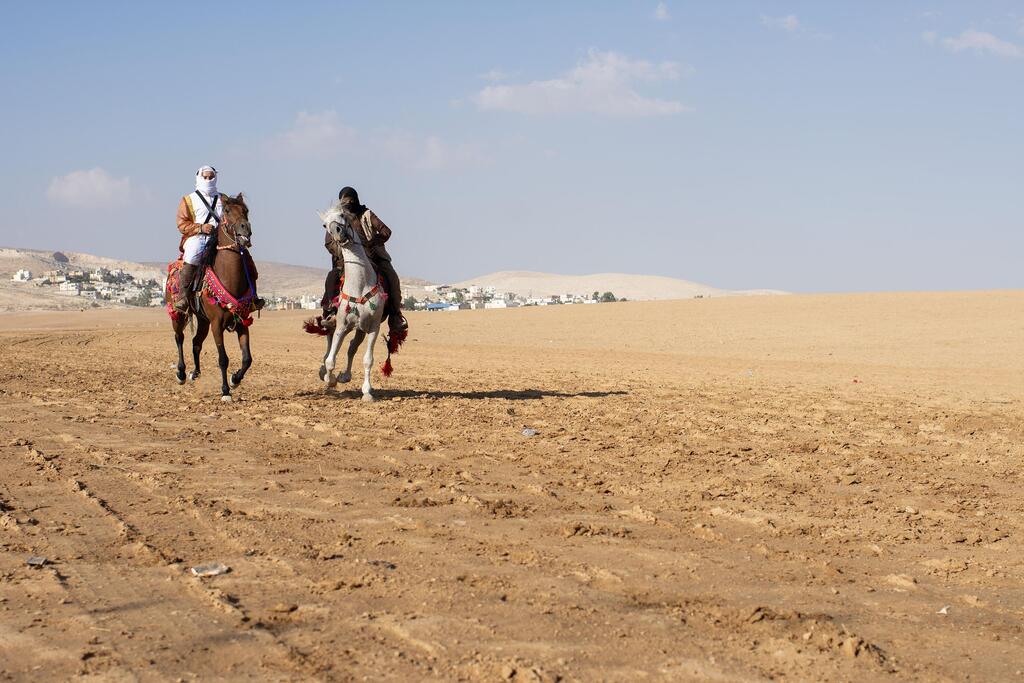
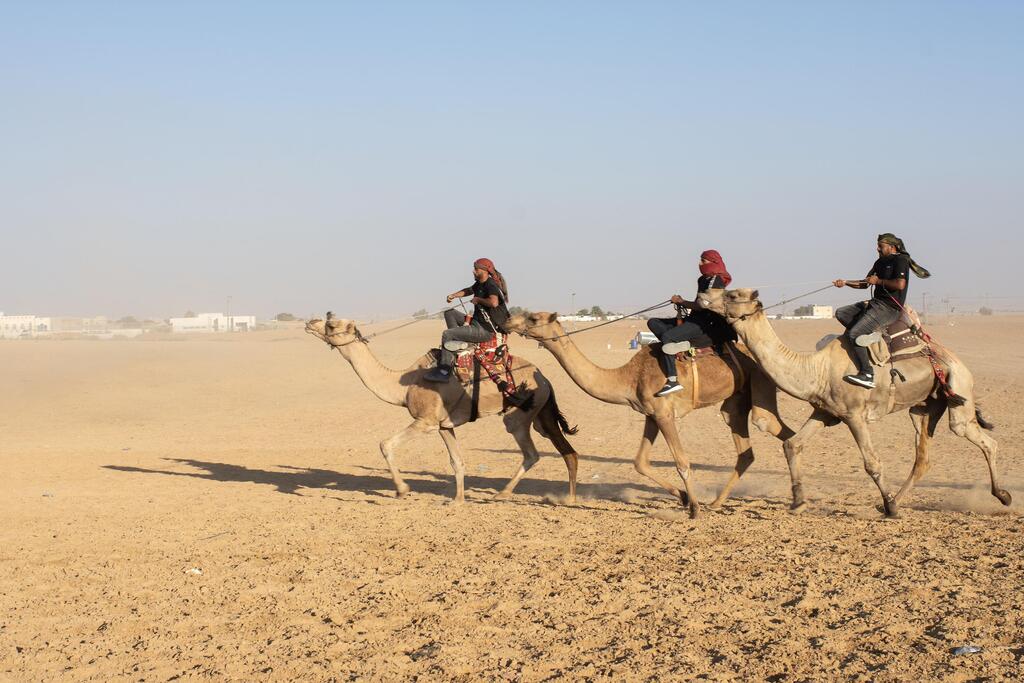
One of the more striking traditions, particularly at larger weddings, takes place among the groom’s family and guests and involves horse and camel races, as well as show performances that bring joy to the groom and his entourage.
Horses and camels are symbols of status and strength, and the wedding provides a golden opportunity to showcase both the animals’ impressive abilities and the riders’ skill in mastering and directing them.
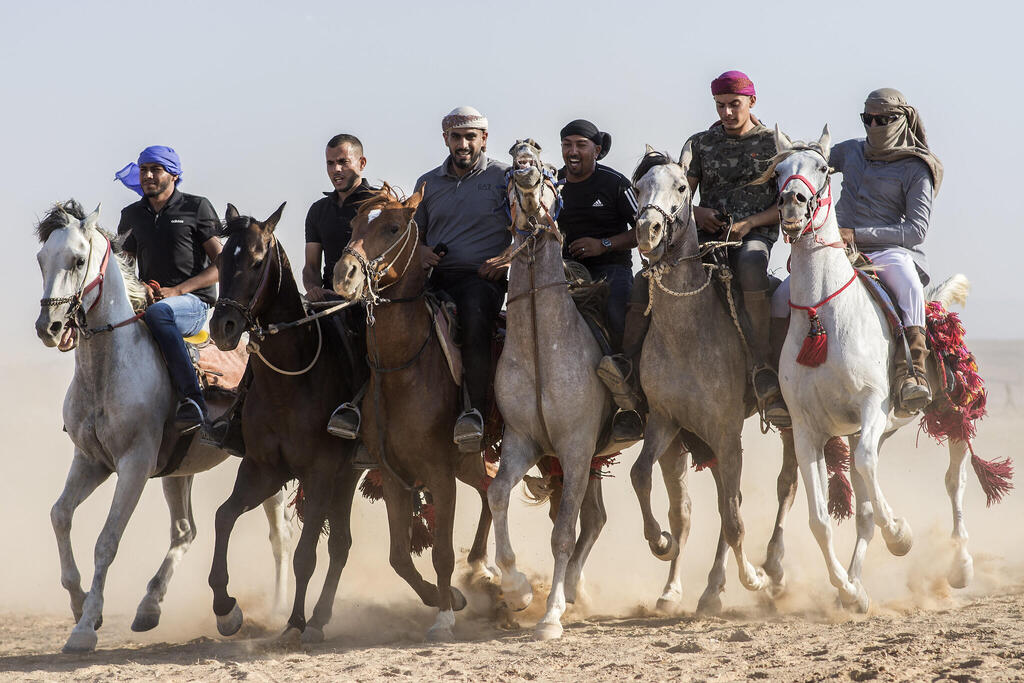
Bedouin wedding. 'Horses and camels are symbols of status and strength'
(Photo: Dan Lazar)
(Photo: Dan Lazar)
(Photo: Dan Lazar)
On Friday, the main day of the wedding, the bride is brought before the groom in a celebratory convoy. Cheers erupt as the bridal procession passes. Local dignitaries and village elders are given seats of honor, and the entire village bursts into celebration. At that moment, joy reaches its peak.
One of the most heartwarming moments of the celebration takes place in the afternoon, when the men present the women with overflowing trays of local delicacies. The ceremony is followed by evening prayers, and the Dahiya dances, a traditional line (or sometimes circular) dance that expresses the community’s strength, unity and cohesion.
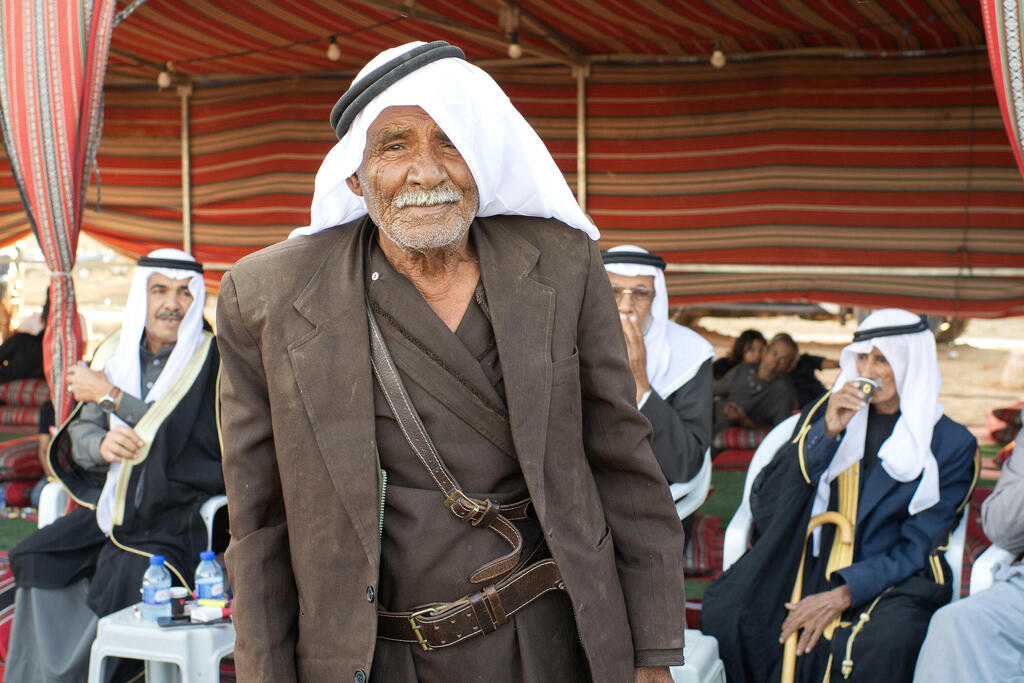
Local dignitaries and village elders are given seats of honor
(Photo: Dan Lazar)
(Photo: Dan Lazar)
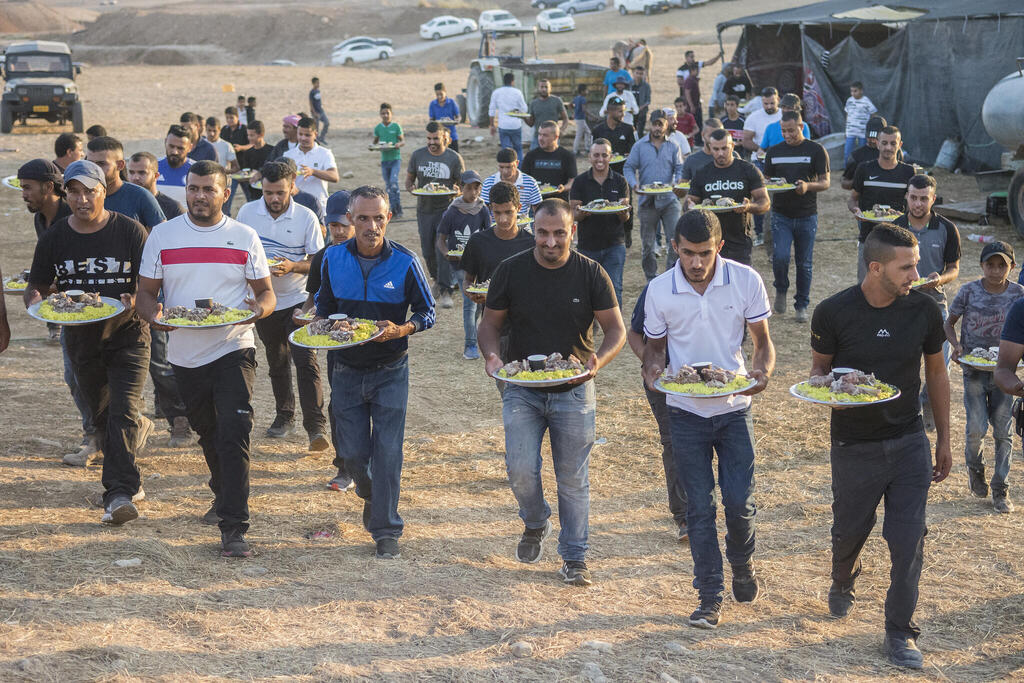
Men presenting trays of delicacies
(Photo: Dan Lazar)
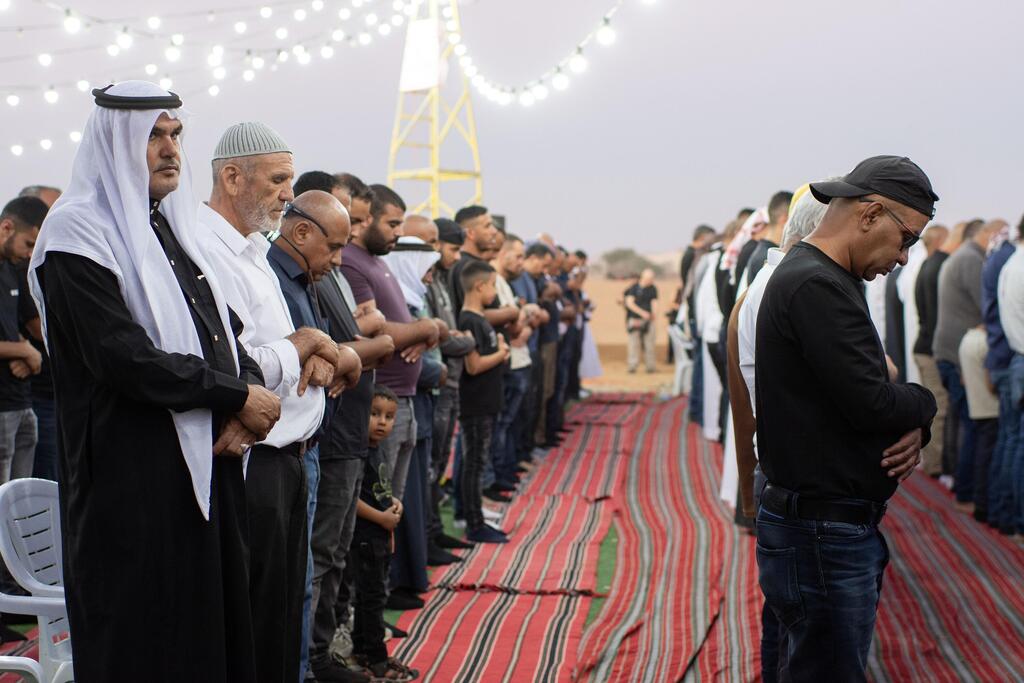
Evening prayers
(Photo: Dan Lazar)
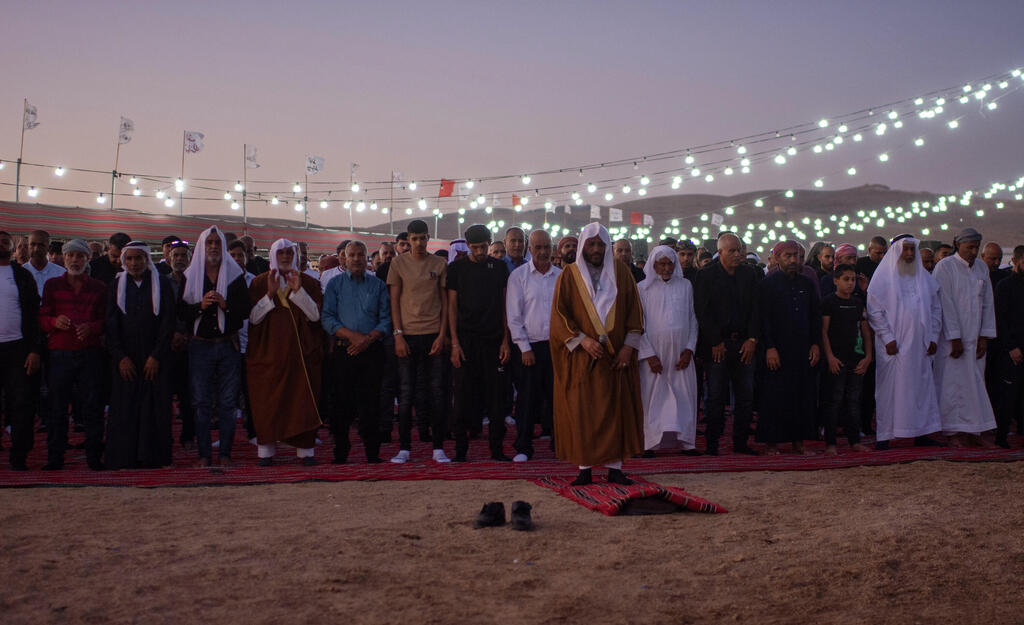
(Photo: Dan Lazar)
As a guest, I had a close-up view of the famed Bedouin hospitality. Children followed me throughout the event, making sure I always had a cup of tea (excessively sweet), coffee (distinctly bitter) or at the very least, cold water.
Though strangers to me and I to them, people approached or waved from a distance, greeting me warmly with “You are most welcome.” Several told me, without prompting, that it was an honor to host me.
In short conversations with locals, a recurring theme emerged, highlighting their longing for peace and normalcy, as they are exhausted by the current situation. “What can we do? Inshallah, sanity will return,” said one man simply.
“What good comes from all this hatred?” asked another. “A person who hates harms himself first."
A third added, “You know, there are places in the world with strange customs, different religions, strange gods. But here? We’ve only got one God, that’s it, and yet this is where all the wars are."
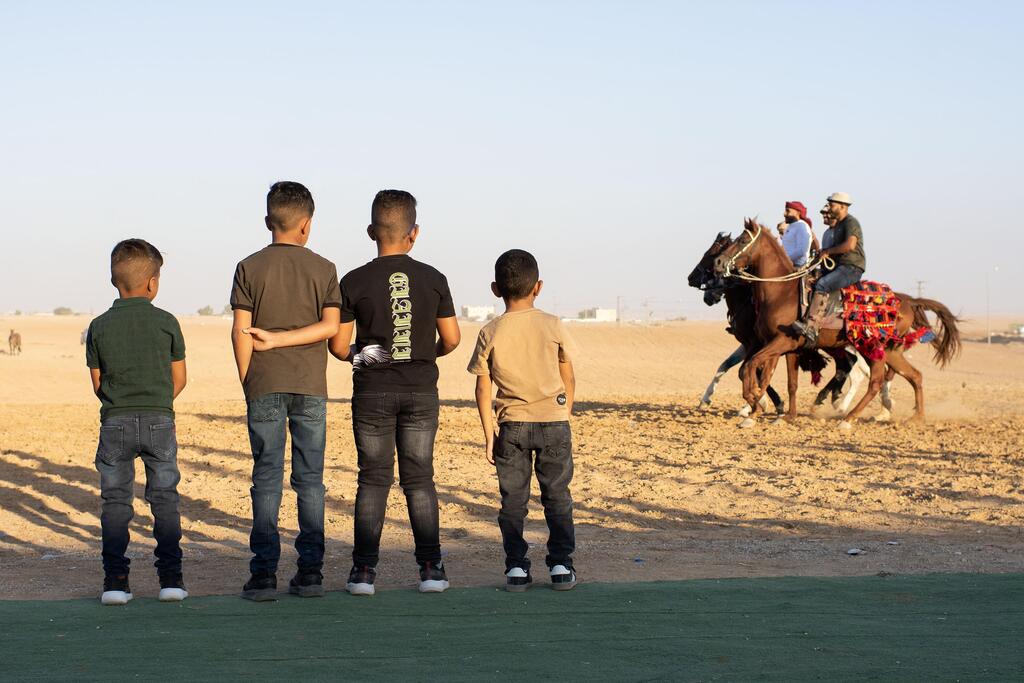
'Inshallah, sanity will return'
(Photo: Dan Lazar)
The relationship between the Bedouin community and the State of Israel is complicated. I chose to focus solely on the personal, human experience. I couldn’t help but admire the community’s ability to separate broader political tensions from the way they treat an individual, me, in this case, as a guest.
“Look,” one local told me, “even if I hated you, and you have to understand, there’s no such thing as hatred among us, but let’s say I did, and I saw you needed help, I’d be the first to jump in and help with all my heart. That’s how we are, it’s in the culture, and it’s important to us.
"We don’t want anyone saying anywhere that a Bedouin didn’t help or didn’t act properly. It matters to us that people get familiar with us and see us. We’ve been here for a long time. We’re part of this land. We’re not newcomers calling ourselves, or mistakenly called, Bedouins. We want to be seen for who we really are."
(Photo: Dan Lazar)
As the evening came to a close, Anwar turned to me and said, “The elders say the winter is going to be hard. Lots of rain, strong storms."
“How can you tell?” I asked. “I’ve seen forecasts predicting a dry season."
“There’s a plant,” he replied. “If it sprouts early, it means a good winter is coming, and this year, it came up very, very early."
At that moment, it became clear: statistical models versus Bedouin field wisdom.
We’ll live and see.
- Dan Lazar, 48, is an amateur photographer who has published two books on street photography. He works professionally as a client relations manager at a financial firm.