

"Ladies, raise your hand if you want to wear the modest swimwear." We had two modest fashion lines and we needed volunteers. I looked out at a group of Jewish models and saw only one reluctant hand go up.
We were in the lobby of the Sagamore Hotel in South Beach, four and a half hours before the I Love Jewish Girls event was set to begin. The hotel already had a chaotic beauty to it. Multiple shows, hundreds of people, and — let's just say — not nearly enough bathrooms for the volume of human beings in that building. I learned quickly: if a model is waiting in line for the bathroom before going in, you are going to be a while.
The first all-Jewish swimsuit runway show at Miami Swim Week
(Video: Barzel Media)


This was the start of my involvement in the I Love Jewish Girls show. It was not a good start, and it was only going to get worse from there.
We had infiltrators, but not the kind you think. Massive delays. No makeup. No hair. Designers leaving. Models crying.
Having no background or prior interest in fashion, how did I end up producing a full-on runway fashion show at Miami Swim Week? Even saying that out loud still doesn't make any sense.
Five days before the show, I saw a text message in a WhatsApp group that caught my eye. A man putting on an all-Jewish fashion event for Miami Swim Week was looking for sponsors. I was hooked — not for the reasons you might think.
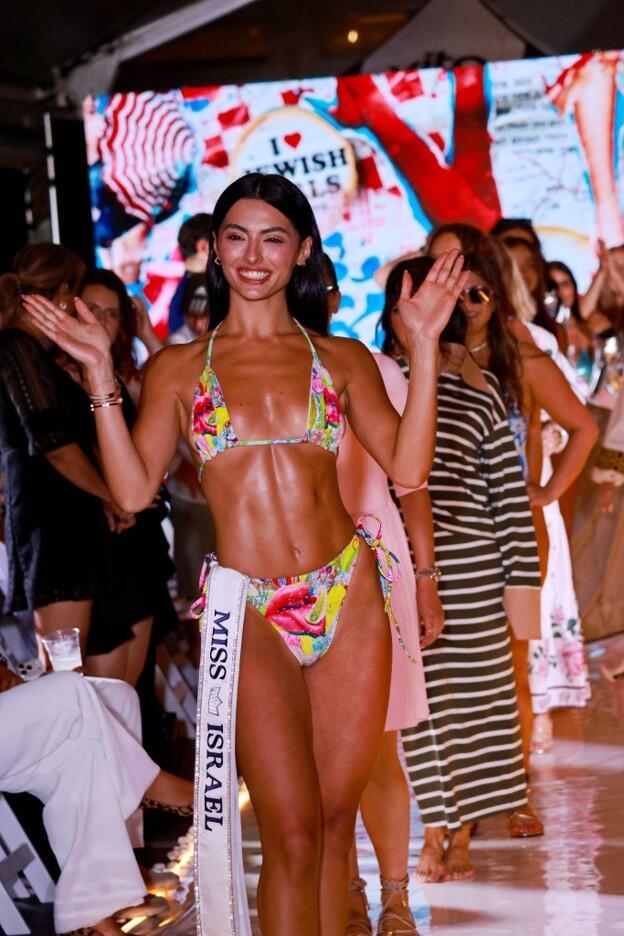
First: the sheer chutzpah to call it "I Love Jewish Girls." No softening it, no making it palatable. No "Shalom Runway" to keep things PC. This was explicitly and unapologetically for Jewish designers and models.
And this was exactly the type of project I always find myself drawn to. Someone betting on an idea that is brazenly all-Israel or all-Jewish, connecting real commercial production with the cause of the Jewish people.
That's actually the story behind the company I founded, Barzel Media. Supporting pro-Israel brands and initiatives and helping them tell their story through creative media, influencer marketing, and sponsorships.
After a few conversations, I reached out to Alejandro Glatt — a Jewish Mexican artist who had just recently moved to Miami and was the lead designer and head producer of the show — and told him I wanted to see how I could help. Barzel Media came on board as a paid sponsor. We would invite influencers and promote the event; in exchange, our logo would appear in the program and I would give a short speech. Simple.
We signed the agreement on Thursday for the Sunday show at the Sagamore Hotel — 9 p.m. showtime. Ironically, months earlier I had been at that same hotel for a Birthright panel discussion.
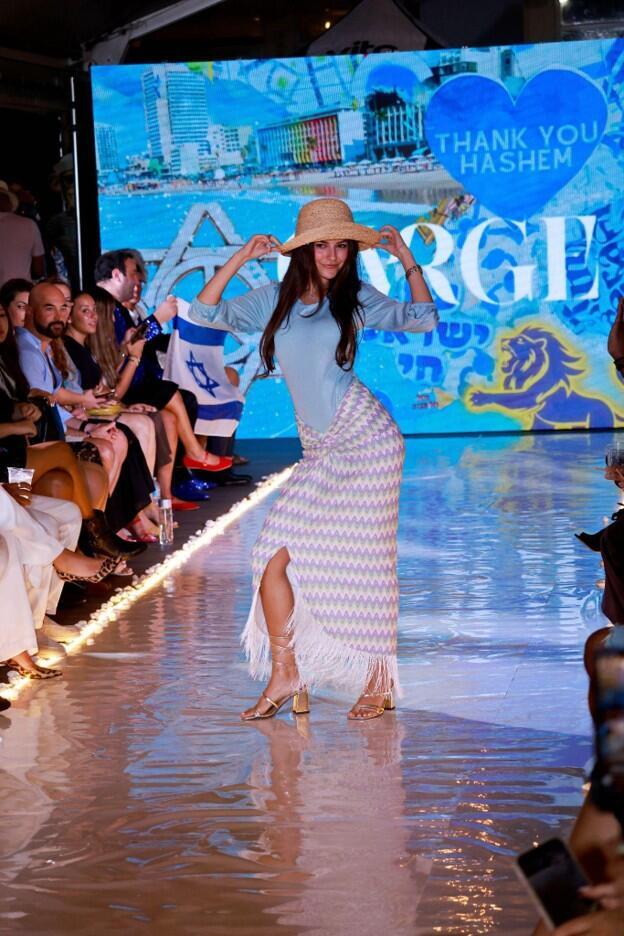
The first all-Jewish swimsuit runway show at Miami Swim Week
(Photo: Barzel Media)
I had planned to arrive early to soak up the energy of the hotel, with shows running all day across the property. When I arrived, I found a frantic Alejandro running around. It was clear this man needed help. Five minutes later, he asked me. It was 3 p.m. and I was officially part of the production.
Thirty minutes later, he handed me the toughest job title I think I will ever have to bear: Model Coordinator. "I need you to coordinate with all the models and make sure the girls know where to go and what to do." "Okay, but what are they supposed to do?" I knew nothing.
I started to get the lay of the land. There had been multiple shows earlier and they were running behind schedule, with models from different shows getting their hair done, their makeup touched up, trying to figure out where to go.
The models started to arrive and the designers started to show up. I was piecing together, step by step, what actually happens at a runway show. Step one: fittings. Our ladies had to try on their outfits so they knew what they were walking in.
Problem: we had no room, no space, nowhere to do that.
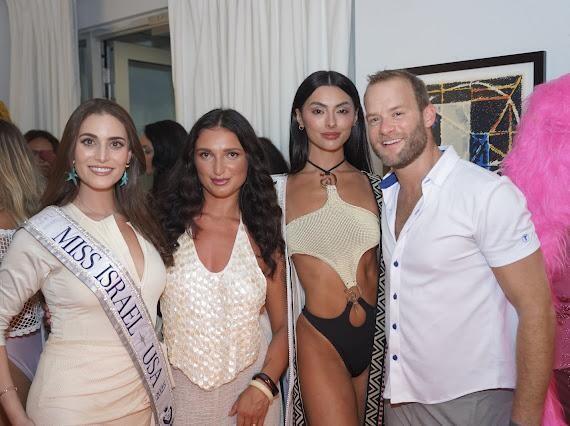
The first all-Jewish swimsuit runway show at Miami Swim Week
(Photo: Tomas Loewy)
I found a spot in a large side room shared with other shows — a tight area for about 30 models. There was a pop-up single-occupancy changing tent where the girls could try on their looks, show the designer, and I would write their name in the show book.
We solved the modest swimwear challenge with a simple fix: ladies in the modest line would also walk in the sexy swimwear line.
As soon as these women tried on the modest swimwear, they looked stunning — glowing with pride. It was one of those moments in the middle of the chaos where a beautiful light breaks through. You see these ladies for the true beauty that they possess.
Then came our first infiltration — not the Free Palestine kind, but something far more charming. A gorgeous, olive-skinned model had simply appeared out of nowhere. And she was tall. Jewish girls are not usually this tall — let me just say that. Some models were showing up late; some were added day-of. Amy was wearing our modest swimwear brand COVRG and looked stunning. I turned to the designer, Jen. "What is she wearing?" "That's the papaya print bodysuit." I opened the show book and wrote her in.
Then Amy pointed to her friend. "She's also in COVRG” The designer confirmed- that's the Mallorca Warm Sand." And your name? Cristiana. No H. Also tall.
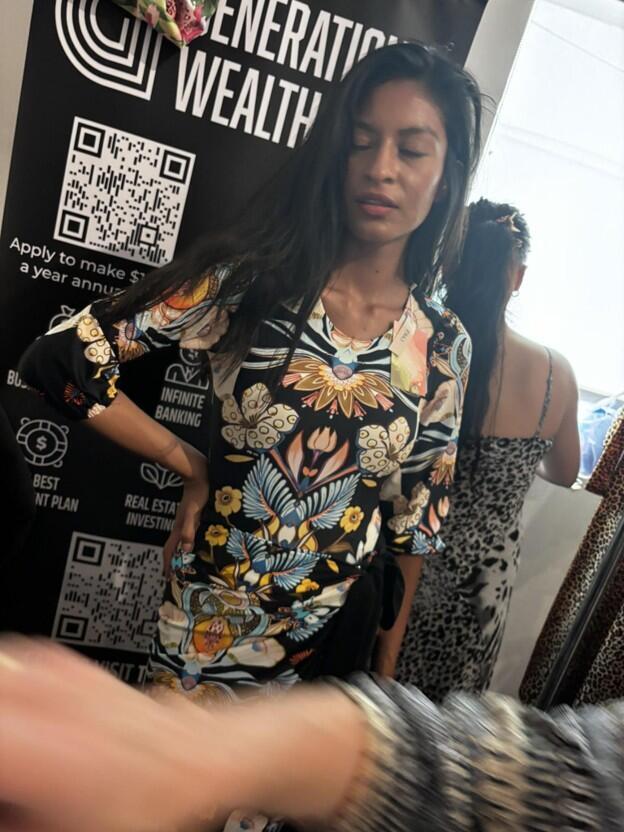
Amy
(Photo: Brian Spivak)
Maybe we were being inclusive. Maybe we just needed more models. Something seemed off — but I barely knew what was happening, she was already wearing the design, and she had the designer's green light. Cristiana, no H, was officially in. Gosh, these women were tall.
Moments later I saw Alejandro looking confused. "Who are they?" he asked. If he didn't know them, they weren't ours. And by this point, we had enough models who wanted to walk the modest line.
So came one of the funniest moments of the day: I had to walk over to a gorgeous model and tell her she couldn't be in our show. I had been warned that models just showed up and tried to get into events. They weren't Jewish, but you had to give them credit — they definitely had the chutzpah.
The irony. When you hear about infiltrators at a Jewish event, you don't usually picture a gorgeous model who just wanted to be part of the show.
It became a running joke for the rest of the day. "Hey Brian — what was the giveaway that Cristiana, no H was not part of our show?"
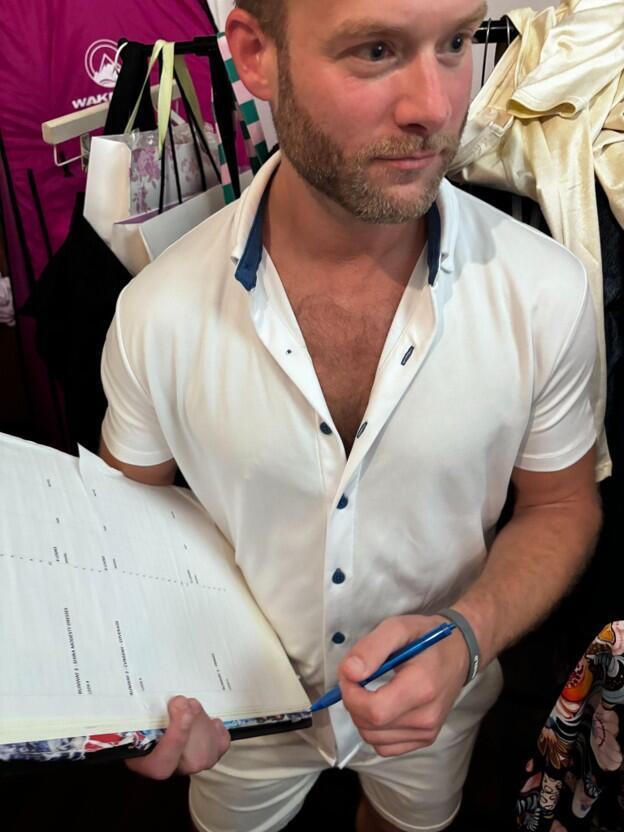
Handling the shows runway order
(Photo: Courtesy of Brian Spivak)
But things started going sideways again. Alejandro was getting overwhelmed. He was in over his head and looked like he was heading toward a meltdown. I pulled him aside with a few quiet words of encouragement. "You got this. I'm here with you. We can do it." I wasn't entirely sure I believed that myself.
We were supposed to have hair and makeup artists — and they were nowhere to be found. We could borrow one makeup artist from the other production. One person for 30 women, with 60 minutes until showtime, still finishing the group before ours. Someone suggested calling in another artist. In the end, we decided to let the girls handle their own makeup. But many hadn't brought any.
The list of complications continued to grow: ongoing drama over merch placement, stolen tables, and imminent threats from the hotel to pull the plug on the whole affair. To top it all off, the clouds broke and it began to pour.
Then something shifted. We got resourceful. The girls started doing each other's hair and makeup, genuinely coming together. It was beautiful. It was also stifling hot inside that hotel, which made everything harder.
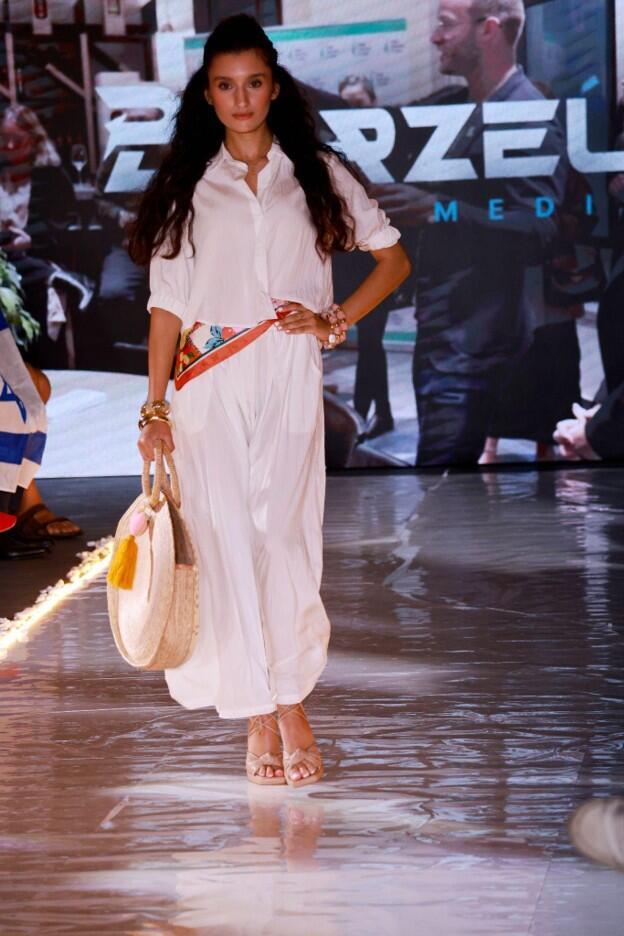
The first all-Jewish swimsuit runway show at Miami Swim Week
(Photo: Tomas Loewy)
The 7 p.m. show was running 45 minutes late — which turned out to be a blessing, because we needed every minute. Then came a torrential downpour bringing more delays. The event was outdoors under a tent, but the access points created problems that brought the show before ours to a standstill.
The rain let up. We got our room ready. We moved the clothing racks up a staircase, out into the rain, into an elevator, and finally into the prep room. Final preparations. Things were coming together.
It was 10:30 p.m. and we were about 15 minutes from showtime. I was also due to give a 10-minute speech and had jotted down a few points — but hadn't reviewed them once, because I hadn't had a free second all day.
We were ready.
I looked out at a full crowd: VIPs, celebrities, people I knew. So much anticipation. Alejandro gave his opening speech with real excitement. Our MC spoke, the music started — and as I stood by the curtain next to our girls, I realized they were all looking to me for a cue.
I got the green light from Alejandro. I turned to Ofir, a former Miss Israel. "Let's go." And off she went.
But I didn't know the cadence. Luckily, Danielle Yablonka, with years of experience as a professional model, explained it to me: when the model at the end starts turning to walk back, that's your cue to send the next one.
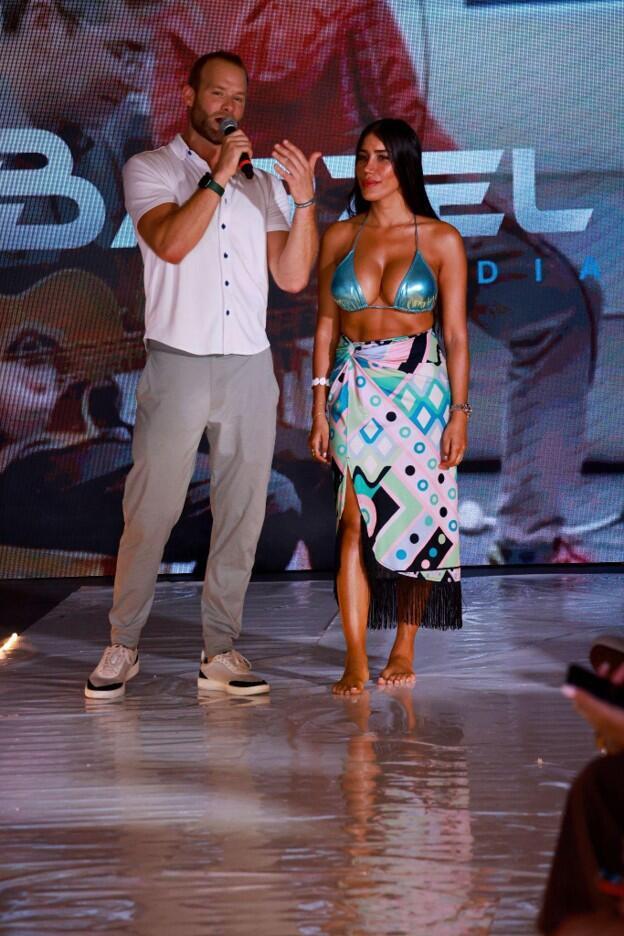
The first all-Jewish swimsuit runway show at Miami Swim Week
(Photo: Tomas Loewy)
So there I was, somehow the guy giving the signal to each of our models. Some were pros. Some had never done anything like this in their lives. I remember Natalie, full of that fun, bouncy confidence I'd enjoyed all day — not a model by profession, but out there doing it. She got nervous right before her turn. I leaned in: "You look gorgeous. You have so much confidence. You got this." And off she went.
The moment each of those women stepped through that curtain, it was lights and action. They were glowing with the personal pride and that of what and who they were representing. History was being written!
Then came our biggest surprise. A 96-year-old Holocaust survivor walked the runway. When she came out, we had one of our male models — who I hadn't even known existed until they were on deck — escorting her on one side. We needed one more, so I offered my arm, and off we went. When she reached the end of the runway, we stepped back, gave her a gentle nudge forward into the spotlight. She paused, soaked it in, and struck a pose. The crowd lost it.
I only realized it later, but this was the second time on this same trip that I had escorted a Holocaust survivor.
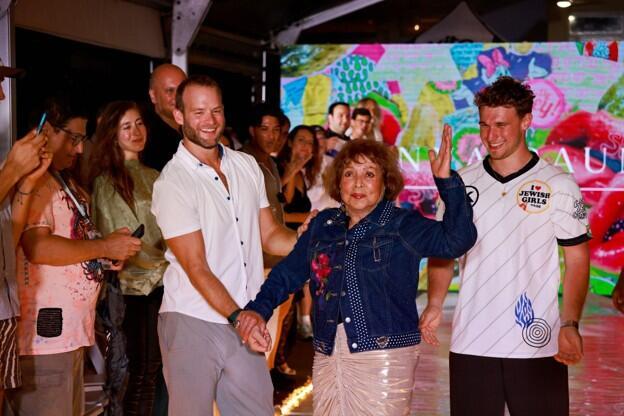
The first all-Jewish swimsuit runway show at Miami Swim Week
(Photo: Tomas Loewy)
Days earlier, I had come to New York first to help produce an Israel ice hockey game at UBS Arena, home of the New York Islanders. I was responsible for making sure that Ivan Gluck, an 88-year-old Holocaust survivor, could take the ice as the honorary captain of the Jerusalem team — in full gear and ice skates.
The significance of having Holocaust survivors not just in the audience, but in the arena — on the ice, on the runway, in full attire, in full pride — that is the essence of the Jewish people.
That's why I came on board in the first place. And honestly, it's why I do any of this. You don't need a blueprint. You don't need a fashion background, a runway cue, or a plan. You just need to show up, say yes, and figure it out as you go.
I saw this same resourcefulness after October 7, when I spent five months volunteering at the Hostage Forum. People were stepping into roles with significant responsibility — no prior background, no formal qualifications, no rulebook. Just showing up and doing what needed to be done. The story of Israel, the story of our people, is that we show up and we do it. Naaseh V'nishma. We will do, and then we will listen/understand. Action first, ask questions later. The Jewish people have been doing exactly that for a very long time.
- Brian Spivak is the founder and CEO of Barzel Media, a full-service media agency dedicated to supporting pro-Israel brands and organizations. Known as "The Economic Iron Dome" and headquartered in Tel Aviv, Brian and his team specialize in bridging the gap between brands, nonprofits and content creators. Through creative media, influencer marketing and strategic storytelling, Barzel Media helps these entities amplify their impact, reach and marketing goals.