

Five years ago, WWE wrestler Logan Paul set a world record when he purchased a rare Pokémon trading card for $5.275 million. This week, he did it again. The card sold at auction for $16.492 million, becoming the most expensive trading card ever sold.
The card in question is the Pikachu Illustrator, one of only 39 copies produced for a Pokémon illustration contest in the late 1990s. For years, it has been considered the “holy grail” of Pokémon collecting. In Paul’s case, it was also the only copy to receive a perfect PSA 10 grading from Professional Sports Authenticator.
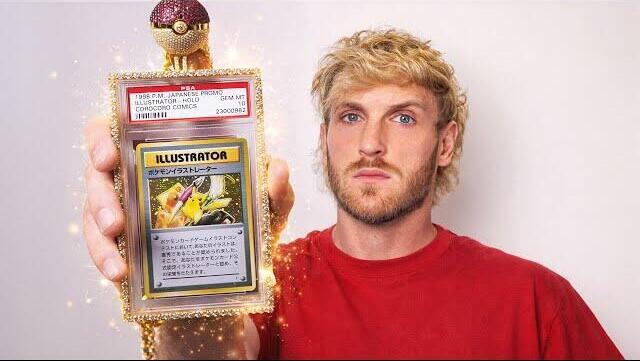
WWE wrestler Logan Paul and the recored-breaking Pokémon trading
(Screenshot: YouTube)
The sale took place at Goldin and lasted 42 days. In the final hours, after extended bidding, the price surged from $6.8 million to $16.492 million, across 97 total bids. Shortly after the hammer fell, a representative from Guinness World Records confirmed it as the highest-priced trading card ever sold. But this story is bigger than numbers.
The combination of extreme rarity, more than 30 years of global hype around Pokémon and carefully orchestrated public relations by Goldin alongside Logan Paul created a perfect storm. This was not just an auction. It was a cultural event.
The card was mounted in a custom diamond necklace that Paul famously wore at WrestleMania 38. He also committed to personally delivering it to the buyer. The narrative, symbolism and spectacle transformed the transaction into something emotional rather than purely financial.
The live YouTube broadcast amplified the momentum. During the stream, Paul opened booster packs, generated real-time buzz and merged the entertainment industry directly with the collectibles market. Young fans, seasoned collectors and investors were all pulled into the same moment. It demonstrated how content, community and commerce now intersect in a single digital arena.
 Bar Gindy Photo: Courtesy
Pokémon, which has surpassed brands like Disney and Star Wars in total lifetime revenue, continues to prove that nostalgia is an economic force. Historical data has shown that high-end Pokémon cards have, at certain points, outperformed traditional investment markets in percentage returns.
In Israel, the impact was also felt. Today, there are thousands of trading card collectors across the country, particularly within the Pokémon community. The Israeli collector scene closely followed the developments in the United States, discussing the sale, debating its implications and analyzing what it might signal for the global market.
Logan Paul later posted on Instagram that it had been an honor to own what he called “the greatest collectible in the world.” Industry estimates suggest he cleared more than $8 million in profit after fees.
The larger question remains unanswered: did the buyer make a brilliant long-term investment, or did they pay a record price at the peak of a speculative wave?
That answer will not be decided in a YouTube livestream, nor by a PSA grading scale. Only time will determine whether this was a masterstroke of financial foresight or simply another iconic chapter in the evolving culture of global collecting.
- Bar Gindy is the host of People & Collectors, Israel's leading collecting podcast, available with subtitles in English and 50 other languages.