

While Israel counts the hours until the release of the hostages from Hamas captivity, the world’s media are also watching the progress of the deal closely. Preparations to receive the returnees in Israel grabbed headlines Sunday evening on major international news sites, some running minute-by-minute live updates.
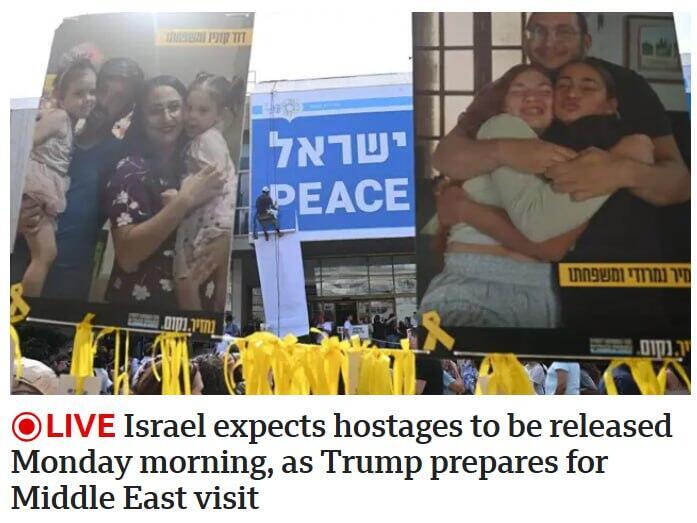
World coverage ahead of return of hostages: Pictured, BBC
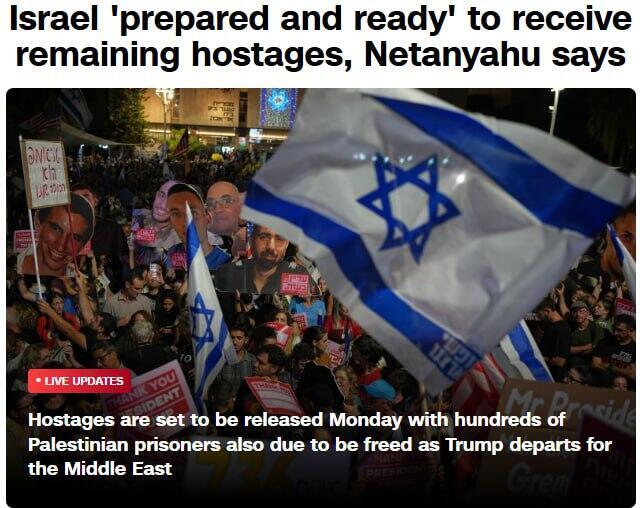
CNN coverage of the hostage return
“Israel expects the hostages to be released tomorrow morning,” the BBC site reported Sunday night, and its network correspondent filed from Jerusalem: “Everyone here is on edge. The families of the hostages are anxiously waiting for their release.” CNN, which also ran a continuously updating live blog on the hostage release, ran under its main headline: “Between grief and joy, Israel awaits the return of the hostages.” In an interview with the network, Ofir Braslavsk, father of hostage Rom Braslavski, said: “Every second feels like an eternity.”
The New York Times noted that in return for the living hostages Israel will hand over some 2,000 Palestinians imprisoned in its territory, and wrote: “On both sides there is a sense of relief mixed with elation after two years of devastating war.” The German newspaper Bild - which tends to take a distinctly pro-Israeli line — tried Sunday night to explain to its readers the asymmetrical price Israel is paying for its sons and daughters.
“Why are thousands of criminals handed over for a small number of hostages?” read the headline in its coverage of the deal’s progress; the article explained: “The answer is painful, but experience shows that in conflicts between two sides with unequal power balances, the handing over of prisoners is the only way to secure the release of hostages. For example, in 2011 Israel had to free more than 1,000 Palestinian prisoners to secure the release of captured soldier Gilad Shalit, including Yahya Sinwar, who later became a Hamas leader and the mind behind the October 7 terror attack.”
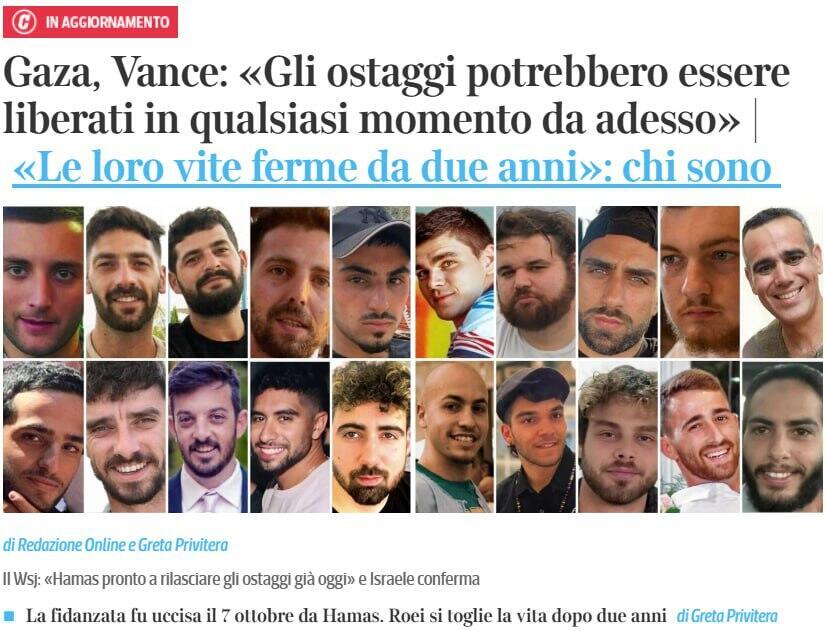
Coverage of the hostage release in Italy's Corriere della Sera

World coverage ahead of the return of hostages in La Repubblica
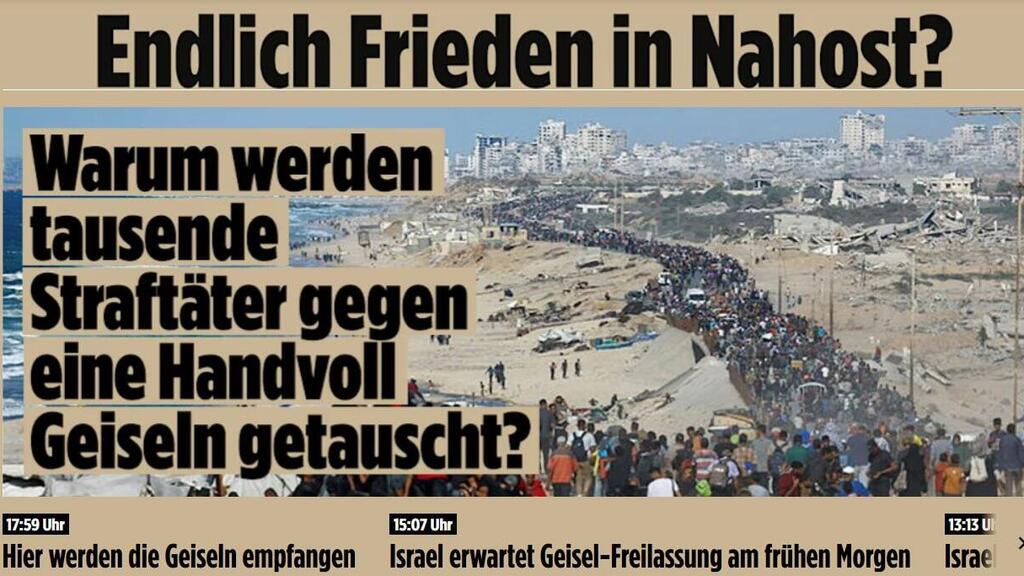
Germany's Bild tries to explain the uneven exchange
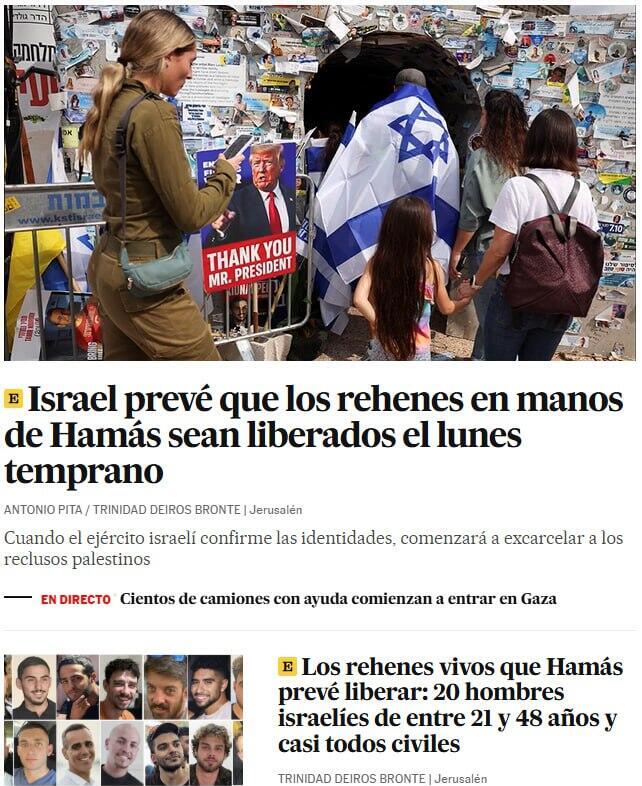
El Pais covers the hostage return
Some European newspapers on Sunday also reminded readers who the Israelis expected to return from Gaza. Italy’s Corriere della Sera published photos of the 20 living hostages under the headline: “Their lives were put on hold two years ago.” The newspaper explained to readers that images of the hostages appear everywhere in Israel: “The first time you encounter them is in the corridors of Ben-Gurion Airport the moment you land in Tel Aviv. You see them in the streets, on the faded posters that have replaced advertisements. They’re on the stickers people stick to their cars. They hang from balconies with Israeli flags. Sometimes you even find them printed on T-shirts. The faces of the 20 living hostages (and 28 who were killed) who remain in Gaza appear everywhere.”
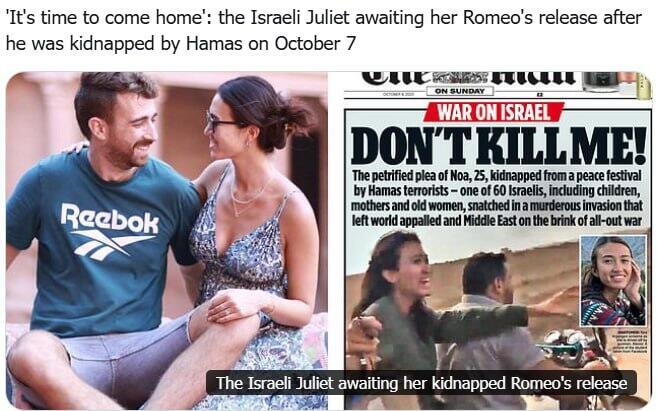
The British tabloid Daily Mail devoted special attention today to the anticipated release of Avintan Or and to the expectation of his partner Noa Argamani to be reunited with him. “The Israeli Juliet waits for her Romeo after he was kidnapped by Hamas on October 7,” ran the headline of the piece, which covered a post Argamani published on social media saying: “It’s time to come home.” The Daily Mail recalled that, for many around the world, Argamani became one of the faces of the October 7 massacre, noting that the newspaper itself ran her anguished photo on its October 8, 2023 front page under the large headline: “Don’t kill me!”
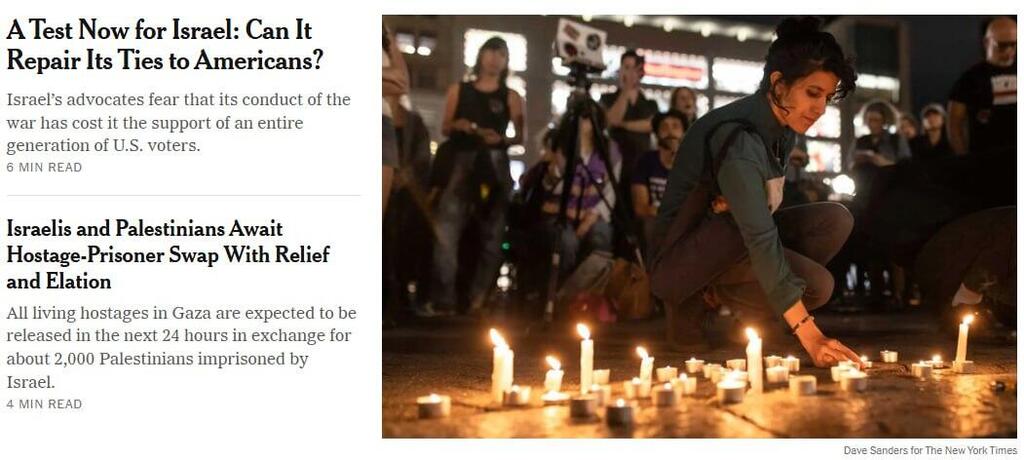
Coverage in the New York Times

Fox News covers the hostage release
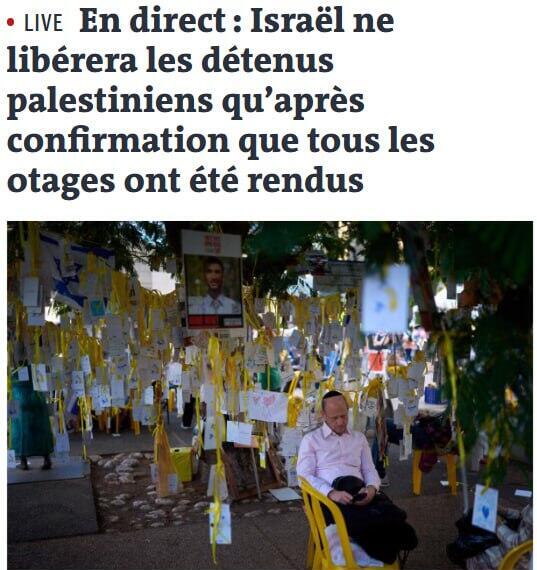
France's Le Monde reports from Israel
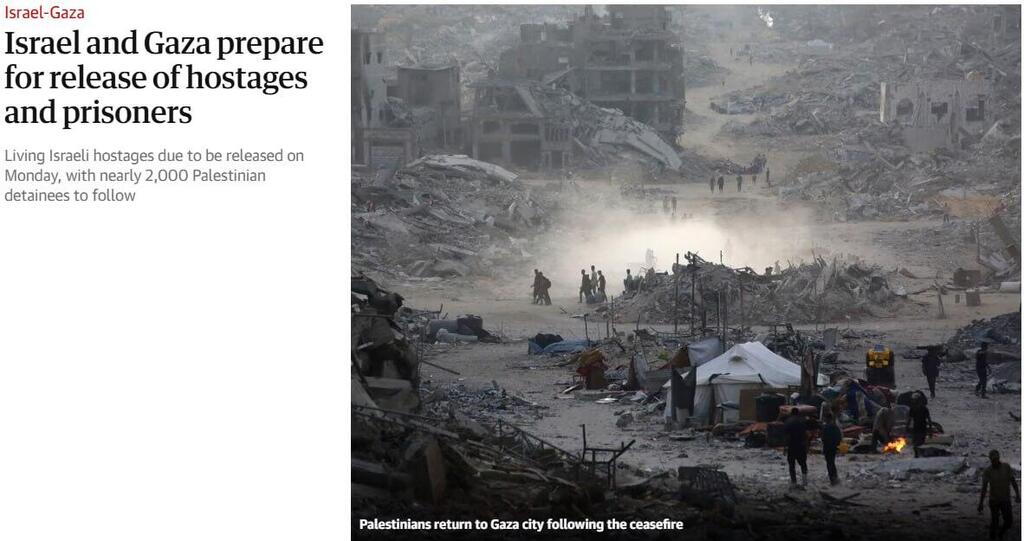
The Guardian
A large portion of the press coverage has also been devoted to Gazans returning to their ruined towns and to the entry of aid into the Strip. The BBC, among others, ran a piece about children in Gaza, quoting youngsters such as nine-year-old Tala, who said she is glad for the ceasefire but cannot shake the horrors of the war: “I saw nothing but dead people,” she was quoted as saying.