

In an age when the ability to come up with an original story is becoming increasingly rare, it is hardly surprising that Hollywood is once again rummaging through history’s junkyard. This time, the subject is a mystery writer who was becoming the hottest name in the British market when, one fine day, she vanished for 11 days and drove an entire kingdom into a frenzy.
The writer was Agatha Christie, then at the beginning of her commercial ascent, and the fact that it happened exactly a century ago has not stopped Hollywood from officially announcing a film based on the story of her disappearance. British actress Felicity Jones (“Rogue One: A Star Wars Story”) will play Christie, alongside French actor Vincent Cassel (“Black Swan”), who will portray a retired Belgian police detective drawn into the investigation — a none-too-subtle nod to Christie’s most famous character, Hercule Poirot.
The thriller, titled “Eleven Missing Days,” will be based on Jared Cade’s book and will approach the disappearance much as the press did at the time: as a classic whodunit in which life imitates art and everyone around Christie immediately becomes a suspect. But the casting of Jones offers hope that Hollywood may also manage to view, with compassion and through contemporary eyes, the real story behind the disappearance: the spectacular psychological collapse of a woman trying to escape reality in order to survive.
Personal tragedy, national circus
Dec. 4, 1926. Interwar England wakes to an exceptionally cold morning in Surrey. On the edge of a steep, frost-covered slope just above a deep chalk quarry hangs a car, half suspended in the air and half on the ground. Its hood is buried deep in the bushes, the driver’s door is open and the headlights are still on.
When sleepy local police officers approached the vehicle, they found several items inside — pieces of a puzzle that would occupy all of England in the days ahead. There was an expensive fur coat, a toiletry bag containing women’s clothing and an expired driver’s license bearing the name Agatha Christie. The driver, however, was nowhere to be found.

Set to step into Christie’s shoes: Felicity Jones
(Photo: Reuters)
Today, we are accustomed to reality sometimes outdoing fiction, but in this case the boundary between Christie’s books and her life did not merely blur — it vanished altogether. Christie, the writer who helped invent the modern mystery plot, simply disappeared. Not for one evening, but for 11 full days, bringing an entire kingdom to a standstill.
There was no shortage of speculation: She had been murdered by her cheating husband. It was a publicity stunt to promote her new book. Perhaps it was a failed suicide attempt. The truth may have been out there somewhere, but unlike in Christie’s novels, there was no cathartic solution. The story of her disappearance remains largely unexplained.
In 1926, Christie was hardly a picture of psychological well-being. Her mother, with whom she shared a relationship described as “devotion that became obsessive,” had died shortly before, and months spent caring for her had left the writer physically and emotionally exhausted. Her publisher was pressuring her to move forward with her next books, and the night before her disappearance came the final blow that made her life unbearable: Her husband, Col. Archibald Christie, told her he was having an affair with a younger woman named Nancy Neele and wanted a divorce.
Immediately after the argument, Archibald left the house to spend the weekend with friends and his desired mistress, leaving Christie behind, devastated and lost.
At about 9:45 that evening, Christie wrote a note to her secretary, Carlo, saying she was going to Yorkshire “to recuperate,” then went upstairs to the room of her 7-year-old daughter, Rosalind. The girl was asleep. Christie kissed her, left the house, got into the Morris Cowley she had bought with the proceeds from her first books — whose flattened front had earned it the nickname “Bullnose” — and drove off without telling anyone where she was going.
A local worker named Edward McAllister later went to police and said that at about 6:20 the following morning he had helped a woman matching Christie’s description start the car. She was wearing only light clothing in the freezing cold, he said, and was shivering, confused and frightened.
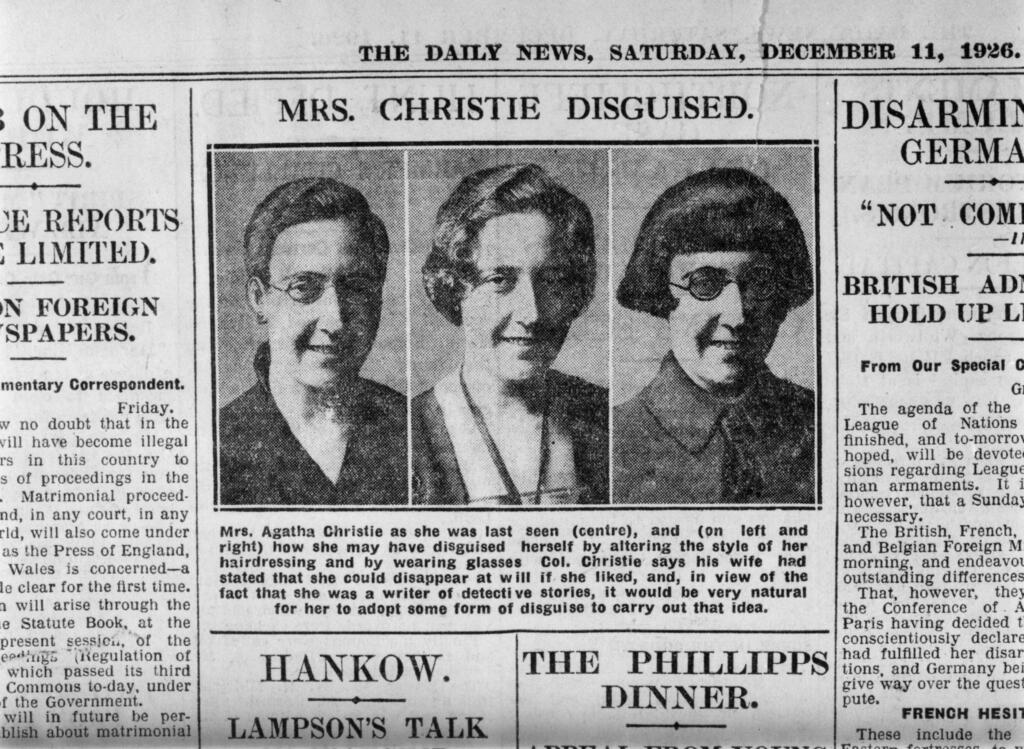
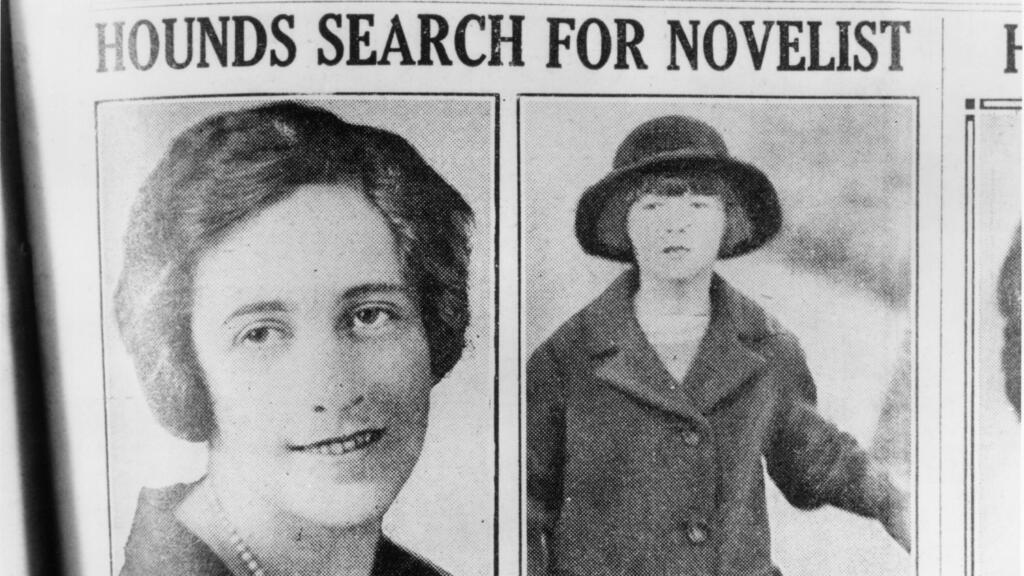
More than 1,000 police officers and over 15,000 volunteers joined the search; press coverage of Agatha Christie’s disappearance
(Photo: Hulton Archive/Getty Images)
The condition of Christie’s car and the objects found inside puzzled police. Once news of her disappearance spread, hundreds of thousands of worried members of the public were drawn in as well, all eager to take part in what amounted to the era’s version of a crowdsourced detective investigation.
The theories ranged from a failed suicide attempt and losing control of the car to suspicion that her husband had murdered her, or that Agatha had coldly tried to frame him for murder — or at least prevent him from spending the weekend with his mistress.
Either way, the case became a national circus on a scale that is difficult to imagine today. British police reports reveal mass hysteria: 1,000 police officers and more than 15,000 volunteers set out to search the hills and forests of Surrey, while Home Secretary William Joynson-Hicks pressured police to accelerate the search.
Even Christie’s colleagues in the world of detective fiction were swept up in the case and felt compelled to put their sleuthing talents to use. Dorothy L. Sayers, creator of Lord Peter Wimsey, went to the site where Christie’s car had been abandoned to examine the clues herself. And Sir Arthur Conan Doyle — the man who gave the world Sherlock Holmes, the ultimate symbol of scientific and analytical rationalism — took a glove belonging to Christie and brought it to a famous medium in the hope that the supernatural might solve the case.
The 1920s were the golden age of Britain’s tabloid press, and drama, sensation and preferably a little blood were the fish and chips of the newspapers. Christie’s story had every ingredient they could have asked for: a wealthy and famous woman, a husband with a formidable military background, a young mistress in the wings and a crime scene that seemed lifted from a Hercule Poirot novel.
Every newspaper wanted a piece of the drama, and some even tried to steer the investigation, including by suggesting that nearby Silent Pool be drained in case Christie had drowned there.
Some spread rumors that police had scrambled a fleet of aircraft and complained that the operation was costing taxpayers the fantastic sum of 12,000 pounds. But a police report in Britain’s National Archives showed that the search itself had cost just 25 pounds. The planes circling overhead did not belong to police but were privately hired by newspapers seeking exclusive aerial photographs.
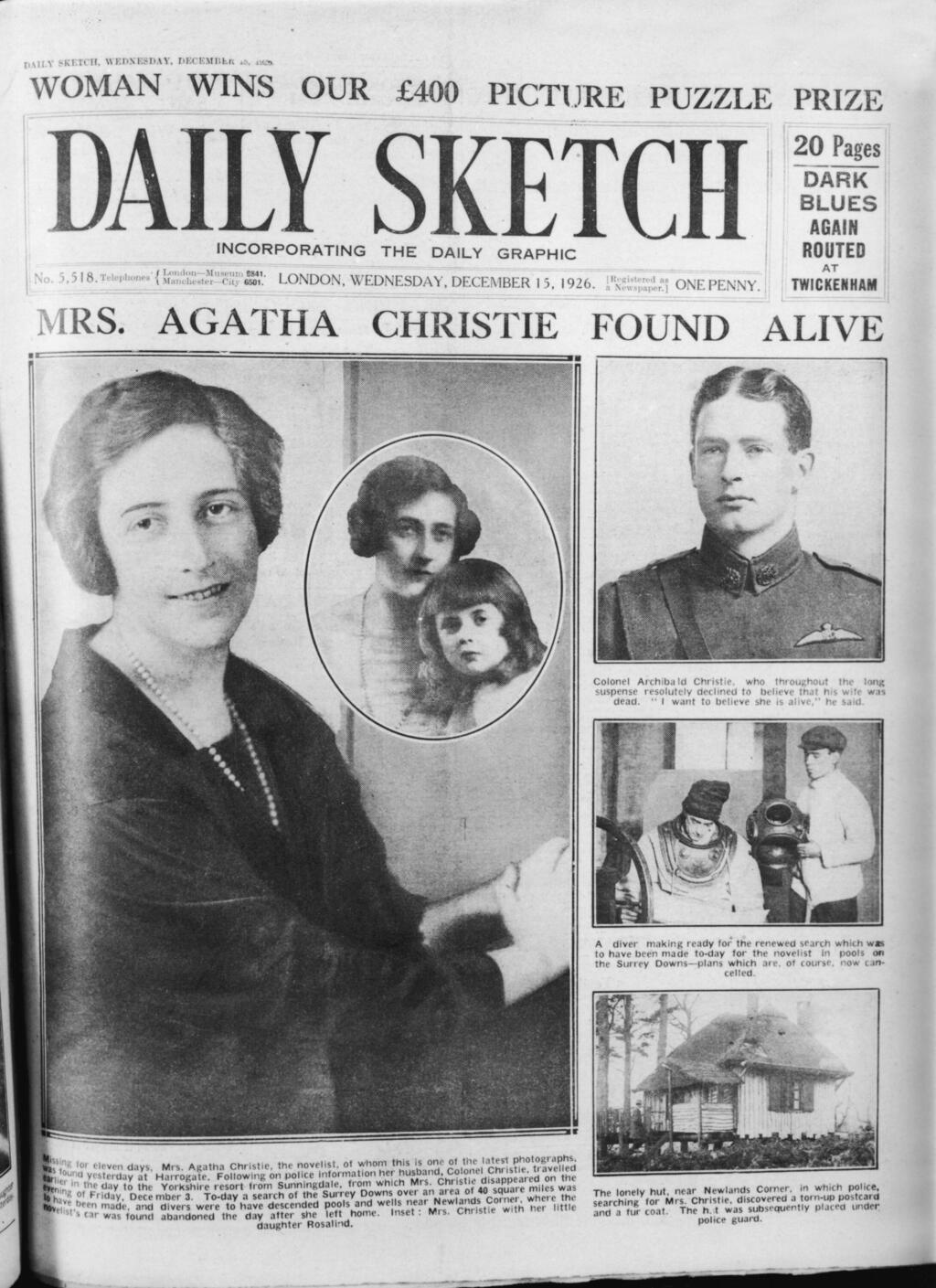
She remarked to one of the staff members that she looked a little like the woman everyone was searching for; press coverage of Agatha Christie’s disappearance
(Photo: Hulton Archive/Getty Images)
Agatha Christie was finally discovered 11 days later in the one place no one had thought to look.
While thousands of volunteers froze in the forests and mediums sniffed gloves, Christie had boarded a train, traveled about 300 kilometers north and checked into the luxurious Old Swan spa hotel in the resort town of Harrogate.
And make no mistake: She was not hiding in her room behind drawn curtains. She chatted casually with other guests, attended dances, played billiards and enjoyed everything the hotel had to offer. She came down for meals, leafed through the morning papers and, in one particularly eerie moment, even remarked to a hotel employee that she looked a little like the woman everyone was searching for.
The person who finally recognized her was a banjo player in the hotel band named Bob Tappin, who noticed that the face staring out from the pages of the daily newspapers was sitting every evening at the hotel’s dining tables.
The investigation revealed that Christie had arrived at the hotel on the day she disappeared and registered under the assumed identity Teresa Neele of Cape Town.
Her decision to use the surname of her husband’s mistress led some police officers to believe that the disappearance had been an ingenious revenge plot designed to humiliate Archie and expose his affair before the entire nation. But it could also be read as disturbing evidence of the depth of Christie’s psychological trauma: The trauma had become embedded in her new identity.
When police received the confirmed report, they summoned Archibald to the hotel. Anyone expecting a dramatic scene when the two met was disappointed. Witnesses said Christie treated him like a distant acquaintance, remaining polite but detached. At one point, she said she would be happy to speak with him, but he would have to wait in the lobby because she needed to go upstairs and change into an evening dress before dinner.
The theory that the disappearance was a publicity stunt for her new book was equally flimsy. Christie was an introverted woman who disliked publicity and fought fiercely to preserve her privacy. Her publisher was furious about the entire incident, viewing it as embarrassing publicity rather than a marketing opportunity.
Later explanations focused on a nervous breakdown and memory loss, or more specifically a condition known as “dissociative fugue,” in which psychological stress becomes so overwhelming that a person effectively disconnects from their previous identity while remaining capable of functioning.
The theory was that the enormous pressure Christie was under caused her to lose her sense of identity and flee reality. Doctors who examined her said she had suffered a mild concussion and complete amnesia.
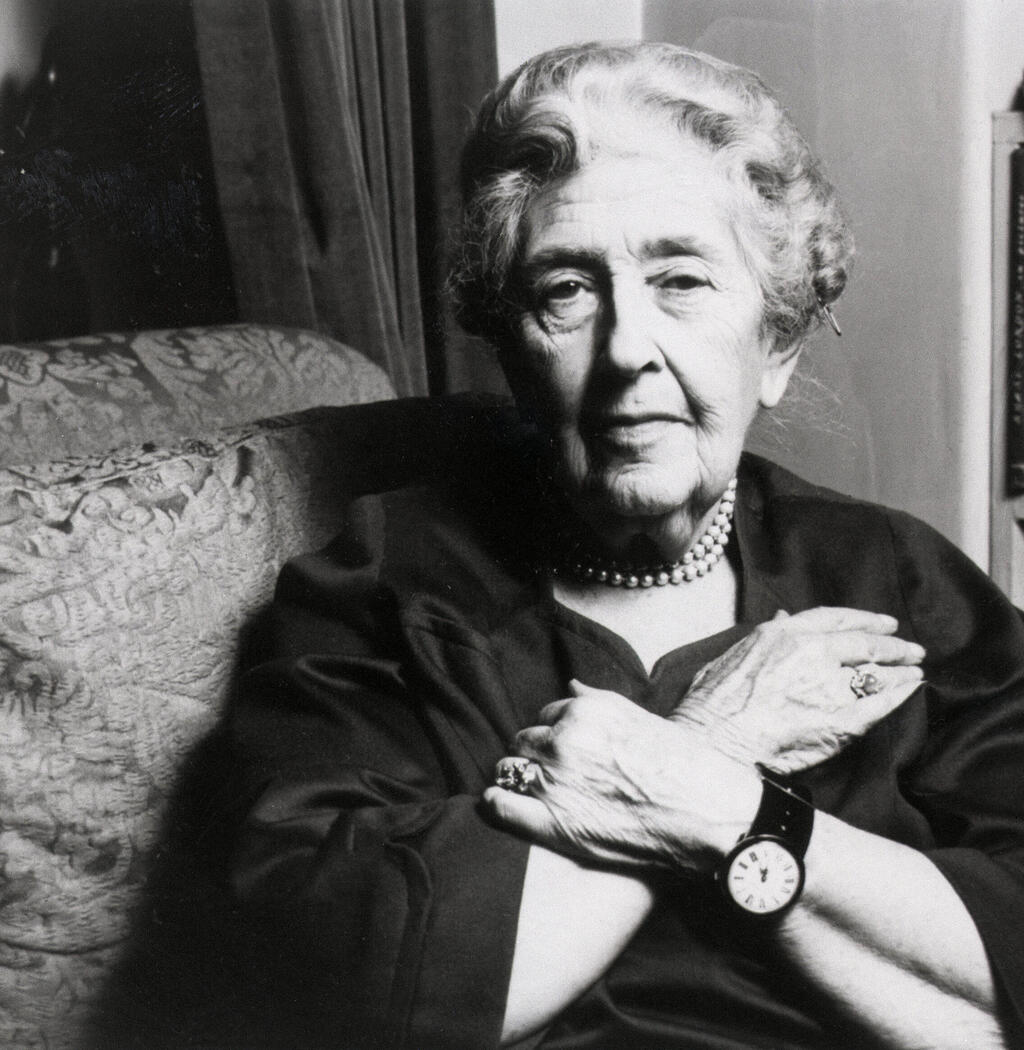
She suffered a mild concussion and complete amnesia; Agatha Christie
(Photo: Bettmann)
Christie eventually returned home and to her daughter. Her divorce from Archie became final in 1928. He married Nancy Neele, while Agatha continued writing and went on to become the most successful novelist of all time.
In 1930, she traveled alone to Baghdad on a one-way ticket, seeking to escape the gossip and the pain that would not let go. There she met Max Mallowan, an archaeologist 14 years her junior. A few weeks later, he proposed and she refused. It took several months before Christie realized he was not going anywhere. They married, and she finally found happiness and stability.
She was later credited with the line, “An archaeologist is the best husband a woman can have. The older she gets, the more interested he is in her.”
Christie joined Mallowan on expeditions through the Middle East, journeys that inspired some of her later novels.
For decades, the accepted narrative was that Christie refused to speak about the 11 missing days and omitted them entirely from her autobiography. But historian Lucy Worsley uncovered a lengthy and candid interview Christie gave the Daily Mail in February 1928, less than two years after the event, apparently in an effort to change the damaging public image that had formed around her and was hurting her efforts to secure custody of Rosalind.
In the interview, Christie described how she “left home that night in a state of extreme nervous strain, intending to do something desperate.” She said that on the afternoon before her disappearance she had visited a relative in a nearby town and, on the way back, the thought entered her mind to “drive straight into the building.” She changed her mind because Rosalind was in the car with her.
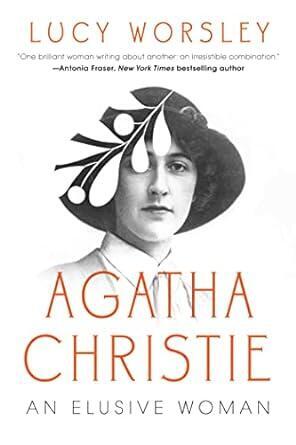
The social and cultural climate of 1920s England was simply not equipped to accept an idea such as dissociation as a psychological defense mechanism; the cover of Agatha Christie: An Elusive Woman by Lucy Worsley
(Publisher: Pegasus Crime)
She went on to say that she felt miserable that night and left home, driving aimlessly. She considered drowning herself in a river but decided she was too good a swimmer. From there she drove to London and other places before turning the car toward the quarry.
Before the car could plunge over the edge, however, it struck something and Christie’s head hit the steering wheel. From there, she said, she wandered in a dazed state to a train station and boarded a train for Harrogate, a town where she had previously received treatment for neuritis.
“I read about Agatha Christie in the newspapers while I was there,” she recalled, “and thought that woman had behaved very foolishly.”
According to Worsley, Christie gave the interview to demonstrate that she was not a “bad mother” who had abandoned her daughter and checked herself into a spa for 10 days, but a mother suffering from an illness.
The public, Worsley argues, preferred to ignore Christie’s version, in part because British society and culture in the 1920s were simply not equipped to accept the idea of dissociation from one’s identity as a psychological defense mechanism.
It was not a rare phenomenon. A considerable number of soldiers returning from World War I struggled with memory loss or fugue states. But psychological trauma without an accompanying physical injury — including what was then called shell shock — was often treated as weakness of character, self-indulgence or deliberate deception. Amnesia or psychological collapse could be viewed as an attempt to avoid military service or responsibility.
The fact that Christie was what today might be called an empowered woman did not work in her favor in that conservative society either. Women who crossed gender boundaries and worked in “men’s jobs” often provoked hostility, and the press portrayed her as cold and manipulative.
When she disappeared, her daughter was left behind — a fact that further damaged Christie in the public eye. People preferred a narrative of revenge or an elaborate hoax to an explanation rooted in mental illness. Add Christie’s profession — mystery writer — and it was only a short leap to assume she was simply staging the plot of her next novel.
The charming, handsome, irresistible man became a red flag
But writers have their own way of using information and processing trauma. If it did not work in an interview, no problem — it could work in a book. The subconscious throws nothing away.
Those 11 days in December 1926 became a powerful creative engine for Christie, who had already explored the idea of changing identities in books published before her disappearance. But what she experienced split her later writing into two channels: an almost ruthless form of psychological self-examination under a pseudonym and a profound, sobering change in the narrative codes of her famous mysteries.
The name she invented this time was Mary Westmacott.
The press categorized those books as romances, but anyone looking for a sugary love story instead encountered something closer to a post-mortem examination of the female psyche.
In “Unfinished Portrait” (1934), the protagonist, Celia, not only contemplates suicide after her mother dies and her husband leaves her, but is saved at the last moment by a strange man. Yet Celia has little use for melodrama and chooses not to pursue a romance with him because she understands that she does not really know him.
It was an expression of Christie’s own regret over marrying, at a young age, an impressive and dazzling man — Archie — whom she barely knew, a marriage that ended disastrously.
Westmacott’s next novel appeared in 1944. Christie wrote “Absent in the Spring” in a feverish burst over three consecutive days without sleep.
Its protagonist, Joan Scudamore, is a bourgeois woman convinced that she is a perfect wife and mother. She becomes stranded alone for several days at an isolated railway station in the desert, with no books and nothing to occupy her.
The enforced silence and absolute isolation compel her to do the most frightening thing known to humankind: look inward.
She discovers that her life and her perception of herself are a complete fabrication. It is perhaps the most precise reflection of what may have happened to Christie during those 11 days in Harrogate.
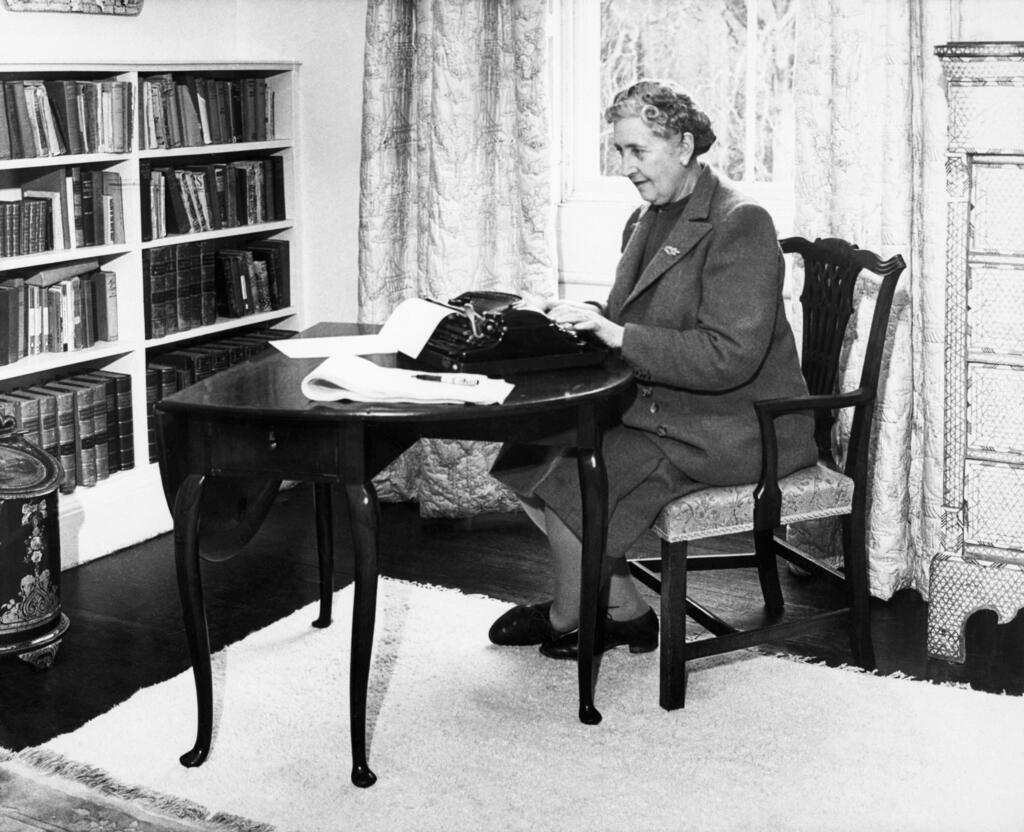
The transformation extended to detective fiction as well; Agatha Christie
(Photo: Bettmann)
The change also reached the detective novels Christie published under her own name.
In her early thrillers, before 1926, the heroines were often adventurous young women who fell in love with charismatic, daring, thrill-seeking men. That formula died on the Surrey cliff.
In the books that followed, the charming, handsome, irresistible man became almost invariably a red flag — and not infrequently the murderer himself. Male charisma, in Christie’s world, was transformed from a social asset into grounds for suspicion.
Her heroines learned from her own experience. They knew to choose the solid, quiet and reliable man, and understood that personal charm is often one of a sociopath’s weapons.
In Christie’s later books, changes of identity also frequently evolved from a trick employed by a criminal or detective into a means of psychological survival.
In the thriller “Destination Unknown” (1954), the heroine, Hilary Craven, experiences a series of tragedies that echo Christie’s own life: Her young daughter dies and her husband leaves her for another woman. Hilary travels to Morocco with the stated intention of killing herself, but at the last moment she is recruited for a secret espionage mission that requires her to assume another woman’s identity.
Buried beneath the detective narratives is the insight that characters’ ability to change identities, adopt false names or fake emotions demonstrates, above all, how blurred and fragile the boundary between truth and fiction can be within the human psyche.
Dame Agatha Christie died on Jan. 12, 1976, at the age of 85, leaving behind an almost unimaginable literary legacy: 66 detective novels that made her the best-selling fiction writer in history, surpassed in sales only by the Bible and Shakespeare.
She was buried in a quiet, private funeral in Oxfordshire. Mallowan died two years later and was buried beside her.
Christie never lost her relevance. The way she defined how Western culture understands suspense, along with the enduring figure of her famous detective Poirot, left a clear trail for generations of creators in the genre who followed her — one that remains visible today, 50 years after her death.