

What do they do about the overdraft, how much do they pay for their home and what dream did they fulfill in the shadow of war? People from across Israel speak candidly about real life, before and during the war. This time: Renana Gitit Oren from Pardes Hanna-Karkur.
Gitit?
“That's the name I was born with, and at 18 I added Renana. I never liked how it sounded. It comes from some singer my father liked. That name has been the nightmare of my life.”
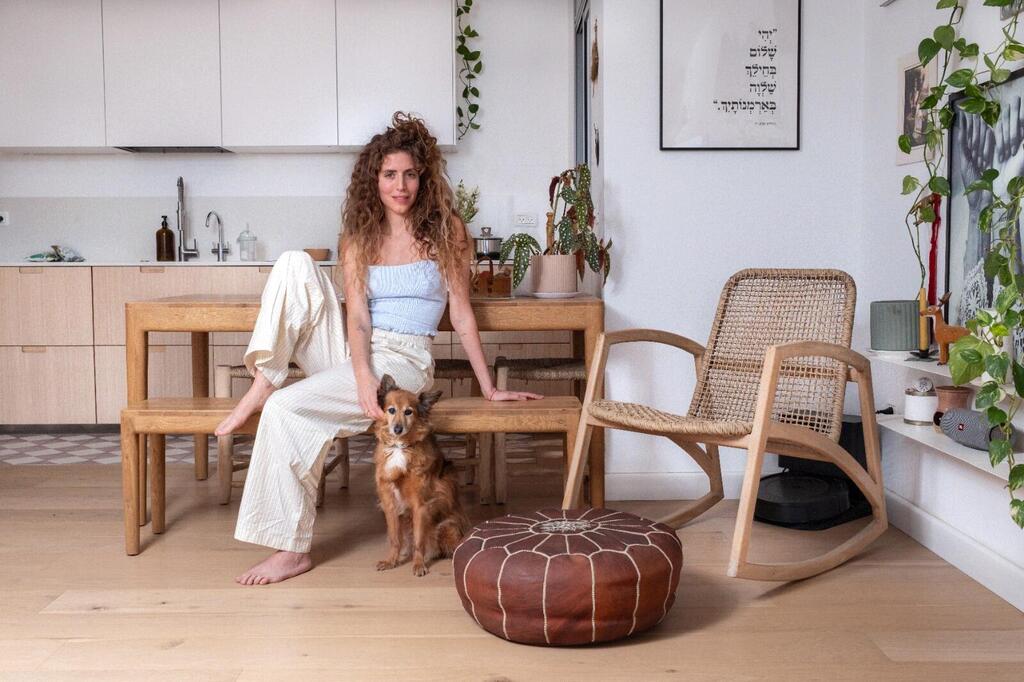
The apartment?
“I've been in Pardes Hanna for 13 years, and in this apartment for three. A four-room apartment I bought new for 1.5 million shekels, but today it's already worth 2.5 million shekels. Pardes Hanna has an image of private homes, but it's developing like crazy and building upward, and I bought an apartment too.”
Where are you from?
“I was born in Moshav Mishmar HaYarden near Rosh Pina. After traveling around the world a bit, I got married and moved to Pardes Hanna with a one-year-old son, and I was in the middle of a divorce process. That was also when I started sewing wedding dresses. I'm a fashion designer, and there were always clients who wanted me to sew for them but I didn't want to, until I looked for a dress for my own wedding. I didn't want something fluffy and banquet-hall sweet, but something that suited a daytime wedding, and I couldn't find it. So even though I said I'd never make a wedding dress, I decided to do it. Then came the first client, whose dress I burned with an iron right before the wedding. But she didn't notice — I added some design element to fix it. After that I sold another 15 wedding dresses and decided to open a bridal salon. I realized I wanted to move closer to central Israel because it's hard for brides to get to Rosh Pina, and I also wanted good education for my son, so we moved to Pardes Hanna.”
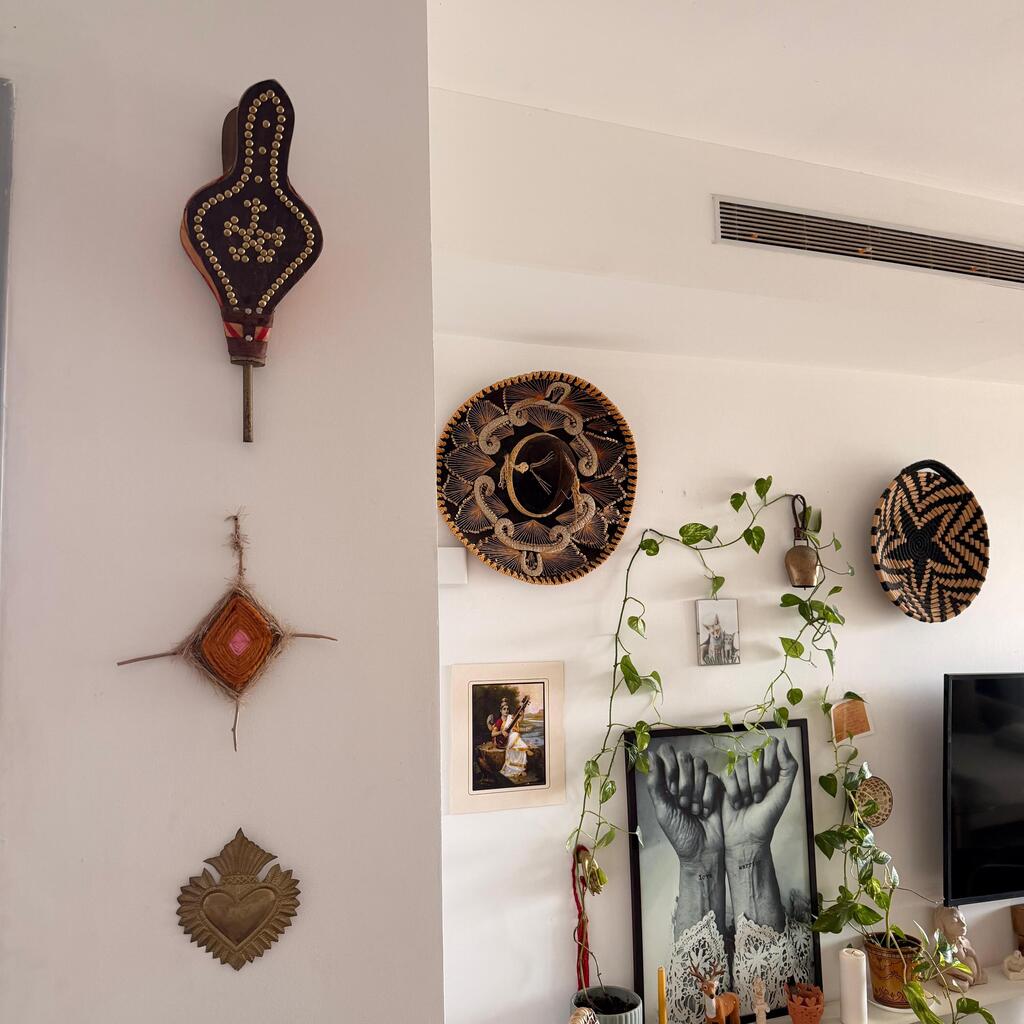
Renana Gitit's apartment
(Photo: Assi Haim)
Pardes Hanna?
“What is Pardes Hanna? A month ago I saw a woman running down the road after a large colorful parrot that had crossed the street. Chaos started, people stopped and began searching for the parrot in the middle of the road. I told myself, ‘This is Pardes Hanna.’ Or in the building WhatsApp group someone will ask, ‘Does anyone have cow’s milk?’ They’ll specify cow’s milk because most people don’t drink it. Cow’s milk is the unusual thing here. Wellness matters to people here. I do Gyrotonic, a holistic exercise method that combines principles from yoga, dance and pilates. In the last three years there’s been a huge boom in great culinary places here. Places that are fun to sit in, bars, people going out. Everywhere is packed. I used to miss that and travel to Tel Aviv, and now it’s really happening here.”
Fashion designer?
“I never studied it formally. I didn’t finish high school and I was restless. I wanted to discover the world, but from a young age I knew this was what I wanted. I grew up on a moshav in the periphery and it was incredibly boring. I was drawn to anything related to clothes. I used to cut up my clothes and my friends’ clothes and sew them back together. That was my dream, and I really wasn’t sure I’d be able to make it happen and buy a home from this work. At one point I traveled to Jerusalem once a week to study sewing and taught myself. I used to cut up every garment that came my way and walk around in half-sewn clothes. My first recognition came from a fair I took part in.”
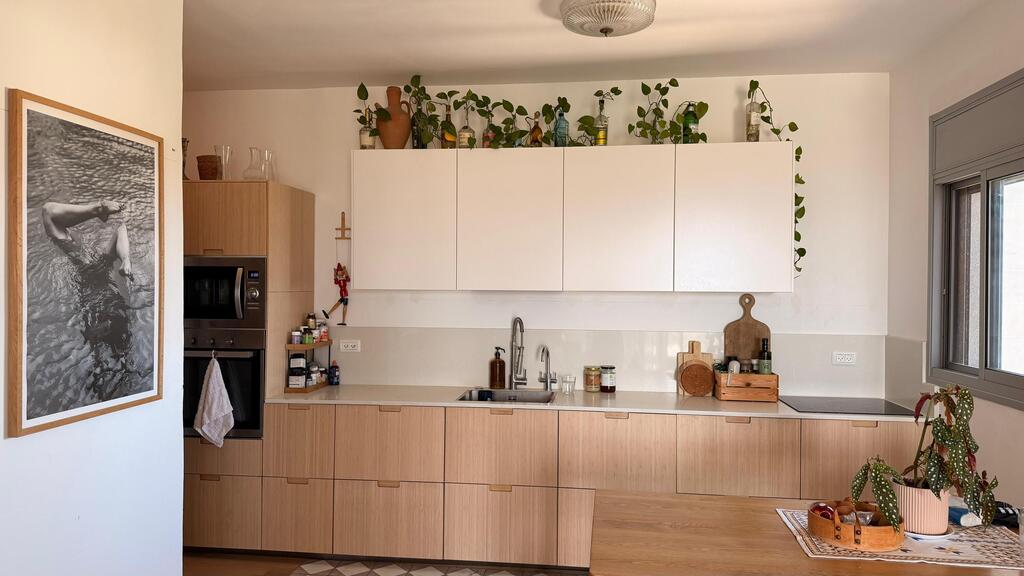
Renana Gitit's apartment
(Photo: Assi Haim)
A fair?
“I worked for a year with autistic people in Karmi'el, and at the same time I had a room at home and started sewing different things. Every dress was one of a kind, and honestly that’s still the case today. Because I was far from Tel Aviv, I lacked a lot of things, but it forced me to improvise. I bought lots of fabrics from Delta and made vintage-style dresses with pieces of lace and different fabrics. Then there was a designers’ fair. A reporter there liked my work and wrote about me, and stores started reaching out. Within months there was more demand than I could sew. Because every dress is different, it was very problematic. To this day I both enjoy and suffer from that lack of commerciality. The dresses can’t be recreated, but that’s also my brand, ‘Toora.’”
Toora?
“It was very successful, and that’s how I worked until my wedding, when I opened the bridal salon and something changed in me. I felt this was exactly what I loved — creating one design and working with a bride, which requires creativity and pushing the designs even further. The women who come to me are getting married in nature settings, or having unusual weddings. It’s more boho chic. I try to keep prices accessible, around 8,000-10,000 shekels, because there are wedding dresses that cost 30,000 shekels. I have nearly 200 designs in my studio, and someone can come wanting a certain design, but I can’t make it smaller because what’s there is what’s there. Which means every bride is a new story. It’s not the most commercial approach, but I feel that’s also my strength.”
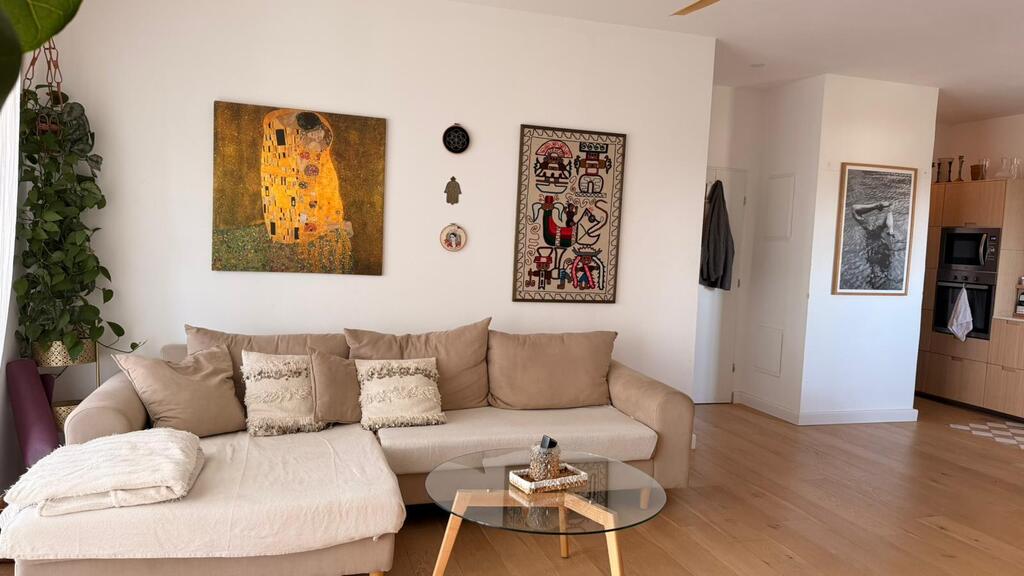
Renana Gitit's apartment
(Photo: Assi Haim)
Grow bigger?
“I don’t want to grow bigger. I’d actually like to work less and enjoy more because I also handle the business management side. That’s a different brain from being a designer. When I’m too deep in business mode, I don’t enjoy it, and I remind myself to return to the channel of creativity and art.”
Financial situation?
“Okay, but the overall economic situation isn’t simple, and even if you make a good living you don’t become rich here. I’m happy I have the option to make a living doing what I love.”
Leisure?
“I’m a foodie and I love sitting in restaurants, but honestly what I love most is being at home. That’s the ultimate luxury.”