

The newly expanded and remastered edition of the Beatles’ Rubber Soul album, released over the weekend, offers an ideal opportunity to revisit one of the key turning points in the Liverpool quartet’s history — the moment when they stopped being a light pop band aimed at teenagers and began the process of becoming something else entirely.
Every new edition of a legendary Beatles album first seeks to shed fresh light on the familiar, then to overwhelm listeners who want to dive deeper with a wealth of extras. That is also the case with Rubber Soul. In addition to a new stereo mix of the original album, the expanded edition, available in several physical and digital formats, also includes the 1965 mono mix, which many Beatles devotees — including this writer — consider the more authentic version.
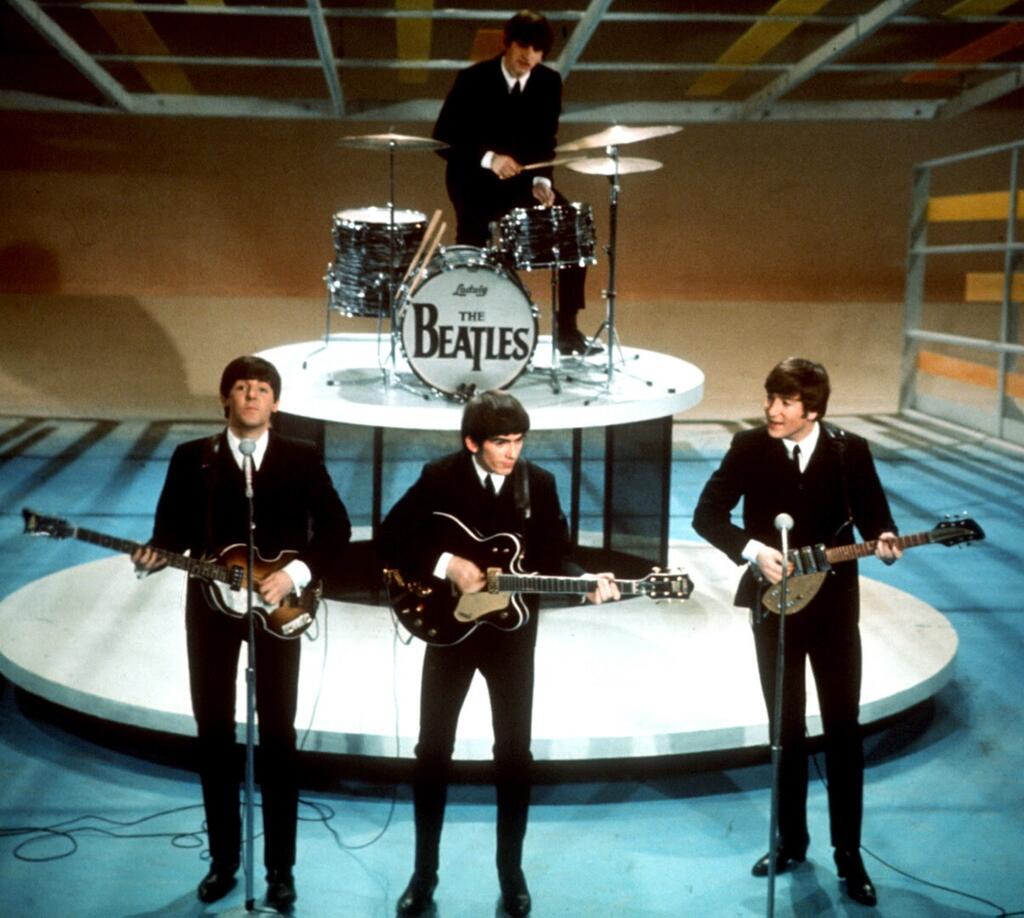
The new edition also includes the U.S. version of the album originally released by Capitol Records, featuring "It’s Only Love" and "I’ve Just Seen a Face," both taken from the soundtrack to the film "Help!". And there is more: the double A-side single "Day Tripper / We Can Work It Out," released at the same time but not included on the album, appears here in both stereo and mono versions.
But as noted, the section that will most interest Beatles obsessives is the one devoted to previously unreleased material. The box set includes more than 20 early versions of songs, most of them never released before. The most intriguing is "Little Girl" — a short home recording by John Lennon that was discovered by chance while work was underway on the new set.
A band at a crossroads
Released in December 1965, perfectly timed for that year’s Christmas shopping frenzy, Rubber Soul is far from the psychedelic, groundbreaking album that would arrive a year later, Revolver. But it has a charm and importance of its own. It is the sound of a band at a crossroads: one foot still planted in the light pop that had made it the most successful group of its era, while the other was already setting out toward deeper, more complex artistic territory.
Listening again to the iconic album in its new expanded form is a reminder not only of how dramatic the Beatles’ transformation was, but also of how quickly it happened.
Speed is perhaps the best word to describe the Beatles’ 1965. In one packed year, they completed an exhausting world tour, filmed their second movie, "Help!," and recorded its soundtrack, then performed in August for more than 55,000 fans at Shea Stadium in New York. The show was groundbreaking in terms of crowd size and media attention, but no one there — not in the stands and certainly not onstage — could hear much through the screaming.
By the fall of 1965, the Beatles needed a vacation. Instead, they went into the studio because their record company demanded a new album by Christmas. Fortunately, rather than turning the looming deadline into a hastily assembled throwaway, the pressure pushed the band to its highest musical peak yet.
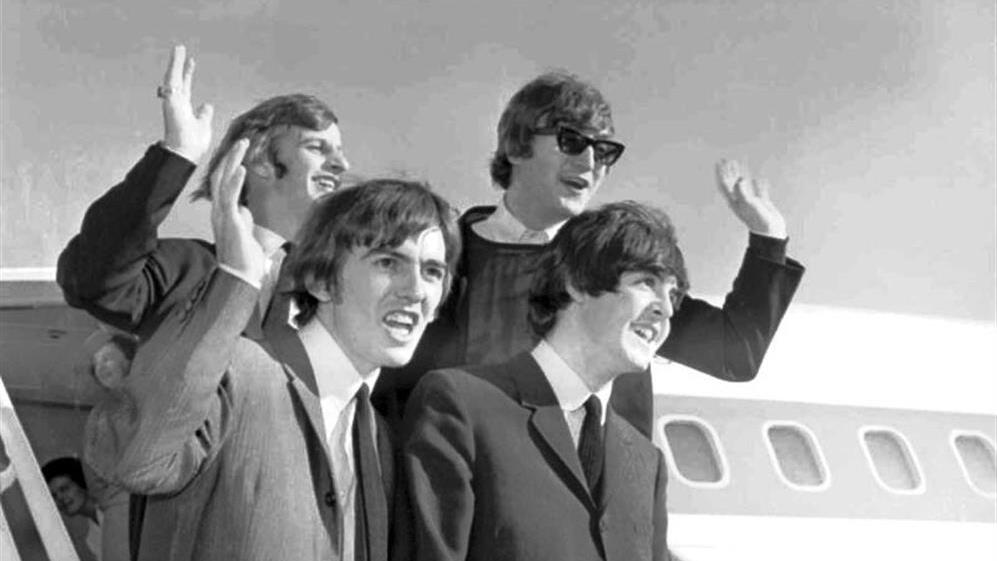
The Beatles in 1964
(Photo: AP)
The speed at which the Beatles worked probably required a certain flexibility. But the album’s title did not come from that. It came from the slang phrase “Plastic Soul,” which Paul McCartney picked up from an African American musician who used it to describe a white singer trying to imitate soul music without fully understanding it.
The Beatles adopted the phrase with a degree of humility: they knew they could not create authentic American soul, but they were certainly inspired by it, as they were by American folk rock and by a meeting with a curly-haired young man from New York who showed them that pop songs could be written a little differently.
They worked on the album at remarkable speed: 14 songs were written, recorded and produced in less than a month on a four-track machine, with George Martin, as usual, in the producer’s chair, while his son Giles handled the mix for the new box set, and Norman Smith oversaw the sound.
Although the album does not have the technological complexity that would arrive with Revolver, you can hear a band beginning to understand not only that it could expand its instrumental arsenal — with Indian sitar, harmonium and a distorted bass sound produced through improvisation — but also that the studio itself could be used as an instrument.
One joint in New York
Some of the credit for the relaxed atmosphere surrounding the Rubber Soul sessions probably belongs to the green smoke that accompanied them. By 1965, marijuana had become a regular part of the band members’ work and leisure routine.
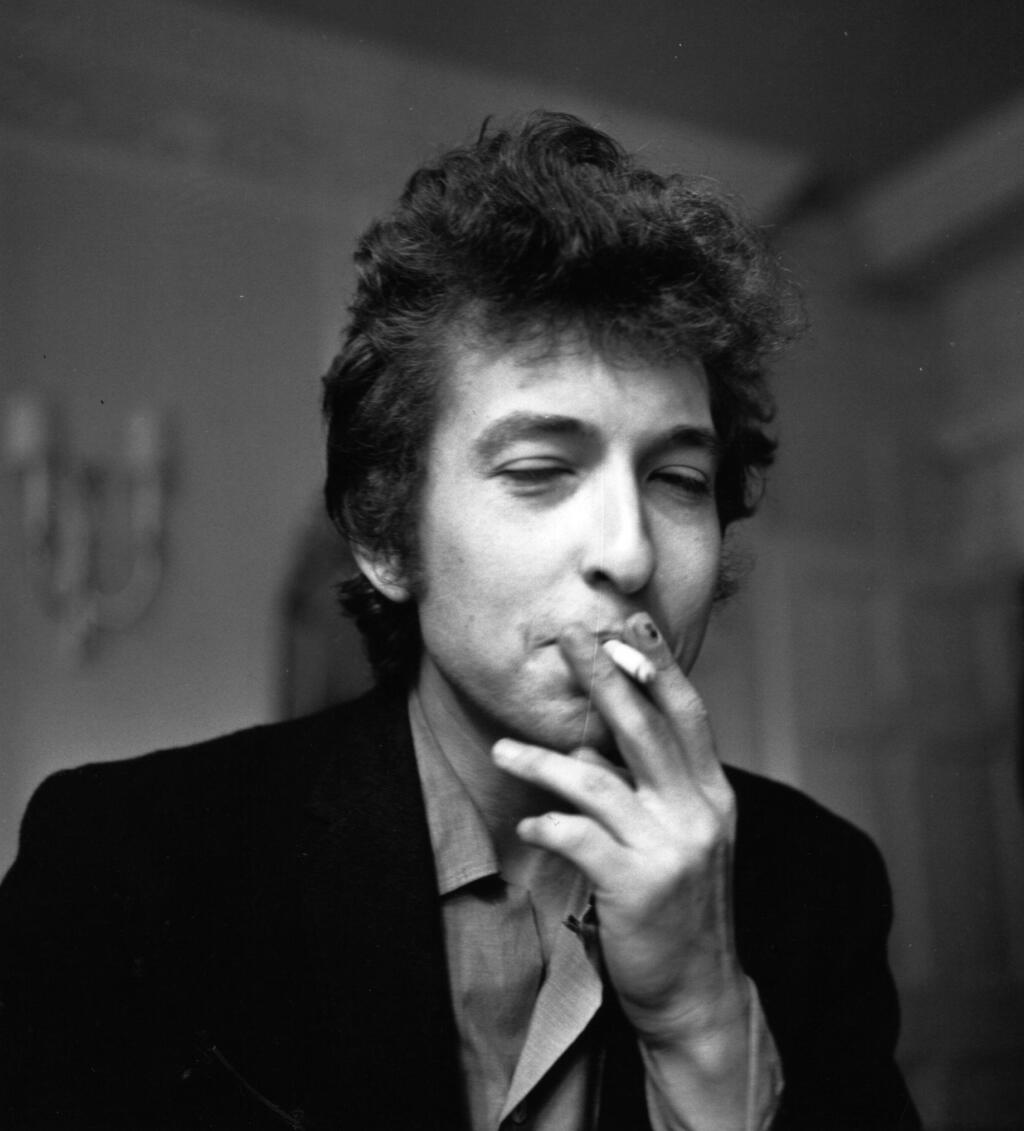
Bob Dylan in April 1965
(Photo: Evening Standard/Getty Images)
Perhaps that is why the cover has a greenish-brown tint, why the four young men pictured on it look slightly dreamy and why the typeface used for the album title feels especially elastic.
To understand the transformation the Beatles underwent while making Rubber Soul, one has to go back a year, to August 1964, and more precisely to a room at New York’s Delmonico Hotel, where they met Bob Dylan.
According to legend — and according to several later accounts from people who were in the room — Dylan offered to share a joint with them during that summit meeting. Dylan assumed marijuana was already routine for them because the words “I can’t hide” in the hit "I Want to Hold Your Hand" sounded to him like “I get high.”
After a few tentative puffs, the Beatles began to discover a new world and fell in love with it.
Dylan’s influence on the Beatles went far beyond expanding their drug menu. Lennon, who admired Dylan’s ability to take an apparently simple folk-pop song and turn it into a deep personal confession, began writing differently after that meeting, as heard in "Norwegian Wood" and "In My Life," where he wrote about himself rather than simply producing another chorus about a “boy who loves a girl.”
The year 1965 was the year rock was born as a musical-artistic movement. Dylan’s electric albums Bringing It All Back Home and Highway 61 Revisited played a central role in that birth. On the British side of the Atlantic, a significant share of the credit for that new musical outlook belongs to the Beatles’ Rubber Soul.
14 songs, two sides
Although Rubber Soul is not as revolutionary as the albums the Beatles released after it, it can be seen as the opening chord of the second half of the band’s recording career, or at least the closing statement of the first.
The 14 songs made clear to listeners that this was not simply another new Beatles album, but something that did not sound quite like what had come before.
The opening track, "Drive My Car," announces the new tone from its first bars: a muscular bass line inspired by Motown and an ironic lyric in which the heroine promises her boyfriend he can be her private driver, while making it perfectly clear she does not really mean it.
The next song, Lennon’s "Norwegian Wood" (This Bird Has Flown), is probably the album’s most important moment: It was the first time an Indian sitar took a starring role on a Western pop record.
George Harrison, who had been introduced to the instrument after meeting David Crosby of the Byrds and had begun listening to Ravi Shankar albums, brought it into a song Lennon wrote about a one-night affair. The ambiguous lyrics were influenced by Dylan — the song does not end with a “conclusion” and leaves the listener without a definitive resolution. A year earlier, none of the Beatles could have imagined making a song like this.
The Black musical spirit of Motown that opens the album returns in the third track, "You Won’t See Me." McCartney wrote a song about frustration in a relationship built on repeating, sustained harmonies.
"Nowhere Man," which follows, is probably the first Beatles song that is not about love, but about loneliness, meaninglessness and a sense of existential stagnation. That fits rather well with Lennon’s account that the song emerged after a night of failed attempts at writing.
The beautiful vocal blend of Lennon, McCartney and Harrison here serves as a kind of preview of the vocal richness they would achieve later in their studio career.
We are still on Side A, and now it is Harrison’s turn. "Think for Yourself" is one of two songs the introverted guitarist finally managed to get onto the album after years of being marginalized as a songwriter, while McCartney played the leading fuzz-bass line through an improvised effects setup.
"The Word," which follows, is ostensibly a light song about “the word,” meaning “love,” but love is presented here as a universal concept rather than simply as the description of a romance between two people.
The first half of the British version of the album closes with a McCartney song. "Michelle" moves in the opposite direction from the one with which the bassist opened the record. It is a delicate jazz ballad with cabaret elements and lines in French, which McCartney felt was a more fitting language for this melancholy song.
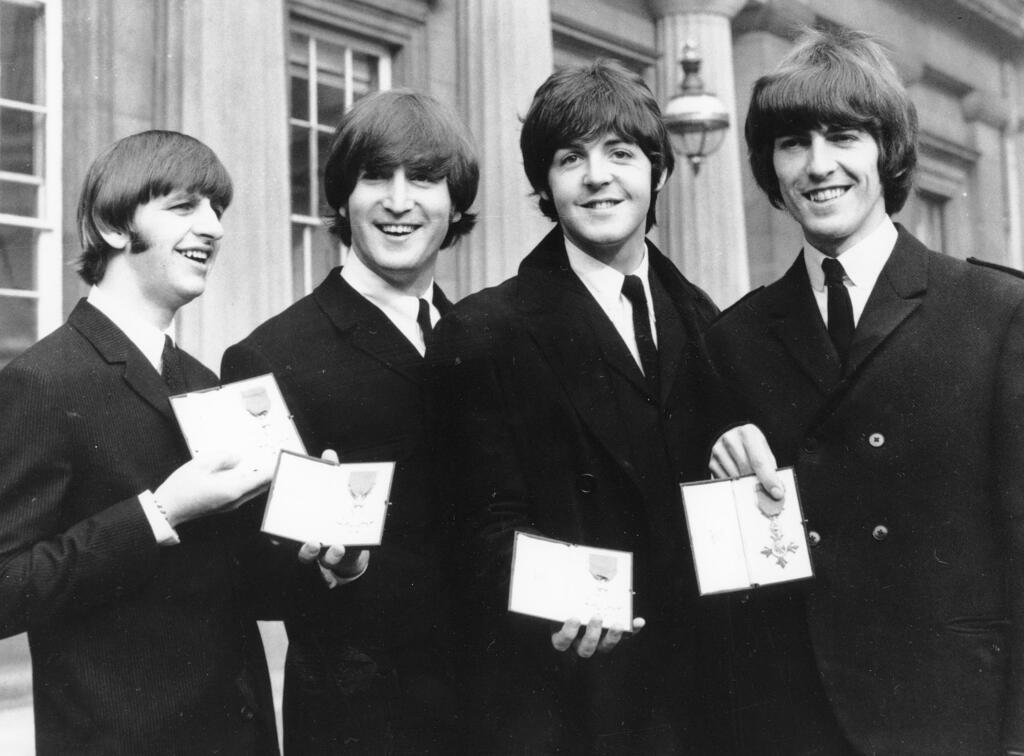
Members of the Beatles receive knighthoods from the British Empire
(Photo: AP)
The Beatles’ early albums were short, and less than 20 minutes after Side A began, the album’s second half opens with the country-pop "What Goes On," sung by Ringo Starr. Although Starr’s contribution as a songwriter was negligible, his bandmates made sure that on every album their drummer stepped up to the microphone at least once.
After Starr’s lightness comes its mirror image. "Girl" finds Lennon at the peak of his confessional writing up to that point. The song deals with a frustrating relationship, and Lennon’s breathing as he sings sounds almost as if it was recorded to imitate the inhalation of cigarette smoke by a despairing man, while the acoustic guitar in the background has a slightly bouzouki-like quality.
Romance gone wrong also appears in "I’m Looking Through You," which McCartney wrote about his recently former girlfriend at the time, Jane Asher.
The emotional peak of the album — and one of the Beatles’ great peaks — comes with "In My Life," in which a young man, Lennon in this case, writes about Liverpool, childhood and friends who are no longer there.
The brilliant production solution for this remarkable song, whose melody McCartney helped shape, came from Martin. He recorded a short baroque-style piano solo, but chose to play it at half speed so he would not have to perform the faster, more complex passages. He then sped the tape up to double speed, making the piano suddenly sound like a light, quick harpsichord.
Dylan was not the Beatles’ only influence on Rubber Soul. The Byrds, the California band that electrified Dylan’s songs, also played a role in the album’s sound. On "If I Needed Someone," Harrison played a beautiful riff on a 12-string Rickenbacker guitar that strongly recalled the Byrds — so much so that Roger McGuinn, the band’s singer and guitarist, accused Harrison, half jokingly and probably a quarter seriously, of stealing from him.
The album’s closing moment, "Run for Your Life," is probably the only one Lennon would have preferred to do without. The opening line, “I’d rather see you dead, little girl, than to be with another man,” was taken almost entirely from an Elvis Presley song, and it illustrates how even on an album that showed the Beatles maturing and developing new sensitivity as writers, remnants still remained of the somewhat emotionally violent world that had characterized them up to that point.
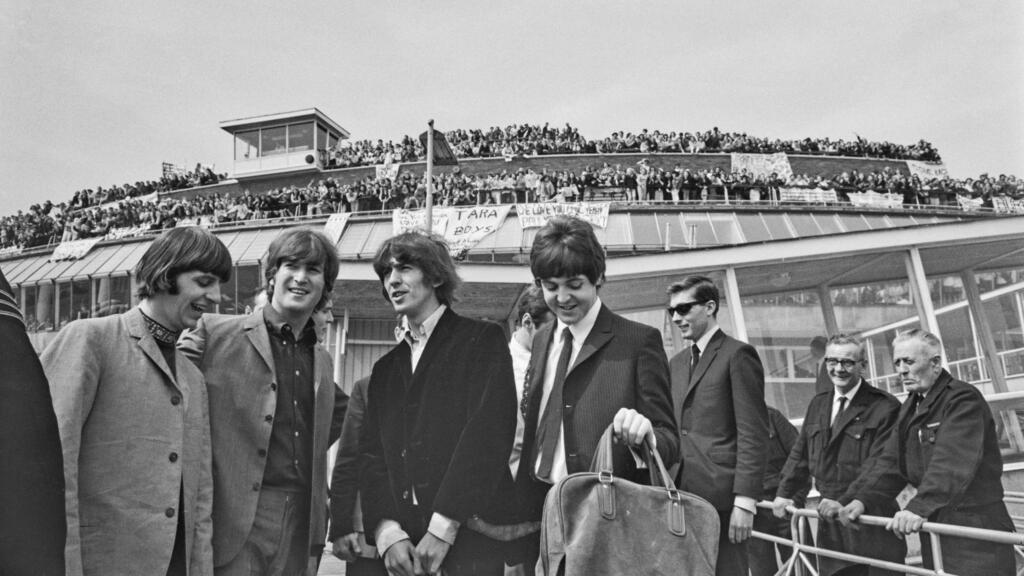
Beatlemania outside Buckingham Palace
(Photo: Evening Standard/Getty Images)
The Beatles were influenced on Rubber Soul by at least two American acts — Dylan and the Byrds — but they also influenced another American musician.
Brian Wilson of the Beach Boys repeatedly said that the first time he heard the album, it struck him as a complete work rather than merely a collection of singles, and that realization pushed him to create Pet Sounds.
Everyone benefited from the musical rivalry that developed between McCartney and Wilson along the London-Los Angeles axis on the albums the two bands would release next.
From the moment Rubber Soul appeared until the day the Beatles walked together for the last time across the Abbey Road crossing, they displayed a dizzying learning curve.
And although Rubber Soul is not as revolutionary as Revolver, does not have a concept like Sgt. Pepper’s Lonely Hearts Club Band, the stylistic versatility of the White Album or the musical richness that graces the sublime second side of Abbey Road, it was an important first step toward all of them.
Rubber Soul is the album on which the Beatles realized they could be something more important than just another wildly successful pop band singing to girls screaming through the show. They finally understood that they had become musicians.