


Jason Alexander was 29 when he first appeared as George Costanza. The pilot episode of Seinfeld aired in July 1989, two and a half months before his 30th birthday. Yet that number still comes as a surprise when compared with photographs from the time. His hairline was already visibly receding, and his glasses and clothes hardly suggested a man in his late 20s. Anyone looking at those images might immediately say that the actor on screen appeared considerably older than his actual age.
The feeling is familiar, and many of us experience it when looking at old photographs. Examples like these have become something of an online genre in recent years, and the list goes on. Sean Connery was just 32 when he first stepped into James Bond's suit in Dr. No, yet he was perceived as a much more mature man. James Gandolfini was in his 30s when he took on the role of Tony Soprano, but his heavy build and receding hairline made him appear middle-aged to many viewers.
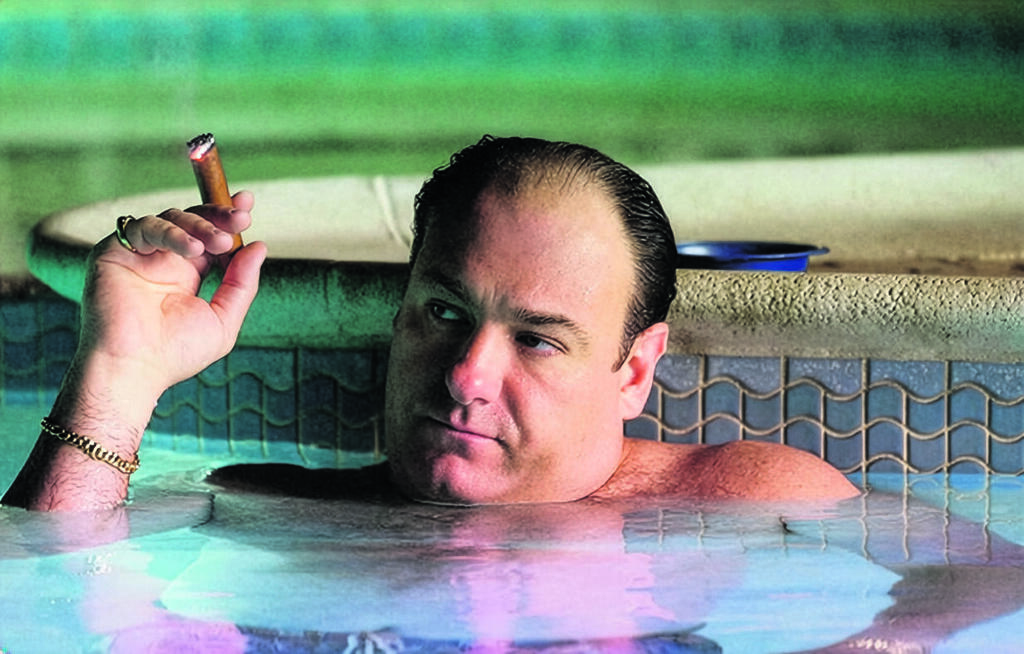
Carroll O'Connor, better known as Archie Bunker from the sitcom All in the Family, was, remarkably, just 46 when the series premiered. Even then, he looked and sounded like a much older father, with graying hair, conservative clothing and a voice that seemed to belong to someone well beyond his mid-40s. Anne Bancroft was also only 35 during the filming of The Graduate, in which she played Mrs. Robinson, the older, experienced woman who seduces Dustin Hoffman's young character. In reality, the two actors were just six years apart.

Jason Alexander in Seinfeld
Israel has no shortage of examples either. Old photographs of several familiar figures from Israeli culture and sports regularly circulate online: entertainer Tuvia Tzafir at 33, theater critic Michael Handelzalts at 40 and basketball coach Pini Gershon at 25, all looking older than their stated ages would suggest. Again and again, these images resurface, and again and again, people express their surprise.

Anne Bancroft in The Graduate
The impression is clear. The proof is less so
Prof. Tzvi Ganel of Ben-Gurion University's Department of Psychology is currently researching age perception. Over the years, he too has noticed the same apparent discrepancy when looking at old photographs. Yet when he went looking for scientific research to support the claim, he discovered that direct evidence was simply lacking.
"I think the phenomenon is real. That's my impression, and it's also the impression of people around me," he says. "But I conducted a fairly broad review of the literature and couldn't find a serious academic paper that directly confirmed this claim."
To investigate the phenomenon properly, Ganel explains, it is not enough to place a photograph of a 30-year-old actor from 1975 next to one of a 30-year-old from 2025. Researchers would need to collect a large number of photographs of people of the same chronological age from different periods, control as much as possible for differences between images taken decades apart, and then ask people who do not know when the photographs were taken to estimate the subjects' ages.
If, across a large sample, 40-year-olds photographed 50 years ago were consistently perceived as older than today's 40-year-olds, researchers could conclude that a genuine effect exists.
 Prof. Tzvi Ganel Photo: Dani Machlis
The problem is that photography itself has changed. Cameras from the 1960s and 1970s, their film, lenses, lighting, exposure and the ways photographs were printed or broadcast on television are not comparable to the sharp digital images we are accustomed to today.
"There are so many factors here that interfere with drawing a clear conclusion," Ganel says. "To make a strong claim, you need to ensure that the photographs are comparable, and that's not simple."
Still, the absence of direct proof does not mean there are no findings that could help explain the phenomenon. Research provides two different pieces of the puzzle. On the one hand, the age we attribute to a face may reflect, to some extent, the body's biological condition. On the other, there is evidence that, in certain physiological respects, people of the same chronological age today may indeed be biologically younger than people of that age several decades ago. The impression, then, may not be entirely unfounded.
Faces don't lie entirely
"The face is a fairly good indicator of biological age," Ganel says. "If you take people of the same chronological age, you can find substantial differences in how young or old they are perceived to be, and those differences can reflect something real about the body's condition."
A large Danish study published in the medical journal BMJ demonstrated this connection. Researchers photographed 1,826 twins aged 70 and older and asked evaluators to estimate their ages. The older a person appeared, the poorer their physical and cognitive functioning tended to be, on average, and the lower their survival rates. Even within pairs of twins, the twin who looked older was more likely to die first.

'The face is a fairly good indicator of biological age'
(Photo: shutterstock)
That study does not tell us whether 70-year-olds several decades ago looked older than today's 70-year-olds. It does show, however, that the gap between chronological age and the age we see in someone's face is not necessarily just a matter of appearance.
Another clue comes from studies that did not examine faces at all. A study published in the journal Demography compared data from 21,575 Americans across two periods, 1988 to 1994 and 2007 to 2010, calculating their biological age based on a range of physiological markers. Across all age groups, the population in the later period was biologically younger.
Among people aged 40 to 59, the difference was 2.36 years for women and 2.65 years for men. Among those aged 60 to 79, the gap reached 3.63 years for women and 4.29 years for men.
Here too, caution is needed. The researchers did not examine whether participants actually looked younger. The findings do, however, strengthen the possibility that the same chronological age does not necessarily represent the same physical condition across generations.
"There is some truth to the claim that people in the past looked older for their age, but it's too simplistic," says Dr. Nitzan Anav, head of longevity at Maccabi Healthcare Services. "We also need to be careful in interpreting the findings. If someone takes medication that improves their blood pressure or cholesterol, it improves some of the markers used to calculate biological age. That doesn't necessarily mean aging itself has slowed to the same extent. On the other hand, rising obesity during those years pushed the indicators in the opposite direction and offset some of the improvement, particularly among younger people."
 Dr. Nitzan AnavPhoto: Ofer Hajayov
The research suggests that the same chronological age does not necessarily represent the same physical condition in every generation. Israel also provides a clear example of how the health environment in which people age has changed.
"According to data from Israel's Central Bureau of Statistics, life expectancy in the mid-1980s was about 73.5 years for men and 77 for women. Today it stands at around 81 and 85.5, respectively, an increase of about eight years over four decades," Anav notes.
"Of course, that doesn't mean a 60-year-old today looks like a 52-year-old did in the past, but it suggests that the body of today's average 60-year-old is at a different point along the aging process."
The habits that added years to people's faces
Before blaming cameras or the way we look at old photographs, it is worth remembering that everyday life was also very different back then. People were less health-conscious, and many of the risks we recognize today received far less attention.
"In the past, there was much less awareness of sun damage," says Dr. Doron Klein, a plastic surgeon who heads the plastic surgery unit at Assuta Ashdod Medical Center. "People would lie on the beach for hours. There weren't the public awareness campaigns we have today, there wasn't the same awareness of skin cancer or the effects of sun exposure on the appearance of the skin. Today, people make more of an effort to avoid hours when UV radiation is strongest, use sunscreen and wear hats. In the past, these things were barely part of the conversation."
 Dr. Doron KleinPhoto: Assuta Ashdod
Cumulative exposure to ultraviolet radiation is known to be one of the main causes of visible skin aging. It affects collagen and other structures in the skin and, over time, manifests itself in wrinkles, changes in texture and pigmentation. Smoking also leaves its mark. A systematic review of risk factors for skin aging identified sun exposure, smoking and air pollution among the major contributors.
Twin studies allow researchers to observe these effects with unusual clarity. In a study involving 186 pairs of identical twins, the longer one twin had smoked, the older they appeared compared with their sibling. Greater sun exposure and failure to use sunscreen were also associated with an older appearance.
Another study comparing identical twins with different smoking histories found that smokers had more pronounced bags under their eyes, deeper folds around the nose and mouth, more wrinkles around the lips and changes in the jawline. Even a five-year difference in smoking duration between twins was associated with visible differences in their faces.
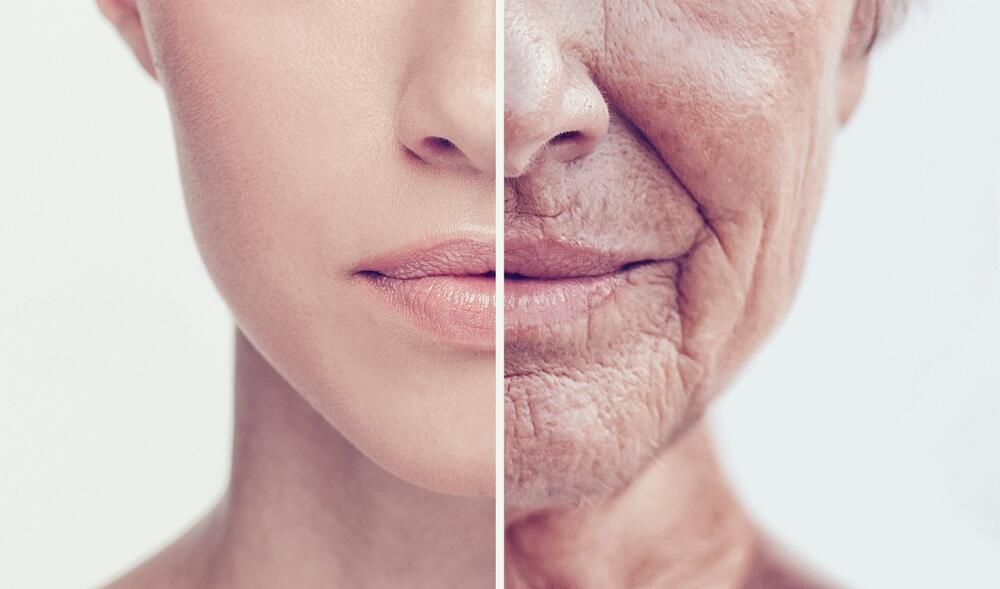
In the past, there was far less awareness of sun damage
(Photo: sutterstock)
Several decades ago, smoking was not only more common but also far more present in everyday life. Cigarette smoke filled offices, restaurants, television studios, homes, buses and airplanes. The idea that smoking could add years to someone's facial appearance was hardly among the considerations that concerned smokers.
"Today, warnings are everywhere, and awareness of the health risks, as well as the effects on skin aging, is much greater," Klein says.
He also adds air pollution to the list, a factor that has been studied in recent years as a possible contributor to visible skin aging. Epidemiological studies have linked prolonged exposure to particulate matter and nitrogen oxides, among other pollutants, to pigmentation spots and certain characteristics of aging skin. However, the body of evidence remains much smaller than that concerning sun exposure and smoking.
Genetics must, of course, also be considered. Two people born on the same day can still look as though they are a decade apart in age. That is one reason Ganel warns against building an entire theory around the most striking examples circulating online.
"Some people are always perceived as older than their chronological age, while others are perceived as younger," he says. "If I want to examine whether people really looked older on average 50 years ago, I need to move beyond individual cases."
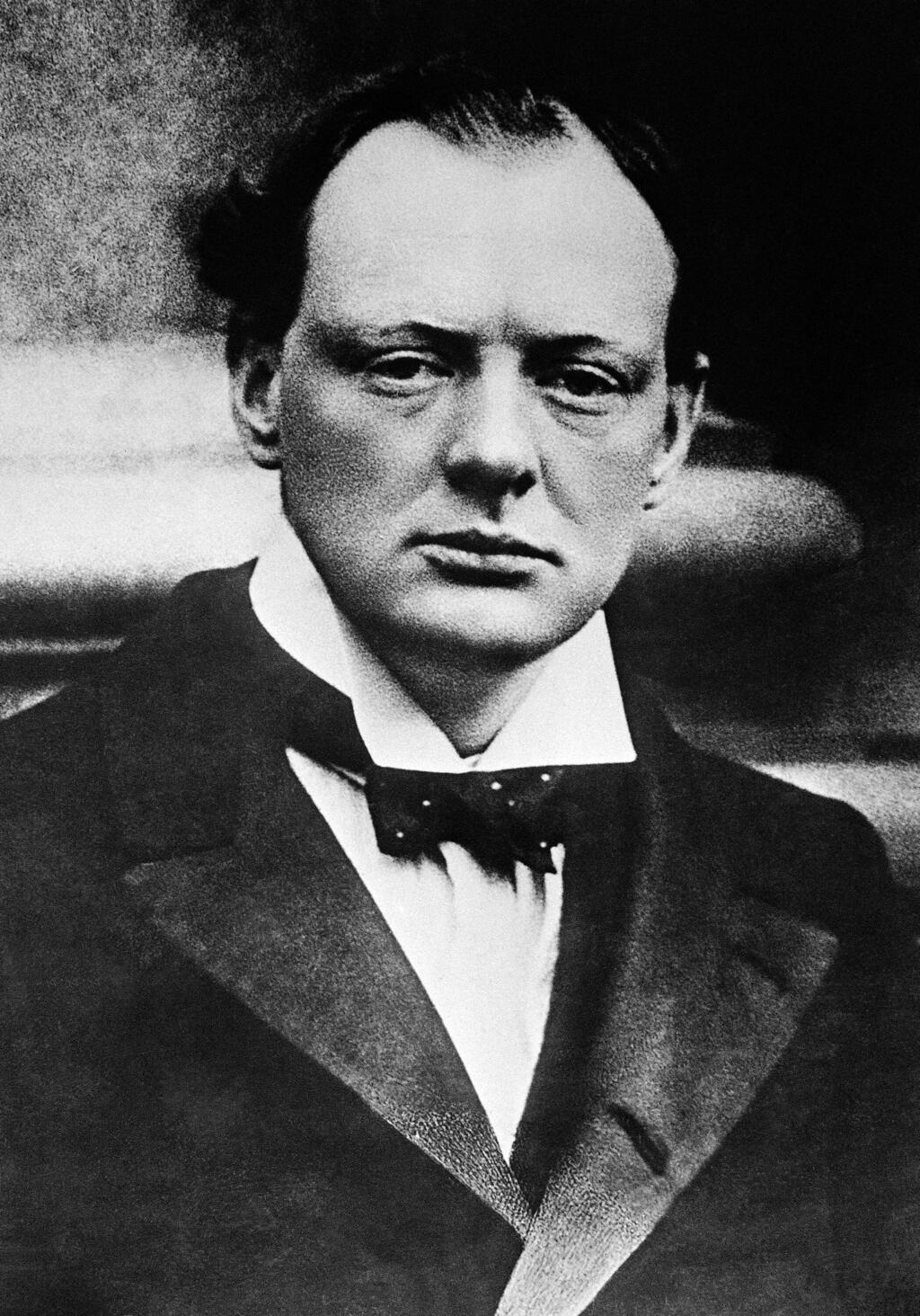
Winston Churchill at age 39
(Photo: AP)
Jason Alexander is precisely such a case. His early hair loss is a prominent personal characteristic, and when social media users select him to demonstrate what a 29-year-old looked like in the past, they are not choosing a random 29-year-old. They are deliberately selecting someone whose appearance was already older than his age at the time. Hardly an objective measure.
The hairstyle was young. The people wearing it got older
There is another reason an old photograph can instantly add a decade to someone's perceived age. It has nothing to do with what the sun did to their skin, but rather with what we have learned over the years to recognize as young or old.
When we estimate someone's age, the brain does not calculate a number based solely on wrinkles. "We use every clue available to us," Ganel says. "Wrinkles and skin texture are very significant factors, especially in middle age and old age, but hair, glasses, clothing and everything surrounding the face also enter into the assessment. We don't really have the ability to ignore them."
A study involving twins demonstrates just how significant these external cues can be. Researchers took photographs of 187 pairs of twins and digitally swapped the twins' faces and the hair and clothing surrounding them. Swapping the faces changed the age evaluators attributed to the photograph, but so did swapping the hair and clothing.
A hairstyle that was fashionable among 25-year-olds in 1975 did not begin as an old person's hairstyle. It simply aged along with the people who wore it. The same applies to glasses, mustaches, suits, shirt styles and even the way thinning hair is combed.
According to Ganel, the clues we rely on to estimate age also change throughout life. In children, facial structure itself changes rapidly, making it relatively easy to distinguish a four-year-old from an eight-year-old based on facial proportions.
In adulthood, facial structure changes less, and skin, wrinkles, hair and other external cues become more important. As people grow older, signs visible on the skin become even more dominant. This is also the stage at which fashion can mislead us. "Anything we can use as a clue, even if it isn't necessarily a genuine indicator of age, we will use," he says.
The generation that learned to blur the passage of time
There is another difference, one that has nothing to do with sun exposure, smoking or general health, but with a concept almost everyone knows well: anti-aging. For much of the last century, the signs of aging simply appeared and remained. Hair turned gray, hairlines receded, wrinkles deepened and teeth changed. In most cases, little was done to conceal these changes.
In recent decades, that equation has shifted. The ability to intervene in one's appearance has become more accessible, more socially accepted and, above all, far less unusual. Some characteristics once considered obvious signs of aging are no longer taken for granted.

Anti-aging treatments have become more accessible and widely accepted
(Photo: shutterstock)
"Awareness of aesthetic treatments has increased dramatically," Klein agrees. "People begin at younger ages and undergo treatments intended to preserve their appearance, rather than waiting until they are older and trying to correct things. There is Botox for expression lines, volume restoration, treatments designed to improve skin quality and chemical peels."
"Gray hair can be dyed, baldness can be addressed by shaving the head or getting a hair transplant, wrinkles can be softened, and teeth can be straightened and whitened. The methods themselves have also changed, and today there is much greater emphasis on a natural appearance, so people won't notice that you've had something done. They'll simply think you look fresher."
According to Klein, the change is also evident among men. Treatments once associated primarily with women, and sometimes performed discreetly, have become much more acceptable among men in recent years.
As these options become more widespread, our point of reference for what a 40-, 50- or 60-year-old should look like is also changing. Ganel believes this process will only make it harder for us to estimate age from facial appearance in the future.
"Our system for estimating age developed over a very long time based on clues that were relatively reliable," he says. "As facial rejuvenation treatments become standard and more and more of those clues can be altered, our ability to estimate age will become less accurate. People will simply be perceived as younger."
"Until now, faces have been fairly reliable evidence of the body's condition, but once they can be edited, that connection is likely to weaken," Anav says.
"An aesthetic treatment changes what we see, not the rate at which the body ages. You can smooth out a wrinkle, but there's no Botox for the arteries, the heart or the brain. What does affect them is familiar and much less glamorous: not smoking, staying active, strengthening muscles, sleeping and controlling blood pressure."
"It's no coincidence that the decline in smoking benefited both the skin and blood vessels. Health accumulates like compound interest, and it's worth starting early. There's nothing wrong with looking good, but the goal is to reach 80 and 90 with a body and brain that still function."
Jason Alexander at 29 looks too old for his age to us today. But who knows? Perhaps in another 30 or 40 years, the picture will be reversed. Someone may come across a photograph of a 40-year-old taken in 2026 and wonder how that person could already have been 40 when the face looking back at them seems so young.
Age perception, it turns out, is a far less stable concept than we might imagine. It is shaped by biology and health, but also by hairstyles, clothing, lifestyle habits, photographic technology, cosmetic treatments and, above all, the eyes of the era looking at you. What will the answer be? Only time will tell.