


Many parallels can be drawn between the Epic of Gilgamesh, the ancient Mesopotamian epic, and stories from the Bible. A closer look reveals that the similarities between the two — including the flood narrative — are not only thematic, but also appear in proverbs and sayings of wisdom.
A new Hebrew translation of the Epic of Gilgamesh was recently published by Carmelit Publishing House by Yoram (Yuri) Cohen, professor in the Department of Archaeology and Ancient Near Eastern Cultures at Tel Aviv University, and Nathan Wasserman, professor in the Institute of Archaeology and the Ancient Near East at the Hebrew University of Jerusalem. The new translation offers an opportunity to examine the parallels between the Mesopotamian work and the Bible.
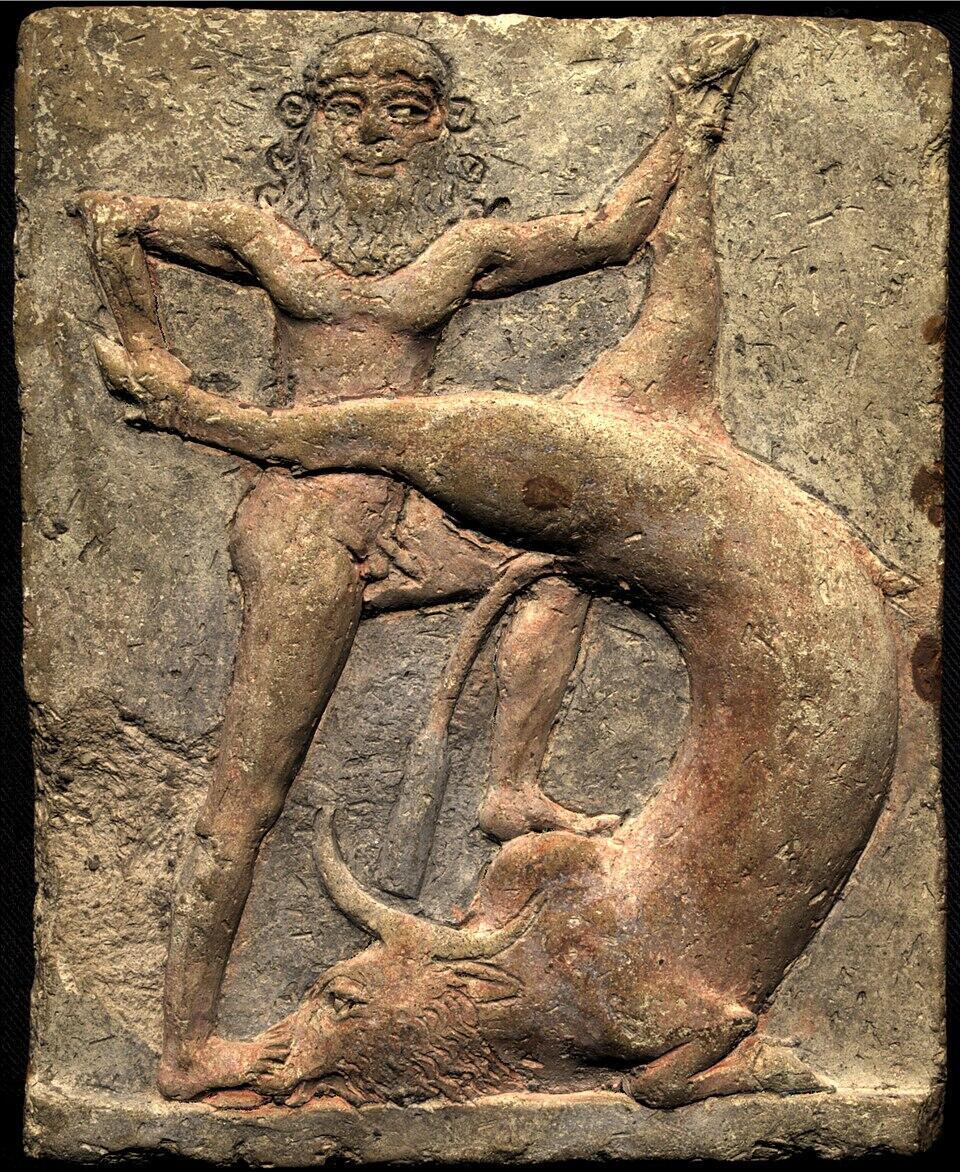
Prof. Cohen notes that several sayings from Ecclesiastes also appear in similar form in the Epic of Gilgamesh. In Chapter 9 of Ecclesiastes it is written: “Always be clothed in white, and always anoint your head with oil. Enjoy life with the wife whom you love all the days of your fleeting life ... Whatever your hand finds to do, do with all your might, for in the grave, where you are going, there is neither working nor planning nor knowledge nor wisdom.”
In the Epic of Gilgamesh it is written: “Let your clothes be clean, your head washed, your body bathed with water. Look upon the child who holds your hand, and delight in your wife’s embrace. This is the fate of humanity.”
“That shows that in the ancient Near East there was shared wisdom and shared mythology,” says Prof. Cohen. According to him, the Bible cannot be understood in isolation and drew extensively from Mesopotamian culture.
He cites another section from the Epic of Gilgamesh containing wisdom sayings: “One alone is only one, but two are two. Even if weak, the two together... how could one alone prosper? Two are enduring... and a triple cord, can it be broken?”
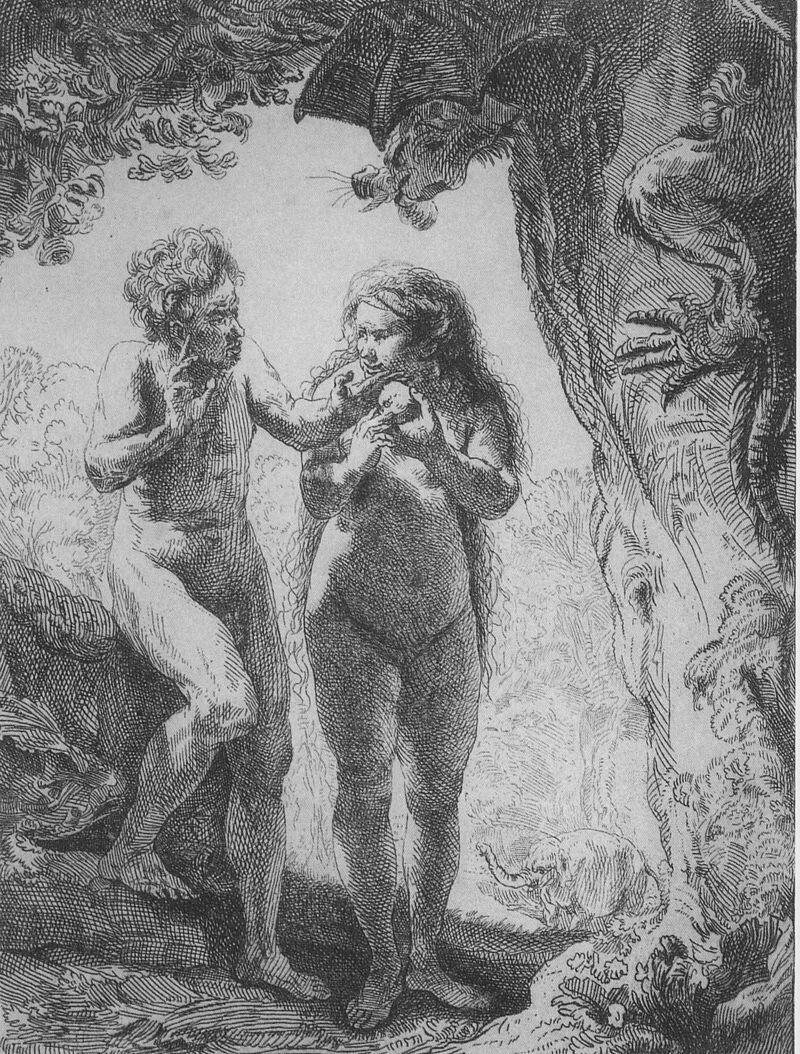
Rembrandt’s Adam and Eve
Cohen notes that the passage clearly echoes Chapter 4 of Ecclesiastes: “Two are better than one, because they have a good reward for their labor. For if either of them falls, one can help the other up... Though one may be overpowered, two can defend themselves. A cord of three strands is not quickly broken.”
From the flood to the serpent
More than 4,500 years have passed since the death of Gilgamesh, who was king of the Sumerian city of Uruk. Unlike the Bible, which was copied and translated repeatedly through the generations, the stories of Gilgamesh — written in cuneiform script and the Akkadian language — were almost unknown to the world. They disappeared together with Babylonian civilization in the early centuries BCE, much like ancient Egyptian culture.
Everything began to change in 1866, when a young English genius named George Smith read on an Assyrian monument the name of Jehu, king of Israel, who paid tribute to Shalmaneser III, king of Assyria.
Smith became an authority on cuneiform and in 1872 discovered on a clay tablet from ancient Nineveh a story about a flood that nearly destroyed the world, and about a man who built a watertight ark carrying animals aboard it until birds he released showed him the flood had ended and dry land had reappeared.
The text, however, was not from the Bible. It later turned out to be Tablet XI from a much larger epic cycle, parts of which were dated to the era when, according to Jewish tradition, biblical figures such as Adam, Noah and Abraham lived. According to the Bible, Abraham was born in the Sumerian city of Ur, only dozens of kilometers from Uruk, the city ruled by Gilgamesh.
For those unfamiliar with the story: Gilgamesh is part man and part god, ruling his city’s inhabitants with an iron fist. The people pray to the gods for salvation, and the gods create Enkidu, who first fights Gilgamesh and later becomes his closest companion. The two journey to the Cedar Forest in Lebanon to battle the monster Humbaba and bring cedar wood back to Babylon. After further adventures, Enkidu dies. A grieving Gilgamesh sets out on a quest for eternal life, during which he meets Utnapishtim — the Mesopotamian counterpart of Noah — who tells him the story of the flood.
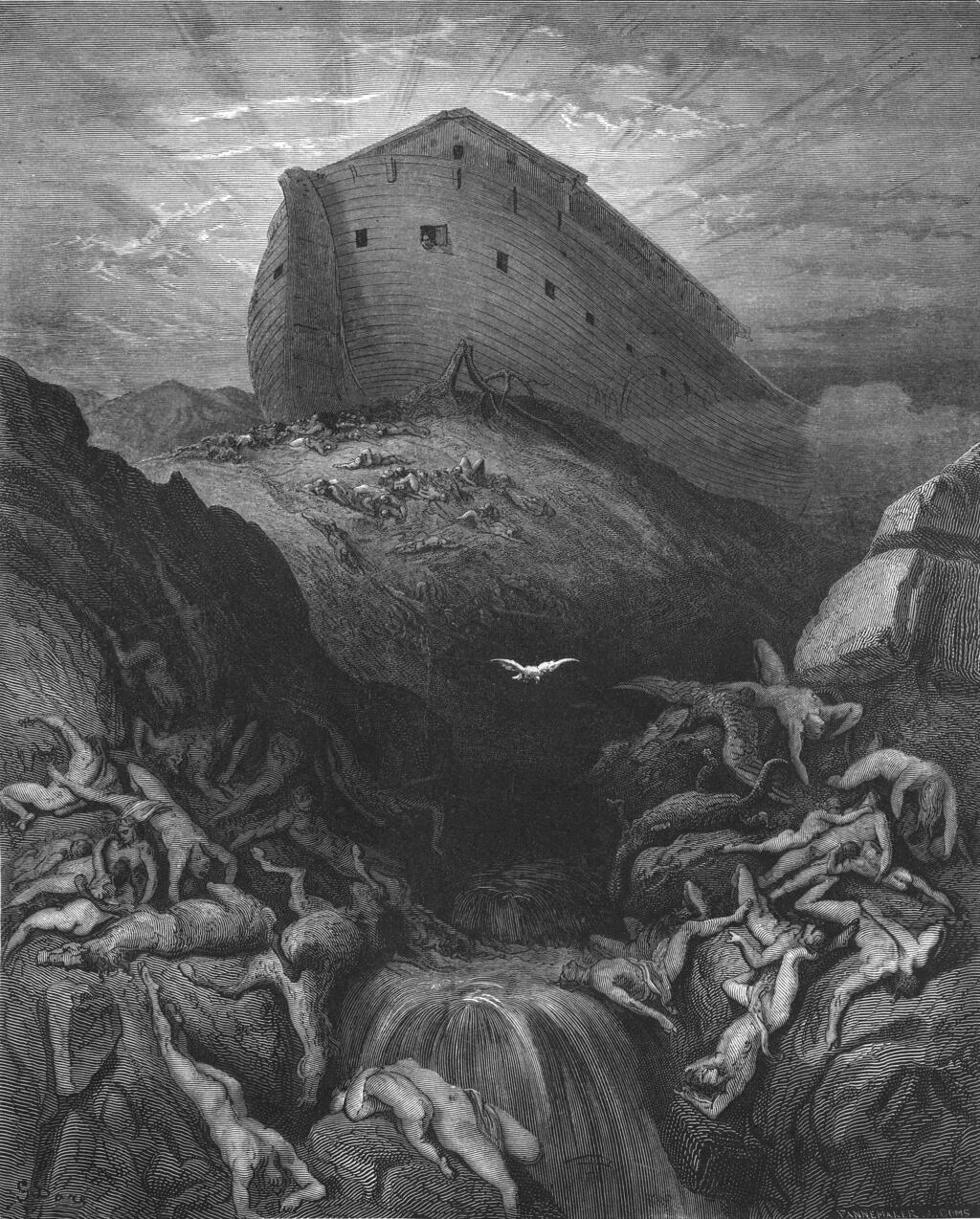
Gustave Doré’s engravings of Noah's Ark
The similarities between the Epic of Gilgamesh and biblical stories are difficult to ignore. In both, humanity is created from the earth by a higher power. Enkidu lives naked among wild animals, similar to Adam in Genesis. The story of Gilgamesh and the serpent that steals from him the plant of youth also recalls, to some extent, the biblical story of the serpent, Adam and Eve and the fruit of knowledge.
“Ever since Tablet XI of the epic was deciphered in 1872 by George Smith, the epic has been linked to the Bible,” explains Prof. Cohen. “Tablet XI recounts the flood story. The Babylonian flood myth resembles the Genesis story so closely that the connection between the two sources is beyond doubt. The hero who survives the flood, the description of the vessel, the preparations for the voyage, the duration of the flood, the birds sent out to search for land, the vessel coming to rest on a mountain and the offering afterward — all are central narrative elements in both the Babylonian and biblical flood stories. But the Babylonian story is much older than the Genesis account. The flood myth already existed in Babylon as an independent work in the 19th century BCE.”
According to Jewish tradition, the flood occurred in the 21st century BCE, while the Exodus from Egypt, the giving of the Torah and its writing took place about 800 years later. So when was the Epic of Gilgamesh written?
Prof. Wasserman says: “Around the 18th century BCE, ancient stories about Gilgamesh began to be written down and woven together into a single work, but it took much longer before the text received a stable and fixed version. That happened around 1,000 BCE. A brilliant scribe named Sin-leqi-unninni revised the work and established its final form in 12 tablets. That is the epic that was copied and placed in the library of the Assyrian king Ashurbanipal in Nineveh. When the British discovered the ancient capital, the entire contents of the library were sent to the British Museum, where George Smith rediscovered the epic.”
Making the text accessible to Hebrew readers
The Warsaw-based Stybel Publishing House released the first Hebrew translation of the Epic of Gilgamesh in 1924 by poet Saul Tchernichovsky, which can still be read through the Ben-Yehuda Project. There was just one problem: Tchernichovsky did not know Akkadian and translated the work from a German version, using elevated language heavily influenced by the Bible.
In the 1990s, Jacob Klein, professor of Assyriology and Bible at Bar-Ilan University, joined poet Shifra Shifman Shmuelevitz, known by her pen name “Sh. Shifra,” to produce a new translation of the epic, published alongside other Akkadian works in the volume In Those Distant Days.
Asked why another updated translation was needed, Prof. Cohen replies: “Over the past 50 years, excavations throughout Iraq uncovered many new texts, some of them essential for understanding the work. In addition, we wanted to change the linguistic register and make the translation more accessible, bringing this ancient work to readers in everyday Hebrew.”
Prof. Wasserman adds: “The epic was written as a literary work from the start, but we decided to avoid trying to imitate an ancient or biblical style of Hebrew. We wanted contemporary Hebrew — beautiful Hebrew — though I assume that in another 30 years new scholars will translate it again.”
When they began working on the project five years ago, artificial intelligence was not yet available to help with translation.
“The Bible contains around 9,000 Hebrew words, while Akkadian has around 22,000,” says Prof. Wasserman. “But Hebrew continued to live on, while Akkadian became an extinct language and only began to be studied and translated about 150 years ago. The difficulty lies in unique words. Even if you ask AI to translate Shakespearean English from the 16th century, it may succeed 80% of the time. But if we want to translate the Epic of Gilgamesh at a level of 99.3%, we need to do it ourselves.”
“We had to edit the ancient Akkadian text,” adds Prof. Cohen, “to reconstruct and translate it at the same time. This is nothing like translating a modern text. It was the national epic of Mesopotamia and survives in many copies. It was an important work taught in schools for scribes and officials across the ancient Near East. Proof of that is that fragments of the Epic of Gilgamesh were found both at Megiddo in the Jezreel Valley and at Ugarit in Syria.”
First published: 02:34, 05.21.26