

Ayelet Zurer — an Israeli actress known internationally for roles in films such as “Munich” and “Angels & Demons,” and for her work in U.S. television including Marvel’s “Daredevil” — reflects on her early years, her career abroad and the emotional toll of the current war in Israel.
Speaking with a mix of nostalgia and candor, she traces a path from the freedom of the 1990s to the pressures of a hyperconnected present.
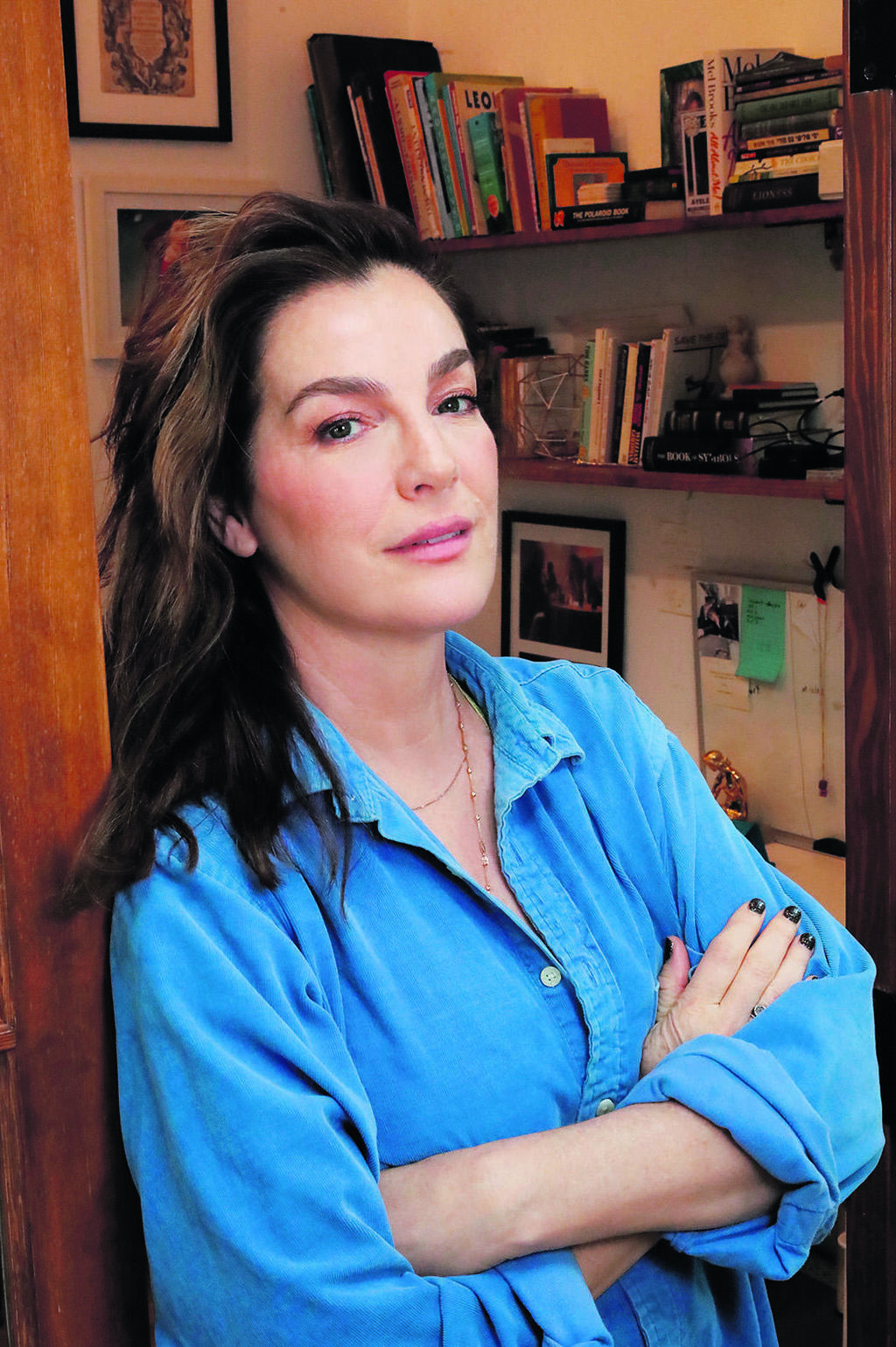
There’s Nothing Like the ’90s
It was the most amazing time. There was the Roxanne club, there were no paparazzi, no social media, no email — at least not until the end of the decade. People left you messages on an answering machine. You could not return calls for three days and no one would say a word. You could always say, “The machine didn’t record it.” Today, if you don’t respond to a WhatsApp message, within five minutes you get five question marks.
I was naive, a bit detached, fearless. I bought a motorcycle, dived in the Blue Hole and other dangerous places, traveled alone to New York, found an apartment that cost $600 in exchange for babysitting for the building manager. The world felt like a Raymond Carver story. There was no need to live outwardly — which, in my view, is our disaster today.
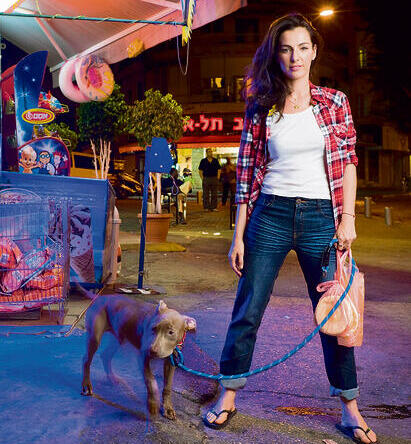
Ayelet in Tel Aviv
(Photo: Yonatan Blum)
If I told your ’90s self where you’d be in 2026?
I think I believed I could somehow find myself in Los Angeles, working as an actress. That did seem possible. Everything was open, everything was possible. Studying abroad was possible, modeling in Japan was possible, even peace was possible.
I actually came from dance theater and wanted to be Pina Bausch. I saw one of her performances in Caesarea and another by Lindsay Kemp at the Cameri Theater — a major repertory theater in Tel Aviv — and said, “That’s what I want to do.” To this day, that’s still the dream, though it shifted.
When you meet young actresses today, are you grateful you’re not in your 20s now?
Yes. On “House of David” — an American historical drama about the biblical King David on Amazon Prime — I suddenly realized I’m the responsible adult. Me and Ali Suliman. Everyone there is in their 20s and I feel like them, I’d hang out with them, but I’m more than 20 years older. The girls call me “mom,” and they’re right — I’m in my 50s and really could be their mother.
It’s a shock, but then I looked at their lives — the selfies, the social media, the constant consumption of information — and I told myself that if I were their age now, I don’t think I would survive. Not the profession and not this life. I’m grateful the ’90s are embedded in me, that my brain isn’t wired for this reality.
Even with an American passport, I don’t want to hide as an Israeli
I was supposed to be in Israel now — hosting an event for a foundation that distributes funds to Holocaust survivors, visiting my family, closing meetings about an Israeli film I co-wrote and another series I’m developing. Everything was set. This is already the fourth time a visit has been canceled because of war.
My friends are in Israel, my family is in Israel — my sisters, my mother, Gilad’s mother, his sisters. We talk on the phone and I mostly try to listen. You try to understand, but until a missile falls on your own head, you don’t fully understand. Still, I feel the pain, the panic, the worry for the children. I identify with the question, “What will happen in the future?” It’s hard to sleep. It doesn’t let go. There’s also a sense of helplessness — what can I do, how can I contribute? What will it help if I do a Zoom interview?
Then I was in New York, dressed up for the premiere of “Daredevil.” There was a moment when someone asked, cheerfully, “How are you?” And without thinking I said, “Not great.” She asked why, and I said, “Because my entire family in Israel is under missile fire and I’m worried about them, and I can’t pretend right now.”
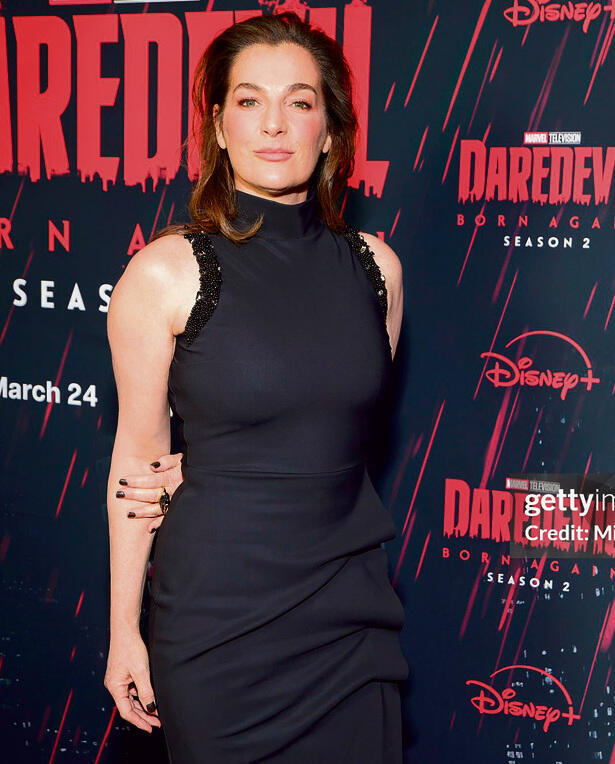
At the premiere of ‘Daredevil’
(Photo: Michael Loccisano, WireImage)
I ended the conversation quickly — I surprised myself. You’re supposed to say, “Great, amazing.” It was such a dissonance. I went home and wrote to my agency: Why not speak out? Why should I hide?
Yes, I have an American passport, but if I don’t talk about these things, I’m hiding — and I don’t want to hide as an Israeli. In an ideal world, I’d only talk about my shows. I want people to watch “House of David,” I think they’ll enjoy it, it’s part of our culture and history. “Daredevil” is great escapism, so why not?

Ayelet in 'House of David'
(Photo: AMAZON prime)
But people abroad talk to me about politics, and for me it’s emotional — it’s in my heart, it’s my people
At the start of the war, I arrived early for a Pilates class. The instructor started talking politics — why war, why Israel — and I found myself explaining the Abraham Accords and the broader Middle East context that people don’t understand from afar. Eventually we said, OK, let’s stop, the class is starting. I lay down and started crying.
I left and thought, what just happened to me? Then I realized: people talk politics with me, and I speak from the heart. It’s emotional. It’s my family, my people.
I’m someone who can see the other side. I’ve worked with all kinds of people. I understand we all view events from our own perspective. But when something is burning — and it is burning now — it’s no longer politics. It’s emotional. I try to give people a broader picture, to explain what it’s like to live in that place over time, the conflict, some history — because people don’t really understand it.
Do you feel antisemitism?
I haven’t felt it personally. There is a rise in antisemitism, but in daily life I don’t feel it. I’ll say more: I’m surrounded by people at work. I see what they post on social media, I see their opinions, and they’re not where I am. But when I meet them face to face, they’re kind, warm, there’s no mention of it.
There’s a dissonance. You think, OK, when you meet me in person you’re my friend, you hug me, you like me — that’s nice. But is it real? Or maybe your feed isn’t real? There’s a huge gap between what people project and who they really are.
Our war is also about truth — and about how AI will remember it
The question I’m most asked in America is: “Why should we fight for Israel?” I explain that Israel serves as a kind of buffer. Some understand, some don’t. It depends whether you’re a Democrat or Republican, whether you watch ABC, NBC or CNN. It’s unbelievable — people are like marionettes.
It’s frightening. Our war, in my view, must also be a war for truth — and for how history is written, because the real danger now is that current history is being written by artificial intelligence. Someone has to do something about it.
Saying yes
I believe that if something reaches you, it required an extraordinary order of the world to get there. You can call it God, the matrix, consciousness or coincidence. If something is created so I’ll be in a certain place, I need to say “yes” to give it a chance.
What opened the door abroad for me was “Munich,” directed by Steven Spielberg. I had a two-month-old baby, I was preparing for “In Treatment” — an Israeli drama series later adapted in the U.S. — and I had no emotional or mental space for another project. When they told me, “Go learn a small part in English,” my first instinct was to say no. In general, my instinct is always to say no.
If I don’t have to earn a living, I’d much rather stay home than prepare for an audition, get dressed, travel alone to another city, meet new people and hope they’re nice, then finish four months later.
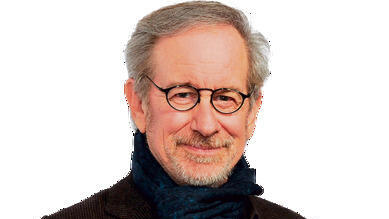
Almost said no to Spielberg
(Photo: Chris Pizzello, Invision for The Hollywood Repor)
That’s the wrong mindset. The right one is to say, “What a great opportunity, let’s see where it leads.” That’s a journey I’ve had to work on. I said yes to “Munich” and a few more yeses, but over time it got heavier — especially with motherhood, and with disappointments and fears. Maybe a film isn’t as good as you hoped, or it’s amazing and then you worry the next won’t be. Life happens — you lose people, you might need surgery, you go through rough periods.
To go for it, not to ruin the work the “matrix” did to put you in the right place at the right time — that’s what I’ve learned, and what I practice. Because I’ve said no and ruined things.
When did you ruin things?
There was one project I left, and it created a lot of trouble for me. It blocked my path for several years. I had already flown out, preparing for my husband Gilad and my son to join me. There was a war in Israel, I felt shaken, lonely and couldn’t understand what I was supposed to do in that film.
If I had been calm and wise, I would have asked for help before deciding to leave. I should have called people and said, “I’m scared, can you help me?” Maybe someone would have said, “Wait three days.”
I discovered that when I arrive somewhere new, for three days I hate everything — the apartment, the place. Now I make sure to stay somewhere I love, so I start on the right foot. I remind myself I tend to panic, and that I just need to flip the coin and say thank you.
To fly, you need ground
Show business also has spirit. Yes, it’s business first, but the “show” involves creation, creators, inspiration. You can’t lose balance. You can’t be only creative without business, or the opposite. Once you lose balance, something breaks.
And then you see actors who lose it.
Yes. Displays of drugs and weight-loss injections.
You seem very grounded.
If I’m not grounded in life, I can’t fly in my work. I need ground to be able to fly.
Enjoyment is a choice
Money matters. They told us it doesn’t? They lied. In my profession there are strong years and weaker ones, and in the weaker years you rely on the strong ones. I realized it’s important to have a side occupation — it can be business, like real estate, where I’ve always invested. You also need to set aside 20 percent.
But when you’re young, you burn through everything — and that’s OK. You need to make mistakes, you live without fear.
What did you buy with your first paycheck?
From “A Matter of Time” — an Israeli TV series — I bought a Mini Minor.
And your first Hollywood paycheck?
My agent took me shopping before the “Angels & Demons” premiere in Japan. After half an hour I said, “OK, now I want to visit a monastery.” She said, “What, we’re not shopping?” I said no. She went to the Prada “monastery,” I went to a real one.
So where do you indulge?
When I’m filming, I live in the best place possible. I’ve learned you need as much pleasure as you can, because there will always be periods without it. You have to enjoy. Enjoyment attracts enjoyment, attracts people who enjoy life. Don’t worry — pain comes regardless, there’s no escaping it.
Aging is pleasant — even within a character
I really enjoy playing Vanessa Fisk in “Daredevil” on Disney+. It’s a pleasure. She’s delicious. I’ve been acting opposite Vincent D’Onofrio for a decade — we’ve grown older together in this. Everyone has families now, some of us have grown children. It brings a different weight to life, and it enters the scenes, the relationships. Aging allows you to bring something new to a character, a different prism.
This season, my character is dealing with whether she is enough, because she understands her partner will always chase something bigger — more control, more power. That’s material I can work with. I don’t think anyone walks around feeling they are enough. I relate to that — to the idea that love isn’t enough. There’s a crack in the romance that speaks to me.
An actor doesn’t need to feel something personally — they can understand it, have compassion, identify with it. That’s what I worked with. Also, as Vanessa I wear stunning clothes, each one sealed in plastic afterward, labeled and counted — every piece is from a top designer. When I once asked to keep a skirt, the answer was an absolute no.
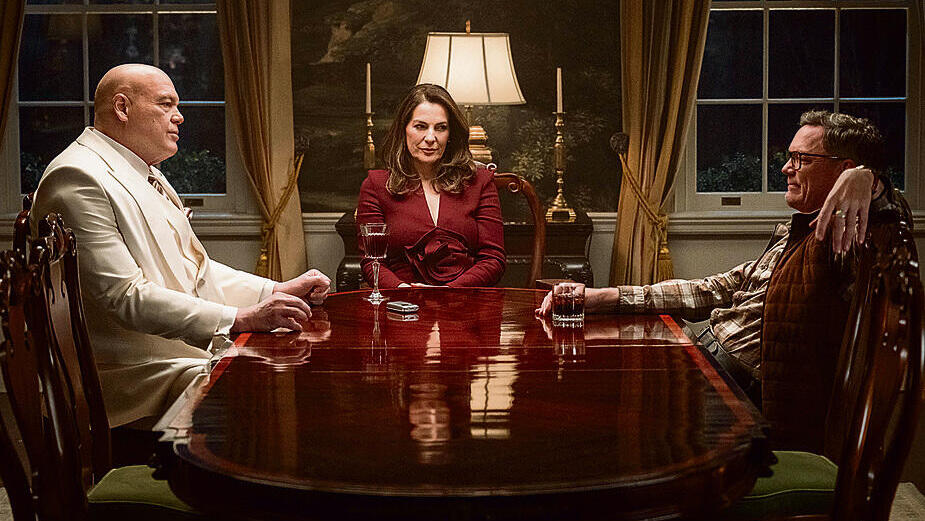
Ayelet as Vanessa Fisk in 'Daredevil'
(Photo: JoJo Whilden)
There’s always a first time
I had to shoot my scenes for the second season of “House of David” within about six weeks, because it films in Greece while “Daredevil” was shooting in New York. It was very intense. Then something happened that had never happened before: I missed a shooting day. For the first time in my life, I didn’t wake up. I messed up.
I arrived at my room and the bed was full of ants. I sprayed, tried to sleep, couldn’t — all I could think about was ants. Eventually I took a sleeping pill. I was supposed to be downstairs at 5 a.m. At 11 a.m. I woke up, stretched — and had a heart attack when I realized I’d missed the day.
How did it end?
They rearranged the schedule. Word spread that I missed a day because of ants, but no one understood how ants could make someone miss work.
Occupational hazard.
No complaints. I make escapism. Everything I write and create is optimistic escapism — that’s where I find rest.