

The Toronto International Film Festival, one of the world’s biggest film events, came to a close this week. Every ending, as the saying goes, is also a beginning, and Toronto traditionally marks the starting line of awards season, with the road leading all the way to the Oscars. Hollywood’s major studios parade their favored contenders, while dark horses arrive in Canada hoping to build momentum.
One of them this year is the deeply personal new film from Israeli director Guy Nattiv (Golda), who has lived and worked in the United States in recent years. At the other end of the spectrum, an entertaining thriller from Pakistan-born director Bassam Tariq is drawing attention for its propulsive plot and bloody action sequences. It may also anger some viewers with its invocation of teachings attributed to the Prophet Muhammad, which guide its hero, a kind of Muslim ninja who kills his enemies in the name of Allah while desperately searching for breast milk.
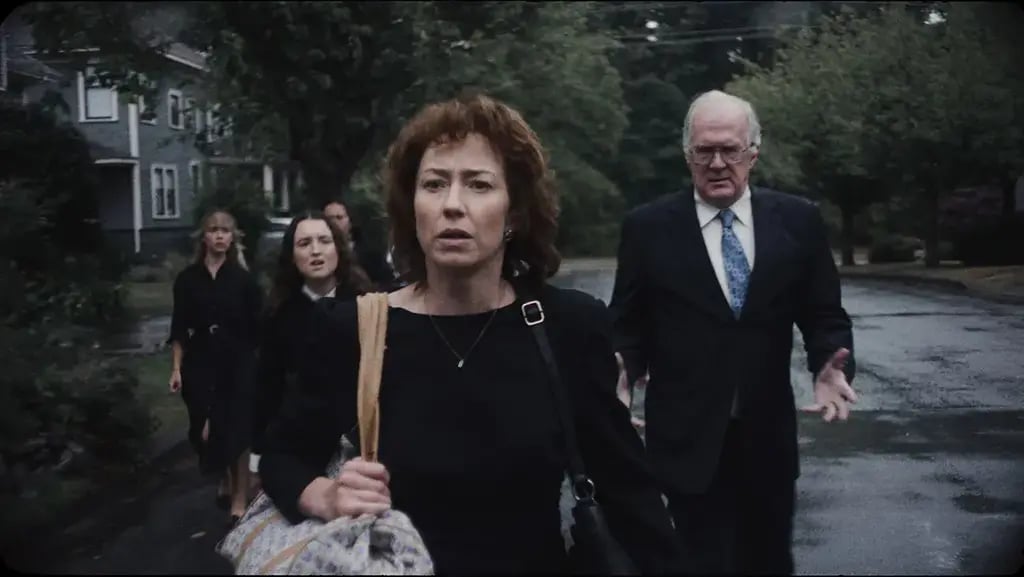
Guy Nattiv’s grandmother’s story
Guy Nattiv had not seen his grandmother since she abruptly disappeared from his life when he was a young teenager. The mysterious circumstances surrounding her disappearance remained hazy until the Israeli filmmaker decided to reconstruct the unsettling true story in his excellent new film, The Liberation, which premiered at the Telluride Film Festival in Colorado before heading immediately to Toronto, a familiar route for productions with Oscar ambitions.
Nattiv, of course, already owns one Academy Award, for his short film Skin. His ambition to bring the story of his grandmother, Rita Cooper, to the big screen had been a priority even before his move to Los Angeles and his 2019 Oscar win. The original screenplay went through numerous rewrites and incarnations, with various Hollywood stars linked to the leading roles along the way. Now that the finished film is finally out in the world, it is fair to say the wait was worth it, in no small part thanks to producer Oren Moverman.
This is Nattiv’s best work to date, successfully balancing his intimate emotional connection to the story with the restrained, almost detached style through which he tells it.
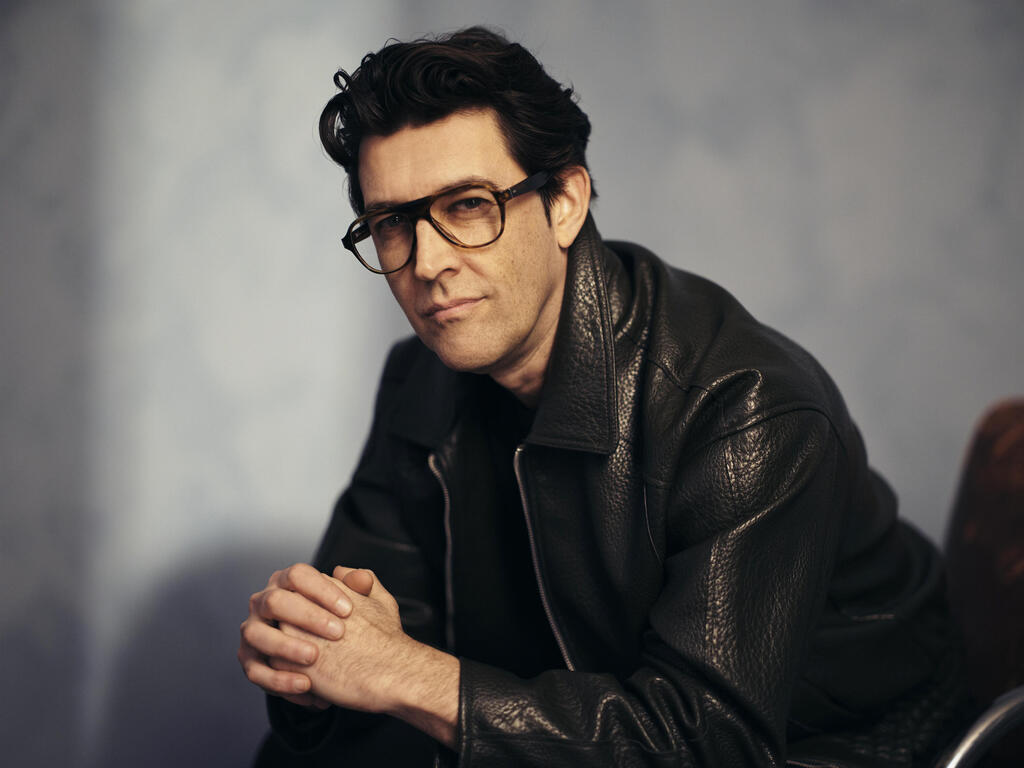
Guy Nattiv
(Photo: Gareth Cattermole/Getty Images for IMDb)
The Liberation is the fourth feature Nattiv has made as a U.S.-based filmmaker, yet it is perhaps closest to the first, Skin. There is a roughness in the filmmaking that connects the two, but the deeper link lies in their characters.
In the testosterone-charged Skin, Nattiv told the story of a skinhead seeking redemption as he escapes a neo-Nazi gang. This time, the central figure is his Holocaust-survivor grandmother, as her grandson retraces the path that led her to abandon her family in middle age and devote herself to an all-female cult in Virginia.
Carrie Coon, taking on the leading role, gives an extraordinary performance as a woman in existential crisis, caught between the scars left by her youth as a Jewish woman in Europe and the dead end she has reached as a wife and mother of two teenage girls in 1980s America. The sudden possibility of rediscovering herself in middle age becomes impossible to resist, even at the cost of destroying her family.
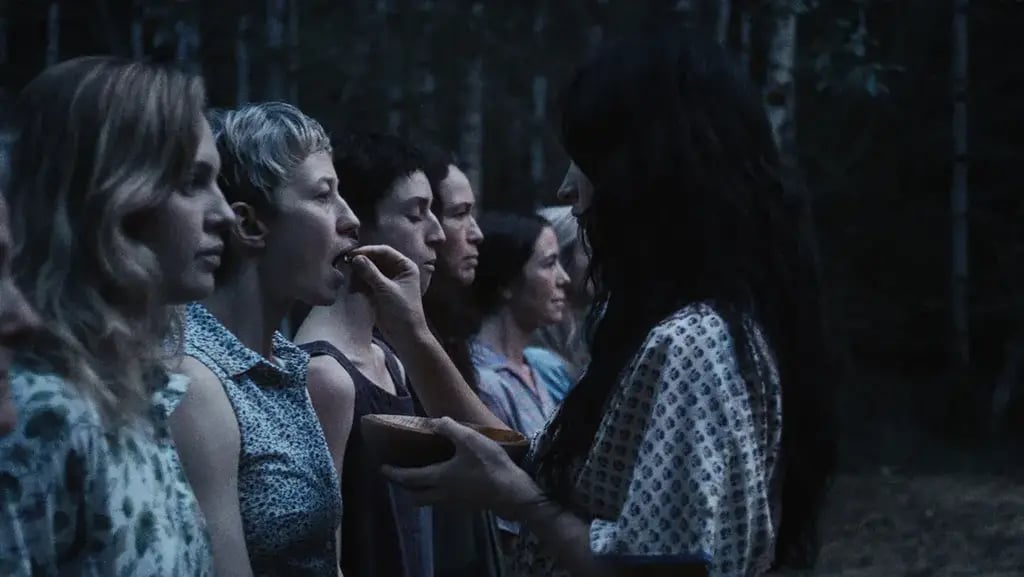
From The Liberation
(Photo: Courtesy of the Toronto International Film Festival)
The heroine falls under the spell of the cult’s seductive leader, played by Lily James, and leaves home, abandoning her husband, played by Tracy Letts, Coon’s real-life husband, and her two daughters, played by Bella Ramsey and Odessa Young.
She severs ties with her family and redirects her money toward the alternative family that has embraced her in the countryside. She rejects her daughters even when they come to rescue her. But rather than simply rage at the grandmother he once knew and then lost, Nattiv uses the film to try to reconnect with her.
Coon displays an impressive emotional range, somewhere between the wounded Nora Durst she played so memorably in The Leftovers, where her character notably resisted another kind of cult, and the bitter severity of Helen Mirren’s Golda Meir in Nattiv’s Golda.
The 45-year-old actor carries the entire film on her shoulders, and through her complete commitment Nattiv is able to hold two seemingly contradictory emotions at once: the anger and disappointment he feels toward his protagonist, and his sincere, compassionate and nonjudgmental attempt to understand her.
From backstage theater and cinema to the center of the Oscar stage
Another standout actress at this year’s festival, who was once mentioned as a possibility for the role eventually played by Coon in The Liberation, is Julianne Moore, who enjoys similarly diva-like status in Jesse Eisenberg’s charming The Debut. That is not the only point of connection between the two veteran actresses’ characters in two otherwise very different films.
In Eisenberg’s witty comedy-drama, which seems destined to figure prominently in the Oscar conversation, Moore also plays a bored, middle-class woman in the throes of a midlife crisis. Her husband and children have become secondary to her, and she is now searching for a way to put herself at the center, or more precisely, center stage.
Despite an unimpressive audition for a community theater production, she gets into the show and begins a journey of self-discovery among a troupe of amateur actors. Under the guidance of a demanding director, played by Paul Giamatti, she develops acting skills, gains confidence onstage and ultimately loses herself completely in her character, with a level of devotion and obsession that begins to cast doubt on both the reality of the production and her own sense of self.
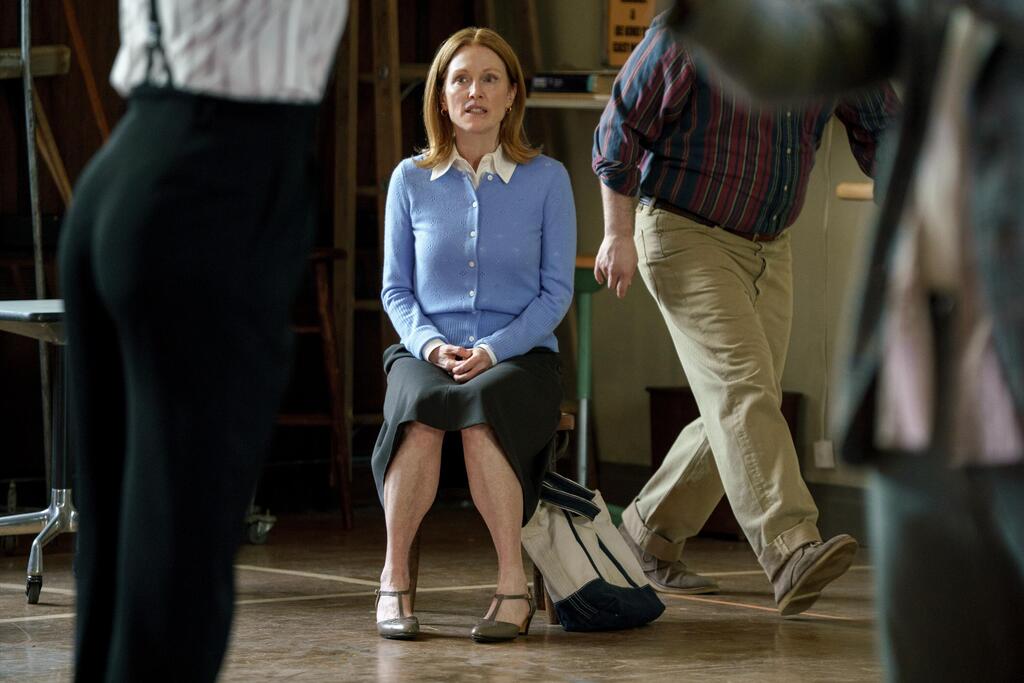
From The Debut
(Photo: Courtesy of the Toronto International Film Festival)
The Debut joins an intriguing trend that has gathered momentum on the big screen in recent years: films emerging from the world of theater, inspired by it and perhaps yearning for it.
Alongside it stands Simon Stone’s beautiful period drama Elsinore, which revisits the tragic story of Scottish actor Ian Charleson. After rising to fame in the Oscar-winning Chariots of Fire, Charleson was cast as Hamlet in a major stage production while battling AIDS.
Andrew Scott is magnificent both onstage and behind the scenes, establishing himself as a major contender in the coming Oscar race.
Cody Fern’s comic melodrama Closing Night follows a Broadway star, played by Sarah Paulson, who develops Alzheimer’s disease and tries to make the most of her remaining time with family members from whom she has become estranged. Naomi Watts, Dianne Wiest and Odessa A’zion also star.
Several dramas that first appeared at Cannes and later arrived in Toronto similarly combine theater with death. Ira Sachs’ The Man I Love almost seems to converse with Elsinore, centering on a charismatic performer dying of AIDS, played by Rami Malek. Japanese director Ryûsuke Hamaguchi’s All of a Sudden, meanwhile, brings together the French director of an elder-care facility, played by Virginie Efira, and a Japanese theater director, played by Tao Okamoto, who form a profound friendship.
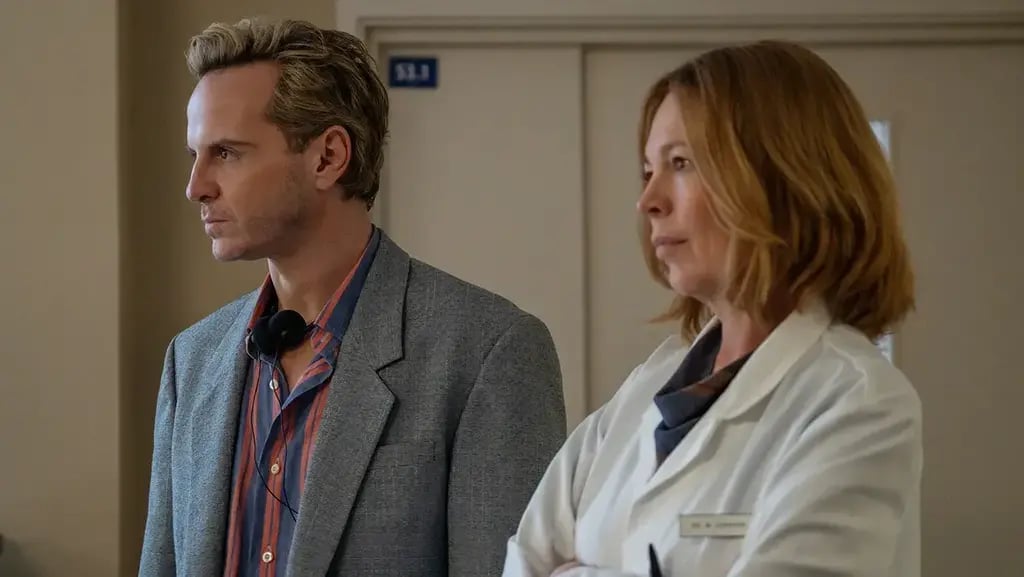
From Elsinore
(Photo: Courtesy of the Toronto International Film Festival)
Another film likely to loom large during awards season, and which stormed into the Oscar race in Toronto, is Peter Farrelly’s I Play Rocky.
Farrelly won an Oscar in 2019 for Green Book, in which he turned pianist Don Shirley’s inspiring story into an entertaining comedy-drama. Here he returns to that formula in an upgraded, especially enjoyable version, recounting the story of a young Sylvester Stallone and his battle to be taken seriously by the film industry.
First he is a would-be actor in New York, then an amateur screenwriter in Los Angeles. His hero’s journey ends with him becoming a glittering Hollywood star thanks to his performance in 1976’s Rocky, which he wrote himself.
His persistence and willingness to sacrifice continue even when studio executives offer him sums of money that seem unimaginable. Stallone refuses to budge, insisting that he must play the title role of Rocky Balboa, a character drawn in part from his own experiences. “I play Rocky,” he keeps repeating, despite never having boxed himself.
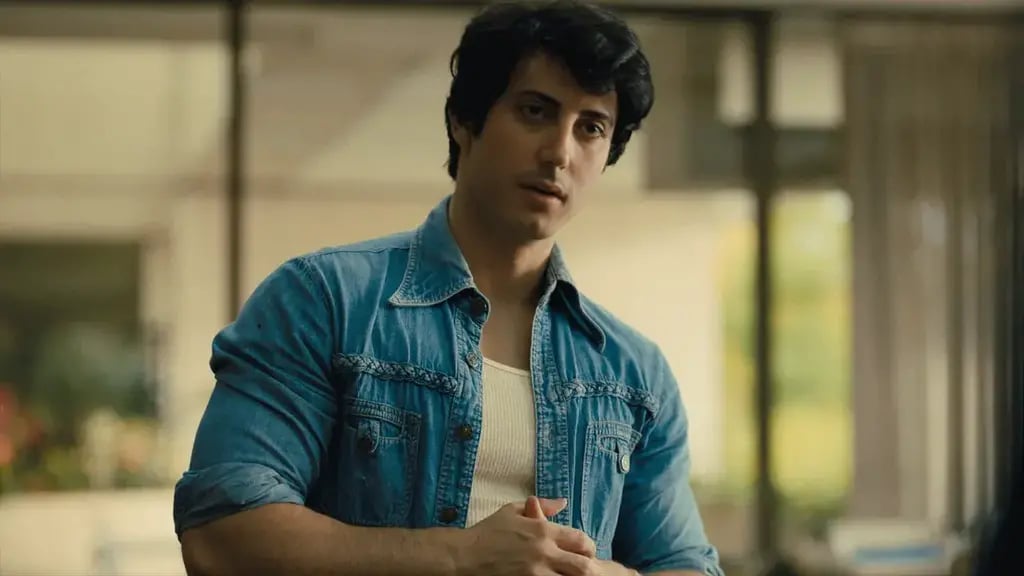
From I Play Rocky
(Photo: Courtesy of the Toronto International Film Festival)
I Play Rocky is entertaining, fast-moving and simply fun, and it swept up the Toronto audience. It fills the heart with that familiar inspiration of an ordinary man with enormous dreams who manages to realize them through dedication and determination, values associated both with the fictional boxer Rocky Balboa and with the actor who created him in his own image, Sylvester Stallone.
And speaking of creating someone in your own image, the relatively unknown Anthony Ippolito stars as an uncanny copy of the young Stallone. The physical resemblance is remarkable, and the 27-year-old actor has also completely absorbed the Hollywood star’s facial mannerisms and distinctive way of speaking, perhaps on his own way to becoming one himself.
Around him are Matt Dillon as Stallone’s father, AnnaSophia Robb as his wife Sasha, alongside Jay Duplass, Stephan James, P.J. Byrne, Toby Kebbell and Tracy Letts, together reconstructing the making of the groundbreaking boxing drama.
In truth, at least for this critic, the movie about the movie is more successful and more enjoyable than the original.
The Oscar starting line takes shape in Toronto
Several other films screened in Toronto are emerging as significant awards-season contenders. Being Heumann follows 1970s disability-rights leader Judith Heumann, played by Ruth Madeley, as she storms a federal building in San Francisco in her wheelchair as part of the struggle to transform government accessibility policy, with Mark Ruffalo playing the administration official on the other side.
Australian filmmaker Jennifer Peedom’s Tenzing is a sweeping period drama reconstructing the 1953 conquest of Everest, following Nepalese climber Tenzing Norgay from his lowest point to his historic achievement at the top of the world alongside Edmund Hillary, played by Tom Hiddleston.
Tim Blake Nelson’s The Life and Deaths of Wilson Shedd stars Scoot McNairy as a cunning inmate and Amanda Seyfried as a theater teacher who falls in love with him while working in a prison and helps him find a way out. The film is also due to screen shortly at the Haifa International Film Festival.
Then there is Misty Green, a Hollywood backstage drama written and directed by Chris Rock, who also stars and could find himself returning to the Oscars, this time not as host.
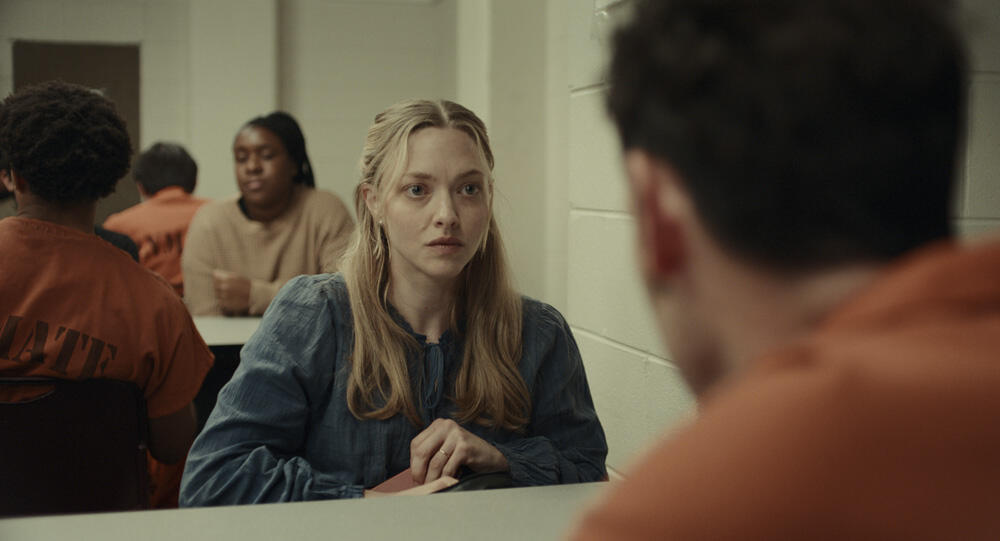
From The Life and Deaths of Wilson Shedd
(Photo: Courtesy of the Haifa International Film Festival)
The biggest winner of this year’s Toronto People’s Choice Award was La Bola Negra (The Black Ball), the period drama by directing duo Javier Calvo and Javier Ambrossi, placing the pair firmly in the Oscar conversation with Netflix behind them.
The Spanish filmmakers bring together three lavish stories set during different periods in their country’s history, intertwined through the inspiration of poet Federico García Lorca to create a beautiful work exploring the relationship between fascism, the Spanish Civil War and the gay experience over the decades.
A significant rival is South Korean director Lee Chang-dong’s moving Possible Love, which connects two couples from different social classes as they experience a broad spectrum of emotions, suspicion, hostility, intimacy, trust, love and betrayal, during the making of a documentary.
Danny Boyle, who won both Toronto and the Oscar with Slumdog Millionaire, is aiming for similar success with his new film Ink, which revisits the rise of The Sun in the British media landscape under ambitious editor Larry Lamb, played by Jack O’Connell, and his arrogant boss Rupert Murdoch, played by Guy Pearce.
Can Muslim killers be the good guys?
Another film that generated plenty of attention, although not necessarily the kind that will carry it into awards season, is Your Mother Your Mother Your Mother, an action thriller that may struggle to receive an Israeli release, if only because its hero is a devout Muslim man fighting for his life in Texas.
Mahershala Ali plays Latif, who in ordinary times makes his living killing people as a hitman for a criminal organization. But after his wife dies, he is forced to devote himself to his role as a father to their three children.
While desperately searching for breast milk for his infant daughter, he is dragged back into violent confrontations he wants no part of, caught between his corrupt Arab employer, a nephew who has grown rich as a pimp and pornography producer, and a fanatical Christian gang.
From there the film develops into something resembling John Wick, complete with bloody action scenes as Latif slashes his enemies’ throats with a sword.
On the road toward redemption, director Bassam Tariq also introduces audiences to the saying attributed to the Prophet Muhammad that a mother should be honored three times before the father, the teaching that gives the film its unusual title.
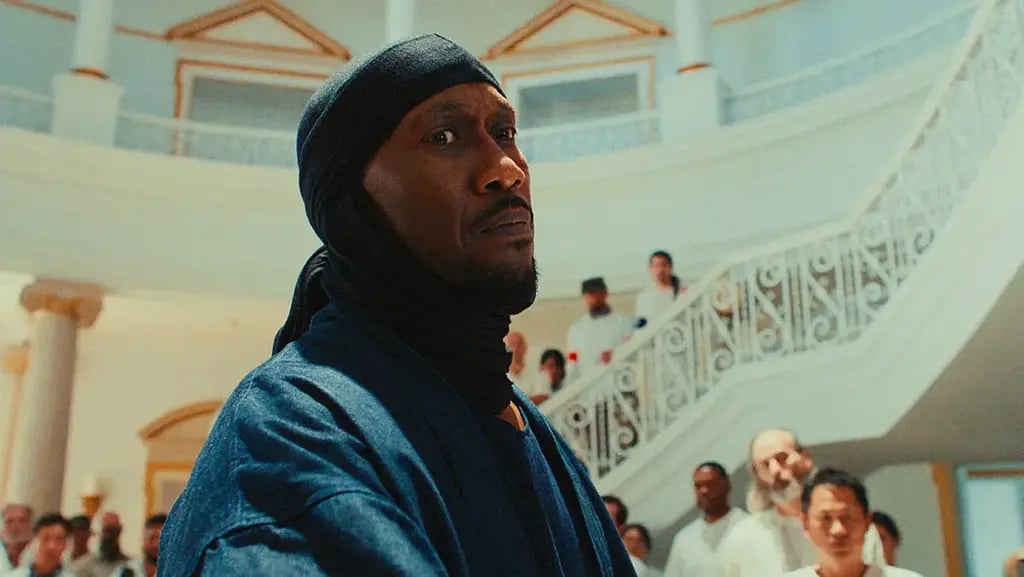
From Your Mother Your Mother Your Mother
(Photo: Courtesy of the Toronto International Film Festival)
Tariq’s thriller may provoke hostile reactions in the United States, and certainly in Israel, if only because members of the Muslim community are presented as the good guys, and as respectful toward women, while the Christians are portrayed as evil, racist and violent. At one stage, members of the Christian group turn their fury on worshippers at a local mosque and brutally massacre them.
More broadly, despite all the concerns ahead of the festival, there were no notable political incidents related to the Middle East conflict.
Despite the presence of an Israeli production, Avi Nesher’s Our Loves, and two Palestinian dramas, Muayad Alayan’s touching Conversation with the Sea and Hosam Abu Dan’s less successful Thirteen in Gaza, there were no pro-Palestinian demonstrations this time targeting the Israeli presence in the city.
Toronto is still trying to move beyond the turmoil of last year, when controversy erupted around Barry Avrich’s documentary The Road Between Us: The Ultimate Rescue, about retired Israeli general Noam Tibon’s rescue mission during the October 7 attack.
From The Betrayers
(Photo: Courtesy of the Toronto International Film Festival)
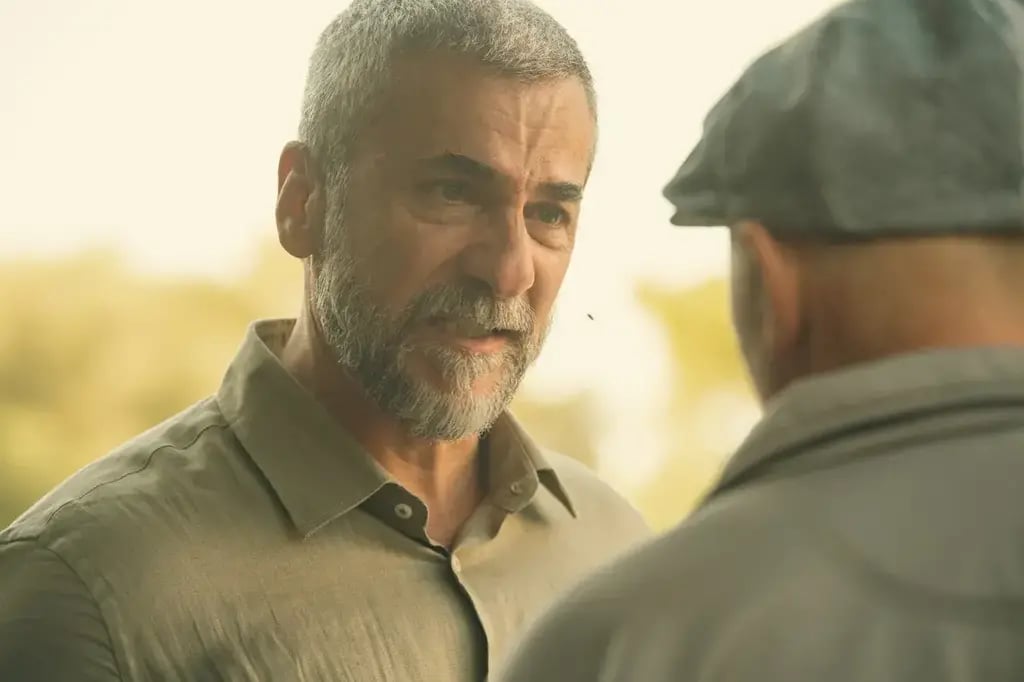
Still, among the dozens of films screened in Toronto, one stood out as particularly puzzling: The Betrayers, David Bezmozgis’ adaptation of his own espionage thriller, which blends Israeli politics with Putin’s Russia. At its center is an Israeli defense minister, played by Michael Aronov, who refuses on ideological grounds to join a right-wing coalition. An attempted romantic blackmail scheme drives him to leave the country and retreat for a time to Crimea, under Russian occupation. A chance encounter with an aging local man revives their shared past as activists in the Zionist movement in the Soviet Union.
Who betrayed whom, and for what? That is the first question the film raises, followed by broader political reflections: What does it mean to betray a movement, a party or a country, and, more importantly, one’s own personal values? These are substantial questions worth exploring, but not through the shallow and contrived storytelling choices made by the Canadian-Jewish director.