

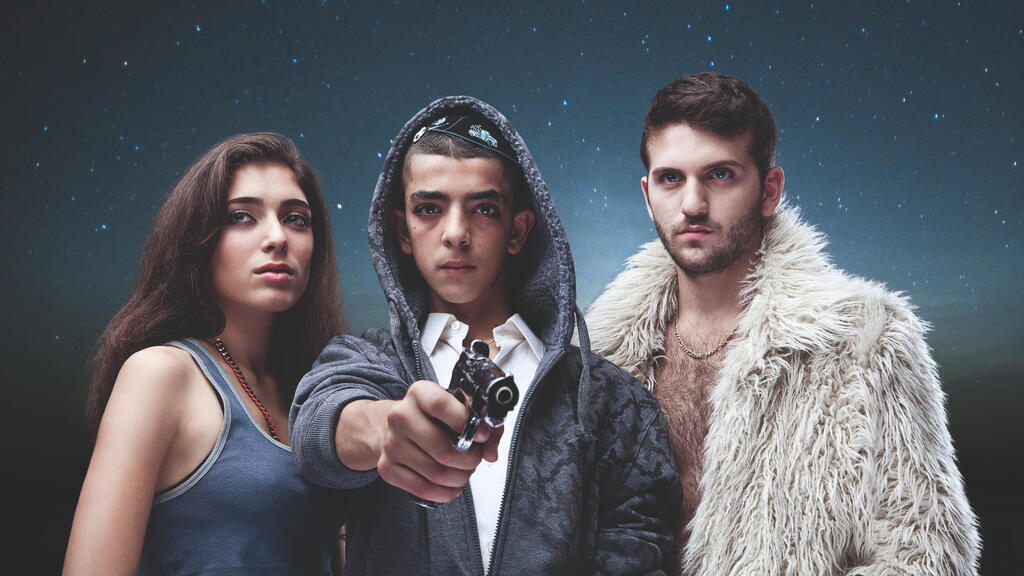
In the 1960s, U.S. television networks began airing a nightly slide just before the news broadcast, reading: “It’s 10 p.m. Do you know where your children are?” The troubling question was a public service announcement born of growing concern over moral decline among teenagers — blamed on the usual suspects: crime, drugs and sex — and served as a direct reminder to American parents: the responsibility for your children’s lives is yours. Another PSA from that era posed an equally pointed question: Have you hugged your children today?
Forty years ago, Daphna Levin was a 10-year-old living with her family in the United States. Those two questions became etched in her consciousness, resurfacing when she was invited to join Ron Leshem and Tmira Yardeni, creators of the Israeli series “Euphoria,” as its director. “If you ask me what drew me to the idea of the series,” she says in an interview with ynet, “that was it.”

On the surface, “Euphoria,” which aired on HOT in 2012, was a series about teenagers living on the extreme margins of existence. They used too many drugs, engaged in too many unhealthy sexual relationships and, overall, experienced a hollow despair and self-loathing they tried to blur through those same means. It attracted a considerable young audience drawn to the chaos and defiance of its characters, but the audience it truly targeted was largely absent — deliberately so: parents and responsible adults.
“Our starting point was ‘Where are you?’ Call it ‘Lord of the Flies,’ call it neglect. Until then, the portrayal of teenagers on television, at least what I encountered, was aimed at teens and was therefore somewhat didactic. I remember liking that we entered a dynamic between teenagers that was directed at adults and was not judgmental in the sense of saying how one should behave or ‘let’s be better.’ It simply said: ‘Here, it’s awful — it’s in your face.’ The goal was for adults to look in the mirror a bit, but not everyone wants to see that mirror,” Levin says.
Israel’s ‘Euphoria’ Trailer
(Courtesy of HOT)


There are no adults in the series.
“There are no adults, no school, no time or place — nothing. And if there are adults, they are predators of one kind or another. The idea was to see what happens when you throw a group of children together without supervision.”
It was a difficult watch even without having children.
“Very difficult. And not only because of the absence of parents, but because our world has become like that. Children become independent much faster in a technical sense. The problem is their emotional maturity lags behind — not because they are more to blame than previous generations, but because the world offers more options. It’s easier to be independent today, so the surrounding world is more dangerous and more accessible.”
A post-trauma generation
A few years earlier, Ron Leshem had been working on a series called “Kino,” about a group of surfers on the beaches near the Gaza border area. At a certain point, he felt it was not the right direction, scrapped everything he had written and turned to a darker, more apocalyptic tone.
As a teenager struggling with self-image and sexual identity, Leshem felt his adolescence was largely spent trying to stay in control and avoid being hurt — “a 30-year-old man in the body of a 16-year-old.” For the series’ formative event, he drew on a real case: in 2004, teenager Ra'anan Levy was murdered outside a nightclub in Shfayim (a town in central Israel). It was a senseless killing of a normative teenager by youths in their late teens.
“He was a high school student who went out to a club, and someone from the Abutbul crime family thought Ra'anan had hit on his girlfriend,” Levin recalls. “They got the wrong person — he had nothing to do with it. But they chased him in a jeep, ran him over and then stabbed him while he begged for his life and tried to explain it wasn’t him.”
All the characters in “Euphoria” converge at a club in the first episode and experience the same event — one that becomes a collective post-trauma, though each breaks down in their own way. “We defined it not as a character in post-trauma,” Levin clarifies, “but as a generation in post-trauma, and we said that long before October 7. Today, every other phrase is ‘a generation in post-trauma.’”
“My thinking was that HOT’s advantage — and necessity — was to create bold, unsettling series that stay with viewers long after watching,” says Mirit Tobi, head of drama at HOT. “‘Euphoria’ by Ron Leshem was ruthless. When I read the first episode, it felt like a punch to the stomach… It was so extreme, frightening. The final result touched on adolescence, identity and sexuality in a world without adults.”
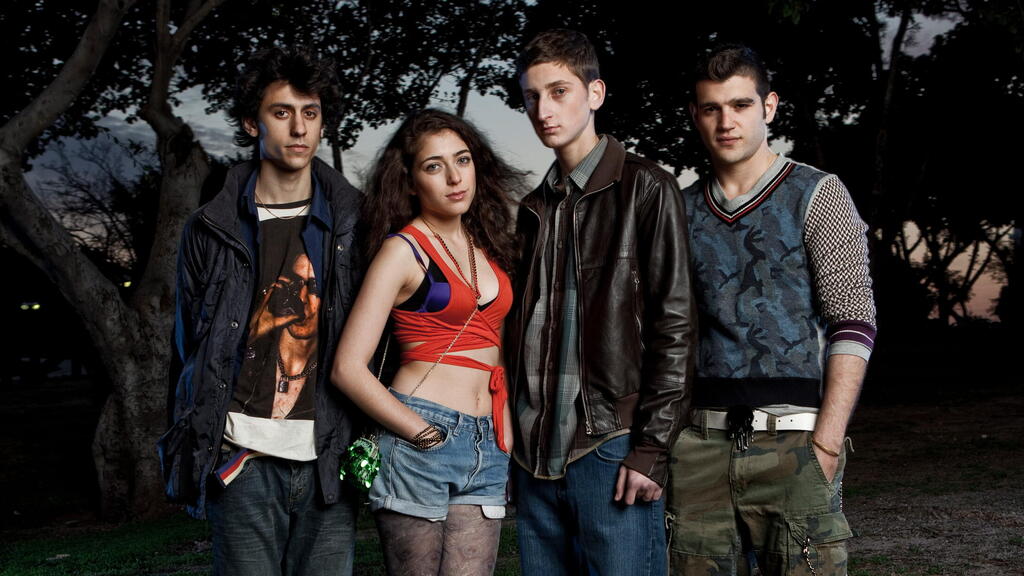
From Israel’s ‘Euphoria’
(Photo: Ohad Romano, courtesy of HOT)
While Israeli society was experiencing a bitter awakening after the failure of the 2011 social justice protests, the teenagers of “Euphoria” operated in a detached haze, in the no-man’s-land of life. There was no teenage rebellion as defiance or rebellion against norms, but rather apathy and despair — and above all, attempts, often unsuccessful, to numb pain.
Viewers met, among others, Noy (Amit Erez), an overweight girl desperate for attention from boys and waiting for the moment she would lose her virginity; Kino (Dekel Adin), the friend of Ra'anan who was murdered, who spends most of his time sleeping after the incident; Shamen (Maor Schwitzer), addicted to pornography; Tzehubon (Dolev Mesika), who synthesizes hallucinogenic drugs for his friends; Tomer (Uriel Geta), a religious teen who deals drugs; and Hofit (Roni Daloomi), a girl with lifeless eyes and a tendency toward self-harm.
The idea of casting Daloomi as Hofit raised many eyebrows, including Levin’s own. At the time, Daloomi was a fresh asset of Teddy Productions, which also produced “Euphoria.” She had comfortably settled into the role of a national sweetheart after winning “Kokhav Nolad” (Israel’s version of “American Idol”), thanks to viewers voting by text message. Levin tried to block the move.
“I said, ‘Over my dead body — what does she have to do with this?’” Levin recalls with a smile. “I didn’t want it to later be written that Tmira Yardeni tailored a series specifically for Roni Daloomi.”
That is the last thing that can be said about the role.
“True, but you know how headlines work — it becomes the thing most associated with the series. But then she came to the audition and blew my mind. It was jaw-dropping, precisely because of her total commitment. She exposed herself in a way that, I’m sure, hasn’t been seen since. She completely stepped out of her comfort zone.”
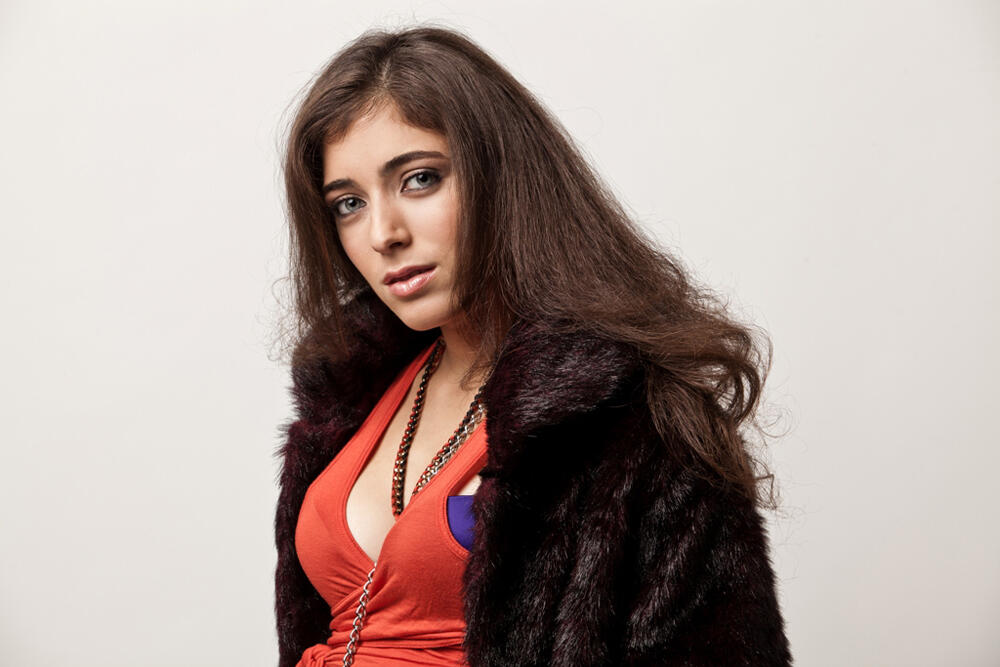
Roni Daloomi
(Photo: Ohad Romano)
Leshem, Levin and Yardeni sought to cast relatively unknown actors, but in retrospect, “Euphoria” became a launching pad for several careers, including Roy Nik and Maor Schwitzer.
“We had another unforgettable casting: a boy named Uriel Geta,” Levin recalls. “He was in an acting class run voluntarily by actor Ofer Hayun, who also played his older brother in the series. Ofer said he was bringing a ‘wild’ kid. He was 15 — above the age requiring a labor permit for child actors — but looked 12. He had attention deficit disorder, didn’t remember a word of the script, but he was captivating.”
Most were not experienced actors. How did you prepare them?
“Imagine a girl like Amit Erez, pre-army. We had to tell her that her role was the rejected girl no one wants, and under that definition we would ask her to undress. To this day, I get chills from the trust and dedication they showed. That’s why they were so moving — they weren’t actors, they were kids.”
Writers of teen series are in a constant race to capture authentic youth language. Were you there?
“Ron isn’t just a writer — he’s a writer-researcher. When he writes language, it’s based on what he hears. But there wasn’t an attempt to sound realistic in terms of capturing specific teen nuances, but rather to convey an attitude: when you don’t give a damn, it eventually comes back to hit you. That’s what happens with teenagers — they don’t care in every direction, and it hits them in the face.”
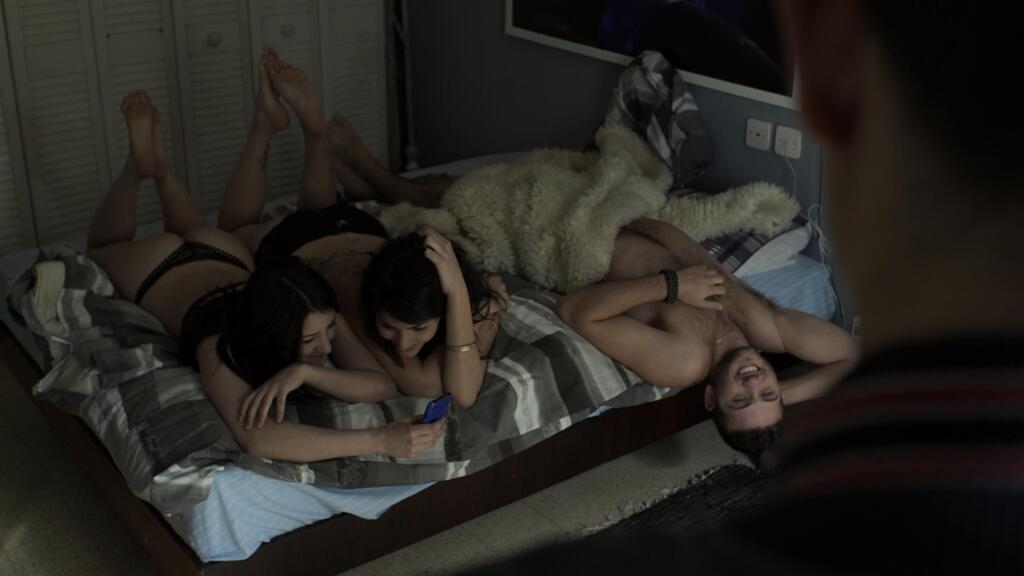
From Israel’s ‘Euphoria’
(Photo: Courtesy of HOT)
The decision to exclude adults from the script was expressed visually as well, becoming one of the show’s trademarks: adults remained in the background — a voice or silhouette behind a cracked open door, a note on the fridge, a message on the phone. Signs of life, but not truly present. Not someone who can save them.
Yardeni: “Not only do they not save — they make things worse.”
Levin: “It was a different world. But what once seemed beyond reality has become reality. In one scene, Amit’s character drugs Roy Nik with a date-rape drug. It may have seemed unrealistic then, but today it’s reality.”
Yardeni: “Maybe it existed then too and we just weren’t aware.”
Levin: “The big difference between then and now is that today the horrors happen inside the protected home. In the past, you had to wander into a dark alley; today it’s in a heated room. Supervision used to be clear — holding a child’s hand when crossing the street. Today, the child is in the next room with a computer. How do you supervise that? What are you protecting them from? If ‘Euphoria’ were made today, it would be the same series — but on steroids.”

From Israel’s ‘Euphoria’
(Photo: Courtesy of HOT)
Did you feel the need to protect the actors?
“Very much so. It was completely clear what level of behavior was expected on set — no smoking near them. This was long before #MeToo and intimacy coordinators, but a habit I’ve kept since is that if I need to touch an actor to position them, I always ask permission. I say, ‘I’m going to touch you now, is that okay?’”
Which scene was hardest to direct?
“There was a scene where they sat in a pool filled with beer on a rooftop. It was February, the fifth floor, and we couldn’t heat the water. They were freezing while we sat outside with coats. You can hear in the recording that Maor Schwitzer can’t speak and his teeth are chattering. I felt terrible for them, but we didn’t give up on the scene.
“Also the rape scene. Today there’s almost a ‘guide’ for how to do these things — what coverings to use, what to do if, God forbid, there’s an erection, what to ask actors to prevent physical discomfort. Back then it was all instinctive — what we thought the camera could show and the actor could do. It was ‘let’s see how we get through this without anyone getting hurt.’”
Were there actors who struggled?
“Because of their age, we never reached a point where someone on set said they were uncomfortable. Everything was discussed and agreed upon in rehearsals. The hardest scene for me was the sex scene between ‘the fat girl’ and the gay character. I’ve struggled with weight my whole life, and imagining myself at her age exposed like that — I felt naked with her. I had a lot of emotion about it, beyond the body itself. I admired her for what she did.
“My adolescence was relatively normative, without major trauma. And still, adolescence is like a washing machine — you go in, you get shaken. Most come out clean, some come out torn. That shaking is inevitable in every generation. Adolescence itself is a kind of trauma — you get hit from all sides, and whoever remains standing wins.
“And that pressure to lose your virginity — when it became her goal, it touched me. Because when someone wants to sleep with you, it validates you, that you’re not disgusting. These are such young, underdeveloped thoughts. What am I worth? Does someone want to sleep with me? They learn through media that there is what’s desirable and what is not loved — especially when you don’t have parents who love you.”
These are gripping roles, especially for new actors. Were they able to step in and out of them?
“I’m always envious of those Hollywood stories about actors becoming their characters for months, or directors living with tribes. I’m not from that world. Acting is acting, life is life, and I don’t encourage that kind of behavior. The atmosphere on set didn’t resemble the series — there was laughter. We’d shoot a rape scene and then the boom mic enters the frame and it’s funny. We weren’t in that heavy state of mind all the time.”
'They made our lives miserable'
When Levin is asked how the creators felt at the end of filming, she answers without hesitation: “Euphoria. It was the most amazing production of my career.” But that feeling was almost immediately met with a cold response from critics and some viewers, who did not know how to process teenagers repeatedly flirting with what they saw as a lack of values and unrealistic behavior.
“The Cable Council made our lives miserable,” Yardeni recalls. “At first they didn’t want to air it, then only at night or after midnight. They were very alarmed by the series.” Orly Yehezkel, a member of the Cable and Satellite Council, demanded the show be taken off the air, arguing it was harmful and “portrays our youth in a negative light — as teenagers engaged in sex, drugs and violence, with no future or responsible adult, and Roni Daloomi, who is supposed to be a role model, plays a serial drug user.”
Levin: “Ron and I were summoned to a hearing at the Cable Council. One council member said to me, ‘Show me one person who likes your series!’ That was the depth of the argument. I told her my mother liked it.”
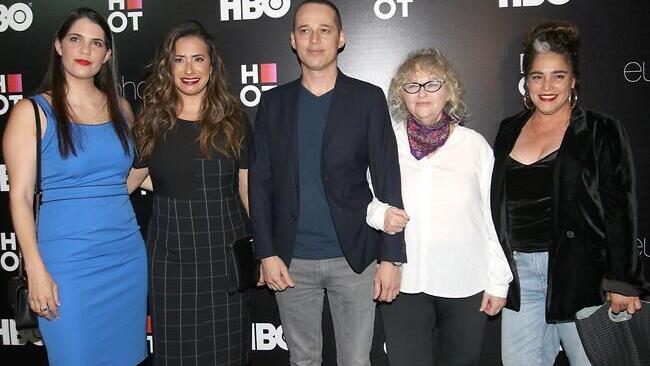
Daphna Levin, Tmira Yardeni, Ron Leshem, Tal Granot and Hadas Mozes-Lichtenstein,
(Photo: Anat Mosberg)
Did you have children then?
“I had teenagers, so even more so. I remember being asked whether I would want them to watch it, and I said no. I don’t think it’s a series for children — it wasn’t designed for children. To a large extent, it was missed because of the noise around restricting viewing hours. It was the only series ever restricted even on VOD. You couldn’t watch it on VOD before 11 p.m. What I had in mind was a series for parents — painful and difficult, about children. But precisely because of the chaos around it, it reached the wrong audience. In the end, children watched it.”
The feeling of euphoria was replaced by depression after the series aired. Ultimately, the show was rated for viewers 18 and older, and HOT aired alongside each episode a companion program hosted by parenting guide Einat Natan, in which the episode’s events were discussed and advice was given on improving relationships with teenage children.
“The series was not well received in Israel at first,” Levin sighs. “It was mocked and more or less buried. Today it seems to me like a stronger series than it did then. Back then, we were living with the feeling of — let’s call it what it was — failure.”
Did you feel misunderstood?
“‘Misunderstood’ is if you’re being kind to yourself. If you want to flatter yourself, you say, ‘I was ahead of my time and not understood.’ If you want to be me, you say, ‘I messed up again.’ There was a sour feeling for a long time, and then it was simply forgotten.”
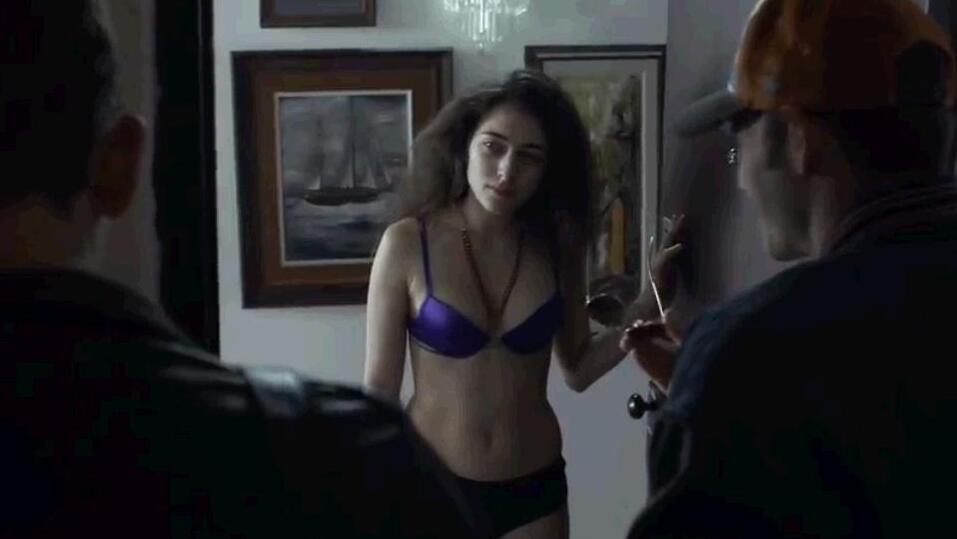
From Israel’s ‘Euphoria’
(Photo: Courtesy of HOT)
Yardeni: “Critics eventually fall in line with the audience. The victory is in the work itself, and critics, with all due respect, are not important or relevant. We don’t fully know the data — HOT is very secretive about it. Military Intelligence is less secretive than they are — but in the end, you understand.”
Levin: “I received responses from parents who said it was hard for them to watch because of the guilt or anxiety, and that I can accept. I remember reading a book many years ago, and the first thought I had after finishing it was, ‘How lucky I am not to be a mother.’ The sadness and humiliation hit me, and I understood there is a certain weight in dealing with this, even on television.”
Only 11 years later did creator, director and screenwriter Sam Levinson discover the Israeli “Euphoria,” through Hadas Mozes-Lichtenstein, and decide that the Israeli melancholy — with added sparkle, artistic makeup and even more drugs — could become a successful American drama. And it did: its two seasons (and a third that premiered April 12) turned Zendaya, Jacob Elordi and Sydney Sweeney into film stars.
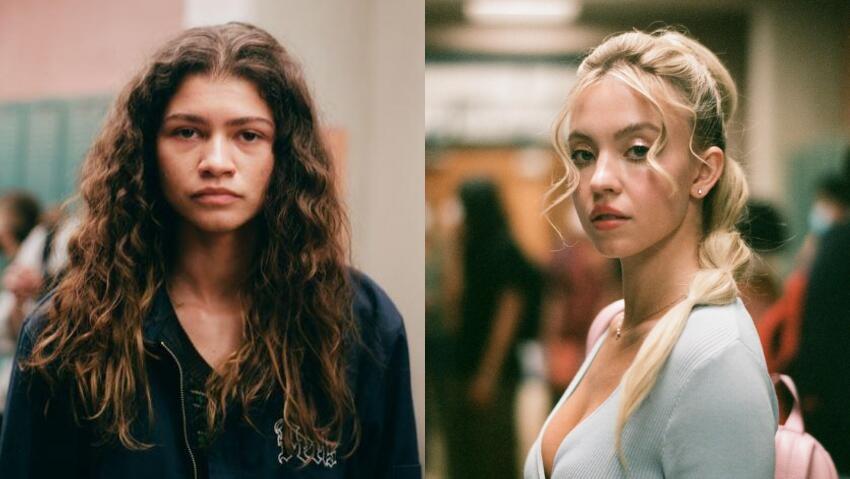
Sydney Sweeney and Zendaya, from 'Euphoria'
(Photo: Courtesy of HBO)
Was it a corrective experience for you?
“As for the American series — and I’m speaking only for myself — I don’t feel any ownership over it whatsoever. It operates without me; it belongs to someone else. The ego recovers a bit when suddenly ‘Euphoria’ is a word everyone uses, and not a joke about some disconnected people who made a series. On the other hand, I feel no emotional connection to the success of the American ‘Euphoria.’
“I haven’t even watched all of it. Not out of protest — it just happened. I saw the first part at the premiere and thought it was spectacular, but it will probably take me time to watch it. It’s funny,” she reflects, adding, “after saying that a series about teenagers is the most interesting thing, now I say to myself, ‘What, I’m going to watch a series about teenagers?’ I really love our series, in its modest way. This year, my youngest daughter, who is 19, discovered it after being exposed to the American ‘Euphoria,’ and I hear there’s a trend of people going back to watch it. That makes me very happy.”