

The timing could hardly be more striking. On the eve of the US premiere of the controversial Israeli documentary NAZA at the New York Film Festival, the trailer for another Israeli-focused documentary was released this week: Paging Hezbollah, a title that plays on the word “pager.”
Like Israeli journalists Yuval Abraham and Rachel Szor, whose NAZA seeks to expose the inner workings of Israel’s intelligence apparatus during the Gaza war, director Justin Folk goes behind the scenes of Israel’s pager operation against the Hezbollah terrorist organization. But where Abraham and Szor rely on interviews with 24 anonymous Israeli military and intelligence insiders, their faces and voices obscured, Folk puts senior Israeli security figures past and present directly in front of the camera.
Paging Hezbollah trailer


Among them are former Mossad chief David Barnea, former Northern Command chief Maj. Gen. Uri Gordin and, above all, Prime Minister Benjamin Netanyahu. Most appear openly and speak with evident satisfaction about the operation.
Paging Hezbollah is scheduled to open in US theaters on Oct. 30, three days after Israel’s Oct. 27 election. That means the film’s American publicity campaign is expected to gather momentum in mid-October. A broad embargo on in-depth coverage remains in place until Oct. 19, after which reviews and interviews are expected to begin appearing, little more than a week before Israelis vote.
That timetable inevitably draws attention to the circumstances surrounding the film’s production and release. Yet unlike most productions at this stage of a theatrical rollout, little is publicly known about who is behind it beyond Folk and one producer, Kirby Washington.
NAZA was also produced under secrecy. But when that film was announced, its backers and production team were disclosed, including Britain’s Guardian newspaper, French production company MK2 and nine producers who worked behind the scenes, among them Oscar-winning filmmaker Jonathan Glazer.
The people and organizations behind Paging Hezbollah are far harder to identify. The production company presented as leading the project is little known, with no readily identifiable record of previous productions, public web presence or contact information. There is no clear public record of who runs it or who else works there.
The list of interviewees, released as part of the film’s promotion, is considerably more transparent. Along with Netanyahu, Barnea and Gordin, it includes former CIA director David Petraeus, retired Brig. Gen. Yaakov Nagel, former Israeli ambassador to Washington Michael Oren, intelligence expert Matthew Levitt and a Lebanese public figure who appears anonymously with his face obscured.
What remains unclear is who initiated the project, who served as its contacts in Israel and where its financing came from. That opacity persists even though the trailer has now been released along with an elaborate website expanding on the film and recounting the events leading up to the Sept. 17, 2024 pager operation.
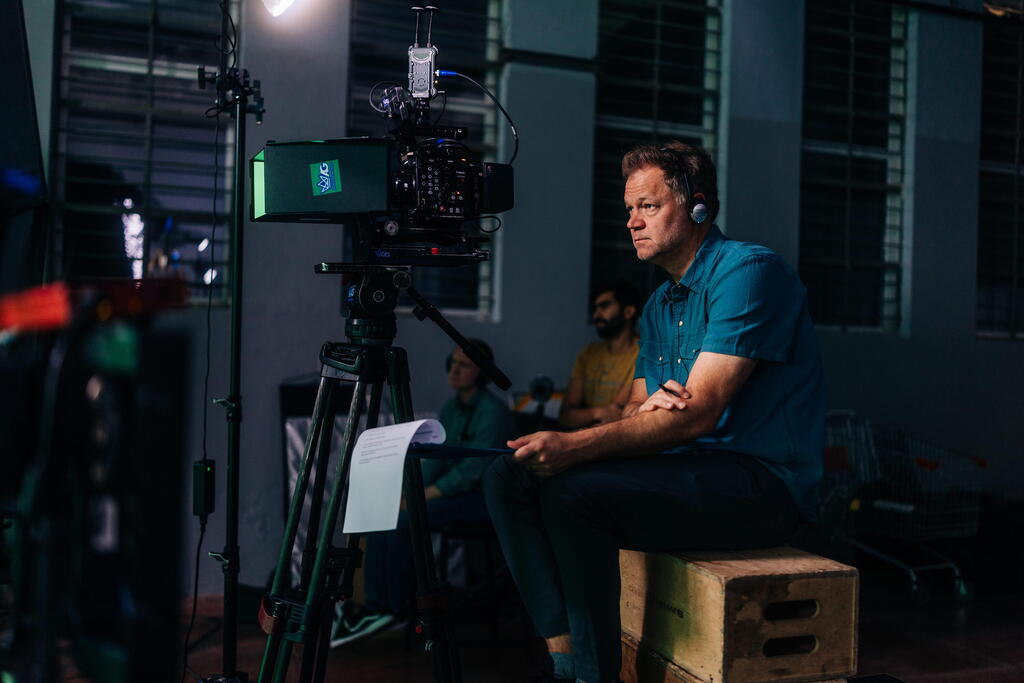
According to the trailer, a company called Aveiled Productions led the project. As of publication, the company had no visible body of previous work, formal online presence or readily available contact details. There was also no public listing identifying its executives or staff.
Although neither the company nor the film appeared to maintain official social-media accounts, Aveiled is identified as the operator of the documentary’s website. More unusually for a film already entering its promotional campaign, the company did not appear in IMDb, the industry database that catalogues filmmakers, crews and production and distribution companies. Paging Hezbollah itself was also absent from the database at the time examined, including from Folk’s personal page.
AVEILED PRODUCTIONS
(Photo: PR)
What Folk’s filmography does show is a substantial record of documentaries approaching American social and political issues from a conservative perspective, several of them commercially successful.
His two most recent films were made with Matt Walsh, a prominent conservative US media personality. What Is a Woman? in 2022 challenged contemporary definitions of gender associated with progressive politics, while 2024’s Am I Racist? sent Walsh undercover into progressive circles focused on race and diversity. Both used confrontational humor and ambush-style encounters as part of their approach.
Folk also directed the 2019 documentary No Safe Spaces, which argued that progressive politics had restricted free expression on American university campuses and in public debate.
Earlier, he directed Right Makes Might: The Lincoln-Douglas Debates, a 2020 dramatic reconstruction of the political clashes between Democratic politician Stephen Douglas and Republican Abraham Lincoln before Lincoln became president. Folk has also worked with entertainer Jamie Alexander on comedy projects.
Nothing in that previous work, however, appears comparable in scale or access to Paging Hezbollah.
Here Folk secured interviews with some of the most influential figures in Israel’s political and security establishment and gained access to a story built around one of the country’s most closely guarded intelligence operations. In filmmaking, that kind of leap is rarely made without experienced producers, well-connected intermediaries or financiers willing to commit substantial resources.
Large documentaries are also frequently commissioned or supported by the organizations financing them. In this case, however, it remains unclear who commissioned the project, who funded it and who ultimately assembled the production.
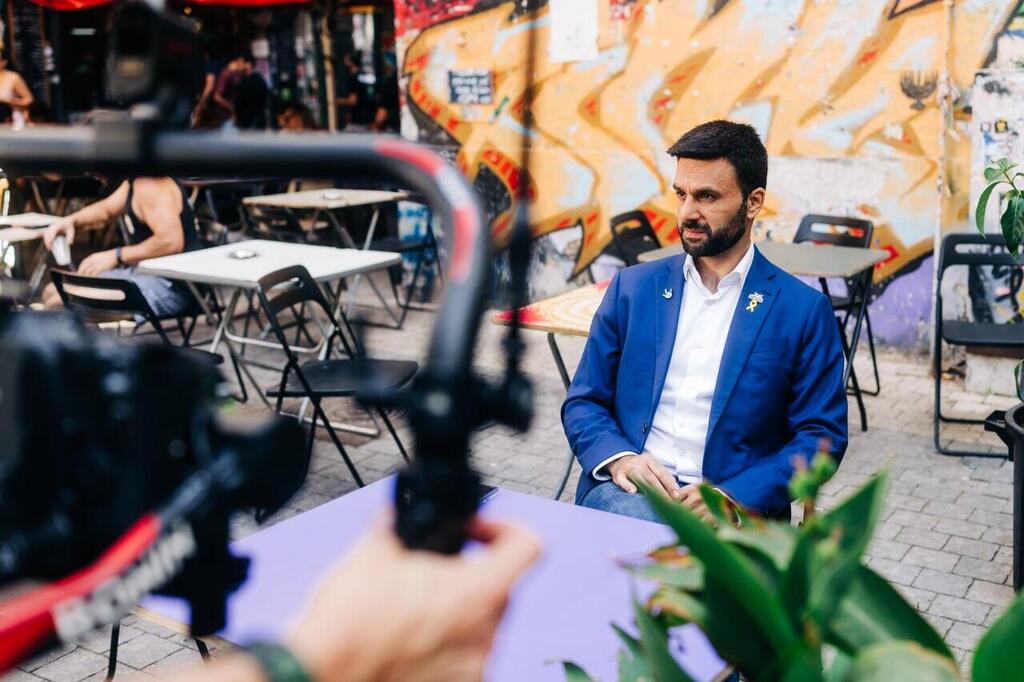
Pro-Israel activist and Knesset candidate Yoseph Haddad
(Photo: PR)
Netanyahu emerges as the film’s central protagonist, something already evident from the trailer.
“The final question left is whether to press the red button,” Eyal Tsir Cohen says as footage shows Netanyahu walking alongside senior IDF officials toward what is identified as a “security conference room — top secret.”
Paging Hezbollah does not focus exclusively on the operation itself. In broad terms, the documentary traces Hezbollah’s emergence from Lebanon’s Shiite community with Iranian backing following Ayatollah Ruhollah Khomeini’s Islamic Revolution, through Israel’s withdrawal from its security zone in southern Lebanon, the terrorist organization’s rise under Hassan Nasrallah and repeated confrontations along Israel’s northern border.
At the same time, it reconstructs the Mossad’s preparations for the pager operation step by step, portraying years of planning, creative breakthroughs and unexpected setbacks before the final decision was made to activate the devices against Hezbollah while Israel was also fighting Hamas in Gaza.
The story then moves to the assassination of Nasrallah. A formidable roster of interviewees speaks openly about the operation and its military, strategic and diplomatic consequences. They include Barnea and Tsir Cohen from the Mossad, Gordin, former national security advisers Yaakov Amidror and Yaakov Nagel, and Sarit Zehavi, a former Israeli military intelligence officer.
The film also features Daphna Russo, widow of Maj. Uri Russo, who was killed defending Kibbutz Kfar Aza during the Hamas-led Oct. 7 attack, as well as Ido Shemariz, who fought alongside him in the community’s emergency response team.
Another participant is pro-Israel activist and Knesset candidate Yoseph Haddad, who is running with the Amcha Israel party.
Together, the interviewees provide context for the years of planning behind the pager operation, but also for the shock delivered to Israel’s defense establishment on Oct. 7 and the profound blow the attack dealt to Israeli society.
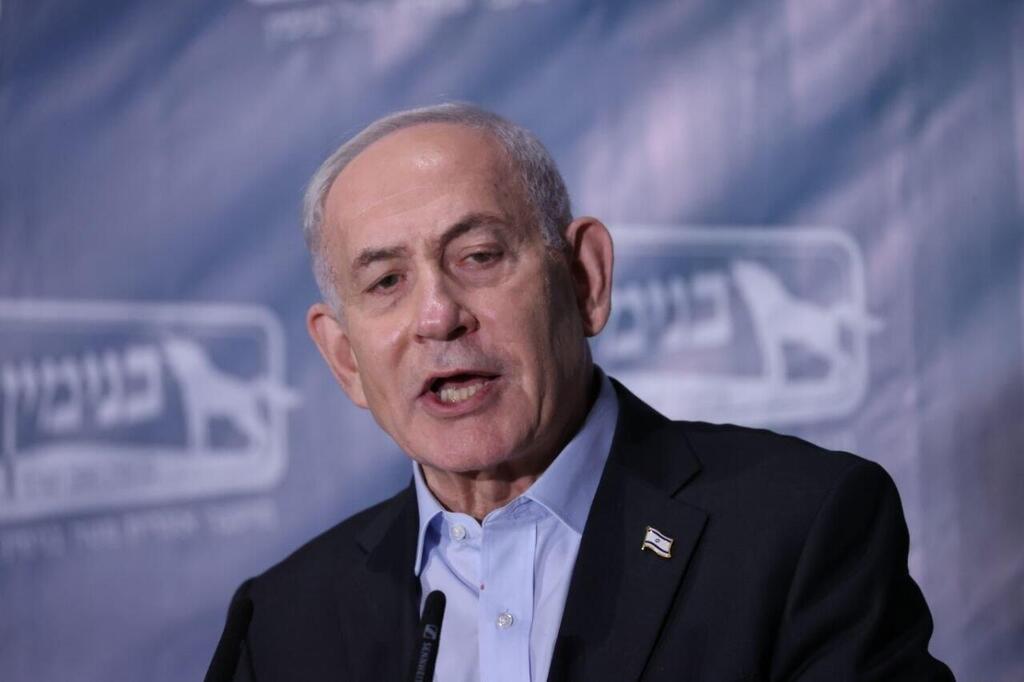
Within that narrative, Netanyahu is presented as the figure who leads Israel out of the crisis. He is the only serving politician interviewed in the film and describes the crucial decisions he says he made with determination after the Oct. 7 disaster, leading eventually to the campaign against Hezbollah that transformed Israel’s position on the northern front.
(Photo: Alex Kolomoisky)
Because of the current embargo, the film itself cannot yet be described in full. Broadly, however, it is constructed as an effective espionage thriller, combining archival footage, interviews and scripted reconstructions to dramatize a highly complex operation conceived and carried out by intelligence personnel who generally operate outside public view.
But the character placed at the center of that thriller is Netanyahu.
He dominates the screen during his interviews, recounting the dilemmas he faced and the decisions he made. He describes some of them as courageous choices made against prevailing advice and emphasizes that he instructed the IDF to avoid harming Lebanese civilians.
Netanyahu also says that in some instances he acted against recommendations from senior security officials. At one point, he recounts an episode that echoes his longstanding complaints that defense officials have withheld information from him, saying a critical update during preparations for the pager operation reached him late and almost by chance through senior intelligence officials.
Such details may have limited resonance for an American cinema audience. They could carry considerably greater significance in Israel during an election campaign.
Folk’s previous films were deeply rooted in American domestic politics. Paging Hezbollah is an English-language American production intended for US theatrical distribution, yet much of its political narrative focuses on Netanyahu’s leadership and his relationship with Israel’s security establishment.
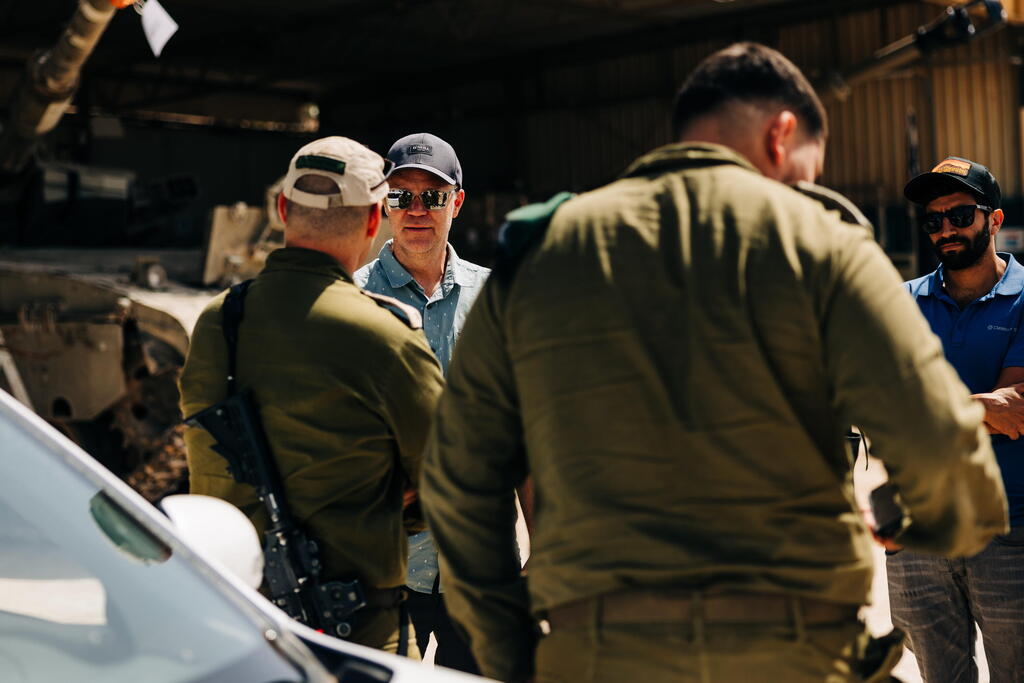
From Paging Hezbollah
(Photo: PR)
The film is scheduled to open in the United States on Oct. 30. American companies 2521 and Angel Studios, both associated with conservative-oriented entertainment, appear to be involved in its distribution, according to the information cited in the original reporting. The companies have previously been involved with projects including the box-office hit Sound of Freedom, the Christian drama Cabrini and animated adaptations of biblical stories involving Jesus and King David.
The conservative news outlet The Daily Wire, founded by Ben Shapiro, may also have links to the project through Washington, a producer and talent agent who has worked with the organization. The outlet backed Folk’s two previous films and gave prominent coverage to the Paging Hezbollah trailer, leading its report with an image of Netanyahu.
Those connections, however, have not been officially confirmed. At this stage they remain based on online reporting and inference rather than formal disclosures.
That is what makes the secrecy around the project unusual. The documentary promises to reveal some of the hidden mechanics of one of Israel’s most audacious intelligence operations, while many of the basic details about the people and money behind the film itself remain undisclosed.
The result leaves one central question unanswered. Is Paging Hezbollah primarily an American documentary intended to draw audiences in New York, Los Angeles, Chicago and elsewhere to theaters after Oct. 30, or is its political impact also intended to reach Israeli voters indirectly in the final days before the Oct. 27 election?
For now, there is not enough public information to answer that question. And with the people behind the production still largely out of view, there are few obvious people to ask.