

An exhibition exploring how Nazi Germany harnessed the power of soccer to advance its ideology opened Monday at the United Nations Palais des Nations in Geneva, coinciding with the start of the UN Human Rights Council’s 60th session.
Titled “Sports. Crowds. Power.” the exhibition runs September 8–12 and examines how the Nazi regime used sport to consolidate power, persecute Jewish athletes and clubs and marginalize those who did not fit its worldview. It also features accounts of athletes who played in ghettos and concentration camps, as well as an examination of how postwar soccer culture failed to fully confront exclusion and extremism.
Gallery
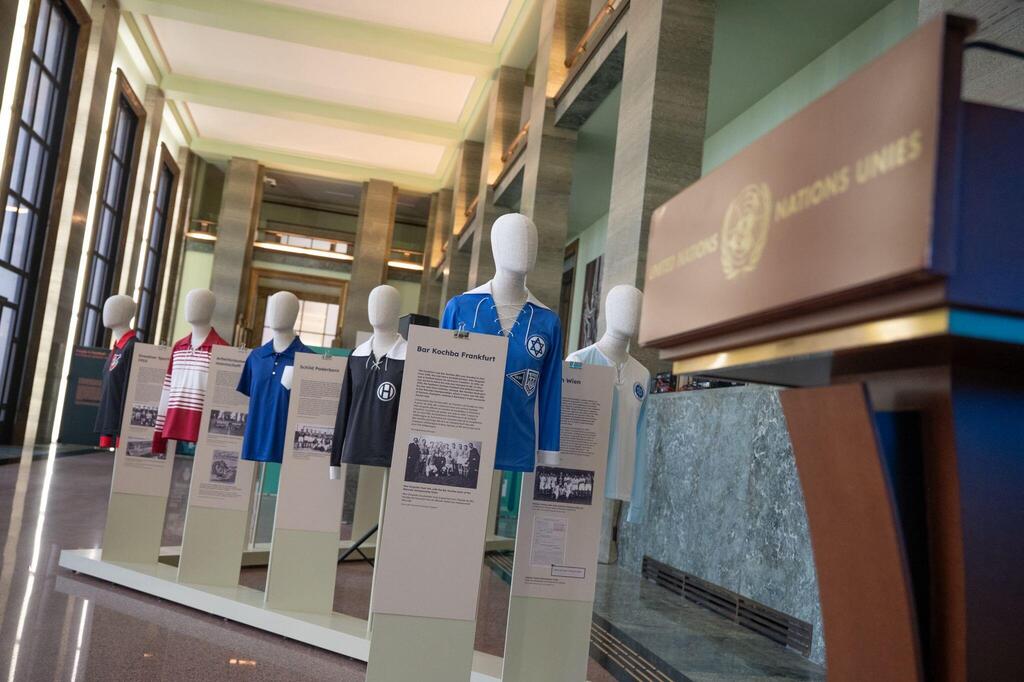
Replica jerseys of Jewish soccer clubs banned under Nazi rule are displayed at the United Nations Palais des Nations in Geneva on Sept. 8, 2025. The exhibition, ‘Sports. Crowds. Power.’, explores how the Nazi regime used sport to spread ideology and persecute Jewish athletes
(Photo: Shahar Azran)
The show was first launched earlier this year at Berlin’s Olympiapark during the UEFA Euro 2024 tournament, in cooperation with the Berlin Sports Museum. Its Geneva stop was organized by the World Jewish Congress and the German NGO What Matters, with support from Germany’s UN mission, UNESCO and other international bodies.
"Today, as Jews and Israelis are once again being excluded from sporting and cultural forums, 'Sports. Crowds. Power.' should serve as a stark warning of what happens when hatred and persecution are allowed to thrive unchecked,” said WJC Israel CEO Sara Friedman following her remarks at the opening.
“Bringing this exhibition to the United Nations is our way of sounding the alarm. The diplomatic community has an obligation to reflect on the dangers and the deadly consequences of silence and inaction. Ahead of the 2026 FIFA World Cup, we must ensure that the sporting community stands firmly against antisemitism.”
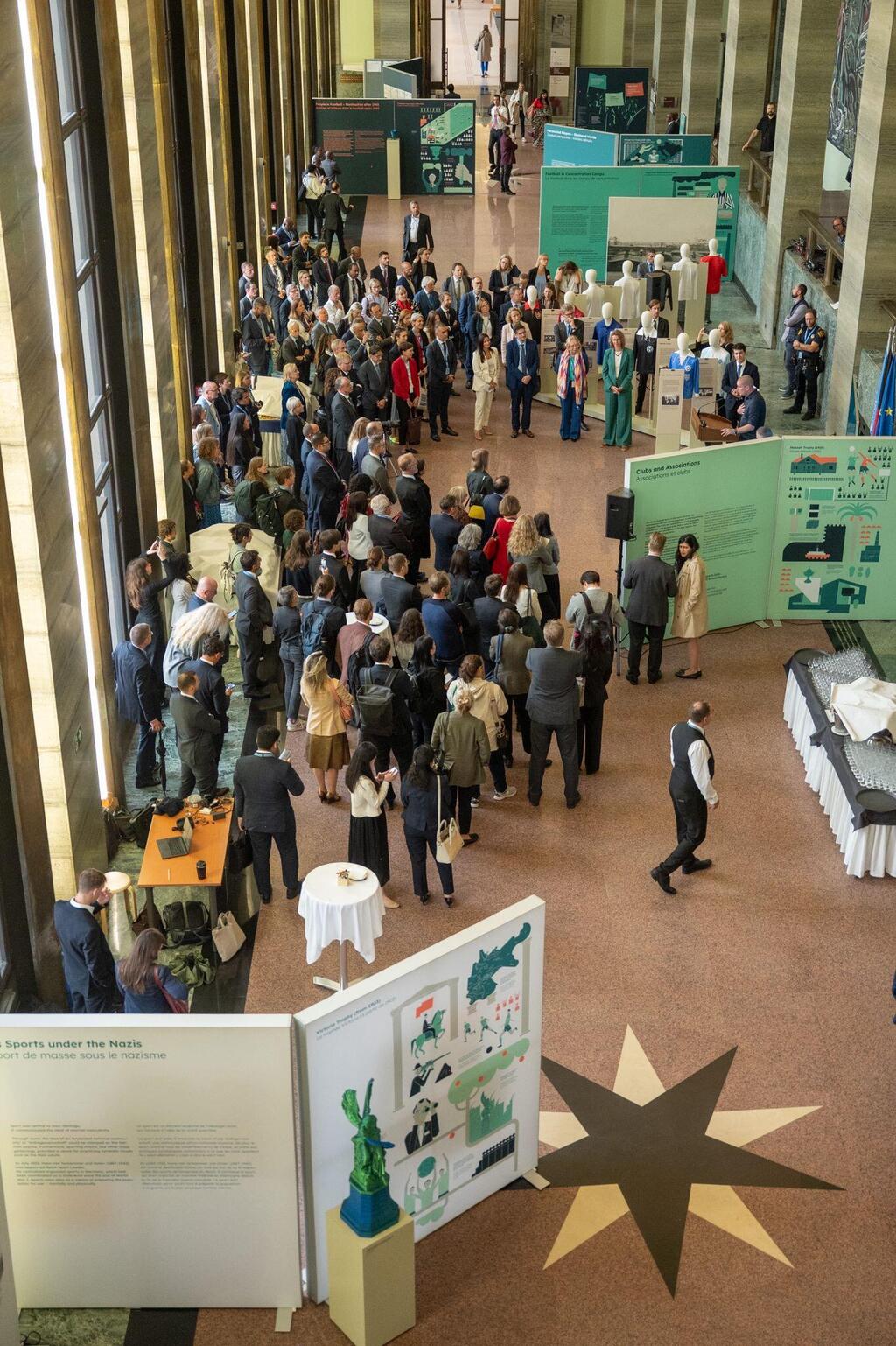
Visitors gather at the opening of the exhibition 'Sports. Crowds. Power.' at the United Nations Palais des Nations in Geneva on Sept. 8, 2025
(Photo: Shahar Azran)
“Football has always reflected the societies in which it is played — at times reinforcing prejudice, but also creating opportunities for solidarity and resilience,” said What Matters Managing Director Daniel Loercher. “By presenting 'Sports. Crowds. Power.' at the United Nations, we want to confront the uncomfortable history of the game under Nazi rule while also inspiring players, clubs and fans today to use football’s universal reach to stand up against antisemitism and discrimination.”
The exhibition is presented in cooperation with the Permanent Mission of Germany and the Office of the UN High Commissioner for Human Rights (OHCHR), in partnership with UNESCO, UPEACE, OIF, OSCE/ODIHR, the European Union and a coalition of 33 UN member states.
“This exhibition is part of the World Jewish Congress’s longstanding engagement with the United Nations in Geneva to raise awareness about the dangers of antisemitism and the importance of learning lessons from the history of the Holocaust,” said Dr. Leon Saltiel, WJC’s Representative to the United Nations in Geneva. “Moments like these are an opportunity to join forces to protect human rights and democratic values."
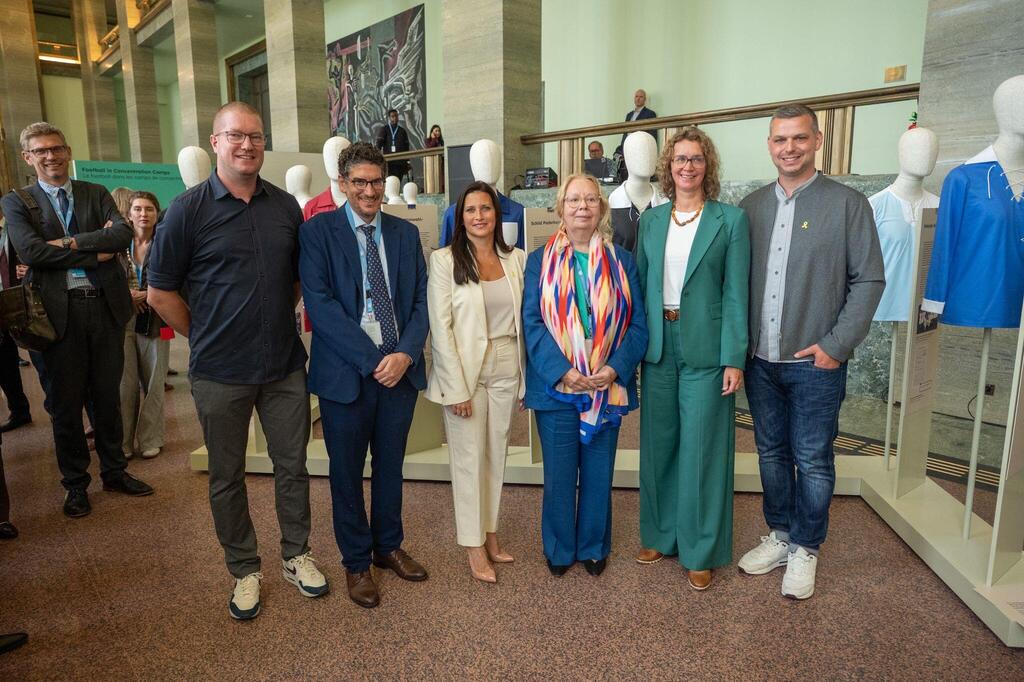
Organizers and diplomats pose during the opening of the exhibition 'Sports. Crowds. Power.' at the United Nations Palais des Nations in Geneva on Sept. 8, 2025
(Photo: Shahar Azran)
Organizers said the exhibition aims to highlight the role of soccer both as a mirror of society and as a potential tool for solidarity. Panels trace how antisemitism and political manipulation infected German sports in the 1930s, while artifacts and testimonies connect those themes to debates in today’s sporting world.
The Geneva display will be followed by a second installation at the city’s main stadium from September 15–19, 2025, where it will include guided tours for schools, soccer clubs and community groups.