

In September 2022, BYD transformed overnight from a little-known Chinese automaker into one of the local car market’s most prominent success stories. Not only did it become the best-selling electric vehicle brand, it climbed to fourth place overall in vehicle registrations the following year, with the Atto 3 becoming the top-selling model across the entire market in the two years that followed. Globally, BYD’s rise was even more dramatic, overtaking Tesla as the world’s leading EV manufacturer over a year ago.
But business has slowed in 2025. In the first third of the year, BYD saw a dramatic 50% drop in Israeli vehicle deliveries — even as it continued to post impressive growth figures in Europe. The main culprits: a delayed arrival of the plug-in hybrid Seal U, and increased competition from other strong rivals.
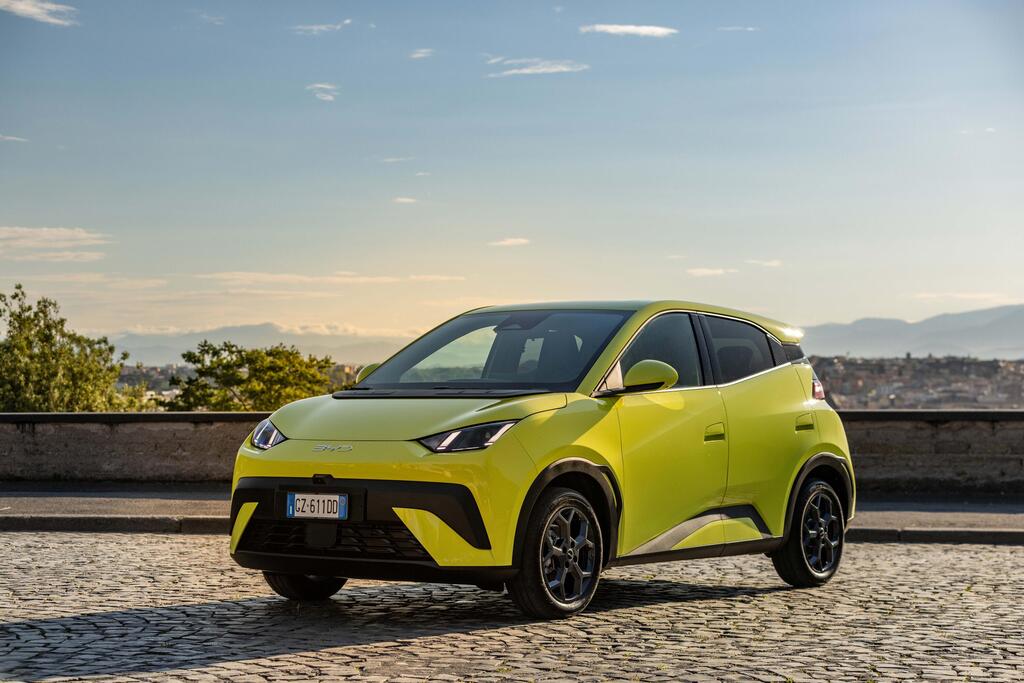
BYD hopes to reverse the trend with the Dolphin Surf, a small electric city car unveiled two years ago at the Shanghai Auto Show (originally under the name Seagull). It enters a nascent segment in Israel currently occupied by two other Chinese models — the Leapmotor T03 and Dongfeng Box — and is expected to grow with global competition.
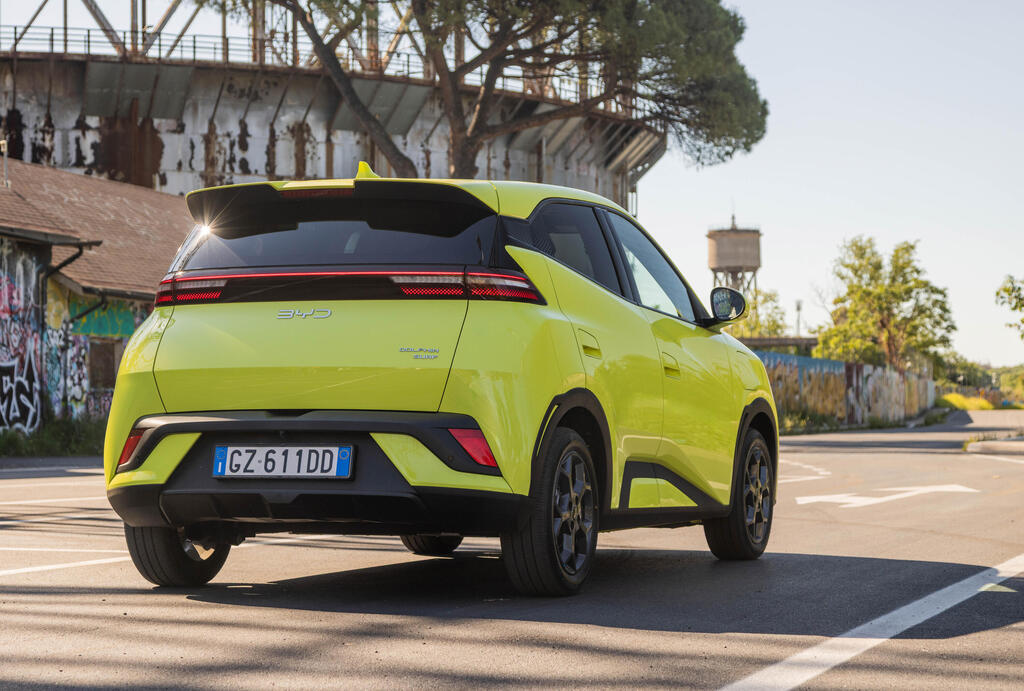
Design and Interior: As with many compact urban EVs, BYD invested considerable design effort in giving the Dolphin Surf a distinct look — though opinions on its appeal vary. A lime green paint job makes it stand out, though not everyone will find it attractive.
Inside, the cabin feels somewhat more spartan than expected, with dark tones and large, rough plastic surfaces. It’s functional but could have been more refined. Still, the car features a 7-inch digital instrument cluster and BYD’s familiar 10.1-inch rotatable touchscreen. However, the screen’s resolution is relatively low, and small icons make operation less intuitive.
The air conditioning system can be controlled using three-finger gestures on the screen — swiping left and right to adjust fan speed and up or down for temperature. Notably, there is no actual temperature setting (i.e., no climate control), only a basic hot-to-cold slider. The fan in the test car also generated more noise than expected.
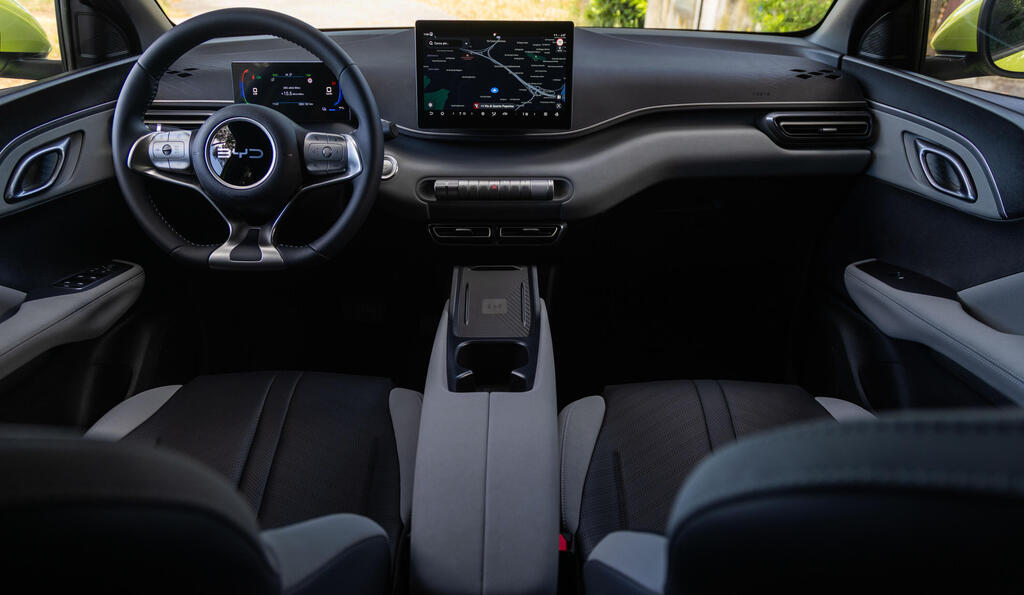
The driver’s seat is comfortable and offers decent support, though limited steering wheel reach adjustment affects the driving position. Visibility is excellent — especially important for city driving — and there are practical storage spaces, including a large compartment between the front seats. The test car also featured a convenient wireless phone charger.
Features and functionality: For its class, the Dolphin Surf is generously equipped, offering synthetic leather upholstery, power-adjustable front seats and 360-degree parking cameras in the test model. The cabin can be accessed using an NFC key or a smartphone app, which also allows remote control of various functions, including climate settings, vehicle location and battery status.
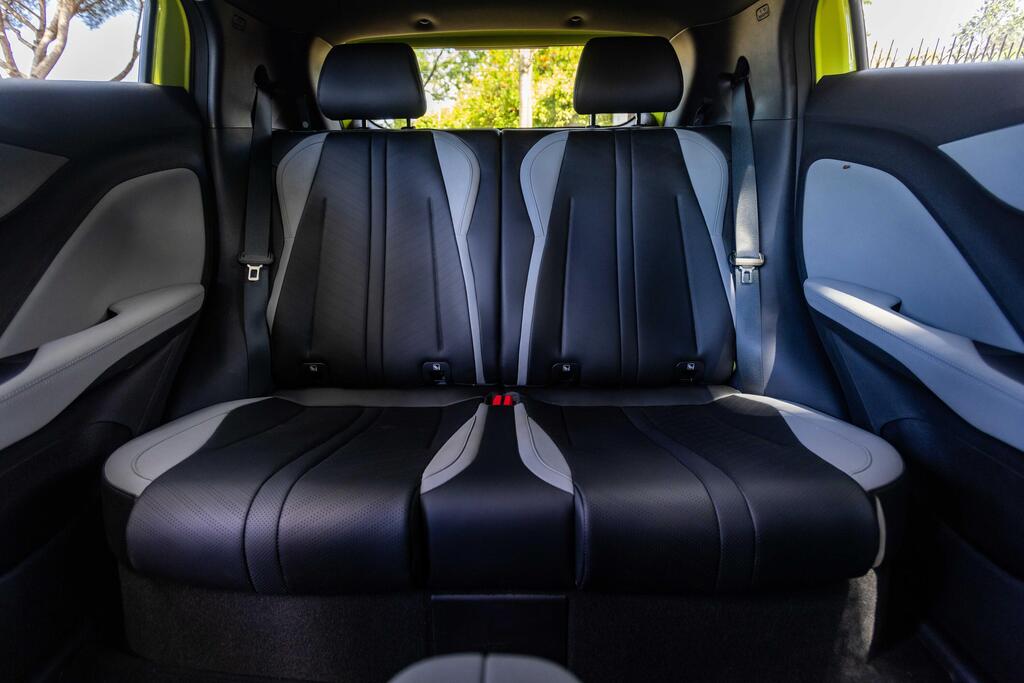
Compared to the standard Dolphin, which shares BYD’s e-platform 3.0, the Surf is 30 centimeters shorter (measuring 399 cm) and has a wheelbase 20 cm shorter (250 cm). Its rear bench seats only two, possibly contributing to a surprisingly roomy cabin — more spacious than some gasoline-powered superminis.
The trunk is also large for the segment at 308 liters and includes a dedicated compartment beneath the floor that can hold a small trolley suitcase. However, it lacks a top cover. As for safety, the car comes with expected features: automatic emergency braking, lane-keeping assist and adaptive cruise control.
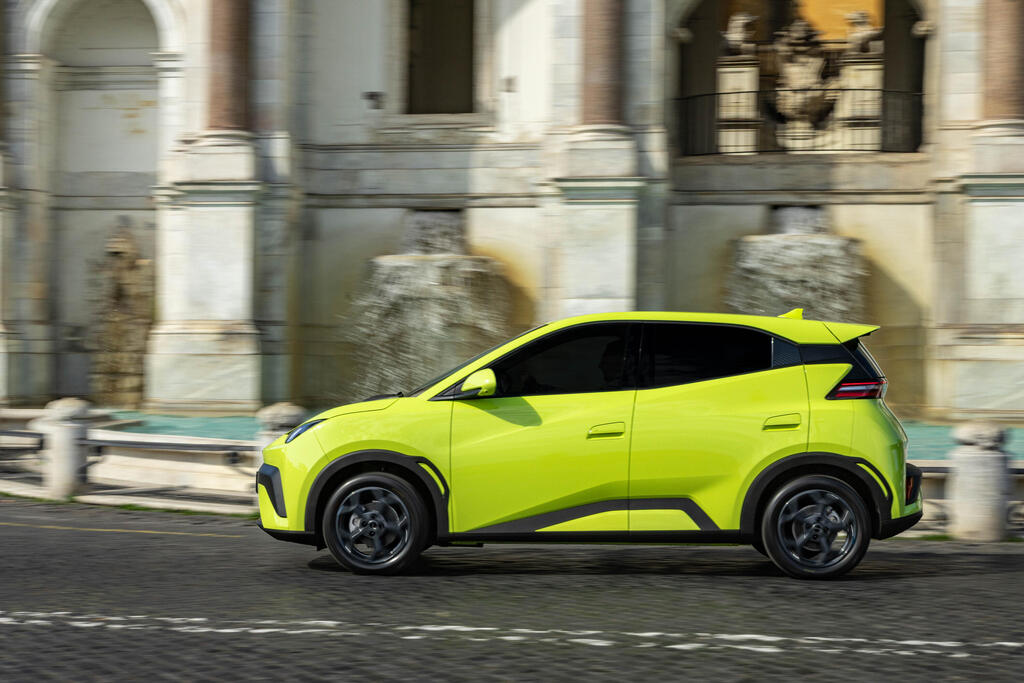
Powertrain and performance: The Surf will be available with two front-wheel-drive powertrain options: a base version producing 88 hp and a higher-spec version with 156 hp — the latter featured in our test drive. This output is significantly higher than that of its competitors, enabling brisk acceleration (0–100 km/h in 9.1 seconds) and even unexpected front-wheel spin under strong throttle. It also allows the car to cruise comfortably at highway speeds, unlike some rivals that struggle at high speeds.
Regenerative braking can be toggled between two modes via the touchscreen, but the interface is unintuitive, the differences between settings are minimal and there is no true one-pedal driving capability.
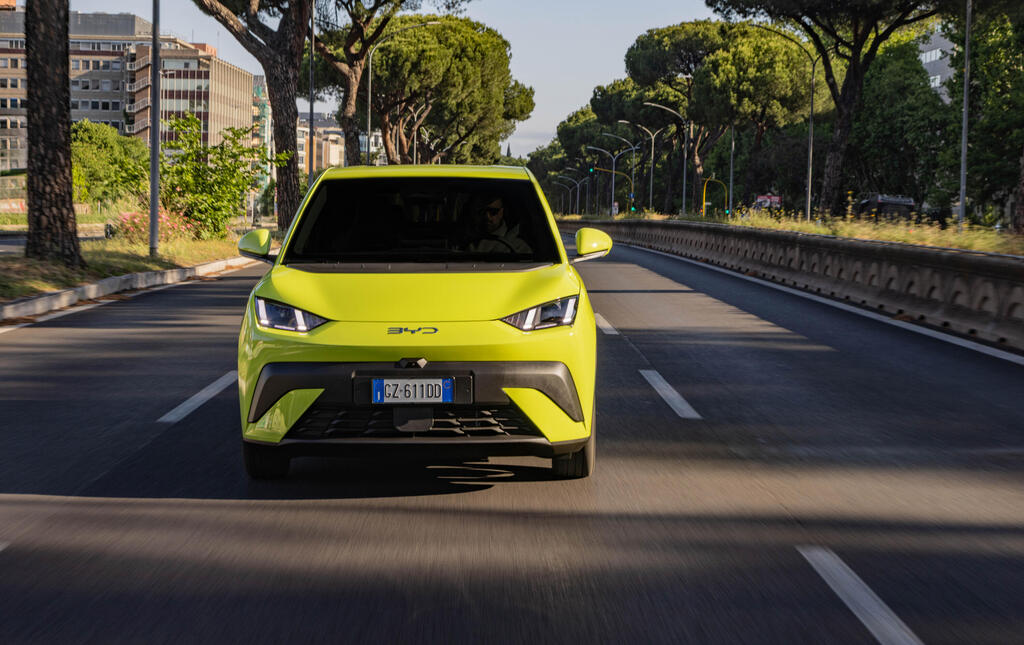
Both variants come with a modest 43.2 kWh battery, offering just over 300 km of range — standard for this class. Fast charging at 85 kW allows a 10% to 80% charge in about 30 minutes, though we aim to verify that figure in local testing. The battery also supports V2L (Vehicle-to-Load) functionality for powering external devices.
Ride and handling: For such a compact car with a short wheelbase, ride comfort is decent, though the short suspension travel leads to a bouncy, busy ride on urban asphalt. On highways, wind noise is prominent.
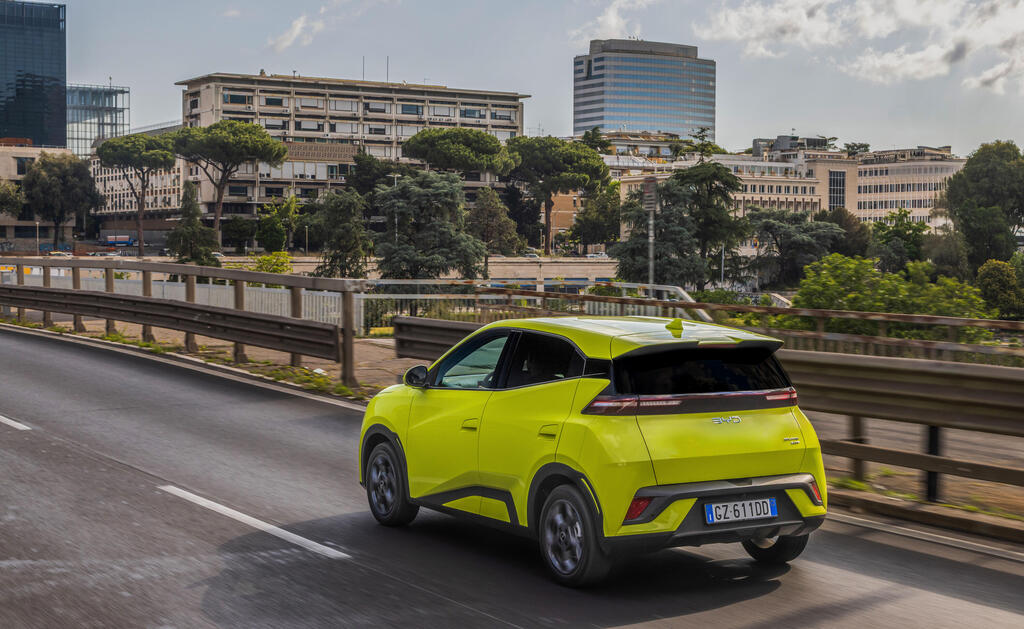
Handling is adequate, but the suspension lacks proper damping over both lateral and longitudinal axes — meaning noticeable body roll in corners and movement under acceleration or braking. That said, the Hankook tires provide above-average grip compared to the lower-grade rubber on some rivals. The steering and braking systems, however, lack feedback. On the plus side, maneuverability is excellent, with a turning circle of just 9.9 meters.
Get the Ynetnews app on your smartphone: Google Play: https://bit.ly/4eJ37pE | Apple App Store: https://bit.ly/3ZL7iNv
Conclusion: The Surf may not be the first urban EV on Israeli roads, but it could be a game-changer. Not only does it offer stronger performance than many rivals, making it viable beyond city limits, it also combines solid practicality with respectable range. Perhaps most crucially — a notion that would have seemed far-fetched just a few years ago — it benefits from BYD’s now-excellent reputation and explosive success in both the local and global markets.
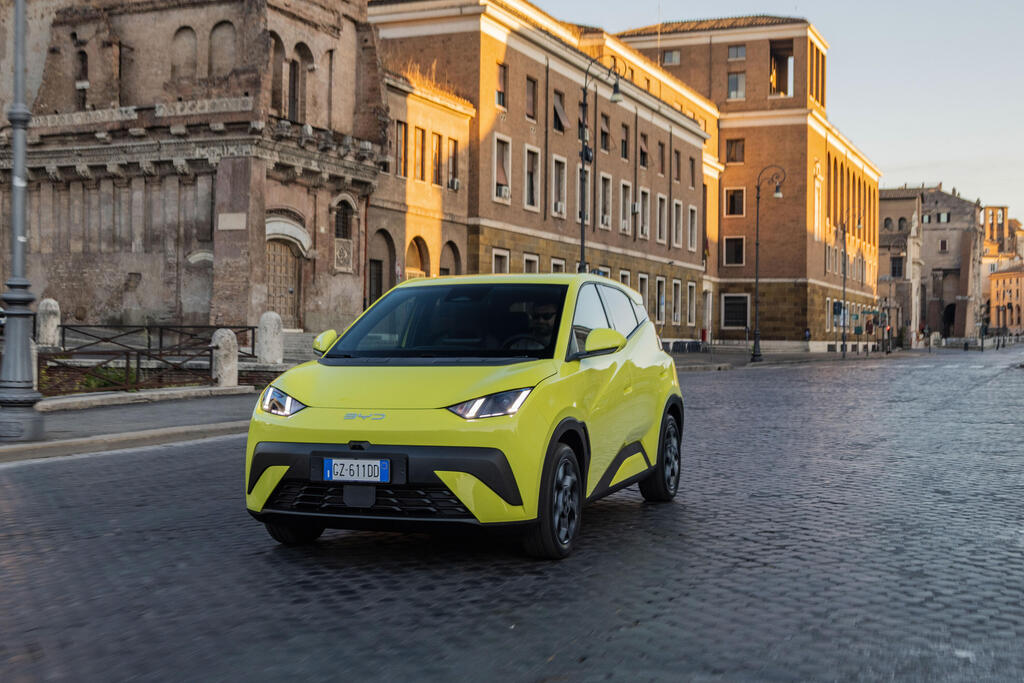
On the downside, its price tag is higher than those of its direct competitors — up to 25,000 shekels more than the Leapmotor T03. Additionally, many potential buyers live in large urban centers without access to private charging stations.
The key question is whether the Surf will serve as a springboard for young buyers, who may later graduate to more expensive BYD models as they age and start families — echoing a longstanding European marketing strategy. And can BYD now afford to charge a premium, leveraging the Atto 3’s runaway success? The answer to both appears to be yes. The Surf is likely to achieve well-earned market success.
Specifications:
- Powertrain: Electric
- Battery capacity: 43.2 kWh
- Power/torque: 156 hp / 22.4 kg·m
- Drivetrain: Front-wheel drive
- Length: 399 cm
- Width: 172 cm
- Height: 159 cm
- Wheelbase: 250 cm
- Curb weight: 1,465 kg
- Trunk volume: 308 liters
- 0–100 km/h: 9.1 seconds
- Top speed: 150 km/h
- Airbags: 6
- Euro NCAP safety rating: Not yet tested
- Test vehicle price: ₪124,000
The writer was a guest of BYD.