

At the start of the year, reality star Stav Katzin adopted modesty. Katzin, whose appearances on Big Brother were often provocative, said at a dough offering ceremony she organized that she felt empty.
“A few weeks ago, I got a sign from heaven. I dreamed that God showed me the shame of dressing immodestly. I woke up with tears in my eyes and one clear feeling – I couldn’t go on like that,” she said through tears. “I packed up my immodest clothes in a bag, and with God’s help, I will not wear them again. Without making a vow, I will renew myself with modest clothing out of true love for the Creator.”

Weeks later, she shared with her followers a prophecy that has come to pass: “Did you see what happened after I took on modesty? The hostages are returning!”
Katzin is one example of celebrities – like singer Odeya Azoulay, or actor Shahar Tavoch – who are moving toward what might be called a “modest, religious look.” Since Oct. 7, the fashion scene has been filled with calls for modesty, part of a broader turn toward religion in Israeli society. Just as religious pop musicians like Hanan Ben Ari and Ishay Ribo have become mainstream, and many restaurants have added kosher certification, “modesty” has become a kind of cultural currency for social media influencers and celebrities, reflecting the growing religious mood in Israel.
Before Katzin, model Eden Fines announced in 2021 that once a week she would dress more modestly “as a way to grow spiritually.” On other days, she continued posting provocative photos and opened an OnlyFans account. Another celebrity, model Nataly Dadon, began dressing modestly one day a week in 2022 and later expanded it to two. On a women’s tour she led in Brooklyn, she swapped her bikini for long skirts, long-sleeved shirts and, surprisingly, a wig – despite not being married and therefore not traditionally required to cover her hair.

Odeya Azoulay
(Photo: Eran Levi)
“Today, a wig isn’t only a symbol of belonging, it’s a fashion item and even an empowerment item,” Dadon told Ynet. “Personally, I chose to pair it with moments of modesty. Twice a week, I dress modestly, not out of obligation but from inner connection. I love the nobility and calm in it. Where in the past I mostly revealed, today I find new beauty in simplicity and grace. Modesty isn’t a set of clothes but a state of mind.”
From dough offerings to TikTok virality
In the second week of the war, social media filled with clips of teenage girls cutting up shorts they called immodest, believing that doing so would help bring home the hostages and soldiers. In one video, a voice encouraged them: “Well done to all the girls of Israel who have taken on modesty for the sake of the Jewish people. This makes great noise in heaven.”
Teenage girls cutting up 'immodest' shorts
For Sivan Ruham Moshe, who owns a modest fashion boutique in Ramla, Oct. 7 was a turning point. She began producing modest fashion videos that quickly went viral on TikTok. In one clip, a black-clad “thief” snatches shopping bags from a customer outside her store, and Moshe goes through the clothes with her, ultimately gifting them back. Other videos show her climbing a literal “ladder of modesty,” where each small step – closing a trench coat, dressing modestly once a week – counts as progress.
Moshe, 38, grew up in a family that observed some religious customs but became religious 17 years ago. “I wasn’t modest before,” she said. “After the war began, so many women were returning to religion. Every other girl on TikTok was throwing away or burning immodest clothes. I made it my project – anyone who takes on modesty gets a free dress from my boutique. Thank God, I gave away many dresses.”

Sivan Ruham Moshe
(Photo: Orel Cohen)
Her success drew thousands of new followers. “I always did well on Instagram, but since the TikTok videos, so many new girls started following me. I believe in humor and an open mind.”
When asked whether she is targeting baalot tshuva (newly observant) or secular women, Moshe said: “Every Jewish woman. Many secular women follow me and want to dress modestly. My clothes aren’t Bnei Brak, they’re modest with style. Girls come in wearing jeans and leave in a modest dress.”
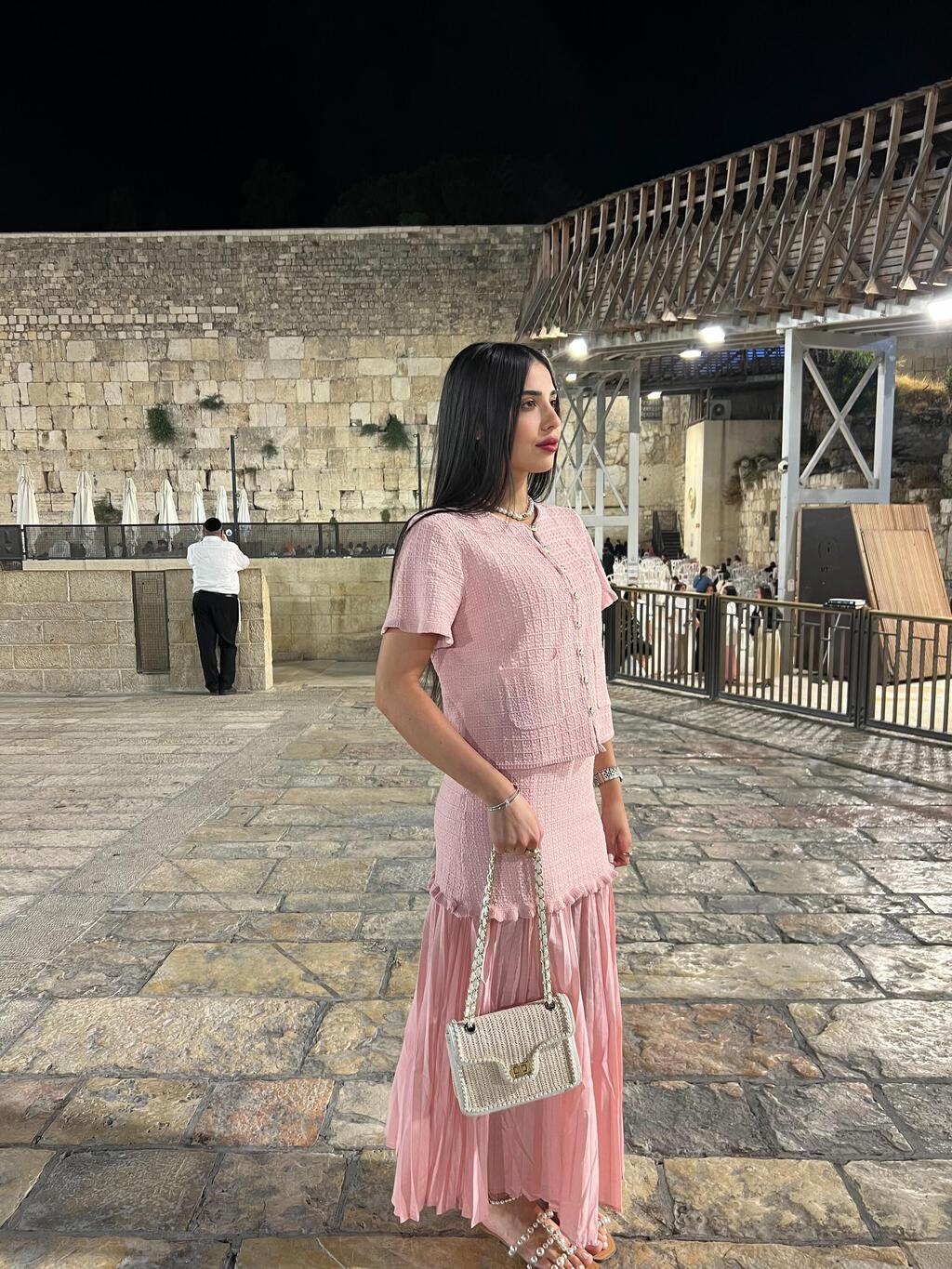
Priel Ben Zion
(Photo: Courtesy)
Other boutique owners, like Priel Ben Zion in Holon, use the same formula: selling clothes while also “bringing people closer” to religion. Ben Zion, who became religious at 19, opened her shop after failing to find clothing that matched her new lifestyle. “Everything I saw was either too secular or too ultra-Orthodox,” she said. “I wanted people to say not ‘she dresses like a religious woman,’ but ‘she dresses well.’”
A global trend with a local twist
Modest fashion is a global category, driven in part by Muslim influencers and luxury brands creating collections for Ramadan. In Israel, Jewish and Muslim women sometimes shop at the same modest boutiques. The upcoming Tel Aviv Fashion Week will feature, for the first time, ultra-Orthodox and religious designers presenting modest fashion collections.

Dr. Rachel Getz Salomon
(Photo: Courtesy)
Still, modesty is not only about clothing but about control, argued Dr. Rachel Getz Salomon, head of the fashion design department at the University of Haifa. “In every war, modesty was recruited: every extra centimeter on a skirt meant another soldier would come home,” she said. “Fashion and modesty are almost oxymoronic. Religion despises fashion but also feeds on it.”
Salomon recalled seeing photos of her grandmother – the wife of a chief rabbi – wearing a mini dress with no head covering. “In recent decades, Israel has undergone a terrible radicalization,” she said. “The focus on modesty turns women’s bodies into a battleground.”
Yet within the strict boundaries, she sees an act of resistance: “Women check off the modesty box but still dress tight and shiny. They do what they want, while appearing to conform.”
Between parody and reverence
The modesty trend has also inspired parody. On the sketch show Mi Zot (Who Is She?) on public broadcaster Kan, actress Magi Azarzar plays “Alata,” a headscarf-wearing ultra-Orthodox influencer who mixes foul language with piety. Online creator Maor Maya produces parody videos under the character “Tut HaTzniut” (Berry of Modesty), which have even reached religious audiences.
“My mission is to bring queer representation to places it usually doesn’t go,” Maya said. “The women who make the original modesty videos are already a little parodic – they’re great performers with humor. My character adds a queer twist, but with respect.”
For Maya, the phenomenon shows how deeply Israeli society values tradition: “There’s something beautiful in modesty, but it should come from choice, not coercion. In the end, Israel has a lot of respect for modesty, religion and tradition – and so do I. The important thing is that it comes from authenticity.”