

At a time when much of the international entertainment industry has kept Israel at a safe distance since October 7, Boy George stands out. The British pop icon has never been particularly interested in following the crowd, especially when that crowd grows loud and insistent. Four decades after becoming one of the most recognizable faces in music, he is once again refusing to conform.
George has spoken publicly in support of Israel and the Jewish people, clashed with figures in the music industry, lost friendships, parted ways with his record label manager and faced criticism over a song commemorating the victims of the Nova music festival massacre. He has also seen a London theater role disappear and become embroiled in a dispute with the American music platform Bandcamp. This is not a young singer navigating his first controversy. In the 1980s, Boy George was a cultural phenomenon whose clothes, makeup and public appearances could dominate conversations around the world long before social media existed.
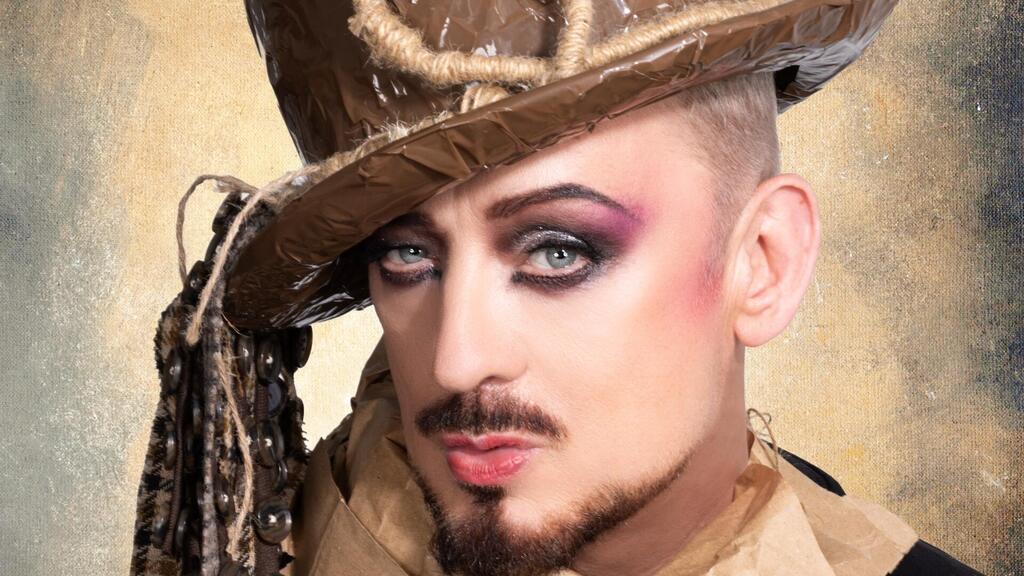
When social media filled with denial, distortion and misinformation surrounding the October 7 massacre, George did more than publish a message of solidarity. He wrote "We Will Dance Again," a tribute to those murdered at the Nova festival. When Israeli producers Guy Besser and Shai Mor Yosef of Live Nation Israel invited him to perform in the country, he did not hesitate. His first concert, scheduled for November 4 at Menora Mivtachim Arena in Tel Aviv, sold out. Organizers subsequently announced a second performance on November 7, titled "We Will Dance Again," dedicated to the victims of the Nova massacre. The event is also intended to support future awareness initiatives and organizations assisting survivors and preserving the victims' memory.
For George, the connection to Nova is deeply personal. "When I walked into the Nova exhibition in London, it was a real shock," he says. "This is my world. The tents, the shoes, the phones. I've been DJing at raves like that for many years, so I felt an enormous connection to that space." DJing is no secondary occupation for George. He has spent years performing at clubs and raves, immersed in a culture where people come together to dance until sunrise. At the Nova exhibition, he encountered the familiar objects of that world, transformed into evidence of a massacre.
"I spoke to survivors, met the parents of Jake Marlowe, who was murdered, and met May Hayat, who survived. I told her, 'I want to write a song.' I went home and started writing. When I finished and listened to it, I felt tears welling up. If something you've written can affect you that way, you know it can affect other people too." Not everyone responded positively. "Obviously, there were people who hated it. But many of my Jewish friends told me I had said something they couldn't say themselves. Sometimes, when you're a little outside something, you see it from a different angle."
George remembers waking up on October 7, 2023, to the images emerging from Israel. "The experience was very traumatic for me. Afterward, I was horrified by the reaction of people saying it hadn't happened. Visiting the Nova exhibition reinforced everything I was feeling. I walked along the wall and looked at all the people who had been murdered. All those beautiful people, so much joy on their faces." He pauses before considering what his upcoming visit might feel like. "I don't know how I'm going to feel when I arrive in Israel. I think it's going to be a very powerful experience."
‘If you're ever confused, I stand with the Jews’
George clearly understands the controversy surrounding his support for Israel, but he refuses to describe himself as a victim. Throughout the conversation, he repeatedly steers the discussion away from what he has lost and toward the choices he has made. When the subject turns to friendships that ended, he describes the experience almost as an exercise in clearing out a closet. Even his song about Nova avoids ambiguity. The artist who built much of his public identity around blurring boundaries between masculine and feminine, sacred and theatrical, chose unusually direct language.
"I felt that the word 'genocide' was being used again and again about Israel, and I didn't think it was the right word. So, as a songwriter, I also felt it was an important word to use in the song." The central message, he says, is contained in a single line: "If you're ever confused, I stand with the Jews." He adds: "That's the central line for me. In that sense, the song wasn't difficult to write. When you're heartbroken about something, the song tends to write itself."
His position creates an apparent contradiction with an earlier Culture Club song, "The War Song," released more than four decades ago, which condemned the stupidity of war. George insists that his fundamental beliefs have not changed. "My position on war remains exactly the same. War is terrible and stupid. No sane person supports war, whichever side they're on. But that's precisely the point I'm trying to make in the song: This is war, not genocide. Nobody is trying to destroy Palestine here. It's a response to what happened, and this is what war looks like. It's no different from Ukraine or anywhere else."
These are unmistakably political arguments, although George maintains that his support for Israel comes primarily from personal experience rather than ideology. "My support for Israel comes from a personal place. I don't really have a strong political position. In my experience, the only thing that truly changes anything is love." He also believes the hostility surrounding Israel is frequently exaggerated by social media. "I think it becomes political for people who feel a certain way. A lot of it happens online. It doesn't really happen in the real world. When you go out into the real world, people aren't hostile."
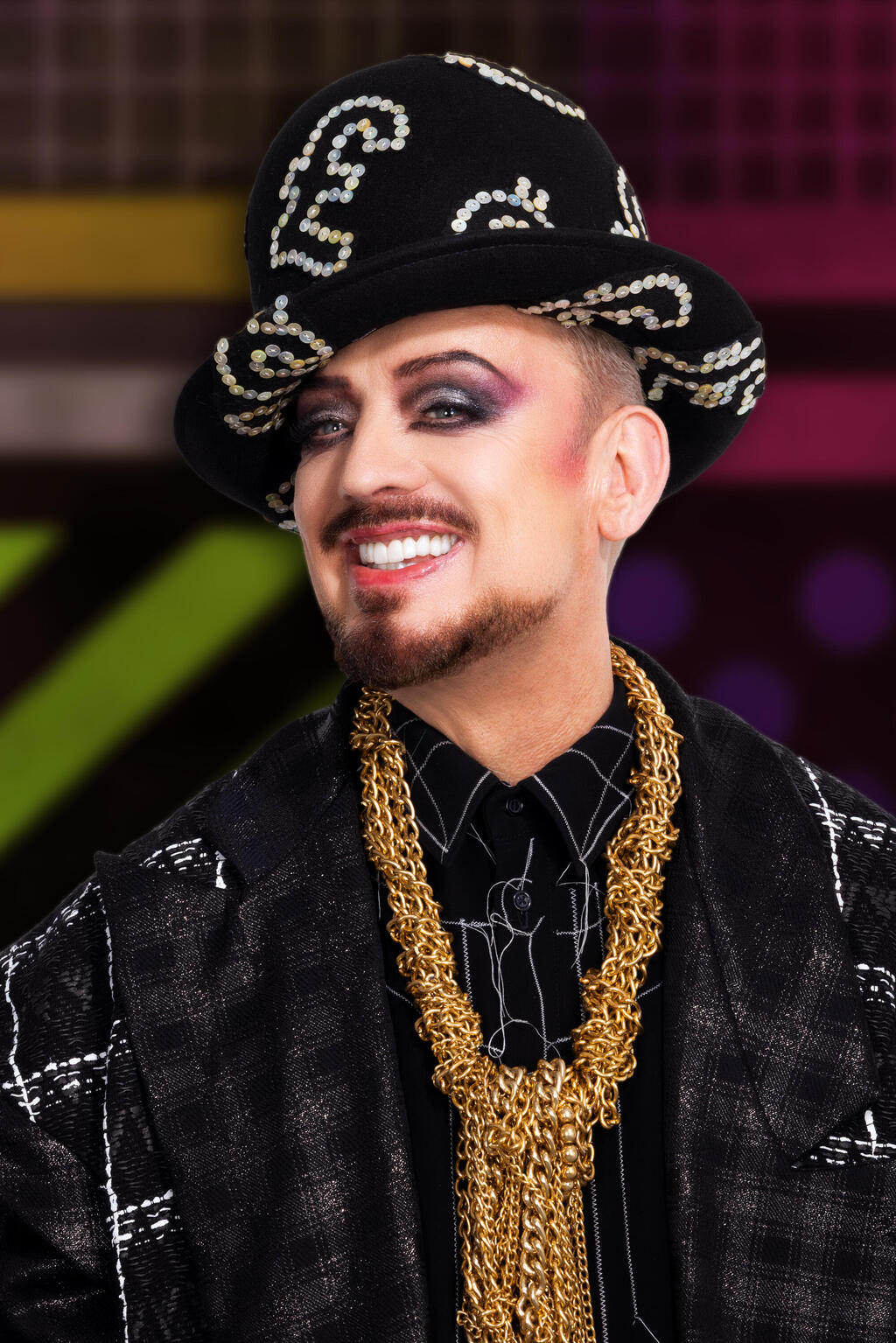
(Photo: Dean Stockings)
The experience of Israeli singer Noga Erez in Mexico offers a more troubling example. At one of her performances, protesters outside the venue threw red paint at fans trying to attend. George acknowledges that such incidents are unpleasant but insists artists cannot allow intimidation to determine their decisions. "You have to just keep doing what you're doing and take action. You have to be brave and not necessarily worry about what other people think. I know what I feel. I know who I am. And that's all I need to know."
A Jewish connection that began long before October 7
George's connection to Jews and Jewish culture predates the current war by decades. One of his earliest close Jewish friends was Philip Sallon, a colorful figure in London's legendary club scene. "He was my first close Jewish friend. Then I became very close to his family, and through him I met more Jewish people. If you're in rock 'n' roll and you don't know any Jewish people, you're probably living under a rock."
Another important figure was Jon Moss, Culture Club's drummer and George's longtime partner. Their relationship became a major emotional influence on the band's music while also creating tensions within the group. "Through Jon, I became more interested in Jewish culture. Even growing up, I was always fascinated by the way religious Jewish people looked. I was the same with the Hare Krishnas. I think that's very typical of an artist. You're attracted to things that catch your eye."
It is a characteristically Boy George explanation. His fascination with culture often begins with aesthetics, the clothes, colors and visual identities that attract an artist's attention. Israeli pop star Dana International also belongs to his history. When reminded that he once performed with her, he immediately corrects the description. "Well, she performed with me." The distinction is apparently important. "Actually, I contacted her to see whether she might want to come and do something when we arrive this time. We'll see. As far as I'm concerned, I'm an entertainer, and I'll go wherever people love me."
‘I threw Roger Waters' letter in the trash’
George's refusal to boycott Israel is not new. When Culture Club performed in Tel Aviv in 2017, he came under pressure from supporters of the boycott, divestment and sanctions movement. Among those who contacted him was former Pink Floyd member Roger Waters, one of the most prominent advocates of a cultural boycott of Israel. George remembers the episode with amusement. "I love Pink Floyd. It's an amusing situation because obviously I get attacked by Roger Waters, but David Gilmour is a lovely man and sends me positive messages."
His response to Waters' letter was considerably less diplomatic. "No. I just threw the letter in the trash." He remains adamant that nobody else gets to decide where he performs. "I'll go wherever I want." Nor does he regard the friendships that have ended over Israel as meaningful losses. "'Loss' is a strange word. If you lose people because of something you believe in, it's not really a loss. It's clearing out. Sometimes you go into your closet and get rid of old things. That's how I feel about some of my friends right now. They just don't suit me anymore. They've gone to Oxfam."
Oxfam, the international humanitarian organization, operates charity shops across Britain that sell donated clothing and other secondhand goods. Even when discussing broken friendships, George manages to return to fashion. Those who no longer belong in his life have not been thrown away in anger. They have simply been donated.
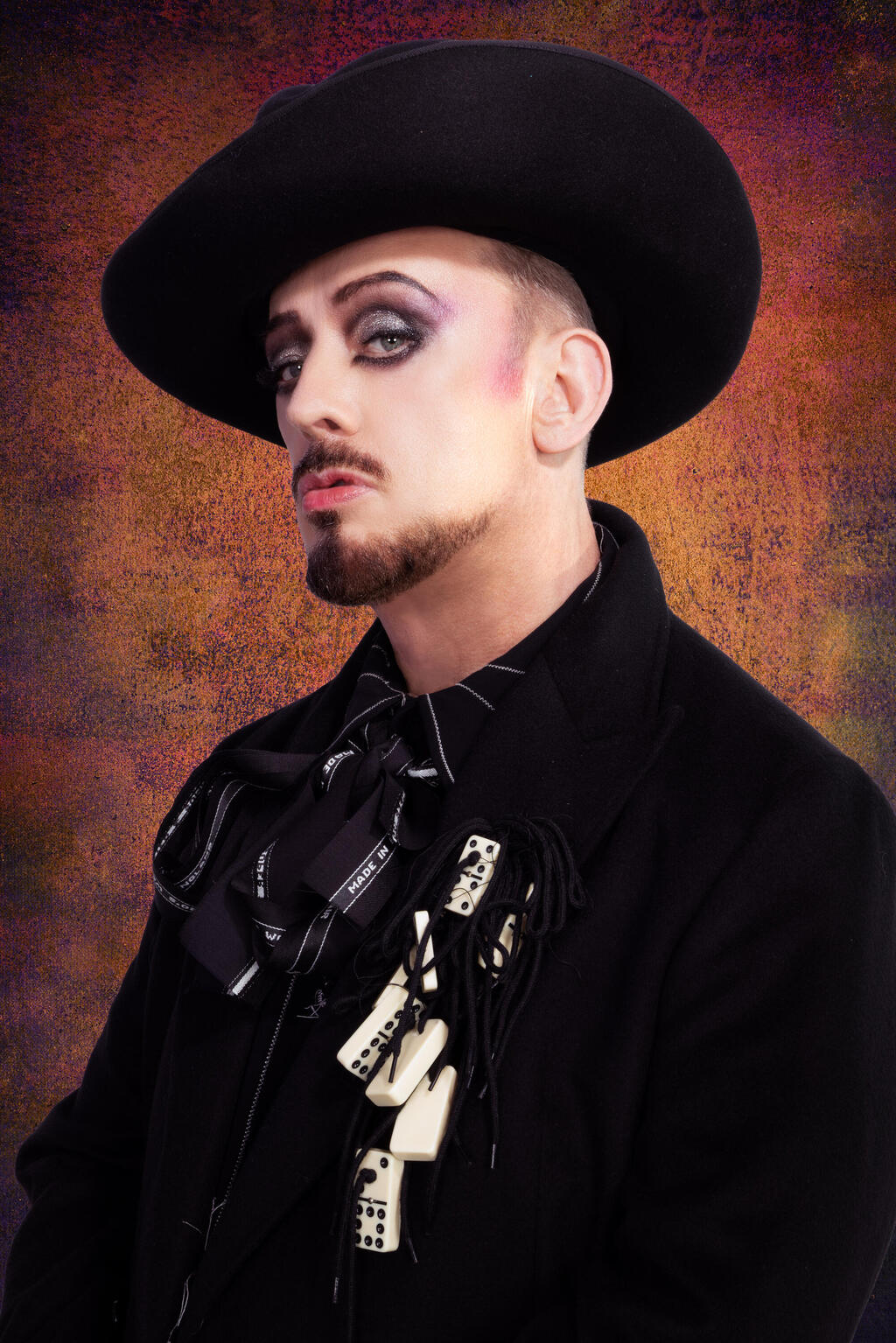
(Photo: Dean Stockings)
The conversation turns to Ed Sheeran and the controversy involving rapper Macklemore, who was removed from appearances during the U.S. leg of Sheeran's tour following pro-Palestinian statements. Despite the controversy, Sheeran's concerts continued. "People are still going to concerts, 50,000 people. Ed Sheeran is performing as usual, so life has to go on." For George, cancellations are often surrounded by uncertainty. "Look, when things get canceled, you're never really sure why, and nobody gives you a very good reason. But when one door closes, another opens. I don't feel like a victim. I feel quite confident about what I'm doing. I think I'm right. And if you know you're right, there's nothing anyone else can say."
That attitude shaped his response when Tony Pontius, who managed his record label, refused to release "We Will Dance Again." According to George, the separation was immediate. "No, it was quick. I said to him, 'I need you to release this song,' and he said, 'I want nothing to do with this song.' I said, 'We're done. Goodbye.' Click. I blocked him on my phone. I don't need a gatekeeper. That's not his job. It's my label. I release whatever I want. That's why I have my own label."
Around the same period came another professional disappointment. George had been scheduled to play King Herod in a London production of "Jesus Christ Superstar," but it was subsequently announced that he would not appear. He declines to explain the circumstances of his departure, citing a nondisclosure agreement. "I signed an NDA. I can't answer that question." He does, however, offer one detail. "I was paid well. That's all I care about."
George maintains that the episode was not painful, although its timing made an impression. "It was a few nights after I released the song, and it made me realize a little how serious this whole thing could be. But I know I'm not doing anything wrong." The man who advocates saying exactly what one thinks also knows when a legal agreement means keeping quiet.
Another controversy involved Bandcamp, the American platform that removed his AI-assisted song about Nova. Initially, George publicly criticized the company and suggested that anti-Israel pressure might have influenced its decision. He now acknowledges that his interpretation may have been mistaken. "I'm not sure I was right about that. There's a lot of AI on Bandcamp. I said it was AI, so I suppose they were obliged to take it down."
He does not claim to know definitively whether the decision was political or related to the platform's music policies. "Who knows? It's one of those strange things. As far as I was concerned, I wanted people to hear the song. Virtually overnight, I found somewhere else to upload it. I went to Payhip, and that's where it is now."
Despite the controversy, George does not intend to turn every concert into a political statement. At a performance in Canada, protesters demonstrated outside while some audience members wanted him to sing "We Will Dance Again." He chose not to. "It didn't fit that show. I didn't go onstage to deliver my political position on Israel. I went onstage and was Boy George, because I've already made my opinions clear. I don't need to repeat them onstage."
Israel, he admits, will be different. "Obviously, it would be naive to say it's just another show. It isn't. There's power in it and there's meaning. But for me, every show is powerful. Being onstage is something very sacred."
The boy who changed pop music
Long before Boy George became a controversial voice on Israel, he was a controversial presence in millions of British living rooms. At the beginning of the 1980s, his makeup, braided hair and flamboyant clothing challenged the expectations of a conservative society. His appearance alone could ignite debates around the family television. When the interviewer recalls growing up in Israel wearing a Boy George badge, the singer laughs and remembers another badge from the United States. "There was one that said 'Vote for Boy George.' Oh my God, disaster. Don't do that."
He is surprisingly reluctant to take credit for his influence on popular culture. "I'm the one who's changed. I don't know whether I changed anything at all." Yet his experience as a young gay man in Britain was radically different from that of many performers who followed. "There's a new generation of people who are daring or outrageous in similar ways, but they didn't go through what we went through. Growing up in southeast London with the National Front and racism, and being a young gay man in the 1970s, was something else. We encountered hostility everywhere we went. Especially if you were a gay person who wasn't hiding your sexuality, and I never really hid mine."
Born George Alan O'Dowd in June 1961 to a large Irish Catholic family, he grew up in a multicultural part of London, surrounded by Jamaican, Indian, Pakistani and Jewish communities. He soon discovered that clothes could function as both armor and a means of expression. By the late 1970s, he was immersed in London's club scene, drawn to everything glittering, provocative or unwilling to seek permission. In 1981, he joined forces with Roy Hay, Mikey Craig and Jon Moss, and Culture Club was born.
"There was a feeling that we'd changed things," George says. "But now we're going backward again, so I don't know what we actually changed. Life is very cyclical. The kind of politicians who are emerging now, the feeling in the world, it all feels very 1970s to me. That doesn't mean we can't celebrate the changes that did happen, but I feel we're taking big steps backward right now."
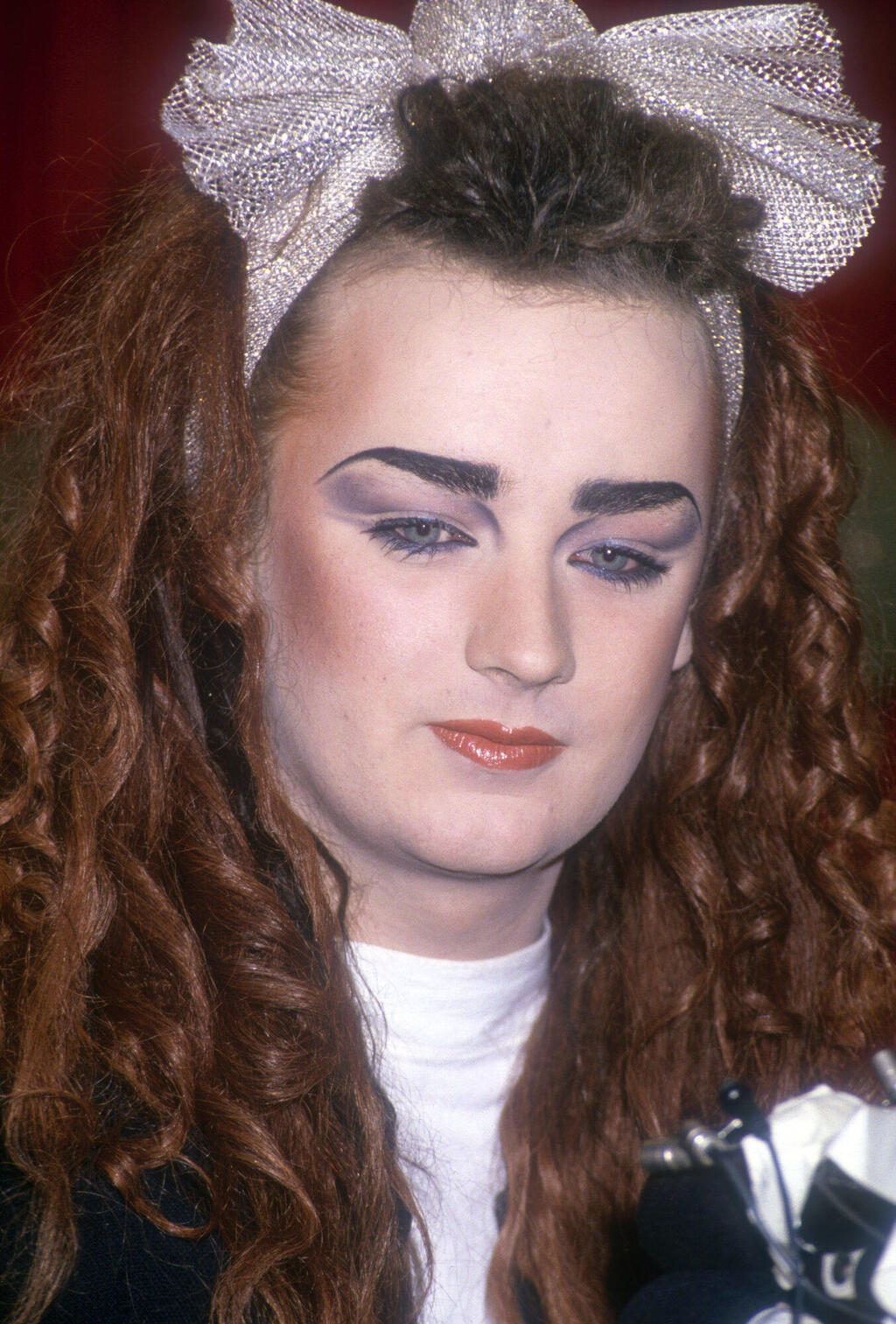
Boy George in the 80s
(Photo: Peter Carrette Archive/Getty Images)
The band's breakthrough came in 1982 with "Do You Really Want to Hurt Me." A year later, "Karma Chameleon" transformed Culture Club into a global pop phenomenon. In 1984, the group won the Grammy Award for best new artist. George thanked America with a remark about its ability to recognize a good drag queen, a line that became part of his public legend. Today, when gender boundaries in popular music have become far more fluid, it is difficult to appreciate just how provocative such a statement sounded on prime-time television four decades ago.
Ironically, the band's biggest hit was initially rejected by almost everyone around George. "Nobody around me or in the band liked 'Karma Chameleon,'" he recalls. "Roy lived in a tiny apartment. I brought the song over and sang it in the kitchen. Everyone laughed at me and said, 'That's terrible. It's about the worst thing you've ever done.' And I said, 'This song is going to be No. 1.' I was completely convinced it would be a hit all over the world."
He was right. "Karma Chameleon" spent weeks at the top of the British charts and became one of the defining songs of the 1980s. "But even today, Roy Hay still says it was the worst thing we ever did." The song's emotional roots lay in George's complicated relationship with drummer Jon Moss. "The drummer was my boyfriend. He was the Karma Chameleon. He was quite indecisive about his sexuality. One minute he was gay, and the next he was straight. If you keep changing your colors, karma will catch up with you."
Their relationship remained largely hidden from the public during the band's most successful years, even as it inspired some of the music. Behind Culture Club's colorful public image lay considerable emotional tension.
The day Bob Geldof sent him across the Atlantic
At the height of his fame, George was among the biggest names in British music. His stature was evident in November 1984, when Bob Geldof assembled an extraordinary collection of stars to record "Do They Know It's Christmas?" for famine relief in Ethiopia. On November 25, Bono, Sting, Simon Le Bon, Paul Young, Phil Collins and other leading performers gathered in a London studio.
George, however, was in New York. Geldof woke him with a telephone call and arranged for him to fly urgently to London. He arrived in time to record his part in the song. George remembers the atmosphere as remarkably restrained. "Everyone behaved nicely. There was no ego. In the American version, 'We Are the World,' there was a lot of drama, a lot of sushi. But the London version was very restrained. You arrived, they gave you your line, you sang it. There were no arguments."
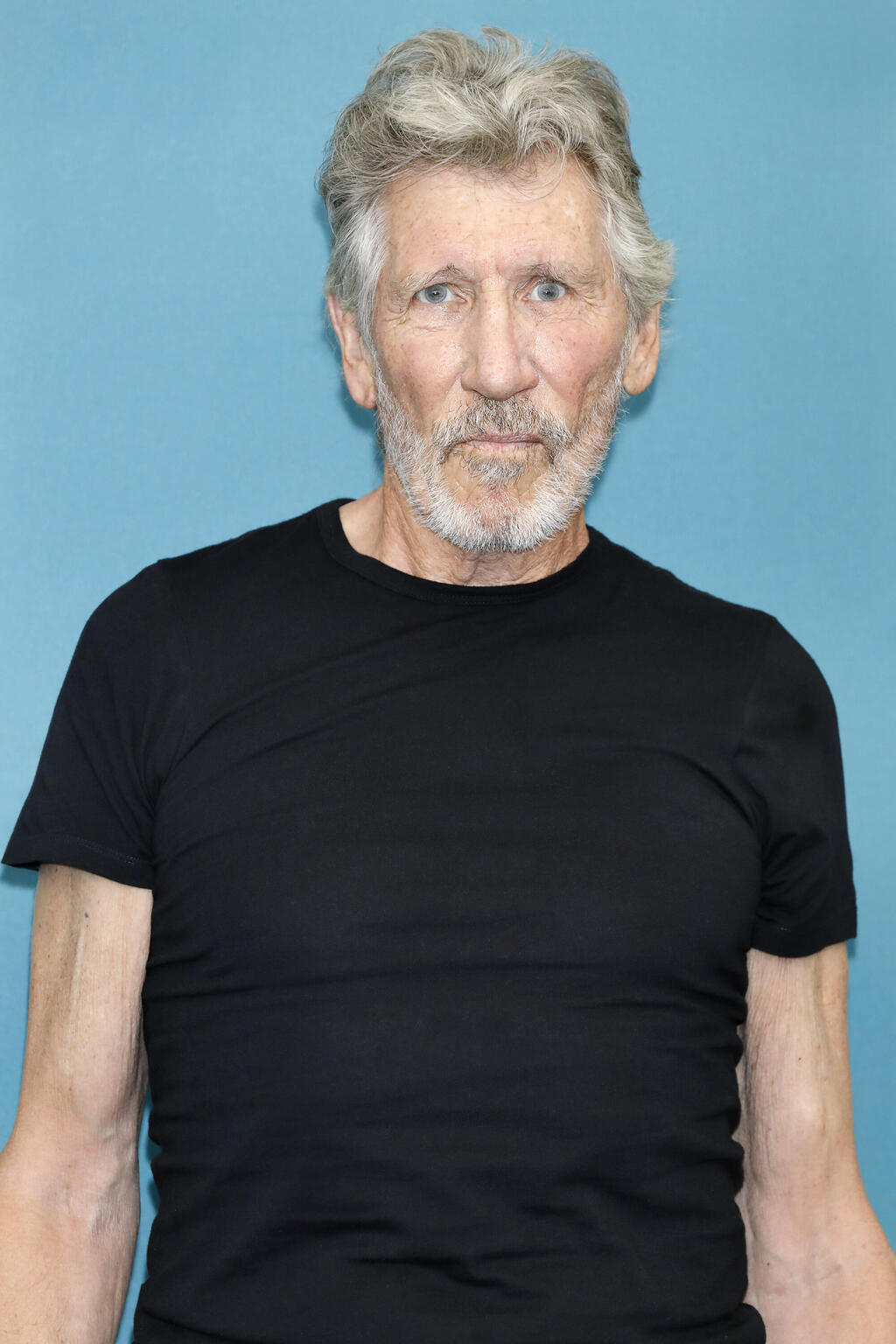
Roger Water
(Photo: Kurt Krieger/Corbis/Getty Images)
David Bowie was among the famous names absent from the recording. George suspects Bowie simply did not find the project appealing. "I think Bowie just didn't want to do it. I don't think he thought it was cool." That is George's interpretation, not an established explanation for Bowie's absence. It is especially amusing coming from an artist for whom Bowie was a major influence. George does not rank either charity single among his personal favorites. "I wouldn't look at either of them and say it was one of my favorite songs. They had a purpose."
Fame, addiction and the long road back
During the mid-1980s, Boy George was one of the most recognizable entertainers in the world. From the outside, fame appeared glamorous and effortless. Behind the scenes, the pressures were mounting. His relationship with Moss was turbulent, tensions within the band grew, and George descended into drug addiction, initially involving cocaine and later heroin. Culture Club broke up in 1986.
George survived, but his subsequent career was anything but straightforward. Over the following decades, he worked in electronic music, DJing, fashion, photography, writing and theater. "Taboo," the musical inspired partly by the London club scene from which he emerged, traveled from the West End to Broadway. He later became a television personality, serving as a coach on "The Voice" in Britain and Australia. Culture Club reunited more than once, and the band's songs found new audiences, including listeners who had not been born when George was trying to convince Roy Hay that "Karma Chameleon" would become a hit.
But George's personal struggles also produced damaging headlines. By the mid-1980s, his heroin addiction had become public knowledge. Years later, another period of drug use brought further legal trouble. In 2005, George called police to his New York apartment and reported a burglary that had not taken place. Officers found cocaine. The drug charge was eventually dropped, and he pleaded guilty to falsely reporting an incident. He was fined, ordered to undergo treatment and sentenced to community service.
Photographs of the flamboyant pop star wearing an orange vest while cleaning Manhattan streets, surrounded by photographers, became an enduring symbol of his fall from grace. The imagery was brutal. A man who had once conquered the streets through music and fashion was now cleaning them in front of the cameras.
A more serious legal episode followed in Britain. In December 2008, George was convicted of falsely imprisoning Audun Carlsen, whom he had handcuffed in his apartment during an incident the previous year, amid heavy drug use and paranoia. In January 2009, he was sentenced to 15 months in prison. He was released after serving part of the sentence.
In a 2011 interview with The Guardian, George attributed the destructive incidents of that period to his addiction. A year earlier, he had told the newspaper that he became sober on March 2, 2008, before entering prison. Since his release in 2009, no comparable criminal episode has been added to his public record. That does not erase the past, but it places his recovery and subsequent years of work in a broader perspective.
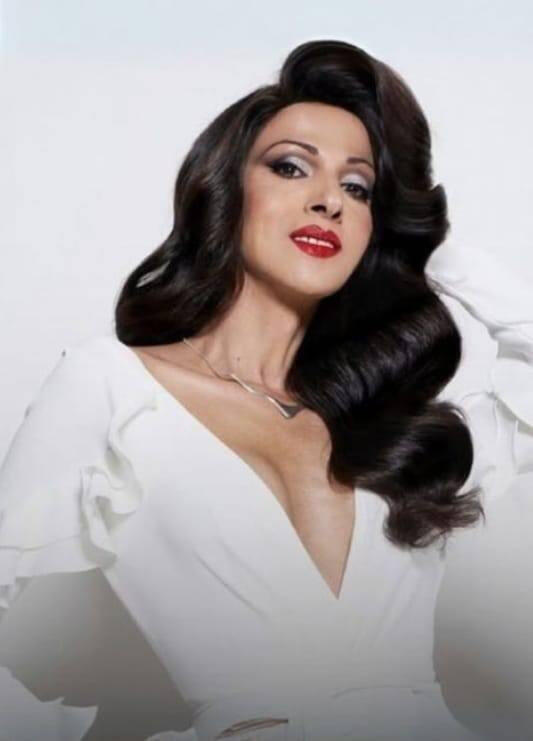
Dana International
(Photo: Ron Kadmi)
George has remained active, making music, performing and refusing to disappear into the nostalgia industry. Many stars of the 1980s survive primarily as memories attached to old records and childhood posters. George has managed to remain both the icon and the man capable of standing outside that image and laughing at it.
Looking back, he says his greatest source of pride is not any particular hit or professional achievement, but his ability to reconnect with himself. "People always ask you to talk about the worst thing that happened to you, and I say, 'There are too many.' But I think what I'm most proud of is that I've managed to stay true to who I am. I've become the person I always was. Fame can make you crazy and distract you from who you are and what your purpose is. There were times when I drifted far away from myself. Today I'm more like my 17-year-old self. And I like myself more now than I did before."
Imagining an encounter with his younger self, he laughs at one obvious difference. "One of the funny things is that, of course, I've got a beard now. My younger self would never have imagined me with a beard." Beyond the beard, however, he believes the younger George would recognize the person he has become. "I think if I met my younger self, we'd recognize each other very well. I've been through a lot in my life, but if I looked at my younger self in the mirror, I could say to him, 'You haven't changed. You're still who you are.'"
As the conversation draws to a close, his thoughts turn to his mother, Dinah, who died in 2023. His voice softens. "I'm my mother's son. May she rest in peace. She raised me to be the person I am. I am who I am because of her. Mothers are the superheroes of the universe. And I'm so much like my mother."