

“Run, Forrest, run!” Jenny (Robin Wright) shouted to Forrest (Tom Hanks), urging him to escape the bullies. And he ran, while the car speeding after him could not catch up. Today, that scene is known as the subject of countless parodies mocking the kitsch and heroism of “Forrest Gump.” But in a movie theater in 1994, you could practically feel the audience rising from the edge of its seat, wanting to cheer for Forrest along with Jenny. In a less cynical United States, it probably actually happened. Tom Hanks is someone people cheer for.
Provocateur filmmaker Michael Moore wondered in one of the articles from the end of the previous decade, examining how to beat Trump, why Democrats were not putting forward someone for the White House who could actually win. He said he had long argued that Oprah Winfrey should run, or better yet, Tom Hanks, adding that he had twice asked Hanks to run for president and been turned down. Moore’s point was simple: Everyone likes Tom Hanks. Don’t worry, this is not a political article — because Moore’s words show he also understands that Hanks is a facade. The iconic actor has never really been political. He has donated generously to the Democratic Party, narrated an Obama campaign film and stood behind Biden and Clinton — but he has always done so pleasantly and without angering anyone, certainly without expressing a controversial opinion. He is simply loved.
And this beloved actor turns 70 today. As usual on a milestone birthday, the initial reaction is “Already?” along with a reckoning over how much we ourselves have aged since that 1990s trifecta: “Forrest Gump,” “Apollo 13” and “Saving Private Ryan.” But with Hanks, the reaction is the opposite: “Only now?” Hanks is such an icon, an ambassador of innocent America, that it feels as though he has been 70 for 15 years. In good shape, it should be said.
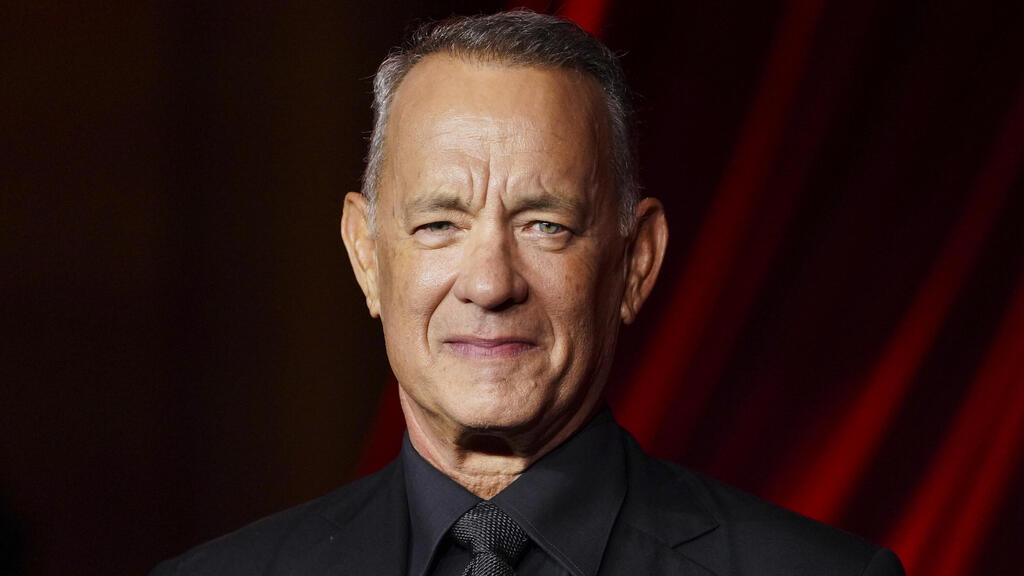
Hollywood’s star map is divided into two categories: icons and chameleons. The former largely play “themselves” and provide viewers with a figure to identify with. Harrison Ford, Clint Eastwood, Julia Roberts, John Wayne, Jimmy Stewart and Jack Nicholson. Their forte is not range, but the audience’s desire to meet precisely them in every film. George Clooney remains Clooney in every role. The “chameleons,” by contrast, disappear into the character — playing with equal ease a muscular neo-Nazi or a soft-spoken writer: Edward Norton, Robert De Niro, Mark Ruffalo and Philip Seymour Hoffman. Hanks was supposed to belong to the second group, but somehow upgraded into the first.
Hanks is an icon, and that was not inevitable. With his nerdy, slightly rumpled look, pale skin and tousled hair, never appearing threatening, sexy or glamorous, he was not supposed to become the symbol of an entire nation, the kind of person some would like to see in the White House. He became a huge star precisely because of that — because he is the everyman. The ordinary man. He is you. He is us. And yet, given all that, there is still a question that must be asked: Is he also a good actor?
The format? An ordinary man in an extraordinary situation
Hanks was born in California in 1956, a classic baby boomer: the son of middle-class parents, moderately devout Christians who lived in the suburbs and divorced when he was young. By the age of 10, he had moved between 10 homes, in various combinations of brothers and sisters. His father was a cook, his mother worked in hospitals, and he bridged the gap between a boring reality and a personality he has described as “extroverted” and “colorful” in childhood — hard as it is to imagine Hanks that way — through a love of local theater and going to the movies.
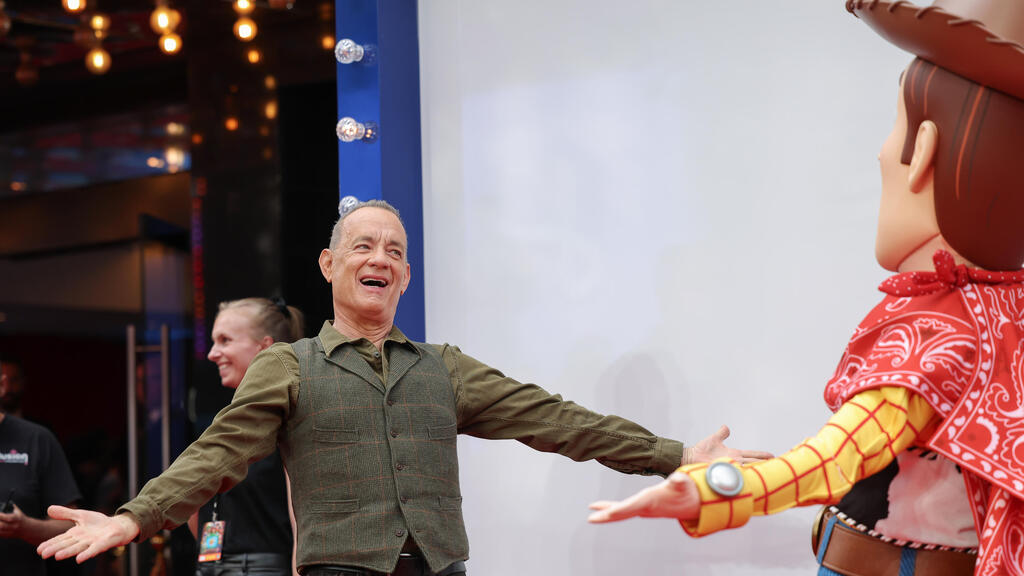
Hanks greets a friend at the premiere of 'Toy Story 5'
(Photo: AP Photo/Millie Turner)
He did not come from an artistic family, did not dream of Hollywood and did not throw himself into auditions, which explains why it took him time to break through. Unlike Leonardo DiCaprio or Tom Cruise, we never got Hanks as a teen star or as a horny college student. Tom is the guy we knew from the office. Literally: In an alternate universe in which Hanks is 20 years younger, it is easy to imagine his debut role on “The Office,” alongside actors with similar temperaments such as John Krasinski, Ed Helms or Jason Bateman of “Arrested Development.”
But Hanks broke through in the 1980s, in movies, and in a big way, something that in retrospect looks almost like a coincidence. After moving to New York in 1979 in search of an acting career, after theater performances that left no mark, horror schlock and sitcoms, he stumbled onto a gold mine. He met the writers — and then director Ron Howard — who were working on the romantic comedy “Splash.” He was intended for a supporting role, but Howard, who understood comic timing from his days as a child actor on “Happy Days,” was captivated by him and cast him in the lead. The Hanks of the 1980s is different from the Hanks of the 1990s and beyond, but in “Splash” you can find the identity card of his films: the ordinary man in an extraordinary situation. The young man who falls in love with a mermaid (Daryl Hannah), the teacher sent to storm the beaches of Normandy, or the corporate man in a boring sweater whose plane crashes in the middle of the ocean.

Hanks with Daryl Hannah, from 'Splash'
(Photo: Courtesy of yes)
“Splash” was a huge hit in 1984, and the offers poured in. In a decade defined by predatory capitalism and Wall Street, and, on the other hand, by a longing for old America under Reagan and Spielberg’s films, Hanks tilted the pendulum in the other direction. He never played a threatening or killer character. He wants to fall in love, get rich and get by, but without stepping on anyone. He did it all with charm and a spirit of silliness, but also with a softness that made clear his characters carried a measure of loneliness. Among his films in the 1980s were “The Money Pit,” the terrific “Punchline” opposite Sally Field, in which he played a beginning stand-up comic who was not very funny but did inspire confidence, and, of course, the cult cop-and-dog film “Turner & Hooch.” They are all very 1980s movies built on a simple concept: Hanks is paired with a partner — a woman, a man or a dog — and all of them have something old-fashioned about them. But Hanks is fairly charming in them and does not become annoying within his particular persona.
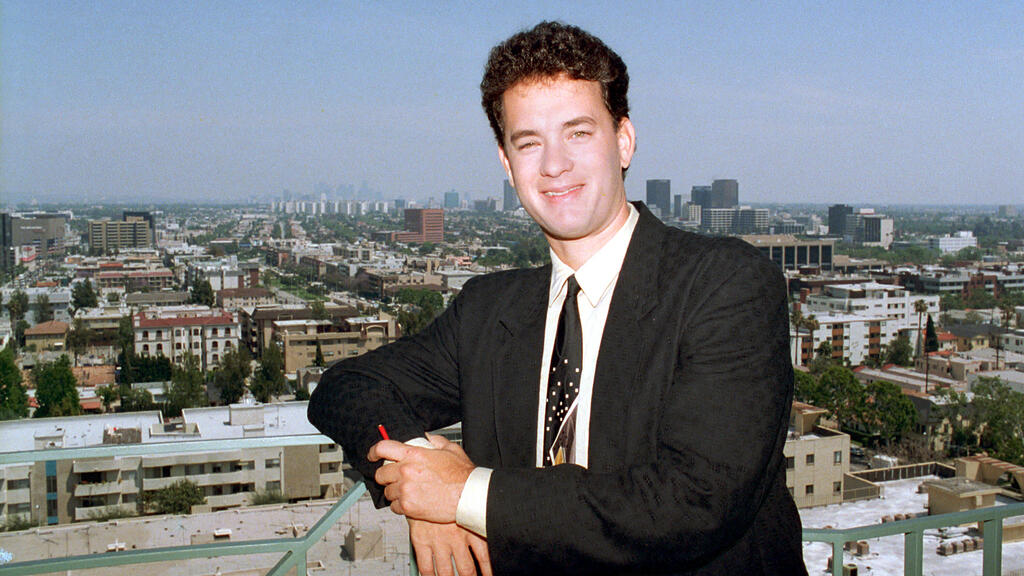
Hanks in 1988, facing the city he was about to conquer
(Photo: LENNOX MCLENDON/AP)
His greatest film of the 1980s was “Big,” with its wonderful piano scene, which brought him his first Oscar nomination. The film revealed why it is so easy to identify with him: Literally, he is a child in a man’s body. A little like Spielberg, whose sister Anne Spielberg co-wrote the brilliant screenplay for “Big,” Hanks connected to the Peter Pan complex that fascinated Americans in the 1980s. The world was abundant and falling at their feet, but they felt like children who had never grown up. In retrospect, the film included disturbing elements within that fantasy — for example, in a scene, which would not pass today, in which Hanks’ child-in-a-man’s-body sleeps with an adult woman who is attracted to him, and he looks terrified. That moment reflects why it is hard to imagine Tom Hanks in sex scenes, even in his romantic comedies, such as “Sleepless in Seattle.” He is such a dad, even when he was not yet a dad.
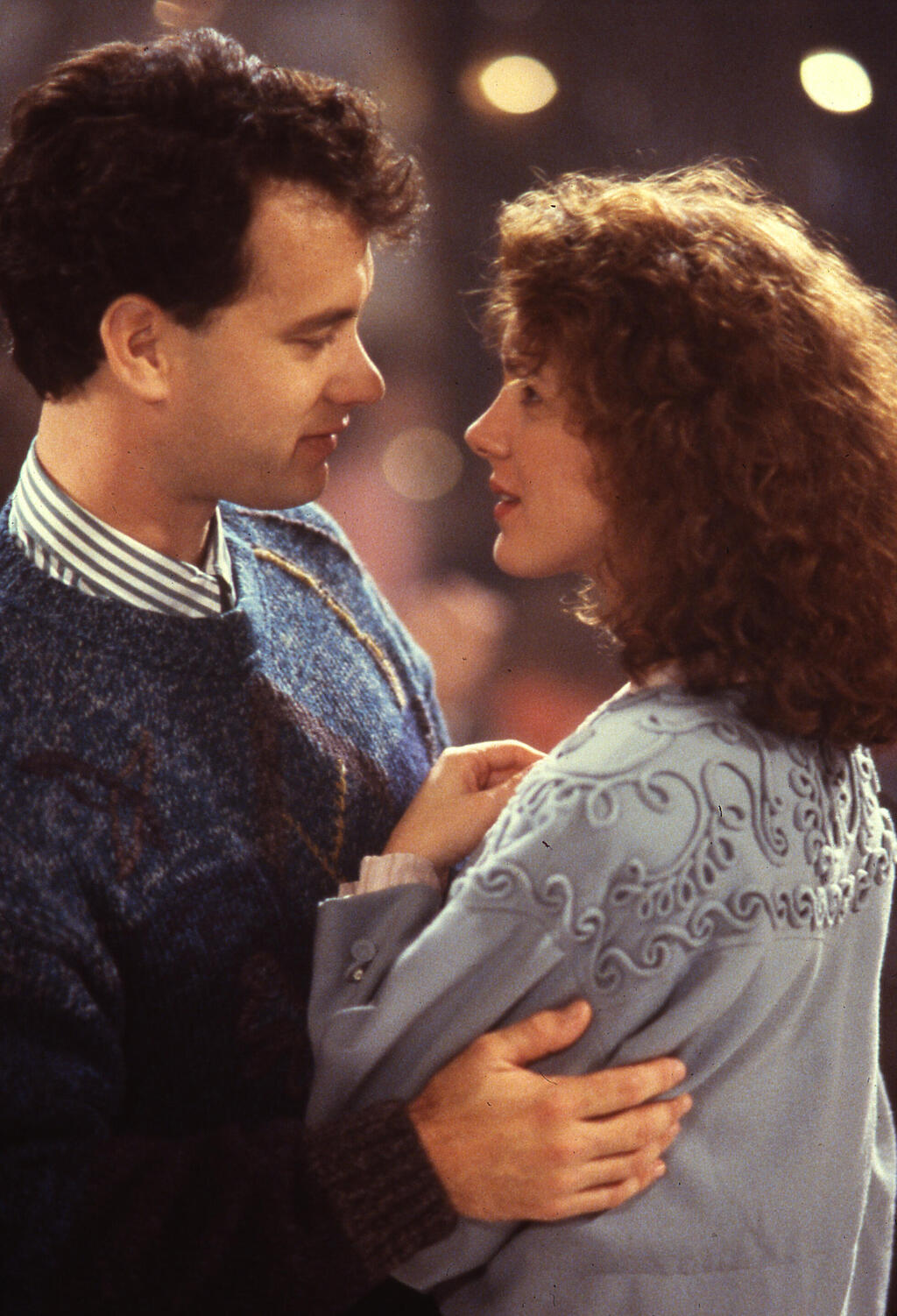
From 'Big'
(Photo: Courtesy of yes)
An American icon
With the transition to the 1990s came the first major flop of his career — Brian De Palma’s “The Bonfire of the Vanities,” based on Tom Wolfe’s book. Hanks’ attempt to play a corrupt Wall Street man who accidentally kills someone was a miscasting visible from a mile away. Leave those characters to Michael Douglas.
Then came the pivot of the 1990s, and Hanks the superstar was born. After a successful opening with “Joe Versus the Volcano,” his first comedy opposite Meg Ryan and the last film in which he let “silly Tom Hanks” shine, and a terrific supporting role in “A League of Their Own,” in which Hanks coached a women’s baseball team that included Madonna and proved he is excellent at playing “the guide,” came the double set of performances that brought him two Oscars in a row, year after year — an achievement no actor had matched since the 1930s and none has matched since.
The first was “Philadelphia,” the courtroom drama in which he played a gay lawyer dying of AIDS who sues the firm that fired him. Although the film already had something self-righteous about it at the time, it is historic: the first major Hollywood film about AIDS to deal directly with homophobia. It was clear that its success would not have been possible without Hanks, who could play the gay man least “threatening” to straight audiences of the period. There is not a trace of homoeroticism in the relationship between him and his partner (Antonio Banderas) — only Hanks at the center as that everyman pursuing justice, in a way that shouts to conservative viewers: “Look! They’re just like us!”
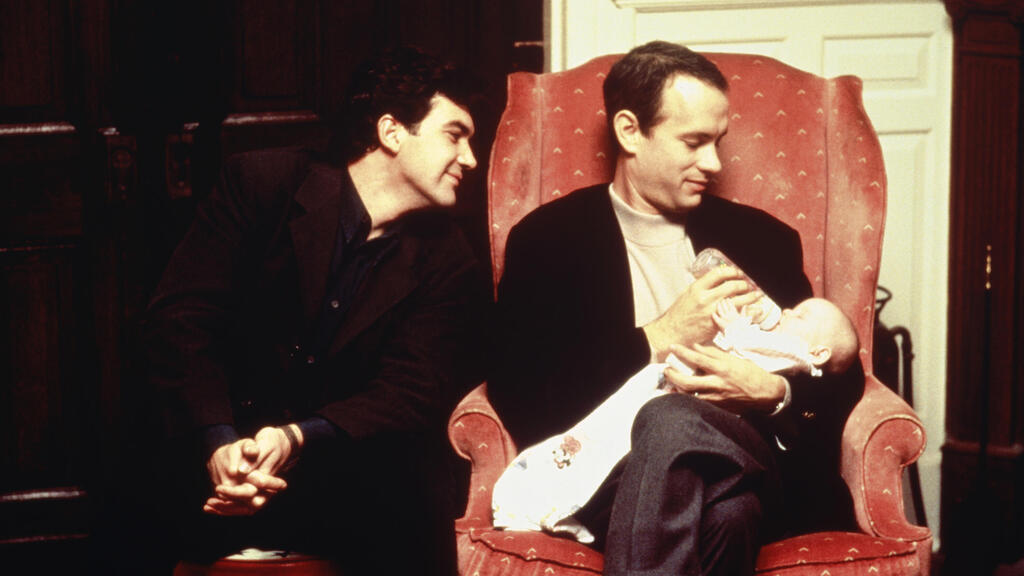
Hanks and Antonio Banderas, from 'Philadelphia'
(Photo: Courtesy of yes)
It was justified under the circumstances, but today it feels mild and hypocritical. Hanks cemented that feeling in his 1994 Oscar speech, when he took the stage and thanked his high school drama teacher, adding dramatically that he was gay, to applause. The outing was consensual, but there was something patronizing about the moment: Only a straight man can play and convey this experience, and at most he will thank the LGBTQ people who served as inspiration. That would not pass today either.
Then came “Forrest Gump,” a film about which everything has already been said, and in which Hanks embodied all the dreams America had assigned to itself: the underestimated underdog who is also the best person in the world and who, in his incidental way, changes history. The film, directed by Robert Zemeckis, was the year’s big hit, won six Oscars — including for Hanks, the director and the screenplay — and, in short, became one of the most beloved films of the 1990s, perhaps ever. It is also one of the most hated, and the voices of its opponents have only grown louder since. Its head-to-head Oscar battle against Quentin Tarantino’s “Pulp Fiction” branded “Forrest” as the kitschy, saccharine and old-fashioned movie standing opposite the “other” cinema of the 1990s, which was viewed as groundbreaking. The fact that Hanks played a man with cognitive difficulties and won an Oscar made him a target of barbs — remember “Tropic Thunder” and the dialogue about “full retard”? Politically, many find it hard not to rebel against a film that is essentially a work of propaganda for conservatism in a liberal era — all the hippies in the film are ugly or end up dying of AIDS, in case you missed it — and that caused America to admire a man with intellectual disabilities and see him as its representative. In politically incorrect terms: “slow, but optimistic.”
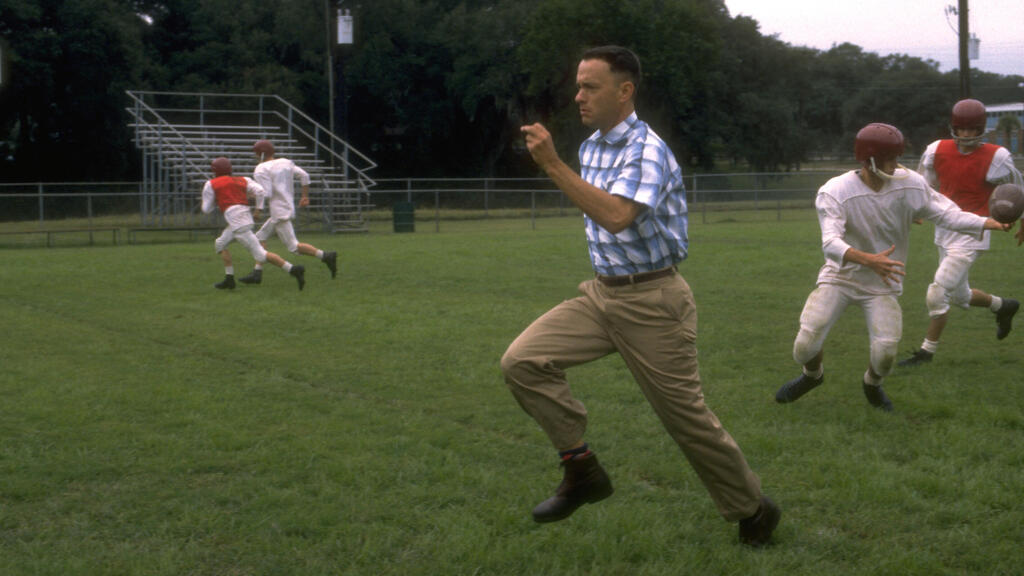
From 'Forrest Gump'
(Photo: Courtesy of yes)
Hanks was already being compared then to Jimmy Stewart, as he channeled the same “good American boy” energies as the star of “It’s a Wonderful Life.” But the debate around “Forrest Gump” spilled over onto him and contributed to the mixed sentiment toward him. After the double Oscar win, Hanks embraced his status and became “Hollywood” itself. He was the establishment. The goofiness and youthful spirit were over. Hanks appeared at every ceremony, narrated every educational documentary about America’s greatness, was photographed alongside Democratic candidates and always remained nice. He was Clinton-era America: optimistic, minus the sex and scandals.
In this context, it is no coincidence that his other major role from the 1990s was voicing Woody in “Toy Story”: a cowboy, meaning America incarnate, the fearless leader of a group and utterly devoid of sexuality. It is a children’s film, so fortunately that is the case, but even in his romantic comedies with Meg Ryan — “Sleepless in Seattle” and “You’ve Got Mail” — Hanks is the most libido-free and passionless romantic partner adult women could wish for, assuming they really wish for such a thing.
The 1990s gave Hanks additional iconic roles as a fearless leader, above all Ron Howard’s “Apollo 13” and, of course, Spielberg’s “Saving Private Ryan.” It is, in my view, his greatest mainstream performance, and fittingly, near the end of the film, it is revealed that the tough commander he plays is, in civilian life, an elementary school teacher. In other words, Hanks as shepherd both in peacetime and in war. In the 1990s, Hanks also sharpened his partnership with the three directors who became his soul mates: Howard, Zemeckis and Spielberg. All four are boomer men, moving along the line between films for children and adults, crazy about experiments in effects and eager to conquer — and they did conquer — Hollywood and the world. With Spielberg, Hanks produced and won Emmy Awards for the excellent series “Band of Brothers.” Through it and through “Saving Private Ryan,” both expressed their generation’s obsession with World War II, “Dad’s war,” as a compass pointing to the moment when America did everything right.
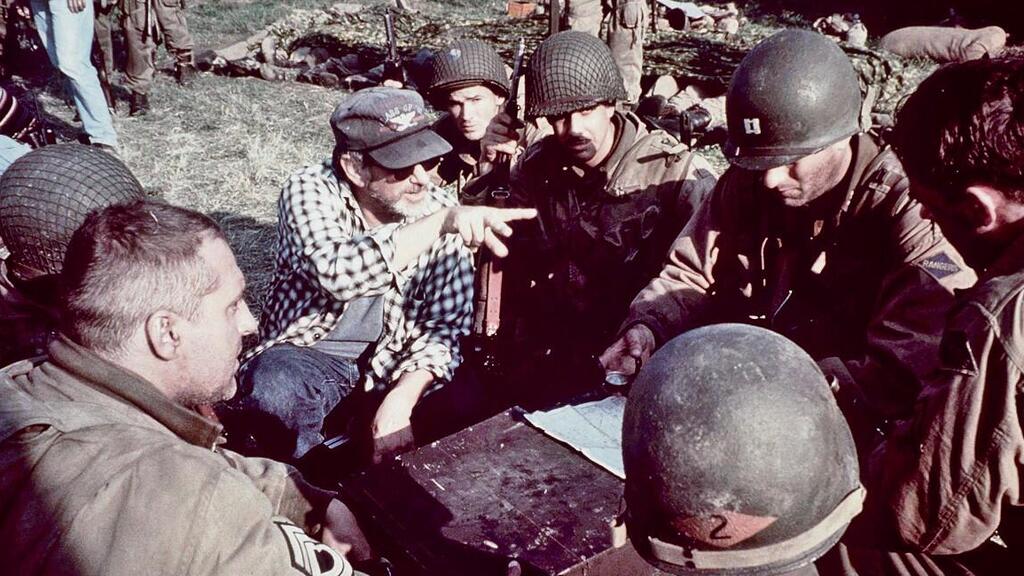
Steven Spielberg, center, and Tom Hanks, right, during the filming of 'Saving Private Ryan'
(Photo: Getty Images)
When the legend ages: What remains of Tom Hanks at 70?
Hanks opened the 21st century with what is probably his most invested performance, a project only a star of his stature at the time could have turned into a huge hit: the deserted-island film “Cast Away,” directed by Zemeckis. In it, Hanks showed just how ambitious he could be. What could have been another Hollywood survival film became, in his hands, a movie in which the main character barely speaks to anyone — only to the volleyball Wilson — and gradually loses weight and becomes a shadow of himself. Hanks is the ordinary man who has to reinvent himself, even when he returns home.
The 21st century also marked the moment when Hanks slowly — certainly not all at once — began to lose his status as a superstar. Too many failures clouded the successes, and too many films featured admirable experiments that did not land. For example, occasionally playing a “bad” character: In Sam Mendes’ ambitious gangster film “Road to Perdition” (2002), Hanks is a restrained hit man, but the filmmakers keep pressing the point that he is actually a good man and a wonderful father. It does not work. In “The Ladykillers” (2004), his only collaboration with the Coen brothers, Hanks retreats into the silly mode of his early career and plays a foolish gentleman killer with an exaggerated Southern accent, as if he were in a sketch. That does not work either.
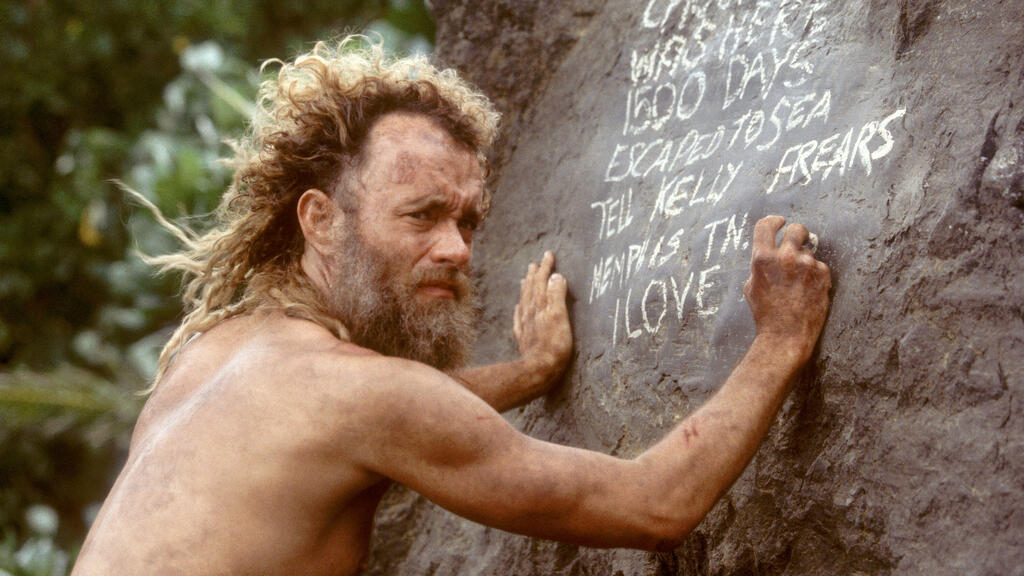
His last iconic role? Hanks, from 'Cast Away'
(Photo: Courtesy of yes)
There was also “Larry Crowne,” which he directed and starred in with Julia Roberts, a major failure that brought out everyone eager to gloat over him. By contrast, his first film as director, “That Thing You Do!,” is charming and worth discovering. There was the ambitious failure in stop-motion animation, “The Polar Express,” on which he and Zemeckis insisted on throwing all their chips. The “Da Vinci Code” trilogy, for which he reunited with Howard, was a huge box office success, but no one thought that was because of Hanks. He was considered a miscast as the intellectual, long-winded researcher Robert Langdon, and the trilogy has been forgotten.
There were successes as well: his wonderful supporting role in Spielberg’s “Catch Me If You Can,” his excellent performance in Mike Nichols’ “Charlie Wilson’s War,” including scenes in which sparks fly between him, Julia Roberts and Philip Seymour Hoffman from Aaron Sorkin’s superb script. It was one of the rare times Hanks succeeded in playing a character with corrupt sides without losing the smile. And in the “success or failure — depending on whom you ask” category, there is his role in the ensemble of the Wachowski sisters’ wild film “Cloud Atlas,” in which he played several roles in exaggeratedly extroverted fashion. And, of course, the “Toy Story” sequels.
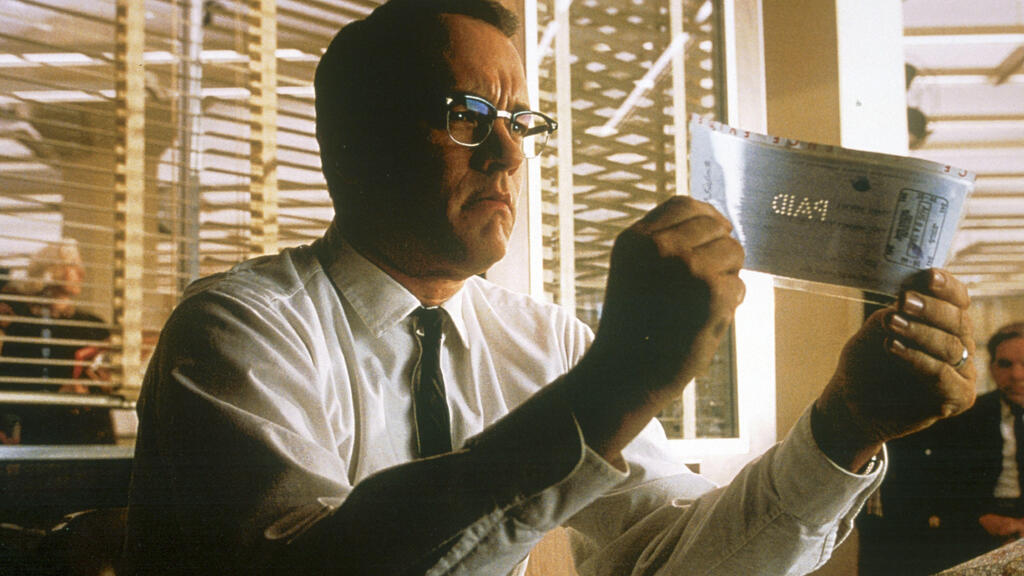
From 'Catch Me If You Can'
(Photo: Courtesy of yes)
Since then, Hanks has continued traveling on a dual track. On one hand, there are the father roles that gradually become grandfather roles — the good, responsible American. Clint Eastwood’s “Sully,” perhaps the most boomer character he has played, and there is competition; “Captain Phillips,” a film in which he gives an excellent performance, partly improvised, but is miraculously overshadowed by the Somali actor Barkhad Abdi, whom no one knew before or remembered after; “Bridge of Spies,” another perfect “dad movie” with Spielberg; “Saving Mr. Banks,” in which he played Walt Disney, certainly not as an antisemite; “A Beautiful Day in the Neighborhood,” for which he earned a supporting actor Oscar nomination; “The Post,” again with Spielberg, opposite Meryl Streep; and the middling “A Man Called Otto,” which was a big hit in Israel because it gave audiences Hanks as the grandfather we all love.
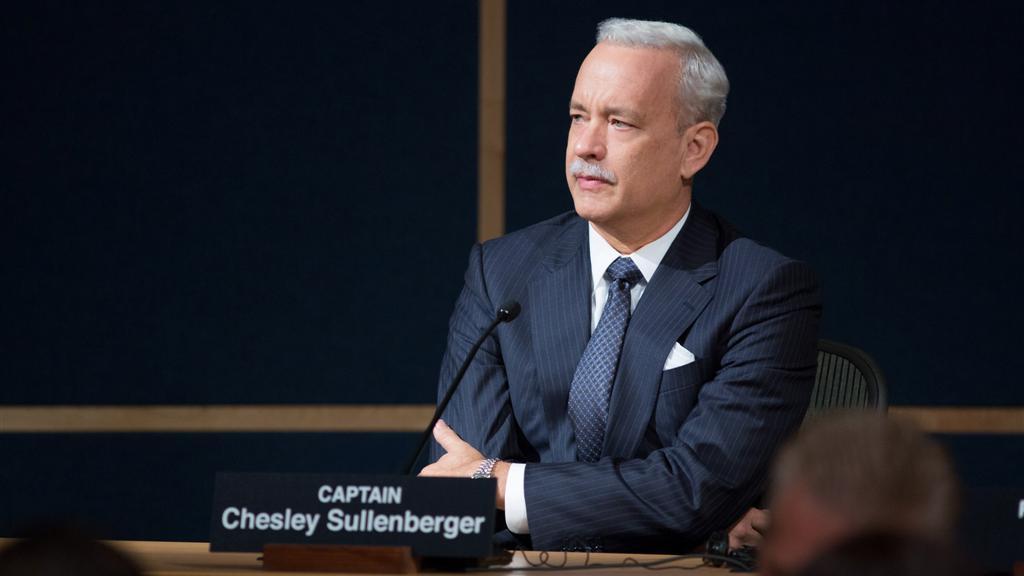
From 'Sully'
(Photo: PR)
On the other hand, every so often Hanks enters a welcome “let’s go wild” mode, reminding himself and us that in the 1980s he was first and foremost a comedian. He takes supporting roles for Wes Anderson (“Asteroid City”), continues making World War II films (“Greyhound,” for which he also wrote the screenplay), and in “Elvis,” for example, managed to deliver a circus-like performance as a ridiculous villain in a film where that fit the tone — and yet, once again, he was overshadowed by the actor opposite him, Austin Butler. But Hanks is no longer a superstar: His films can be dumped onto streaming, pass by without anyone noticing and leave not a milligram of the imprint of a single scene from “Forrest Gump.”
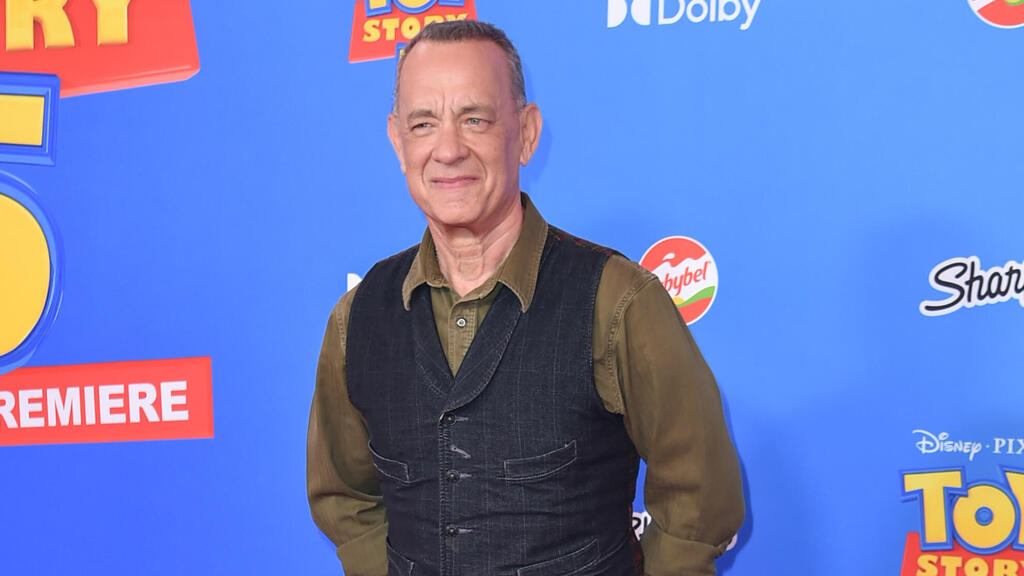
Hanks at the premiere of 'Toy Story 5'
(Photo: AP Photo/Richard Shotwell)
So after all the talk about his status as an icon, as a symbol of Hollywood, of America, of the ordinary person and of white bread, the time has come, at 70, to ask the provocative question with which we began: Is Tom Hanks actually a good actor? Because with all that status comes backlash, and not every role of his lands. The completely non-cynical answer is: Of course. He is a giant actor. Hanks is not only a symbol or an empty face that rose to greatness simply because he is the nicest guy around. He is an actor who always manages to walk the fine line between the extraordinary and the ordinary, between the conservative and the daring, between the respectable and the silly. That is why audiences love him — that same ordinary man in an extraordinary situation. Run, Hanks, run. You’ve still got it.