

Hotel Majestic, the French Riviera. This is the center of the Cannes Film Festival. After pushing through the bustle of the lobby, filled with entourages preparing for the next premiere, and passing the buzzing restaurants and bars where negotiations take place, deals are sealed and romantic dates unfold, I reach an elevator that takes me up to a large, lavishly designed suite overlooking the Mediterranean Sea. Inside sits Kristen Stewart. She looks exhausted. Jet lag may have caught up with her, or perhaps it is simply red-carpet fatigue and the relentless round of interviews.
But the moment Stewart begins talking about her directorial debut, “The Chronology of Water,” which screened in Un Certain Regard, Cannes’ second-most prestigious competition, she comes alive. She speaks with passion and intensity about the work and the hardships she endured on the road to fulfilling her dream of becoming a director.
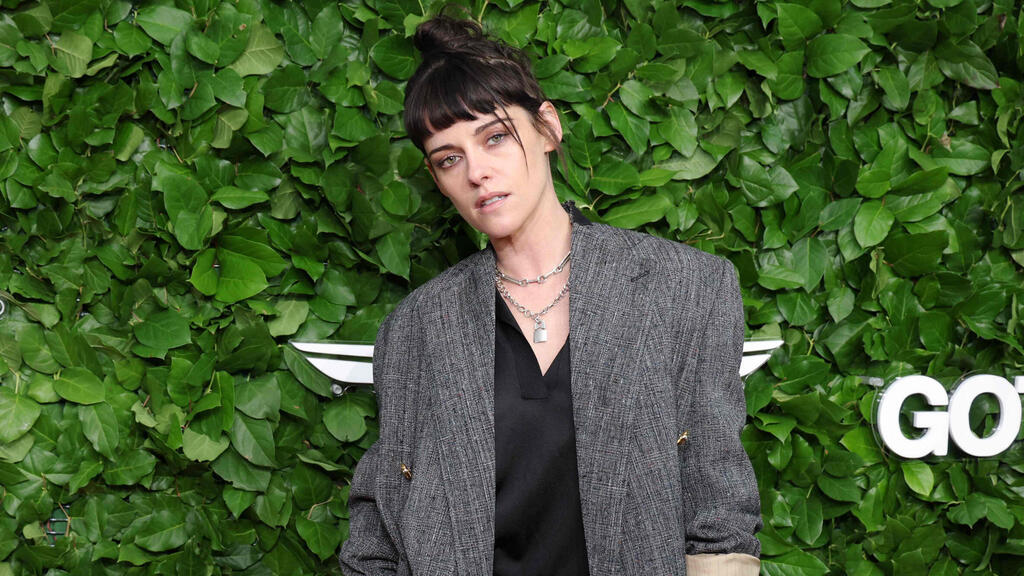
At our meeting, Stewart is wearing a suit with short pants, making it hard not to notice a new black-ink tattoo on her upper left thigh, just above the knee: MINE, in capital letters. At one of the premieres, Stewart also appeared on the red carpet in a chic white Chanel suit, again underscoring her status as a fashion and style icon. The shorts revealed the fresh tattoo, which quickly stole the spotlight. Commentators rushed to speculate about its meaning. Was it taken from a Taylor Swift song? Or did it refer to Stewart’s partner, Dylan Meyer, whom she married several weeks earlier in a quiet, low-key ceremony in Los Angeles?
Naturally, in the interview I asked her about the tattoo’s meaning. It turns out the entire “Chronology of Water” crew got the same tattoo. “It's an original song on our score,” Stewart explains. “In one scene, the main character comes into her hand, looks at it, smells it, shocks herself and wipes it on her arm. There's this song that starts, saying, ‘Mine, mine, mine, mine.’ Everything was his until it wasn't.”
Does that word, that song, also have personal meaning for you?
“That’s right,” she replies.
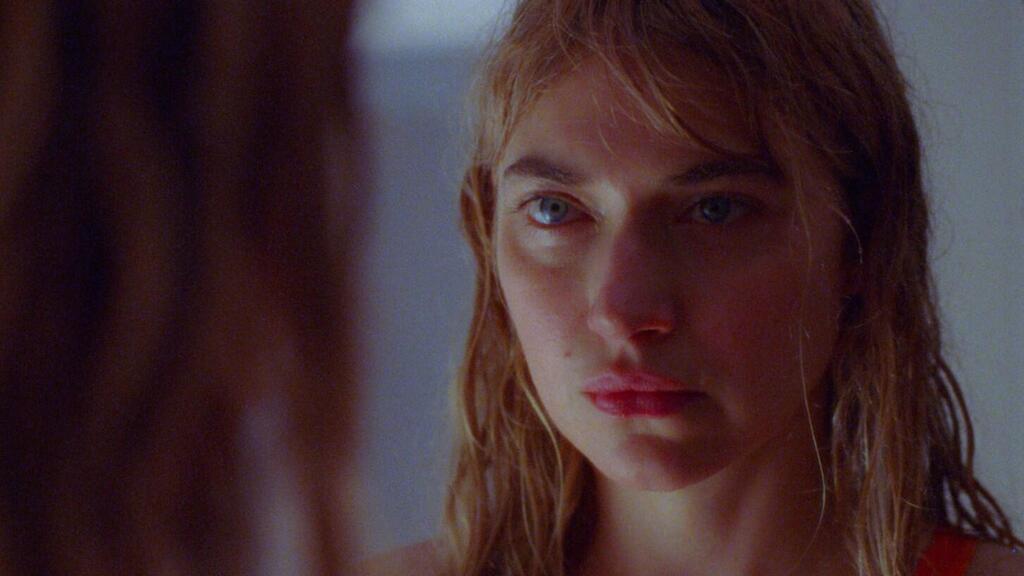
From 'The Chronology of Water'
(Photo: Courtesy of The Forge)
Indeed, Stewart, who turned 35 this year, does everything her own way, striving to ensure things belong to her. Since the blockbuster “Twilight” saga catapulted her to stardom at age 17 and turned her into a teenage idol, she has consistently defied expectations. She regularly veers off the paths laid out for stars like her, reveling in rebellion and speaking in a voice that does not align with the slick Hollywood machine.
“I wanted to escape the labels that were stuck on me,” she says. “I never felt fully imposed upon. I always felt like there was a platform that people were almost craving me to carve out. I was thrust into such a complex, intense arena at such a young age, and my relationship with that communication was a little more strained than it is now. You have to step outside of yourself and your own experience to view your life in terms of how other people process it.”
That arena was indeed complex and intense. The media was often cruel to Stewart and to Robert Pattinson, her co-star in the “Twilight” films and her romantic partner at the time. Thirteen years ago, when Stewart was 22, she arrived at the Oscars limping on crutches, a moment that quickly became a media sensation. It emerged that two days earlier, she had stepped on broken glass and injured herself.
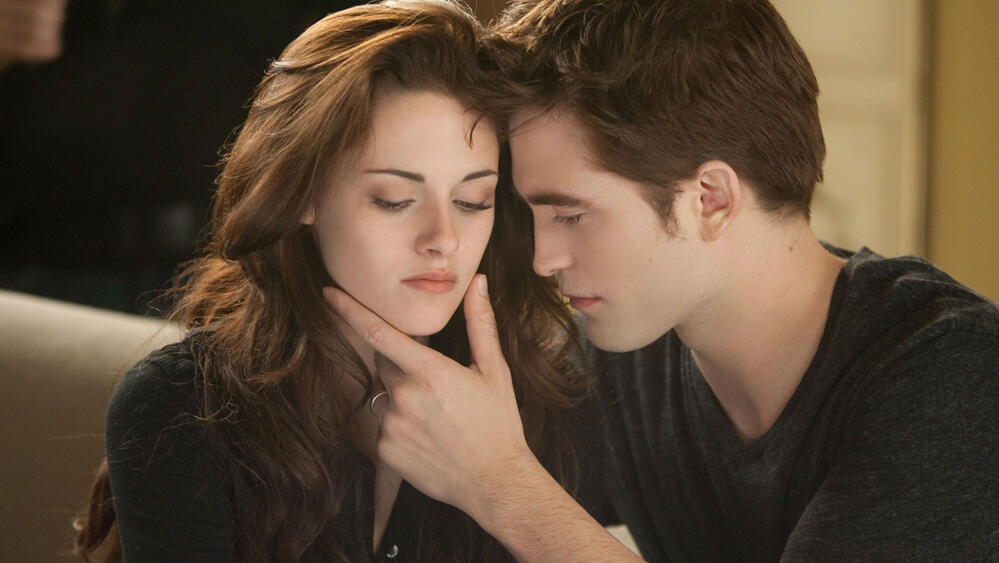
From 'Twilight'
(Photo: PR)
The late Jewish comedian Joan Rivers, sharp-tongued and unapologetically politically incorrect, seized on the crutches for her show “Fashion Police,” delivering biting jokes at Stewart’s expense and using the injury to mock her affair with Pattinson. Rivers also aimed barbs at the other figure in the scandal, married British director Rupert Sanders, who became involved with Stewart during the filming of “Snow White and the Huntsman.”
The jokes and attacks were so crude that many cannot be repeated. Beyond mocking Stewart’s lace dress or the crutches, the merciless insinuations about the affair caused her deep distress and embarrassment. Rivers was far from alone; the media frenzy was widespread.
The breakup with Pattinson that year turned Stewart into fodder for satirists and talk-show hosts. Winning a Razzie for worst performance for her role in the final “Twilight” film, which nonetheless grossed $800 million, did little to ease the pressure.
'It’s ridiculous that actors think they’re so interesting and try to sell themselves'
And speaking of “Twilight,” there is now an opportunity to revisit the days when 17-year-old Stewart was thrust into superstardom with legions of fans. Marking 20 years since the release of the first novel in Stephenie Meyer’s best-selling vampire saga and 17 years since its 2008 film adaptation, United King is returning all five “Twilight” films to theaters in Israel for one week. Beginning Sunday, the films will screen nationwide, one per day, culminating in a marathon next Saturday.
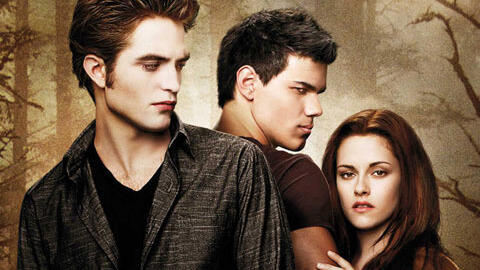
'The Twilight Saga: New Moon'
(Movie poster)
“Honestly, when I started working on ‘Twilight,’ I hadn’t even heard of the books,” Stewart says. “They were very much aimed at teenagers, and I was reading completely different things. Even at 13, I never went near the young adult section. The ‘Twilight’ books were very clean. There’s no sex. They were written by a Mormon woman, and people always commented on that, but I don’t really think there’s much connection to that fact.”
Stewart famously played Bella Swan, a 17-year-old girl from a divorced family who moves to a small town and falls in love with a vampire, Edward Cullen. Bella has a special ability: her thoughts cannot be read, giving her a form of protection. “I’m very proud of those films and of my friends from the series,” Stewart said in a 2012 interview when the fifth and final film was released. “The series is a good interpretation of our generation in the United States. I always thought Bella was very mature. I really admire her.”
She recalls the chemistry with Pattinson. “Between Robert and me, there was great chemistry. He was the only guy who came into the audition and really seemed to be thinking about something beyond playing the perfect vampire. Saying goodbye to ‘Twilight’ makes me both sad and happy. It was a huge experience that took four years of my life.”
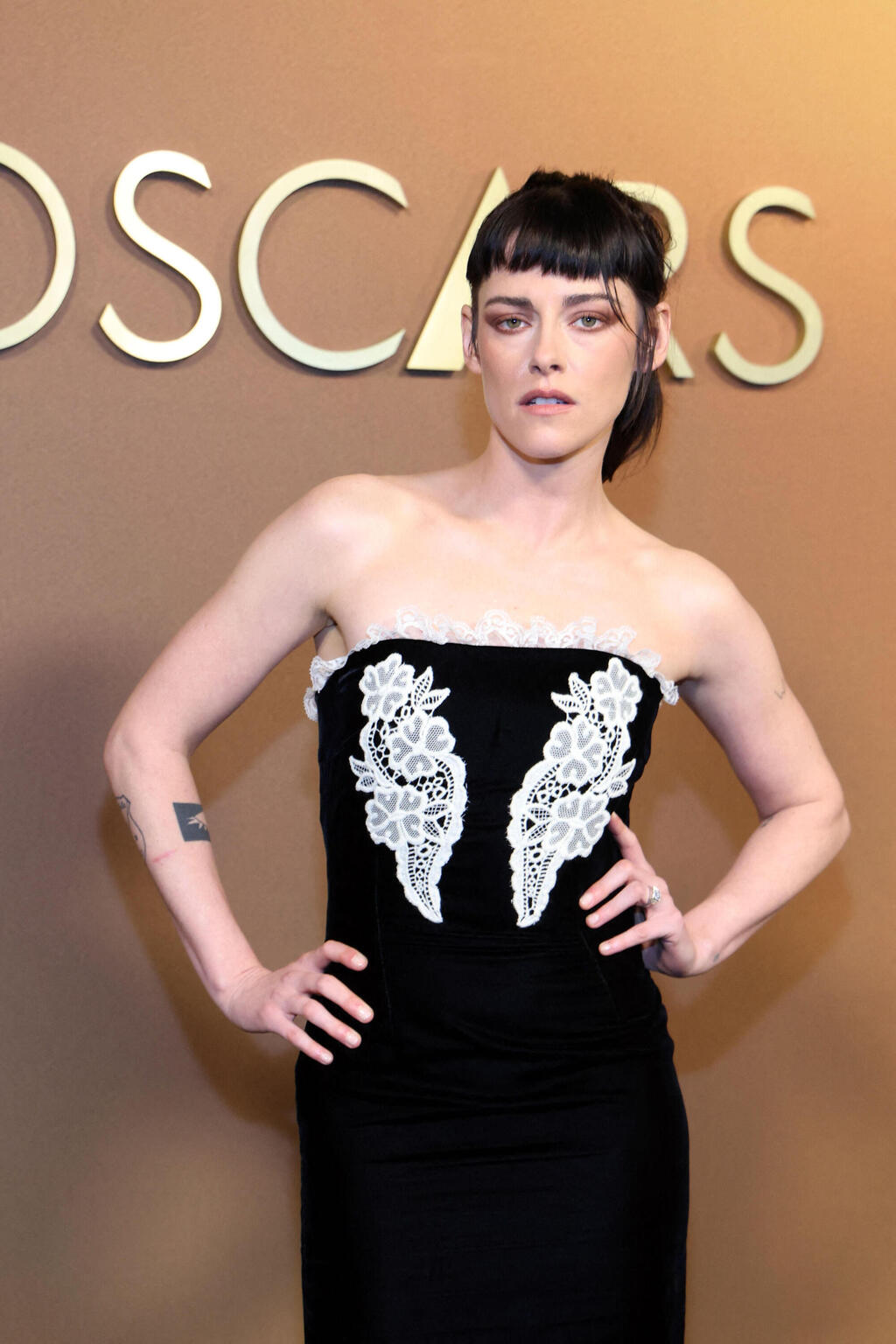
Kristen Stewart
(Photo: Valerie Macon/ AFP)
Today, Stewart, who grew up in Los Angeles and began her career at age 8, can look back on the “Twilight mania” with perspective. “I became insanely famous at 17,” she says. “At 17, you don’t know how to communicate with more than two people at once. You’re already trying to figure out how others see you. Who are you? How am I perceived? Can I influence that? Should I even think about it? When those questions are taken over by the masses and are no longer just yours or your inner circle’s, it’s not simple. There were people sitting outside my house staring. Everyone thought they knew who I was. Honestly, it was pretty scary. So I withdrew and became very closed off, which didn’t allow me to live a full life.”
“I think the meaning of the fame that came with ‘Twilight’ was learning to set boundaries,” she continues. “I swung from one extreme to another, and now I fully know my limits and can place myself in a very rational way. I feel completely free to do whatever the fuck I want. I protect myself, I guess, but I don’t feel deprived of anything.
“It’s ridiculous that actors think they’re so interesting and try to sell themselves,” she adds. “I was terrified of becoming that. I’ve come a long way, and now it makes sense to me. I know how to manage things. Mostly, I don’t want to sell a persona to the public. I don’t think I’m that interesting. My characters are far more interesting.”
'God, actresses get treated like shit'
Stewart has done everything she could to make her roles more interesting. After the “Twilight” films, both she and Robert Pattinson sought to shed their teen idol images. Their choices reflected an effort to prove they were serious actors capable of doing varied and unconventional work. Above all, the two showed they were unafraid to take risks, explore dangerous territory and even strip down and appear in explicit sex scenes.
Since the final “Twilight” installment, Stewart has rarely appeared in major box office films and has steered clear of superhero and comic book franchises. She has preferred working with non-American directors, including Brazilian filmmaker Walter Salles (“On the Road”), French director Olivier Assayas (“Clouds of Sils Maria,” “Personal Shopper,” the miniseries “Irma Vep”), Canadian director David Cronenberg (“Crimes of the Future”) and Chilean director Pablo Larraín in “Spencer,” in which she portrayed Princess Diana, a role that earned her an Oscar nomination. Stewart also worked with Woody Allen on “Café Society.”
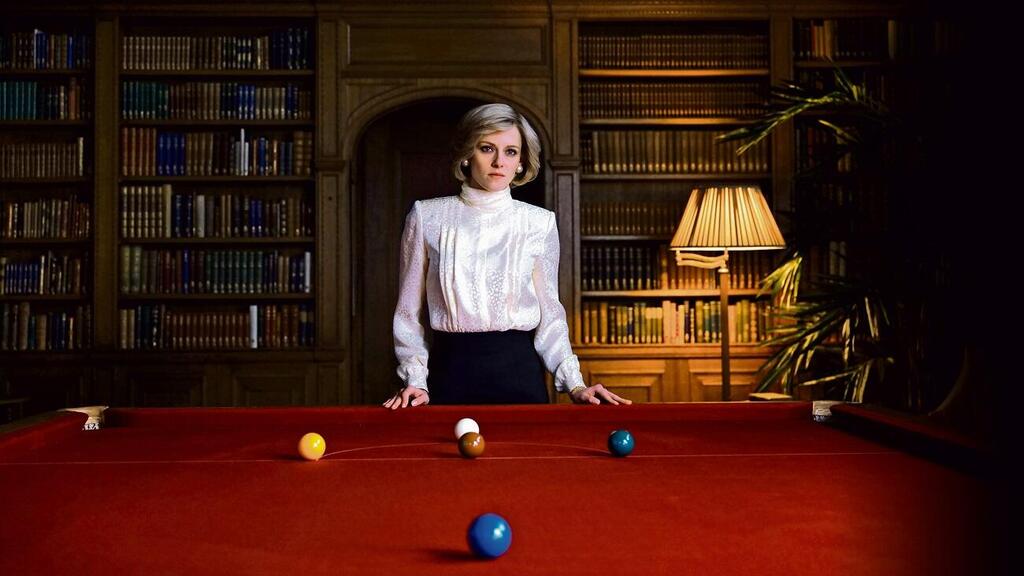
Kristen Stewart in 'Spencer'
(Photo: Courtesy of Lev Cinemas)
Her career over the past decade has been uneven. One of the few films I admired was “Love Lies Bleeding,” Rose Glass’ violent 2024 film in which Stewart played a gym manager who falls in love with a young woman on her way to a bodybuilding competition. Often, Stewart, the adventurer, appeared in low-budget films that never received wide commercial release. One of the few relatively commercial projects she took on was “Charlie’s Angels,” which itself was not backed by a massive budget.
“I made a lot of money from ‘Twilight,’” Stewart recently told The New York Times. “I’ve been so lucky not to have to function from a place of creating security for myself, for my family. But I think if that had never happened, I would be scraping the bottom of every barrel to never make another studio movie again. Having it be so impossible for people to tell stories is capitalist hell, and it hates women and marginalized voices, and it’s racist. It’s too hard to make movies right now that aren’t blockbuster-y, proven equations.”
In our meeting, Stewart voiced similar sentiments about the status of women in the industry and beyond. “I don't wanna say that it's an exclusively female experience to be told to ‘shut up,’” she said. “But women are constantly told that. There is a concave nature that we have. We receive. It’s an inherent physical difference we live with. In our world, there is God the father, the teacher, the psychiatrist — they’re all men.”
And directors, too
“Yes. We bow, we open up, and we hope to receive — and then we produce life. Women operate a lot from a place of shame. There is a crushing of the voice and a suppression of natural instincts that women are forced to do in order to live here. And then you realize it’s killing you. God, actresses get treated like shit. In general, women are in a terrible place right now. We’re screwed — and I won’t even expand on that.”
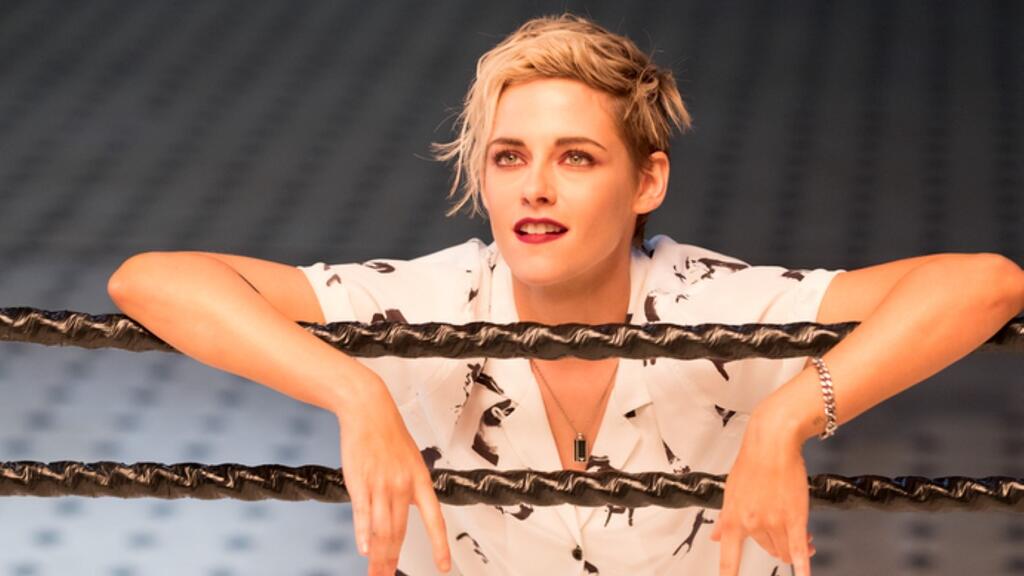
Kristen Stewart from 'Charlie's Angels'
(Photo: PR)
But there was a feminist wave and the #MeToo movement
“Life and death and life and death. It’s so cyclical. There's been a women's movement. There have been so many. We try to move forward, and then we slip. We’re walking on a tightrope that is actually a knife. I don't know what's under there. I don't know where we're going. We’re totally fucked. I'm fucking so scared.”
One thing that can be said in Stewart’s favor is that she has never been afraid to follow her own preferences and desires, regardless of image or the wishes of publicists and agents. In 2017, Stewart came out as bisexual. Her romantic history includes relationships with several women, among them special effects producer Alicia Cargile, Stella Maxwell, a former Victoria’s Secret model, singer-actress Soko and musician St. Vincent. “When I was dating a guy, I was hiding everything personal that I did because it was immediately trivialised,” Stewart said in a past interview with British Elle. “In a relationship with Robert Pattinson, we were turned into these ‘Twilight’ characters, and I was like, 'That's mine. You're making my relationship something that it's not.' I didn't like that. But it changed when I started dating a girl. I thought, actually, to hide this provides an implication that I'm ashamed of it, so I had to alter how I approached being in public. It opened my life up and I'm so much happier.”
In a 2024 interview with Variety, Stewart said, “I can only now see the queerness of the ‘Twilight’ films. I don’t think it necessarily started off that way, but I also think that the fact that I was there at all, it was percolating. It’s such a gay movie. It’s so hidden.”
'I thought I’d ruined the film, and it was horrible'
Over the past decade, Stewart has flirted with the idea of becoming a director, directing music videos and short films. “I’ve wanted to direct since I first became part of the process,” she said. “I do love acting, serving someone else’s vision and taking part in their thought process, but I have my own point of view and I know I can protect the people who are drawn to it. I know we can make something beautiful together. I can be a catalyst for creation and be responsible for it. Directing is the thing I love most.”
That is how she came to make “The Chronology of Water,” which, since its Cannes premiere, has enjoyed an impressive international festival run, from Indonesia and India to New York. Starring Imogen Poots, the film is based on the autobiographical book by Lidia Yuknavitch, whose father abused her and her sister physically and sexually while their alcoholic mother did not intervene. Yuknavitch became an accomplished swimmer and struggled with drug and alcohol addiction. She published the memoir in 2011, impressing Stewart, who fought to bring it to the screen.
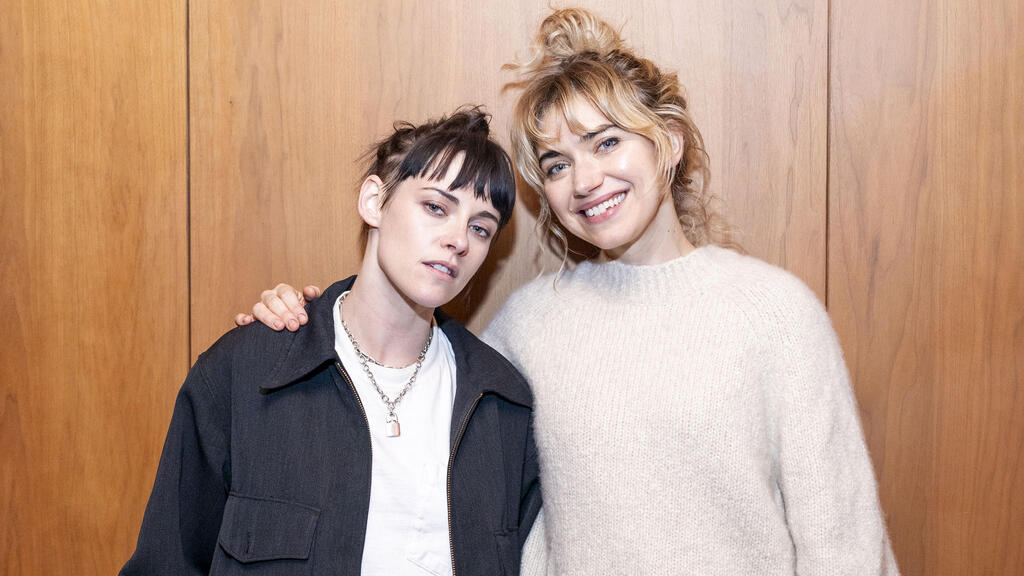
'The Chronology of Water' star Imogen Poots and Kristen Stewart
(Photo: Santiago Felipe/Getty Images)
“That book by Lidia is like a haunted house of oppression exploding from a place of demanded volition, because without it, actual death is on the other side,” Stewart said
“This book is the keys to your own castle. When I read it, I thought that if I had that kind of relationship with it, I couldn’t be alone, and it needed to be alive. When people ask what the movie is about, it's about writing. And it's about the way you contextualize your life inside your body. It's about repossessing the things that happen to you, defining them in your own terms to come toward acceptance. It’s also about rebirth after losing something — and ingratiating yourself with newness is fucking hard.”
Since 2019, Stewart has been in a relationship with screenwriter Dylan Meyer, the daughter of Jewish screenwriter Nicholas Meyer. The two recently formalized their relationship. They are now working on a joint project they wrote together and shot in 2025. It marks Meyer’s directorial debut, a comedy that also stars Seth Rogen.
Meyer also supported Stewart as she worked on “The Chronology of Water,” and Stewart says she was grateful that during the many ordeals and crises of making the film, Meyer and her friends and family stood by her, offering support and encouragement.
“It was a total shipwreck,” Stewart admitted. “The script was so precisely designed — I thought I’d built an unsinkable Titanic, and immediately the film became a paper boat in the ocean. It was a nightmare. I died every day. It was a very fragile and demoralizing situation. We changed department heads during production, and a week after we started, we also replaced key cast members. Those choices protected the film and gave it the life it has.
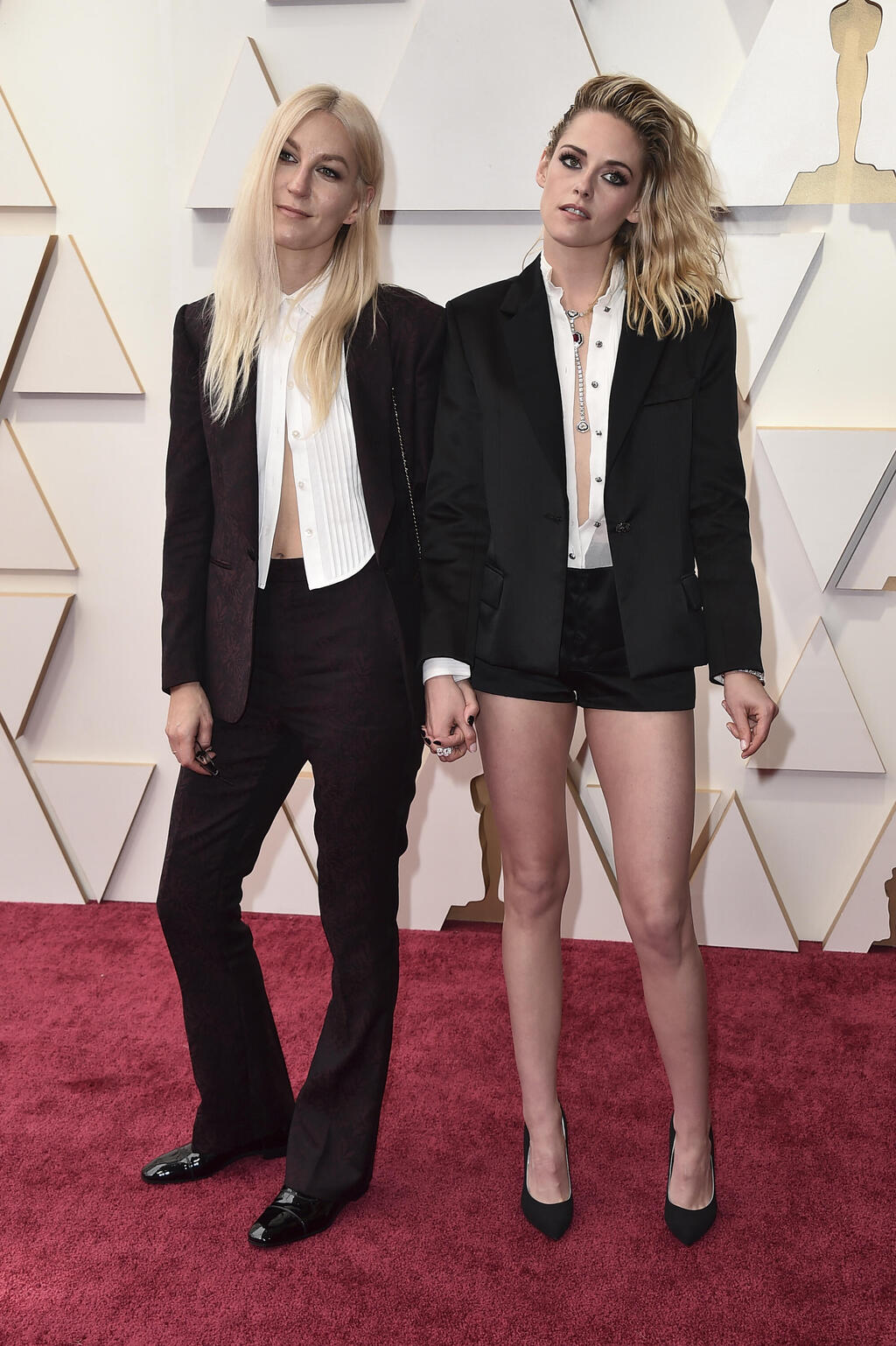
Kristen Stewart and Dylan Meyer
(Photo: Jordan Strauss/Invision/AP)
“I feel really lucky that it happened and proud that we followed the path. But it was not one that I carved out. There was no prescient initially. It was like baptism by fire. I’m really proud of myself for having such a tiny ego. I think the film works and I love it now, but for a moment I didn’t love it at all. I thought I’d ruined it. And it was horrible. But I told myself: I've done everything else in public my whole life. I guess everyone's gonna see it.”
Stewart thanked those close to her who supported her during those moments of crisis. “Luckily, I have such a cool family and I have such an incredible support system. It’s important to have support systems that, when you reach out and look for them, are there. It can be in art, it can be in community. Then there’s never a point where you’re alone. Being alone is a failure. Being alone is a concept designed by oppression to make you feel like you have no help or no friends. Whenever you feel really alone, accompany yourself with your own voice and try to find some strength there. Other people will hear you, and they’ll be proud of you — just for being yourself.”
You are unlikely to see “The Chronology of Water” playing at a theater near you, but it is worth making the effort to seek it out. Stewart would be the first to admit it is unconventional and not commercial. “It’s a weird movie, and I’m completely thirsty for the interactions it has with other people,” she said. “It’s like watching your kid go to school after you gave them a weird haircut and you think it looks stupid — and then everyone loves it, and you’re like, ‘What?’”