


In today’s entertainment industry, being a multi-talent is almost a prerequisite. The superstars of our generation do not just release albums and embark on global tours; they run entire empires, star in leading film roles, front high-fashion campaigns and operate labels of their own. But long before Madonna, Beyoncé, Lady Gaga and Ariana Grande, Cher, who turns 80 today, taught the world what the true range of a pop star looks like: limitless.
The legendary superstar created the blueprint for the modern multidisciplinary artist, and more than that, turned her many talents into a source of power, not an obstacle.
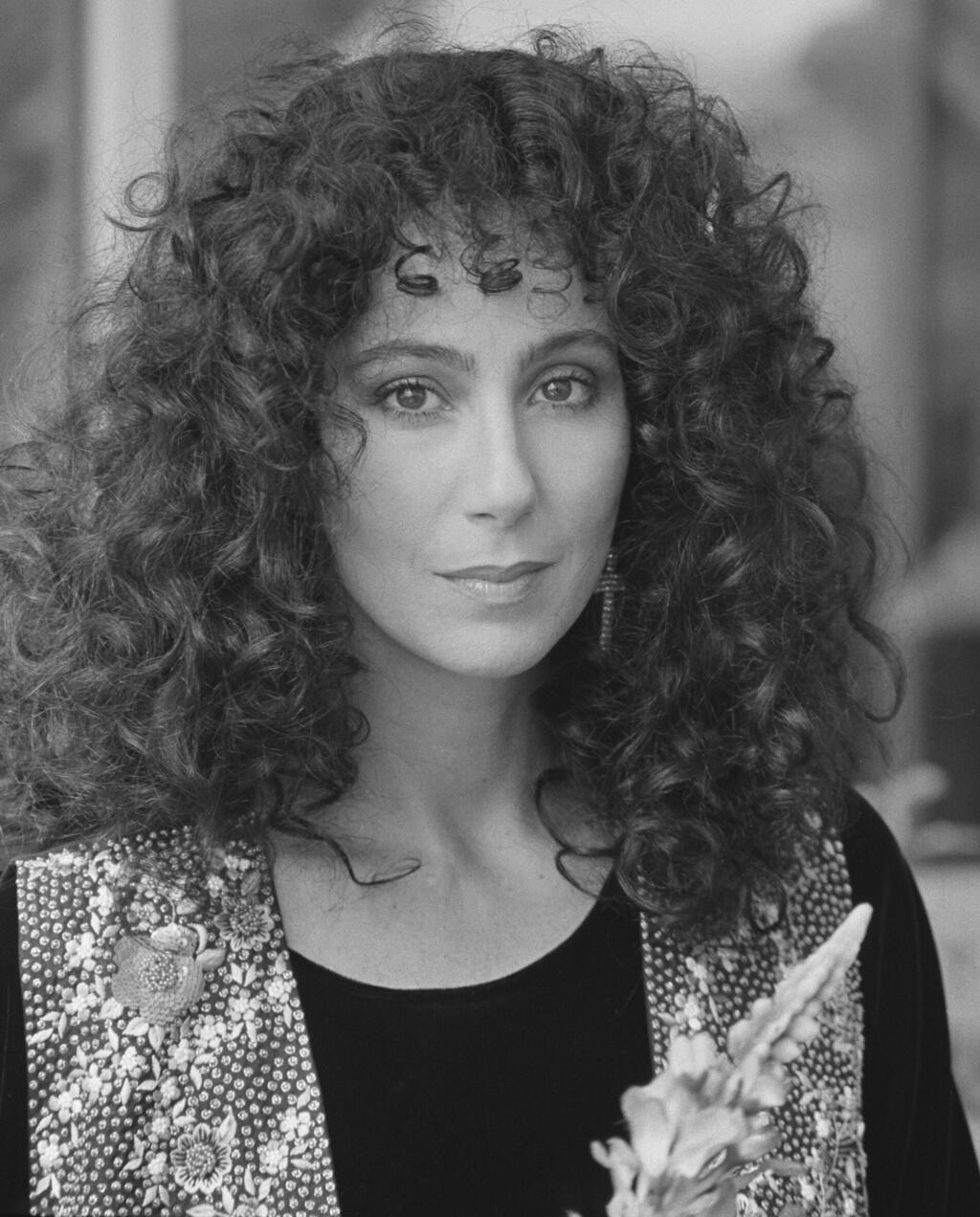
First and foremost, Cher is a singer, and her success is evident in the charts across six decades of activity, four of them at the top. Throughout her career, she moved between musical genres as she pleased, regardless of the trends of the moment. Her pop blended a range of influences, from the folk of “Gypsies, Tramps and Thieves” to the gospel of “Walking in Memphis,” the grandeur of “If I Could Turn Back Time,” the disco of “Strong Enough” and the revolutionary “Believe.”
Cher always insisted on being everything she could be without reducing herself to a single definition. Unlike stars who paved the way for her, such as Barbra Streisand, she was not afraid to take risks. That is how she earned awards and nominations, including an Oscar and an Emmy, for playing unconventional characters: a lonely, poor lesbian in “Silkwood,” a fierce single mother in “Mask” and a worn-down, melancholy bookkeeper in “Moonstruck.”
The impression she left on listeners and viewers was also shaped by her public appearances. Through unforgettable fashion choices, she became a style icon still referenced today — hello Zendaya, hello Dua Lipa — and established herself as a cultural icon who refuses to disappear.
I Got You, Babe
To understand how the Cher we know, quote and reference to this day was born, one must return to the beginning. Cher was born Cheryl Sarkisian to Georgia Holt, an actress and singer who was too poor to raise her, and John Sarkisian, an Armenian American truck driver and alcoholic. As a baby, Cher was placed in a Catholic orphanage. When she entered, she was still crawling. When her mother came to take her home, she could already walk.
Her mother married and divorced six times, and the home Cher grew up in was unstable, to say the least. At school, young Cher struggled to read letters and numbers, only later discovering that there was a name for it: dyslexia. It was not only dyslexia that made her feel strange. With her long black hair, she also looked different from her blond mother and sister. In her Rock & Roll Hall of Fame acceptance speech, Cher recalled how her mother encouraged her: “You may not be the prettiest, the smartest or the most talented — but you are special.”
That uniqueness drew her toward her main calling. In 1956, when she was 10, she saw the undisputed star of the era: Elvis Presley. Cher looked at him and wanted the same thing. While other girls in the audience wanted to be with the rock ’n’ roll star, Cher wanted to replace him. “I knew I wanted to be on that stage in the spotlight one day too,” she wrote in the first volume of her self-titled memoir, published in 2024.

The man who mesmerized her; Sonny and Cher
(Photo: Douglas Miller/Keystone/Getty Images)
At 16, the dream became an opportunity when Cher first met the man who would open doors for her, and whose presence mesmerized her. Sonny was then 27, divorced, mousy and dressed in an oversized coat with a mustard-colored shirt and tie. Cher often returned to the moment she first saw him, describing it as one in which “everything else disappeared.” The connection was immediate. The two became a couple and began making music together. Although he did not initially believe in her talent, Sonny recommended her to super-producer Phil Spector, who included her in his productions, including hits by the Righteous Brothers and the Ronettes, where she sang backing vocals.
After several failed attempts in the United States under different stage names, the two received advice from members of the Rolling Stones: go to England to generate buzz. The gamble paid off beyond expectations. Their distinctive look, which included bell-bottoms, necklaces, bracelets and embroidered shirts, caused a stir in London, and the media frenzy turned them into overnight stars. Soon after, their song “I Got You Babe” (1965) launched them onto the world stage, topped the charts, pushed the Beatles from the No. 1 spot and turned Sonny and Cher into the power couple of the counterculture and the flower-child generation.
Upon returning to America after cementing their status as an international sensation, the duo became a well-oiled hit machine. At the same time, they established themselves as America’s favorite family thanks to their successful Emmy-nominated television show, “The Sonny & Cher Comedy Hour,” which also featured their baby daughter.
But the more successful they became, the more Sonny sought to control Cher. “He changed, he didn’t care about me,” she recalled in an interview with CBS. At the same time, his image became intimidating. Sonny forbade her from leaving the house, and many people feared him.
The balance of power shifted when the young singer discovered that throughout their years together as a duo and a couple, Sonny had tricked her and stolen her money. In an interview with Oprah Winfrey after his death, she recalled: “I said to him, ‘When did you decide it was OK to take all my money?’ And he said, ‘Well, I always knew you’d leave me.’ I said, ‘That’s not a good enough reason!’”
Leaving her relationship with Sonny was a defining moment in the singer’s construction of her identity, and the freedom from him allowed her to understand what she wanted to do. “After I left Sonny, I started to grow up,” she said on the “Today” show. “I was 27, but I acted 16. So I kept making mistakes in public.”
Life after love
Cher rebuilt herself piece by piece, on her own terms. Music remained the foundation, but her new passion was reflected in every choice she made, even when the industry made life difficult for her. It was evident in her daring song choices, her distinctive voice and her embrace of revolutionary technology, as well as in the surprising screen roles she landed and in the establishment of her status as a fashion figure impossible to look away from.
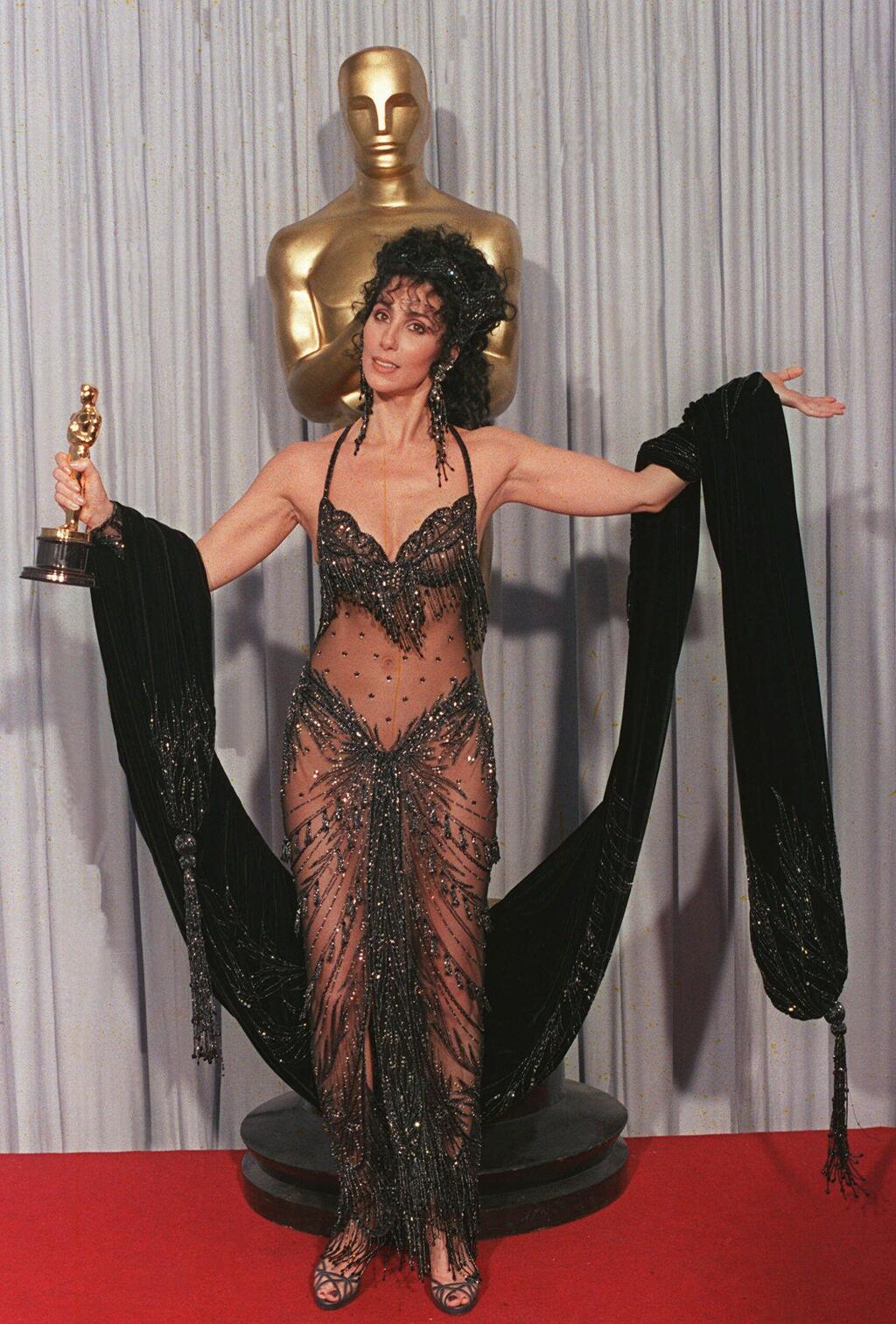
Cher in a Bob Mackie dress at the 1997 Oscars
(Photo: AP/LENNOX MCLENDON)
From the start, Cher was unafraid to take risks, wearing daring outfits at a time when women were expected to be as covered as possible. While Joni Mitchell wore long, modest dresses, Cher appeared in sheer gowns that became symbols of glam. Together with designer Bob Mackie, she created groundbreaking looks built around the idea that a woman could be sexy and talented at the same time, with no contradiction. The dresses and outfits were nothing less than works of art, every bead and sequin a piece of craftsmanship that made America tune in eagerly each week to see what she would wear next. Because she was married, American censors did not cancel her. “When you’re married, they let you get away with things,” she told Vogue.
Cher used fashion as a weapon against her critics, as with her famous “hedgehog” look at the 1986 Oscars. She had not been nominated for a statuette, despite many believing she deserved one for her performance in “Mask.” As revenge, she asked Mackie to create the most “over-the-top” look possible. He dressed her in a two-piece gown with an extremely low cut. “The Academy members didn’t like me,” she told the fashion magazine. “They hated the way I dressed. I had young boyfriends, and they thought I was ‘not serious.’ So I came and said, ‘As you can see, I got my handbook on how to dress like a serious actress.’”

The technology changed everything; Cher, 1999
(Photo: Diane Freed/Getty Images)
But the same multidisciplinary range that later became her trademark was also one of the qualities that threatened society and her standing. She was repeatedly asked why she was not “satisfied” with just one thing. “People wanted to know why I wasn’t ‘satisfied’ being a singer. As if you’re supposed to be ‘satisfied,’ and your life isn’t one big adventure where you can change anything if you want to and have the courage. If I want to do something else tomorrow, I’ll do it,” she explained in a 1991 interview with Sally Jessy Raphael.
The criticism did not stop as the singer aged. After she passed 50, the industry decided it was done with her. In the past, she had already been forced to move to performances in Las Vegas, which she said was then a “graveyard” for artists. Two record companies dropped her, and she found a label in Britain.
Everything changed again in 1998 when producer Mark Taylor decided to use Auto-Tune as an improvisation while working with her on “Believe,” changing the world of music forever. It was innovative, strange and unusual. It made her voice sound robotic, yet somehow made her sound more human. It was the first time Cher won a Grammy.
In doing so, Cher introduced the world to the creative use of Auto-Tune: the technology that allows singers to disguise off-key notes and artificially align vocals precisely to a musical scale, later becoming an element frequently used in pop and hip-hop productions to create a futuristic, intriguing sound. Later in her career, Cher told The Guardian that Jay-Z once approached her at an event and said, “Thank you, because of you all my friends have jobs.”
Cher’s 23rd studio album did not merely return her to the spotlight; it also brought a singer in her sixth decade of life into the club — and in a sense proved that dance music has no age and no expiration date.
Dancing with a hurricane
The many transformations Cher has undergone continue to inspire a new generation today, including Zendaya, the actor, creator, dancer and singer who introduced Cher at the 2024 Rock & Roll Hall of Fame induction ceremony, and Dua Lipa, who herself aspires to an all-encompassing career as a musician, actor and founder of a book club and accompanying podcast.
“Everything she’s done throughout her career, how she’s grown and reinvented herself, fills me with inspiration. She’s a trailblazer, she’s a force,” said Lipa, who sang with Cher at the Rock & Roll Hall of Fame ceremony. “If you have the drive and the power and the spark for life, and you want to be the best version of yourself, you can do anything. Cher is a beautiful testament to that.”
Cher’s enormous success across decades was also cited that celebratory evening by Shania Twain, who framed consistency as inspiration in itself. “Watching Cher go through all of these evolutions in her life — her fashion sense and her stage presence — she is the most versatile artist ever.”
Cher taught generations of singers that they do not have to have a “pretty voice,” and that a distinctive voice, one that sounds like nothing else and belongs only to you, is a far more interesting artistic weapon. “With Cher’s voice, you know it’s Cher. It’s a mix of masculine and feminine that can’t be copied,” Pink said.

The girl who felt different and became a legend; Cher at the 2026 Met Gala
(Photo: Evan Agostini/Invision/AP)
Cher inspired an entire generation of musicians who followed her, but also women of her own generation. During Cher’s divorce from Sonny, Tina Turner said she drew inspiration from her to leave Ike Turner, her violent and abusive partner. Like Cher before her, Turner left and started over. When Turner left Ike with four children and not a dollar to her name, Cher hosted her on her show and helped her survive until her comeback. “Cher was so free. Totally in control of her career and her life and her recordings in the studio,” Turner told Winfrey in a joint interview with Cher several years ago.
The girl who felt different and became a legend, while those around her constantly doubted her abilities and ambitions, continues to inspire and help anyone who feels different believe they have a place in the world. The combination of her consistent and natural camp, uncompromising honesty and preference for everything excessive, glamorous and larger than life positioned her as a leading gay icon who makes queer people around the world feel they have a safe place to be.
What comes next? Even at 80, Cher has no retirement plans. As she explained her philosophy to The Guardian: “Barbra Streisand once asked me, ‘Why are you still working?’ And I said, ‘Because one day I won’t be able to work anymore.’ So as long as I can work, I will.”