

When Polish director Michal Kosakowski was a child, he was exposed on television to many images dealing with World War II in general and the Holocaust in particular. Since then, he has developed an obsession with the Holocaust, despite the fact that he is not Jewish.
"In Poland, images connected to the Holocaust were shown frequently, much more than in other places," he explained when we met at the Venice Film Festival. "They were all kinds of Eastern European productions, and because I saw so many films like that, I carry this trauma from childhood. In general, my approach to cinema is that I am interested in dark subjects, the dark human soul. For example, my two previous films dealt with the Sept. 11 attacks in New York."
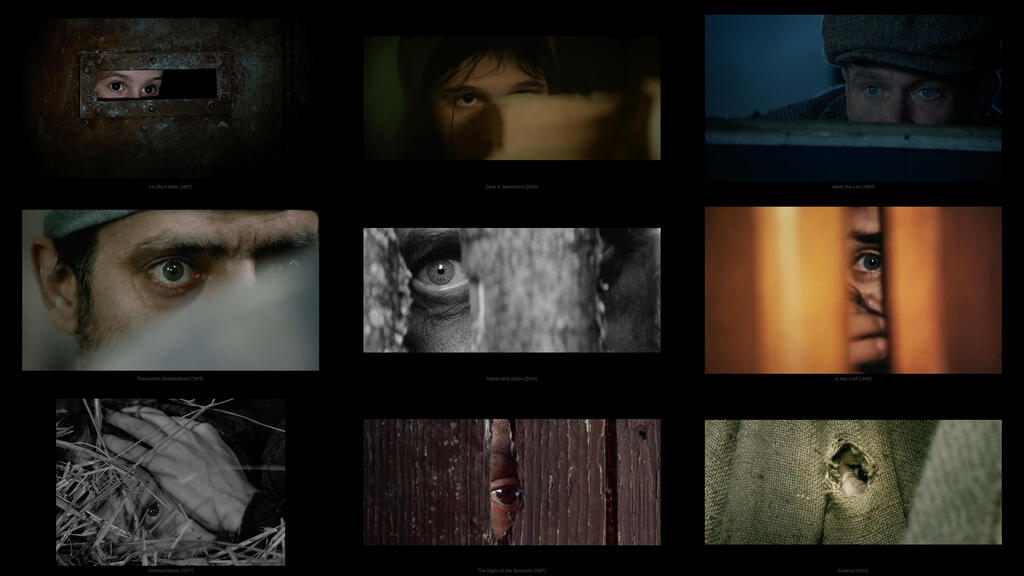
Holofiction trailer
(Video: Kosakowski Films)


Kosakowski, who lives and works in Berlin, said he watched the terrorist attack that brought down the towers on television. "I immediately thought of one shot from Roland Emmerich’s Godzilla, which came out in 1998. I said to myself, 'Wow, this is exactly the same.' Over the next five years, I began collecting images that raised the question: Did Hollywood predict this disaster? That is how the short film Just Like the Movies was born. Later I found the answer: Many of the people who filmed those images of the Twin Towers disaster live, on the scene, had in their subconscious the Hollywood images they knew from movies."
His ambitious new documentary Holofiction shows how cinema has depicted the Holocaust. Over eight years, Kosakowski collected excerpts from more than 3,000 feature films and television series, creating a fascinating archive of the Holocaust’s visual memory, moving between iconic moments and clichés.
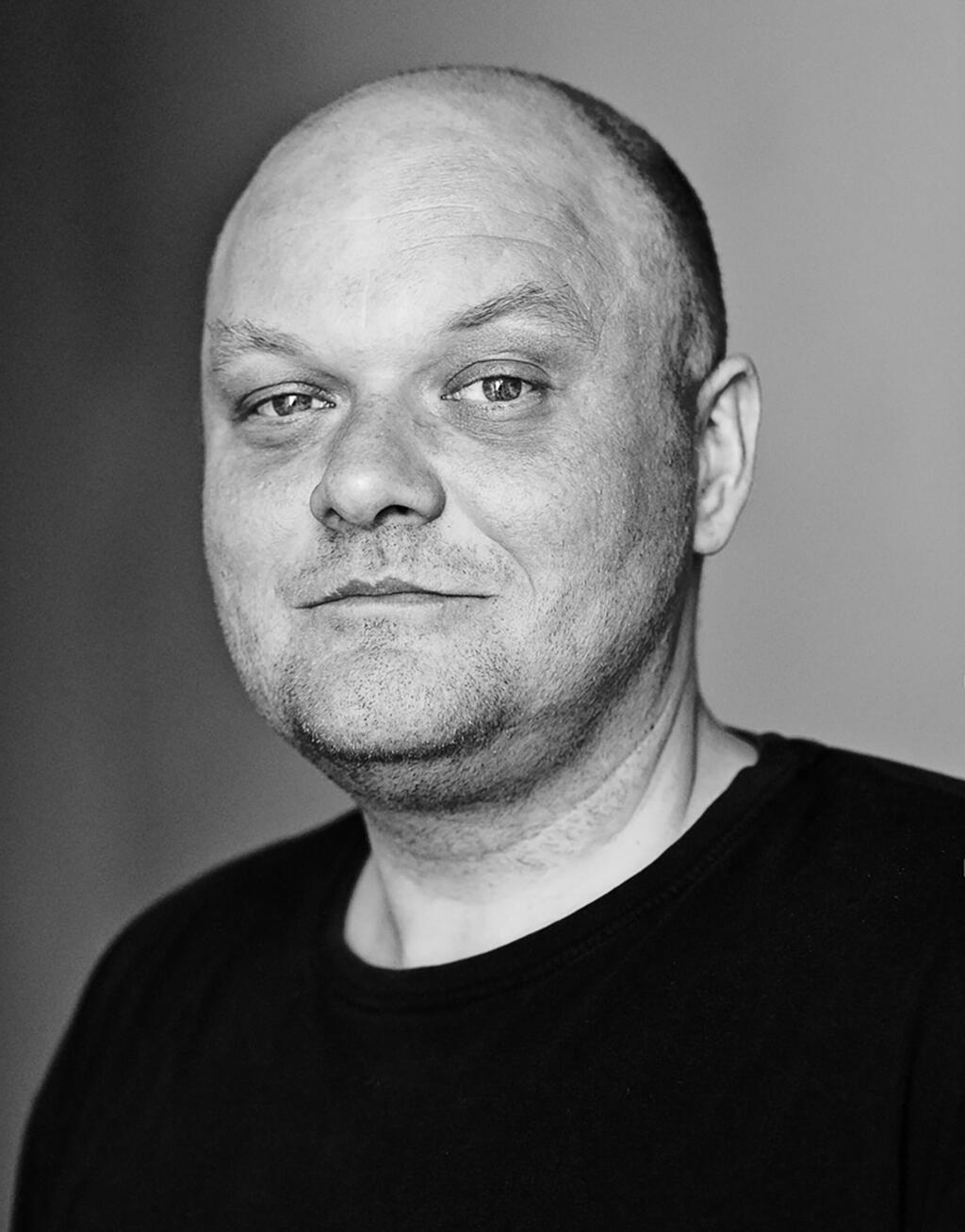
Director Michal Kosakowski
(Photo: Tom Wagner)
"World War II is the most depicted event in the history of cinema," Kosakowski says. "Many films on the subject have also come out recently. Why is it the most depicted? Because the event is so well known, and there are so many stories to tell. That war provides an inexhaustible source of stories. If you look at the number of people killed, each person has a story. The event was enormous, and what the Nazis did was a vast, systematic atrocity."
Scenes that return again and again
Holofiction, produced by Kosakowski’s wife, Uli Aigner, premiered at the Venice Film Festival and is now coming to Docaviv 2026, which opens this week at the Tel Aviv Cinematheque. Kosakowski will attend the film’s screenings in Israel, on Thursday at 6 p.m. and Sunday at 10 a.m., and it is worth taking the opportunity to meet him. The film will later be broadcast on HOT8.
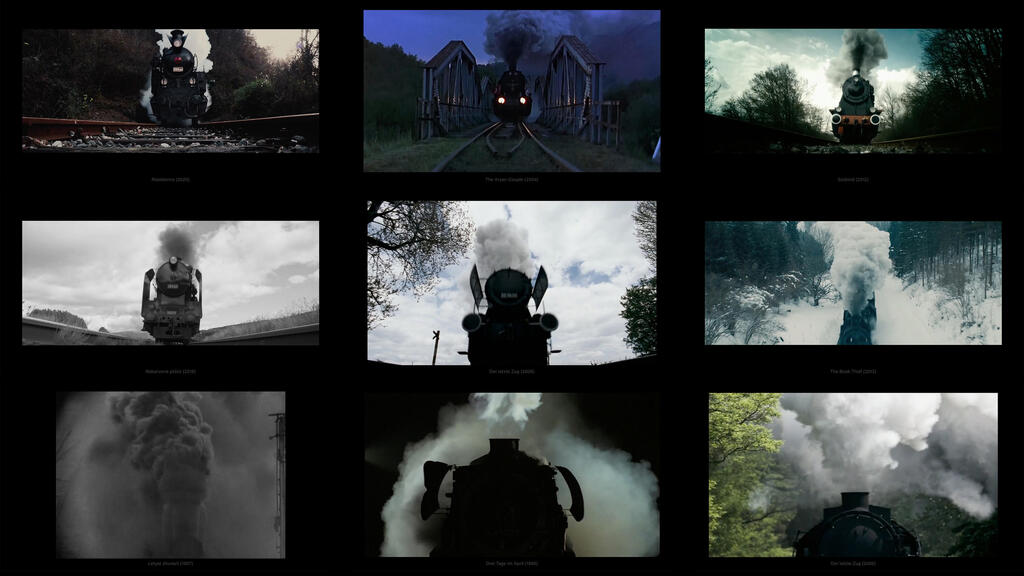
From Holofiction
(Photo: Kosakowski Films)
How did the process of selecting and working with the film clips unfold?
"I had to develop a system," he says. "Without a system, it would have been like looking for a needle in a haystack, simply impossible. Maybe my answer should begin with the question of how the idea for the film took shape. The answer is thanks to the Jewish director Claude Lanzmann, whose documentary Shoah I loved very much. It is a powerful film, one of the best documentaries ever made. I remember reading an article Lanzmann wrote titled The Holocaust: Impossible to Represent. He wrote it when Steven Spielberg’s Schindler’s List came out, because the film upset him very much. He was angry that Spielberg used this subject and various techniques to tell a cinematic story.
"I was curious about Lanzmann’s prohibition, his claim that feature films should not be made about the Holocaust. It seemed so strange to me, and I wondered why he said it. I decided to take Lanzmann’s statement as my starting point. I said: Let’s try to prove exactly the opposite. I took all the films that existed up to that point — not only films about the Holocaust but also films set during World War II."
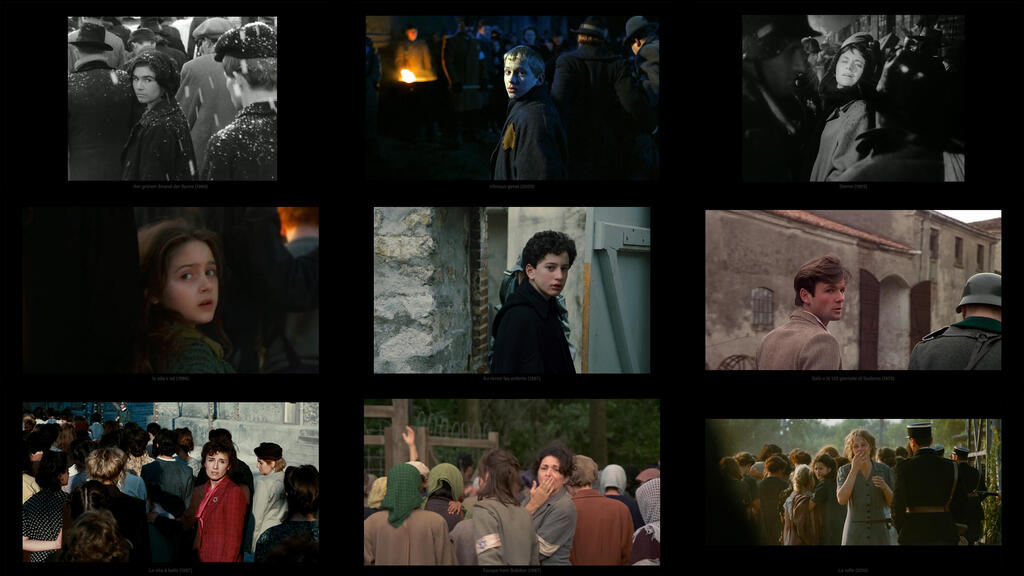
From Holofiction
(Photo: Kosakowski Films)
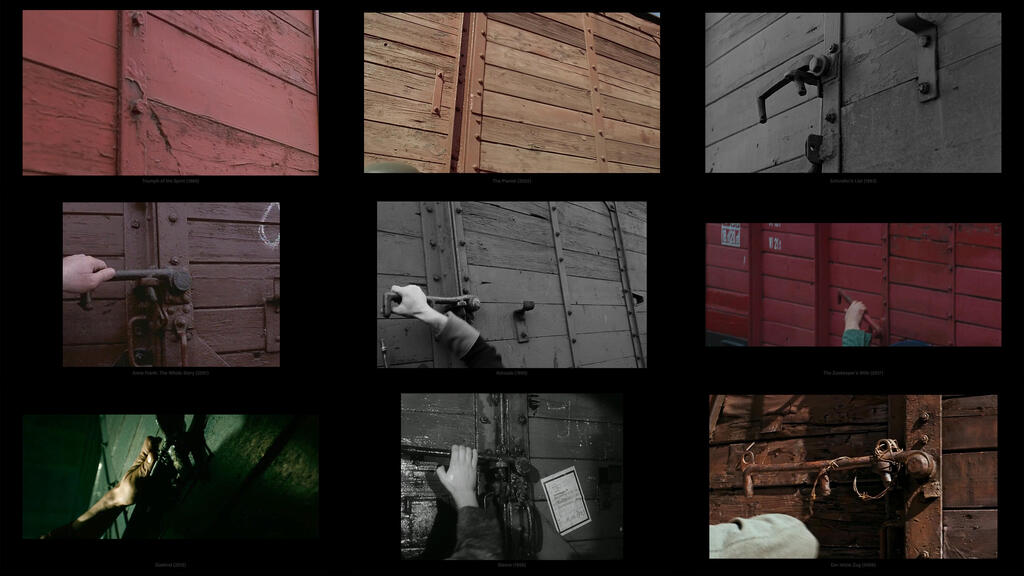
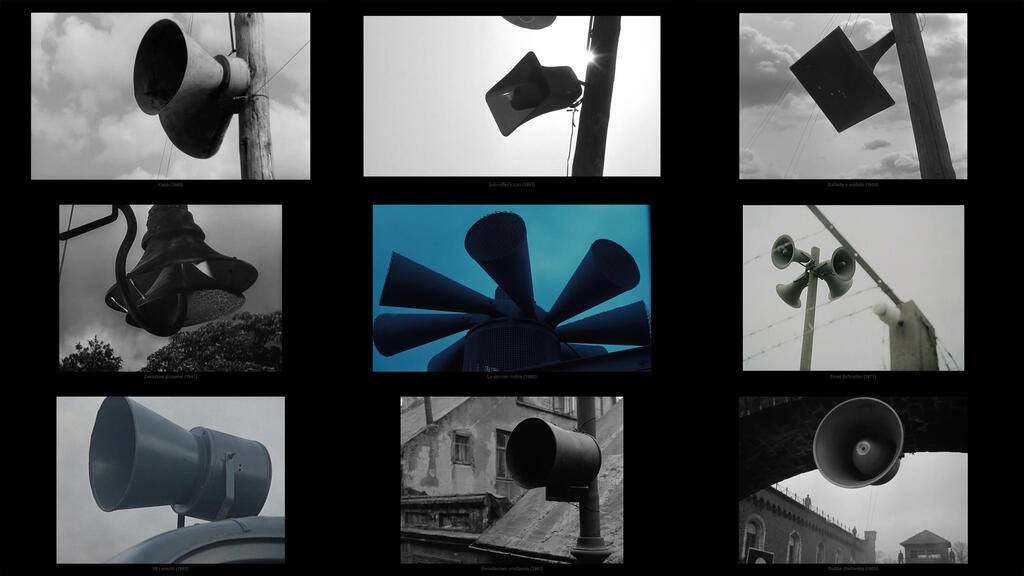
At first, Kosakowski sampled 20 famous, acclaimed films. "I tried to choose as many interesting scenes as possible from them and catalogue them into iconographic groups," he says. "After I finished the 20, I examined which groups repeated themselves. I discovered, for example, that the image of people boarding trains, Nazis entering Jewish homes, people crying — that was the iconography they all shared."
Was there a cliché that kept returning?
"I don’t know if cliché is the right word, but the scene in which Nazis enter Jewish homes appeared in almost every film. In that scene, you see Nazis smiling at their victims. Almost every film also had an image of trains, and of people with fear on their faces. From the question of how I could assemble all these iconographic images and put them into one story, into my story, I built a concept. By the way, I did not want to include sex scenes in the Holocaust, and I also did not want to show physical violence."
The meeting with Claude Lanzmann’s widow
One of the interesting things that emerged in Kosakowski’s research was that actors sometimes played a perpetrator in one film and a victim in another. Donald Sutherland, for example, played an Italian fascist in 1900 and later a Jew in Uprising, based on the story of the Warsaw Ghetto uprising. "It was an amazing opportunity to create a montage in which the two characters look at each other, and it fit perfectly with the story I had built," he says.
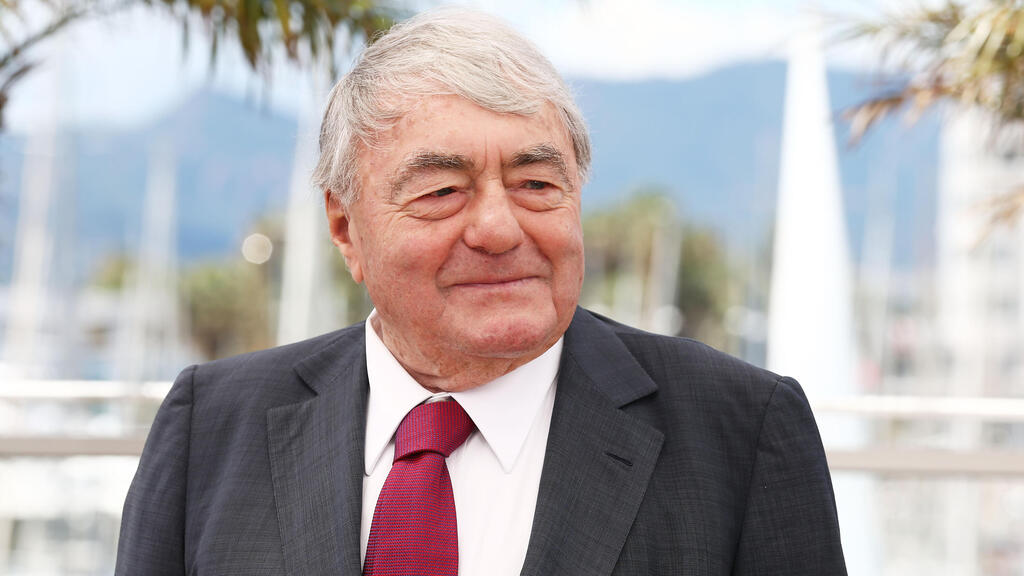
Claude Lanzmann; claimed that feature films should not be made about the Holocaust
(Photo: Andreas Rentz / Getty Images)
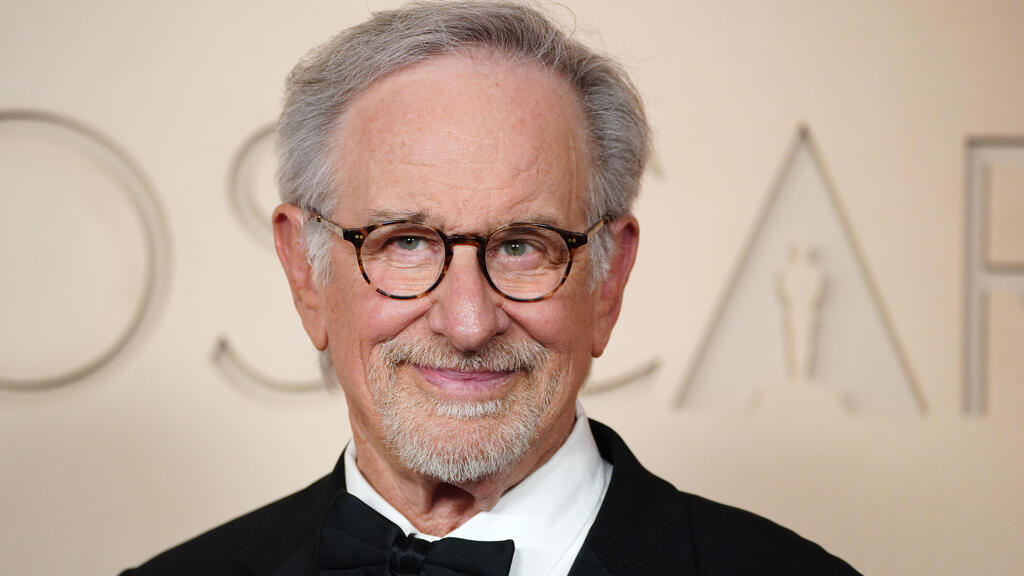
Steven Spielberg
(Photo: Jordan Strauss/Invision/AP)
I understand that Dominique Lanzmann, Claude Lanzmann’s widow, saw your film. What did she say after watching it?
"Dominique came to our apartment, and after she watched the film, she said: 'He was right — it is impossible to depict the Holocaust.' That disappointed me. I think that, for me, it is possible, because after all, I made Holofiction. But from Dominique’s point of view, it is not possible."
Speaking of Lanzmann, what do you think of Spielberg’s Schindler’s List?
"When I first saw Schindler’s List, when it came out in 1993, I was 18. I enjoyed the film because cinematically it is well made, and it moved me very deeply because it reminded me of childhood memories, when I saw films in that style. It was the first moment when I thought: 'Wow, suddenly there is a film in the world that depicts all the memories and all the images that had already appeared in other films, but this time on a huge scale.' Whether you like it or not, I still think it is a very important film."
From Holofiction
(Photo: Kosakowski Films)
Do you want Holofiction to make people reflect on the Holocaust, or to change their perspective?
"In my films, viewers become very aware of how autocratic or dictatorial systems function," he says. "I think repetition of images is a good tool for reflecting that. No one today will read a book about dictatorial mechanisms, because no one has time. But if you try to create something audiovisual, without dialogue, with music that carries you through the story, like Holofiction, then I think such a project has the potential to capture you and make you really think about the subject. It is very important that viewers also think about themselves and think about their own starting point when looking at the past.
"I held test screenings of the film, and some friends of mine, Turkish lawyers who came from Istanbul to visit Berlin, said that the truth was that throughout the film they were not thinking about the Holocaust but about the Armenian genocide. Whoever watches my film begins to think about where they come from, about the history of their own country. In this period in which we live, a period in which 'strong leadership' is raising its head around the world, I felt I had to do something because I personally am very afraid of war. I grew up in Poland, and I remember that in 1981, when there was a state of emergency after the Russians threatened to invade Poland, I saw violence in the streets as a child, police and so on. It was traumatic for me. Since then, I have been very afraid of wars."
'Suddenly, the film became relevant'
Kosakowski recalls that when he began working on the monumental project almost a decade ago, "there was no war in Ukraine and no huge war in the Middle East. People were laughing at me: 'What would you do? We have already seen so many Holocaust films.' Look at where we are today. Suddenly, my film is so relevant."

A Nukhba terrorist on October 7, 2023
Many people today use terms from the Holocaust era, such as Nazi or fascist, in political discourse. What do you think about that?
"You have to be very careful with these words," he says. "You have to provide proper education, because you cannot just say 'Holocaust,' or 'antisemitism' or 'Israel.' When talking about Israel, for example, you have to separate things: Israel and the Israeli government, Jewish society and the Jewish past. These are completely different things. You cannot mix them up. It is amazing that antisemitism is now rising. I don’t understand it. October 7 was an act of Nazism. Absolutely. We have to talk about this. If we do not talk, we will go backward. The only thing that will allow us to live in peace side by side is education."
Holofiction is only part of Kosakowski’s mega-project, titled Dark Tourism. "It is a 10-part project, and it is made up not only of films but of different and diverse ways in which we commemorate World War II," he explains. "Dark tourism is an important term coined in the 1990s by two British professors, and it describes tourism to dark places where atrocities occurred. I am very interested in this important subject. Today, there is really so much tourism to 'dark places' such as Chernobyl or Ground Zero in New York.
From Holofiction
(Photo: Kosakowski Films)
"What I wanted to do in order to expand the term was to deal with worlds of digital images, because I think that when you watch films about atrocities and violence, you are also a kind of dark tourist. That is my interpretation. The first part of the Dark Tourism project is called Chronofiction, and it is intended to be a 6,000-page book made up entirely of a list of films about World War II and the Holocaust, and the dates each film deals with. At the end of the book, there will be a link to a portal where you can type, for example: When was Reinhard Heydrich assassinated in Prague? The computer will show you all the films dealing with that period. The next step will be an exhibition in cooperation with the German Cinematheque, and perhaps other German film museums."
Kosakowski also wants younger generations to be exposed to his work. "I want to see young people coming to my films and exhibitions. In many countries, they do not even know what the Holocaust is," he says. "Please, you have to learn. Look at our world. Genocide is reappearing in every corner of the world, and 'strong leadership' is again raising its head. If you do not understand the past, I do not know where we will end up. It is very important to teach young people. People believe that a strong leader will bring salvation, but that is not true. If we only fight, nothing will be solved."