

It all began in 1986, when a seven-year-old Yaron unwrapped what he thought was a toy car—until it suddenly snapped open into a robot. “It blew my mind,” he laughs.
That first figure sparked a lifelong fascination. The toys arrived with fold-out instructions and sticker sheets, teaching kids to turn a simple vehicle into a complex hero. “Some take just one move,” he says. “Others have fifty or sixty steps—it’s like mechanical origami.”
Asked which mode is harder, he grins: “Turning a robot back into a car. You need patience—and tiny fingers.”
“It’s part toy, part puzzle, part character,” he explains. “A Rubik’s Cube that talks.” For Yaron, the magic lies in how engineering and storytelling merge. The toys came first, but when Marvel’s writers gave them names and personalities—Optimus Prime, Megatron, Starscream—they became icons.
He recalls the full saga: the Japanese Diaclone and Microman roots, the 1984 TV mini-series, and the 1986 animated film that shocked kids worldwide by killing off Optimus Prime. “It traumatized a generation,” Yaron laughs. “But that’s what made it unforgettable.”
Later came Japanese sequels—Headmasters, Masterforce, Victory—which expanded the universe even further. “There’s always another layer,” he says.


Yaron's collection
(Photo: Bar Gindy)
Over the years, Transformers have crossed into pop culture through creative partnerships: Back to the Future’s DeLorean, Ghostbusters’ Ecto-1, Top Gun’s jet, TMNT’s Party Wagon and even Sonic the Hedgehog. “They transform nostalgia into something new,” Yaron says. Prices range from $35 to $400, depending on the rarity of the item.
Among his rarest pieces is a Linkin Park x Soundwave figure—gold-plated and emblazoned with the band’s logo. Another standout is Blockbuster, a custom Israeli repaint inspired by the defunct video chain, created by a local artist. “That one’s personal,” he admits. “It’s a piece of pop-culture history reimagined in Israel.”
The market, the prices and the ethics
Collectors quickly learn that size doesn’t dictate value. Modern retail tiers range from $10 Core Class miniatures to $200 Titan-class giants, but exclusives and vintage Japanese editions can reach thousands. His most prized single figure is a Japanese G1 Overlord, still sealed in its original box.
Yaron also values integrity. “If a figure’s creator or character represents hate, it’s out,” he says, recalling items he removed after antisemitic comments by public figures. “A collection reflects who you are.”
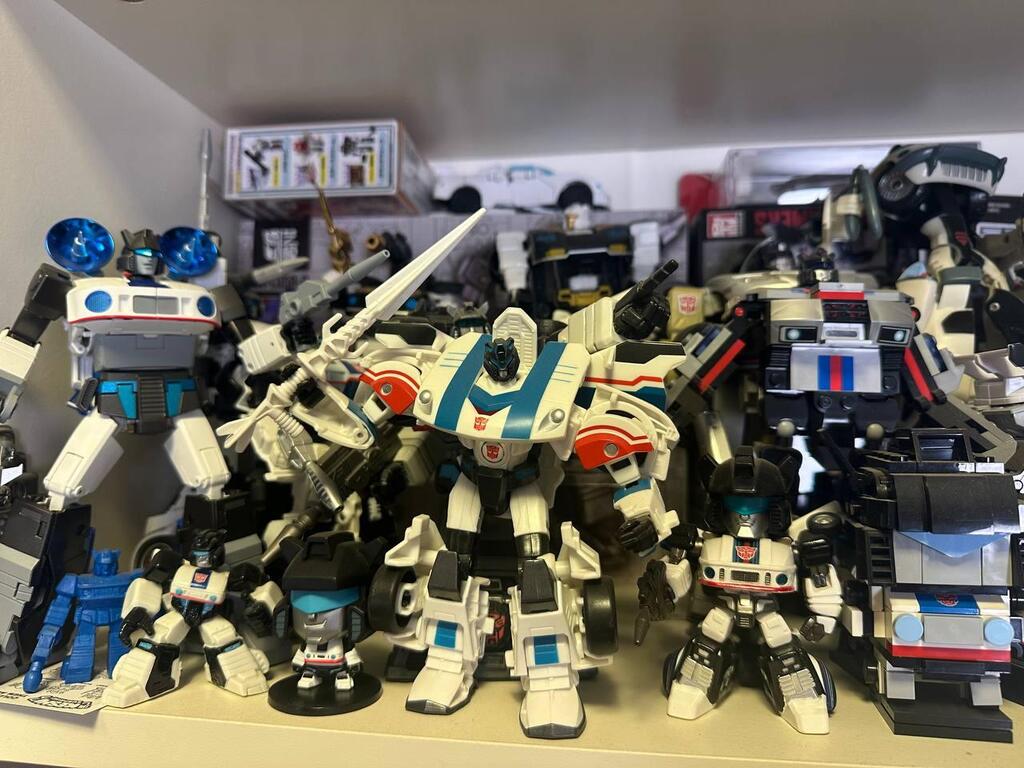
Yaron's collection
(Photo: Bar Gindy)

Yaron's collection
(Photo: Bar Gindy)
His oldest survivor is Doublecross, a two-headed dragon from the late ’80s that once emitted sparks like a lighter. “No toy company would dare make that today,” he jokes. Among other treasures are graded Mastik Atlas stickers, relics from an Israeli chewing-gum brand that once packed Transformers decals inside.
Few communities are as loyal as the Transformers crowd. Israel’s fandom began in early-2000s forums and exploded with the 2007 live-action films. Yaron now manages the Transformers Israel Facebook group and helps organize national toy events like Ono-ToyFest—a free annual convention in Kiryat Ono with exhibits, workshops and screenings.
“When I tell people abroad that there’s a Transformers community in Israel, they’re stunned,” he says. “But we’re small creative, and passionate.”
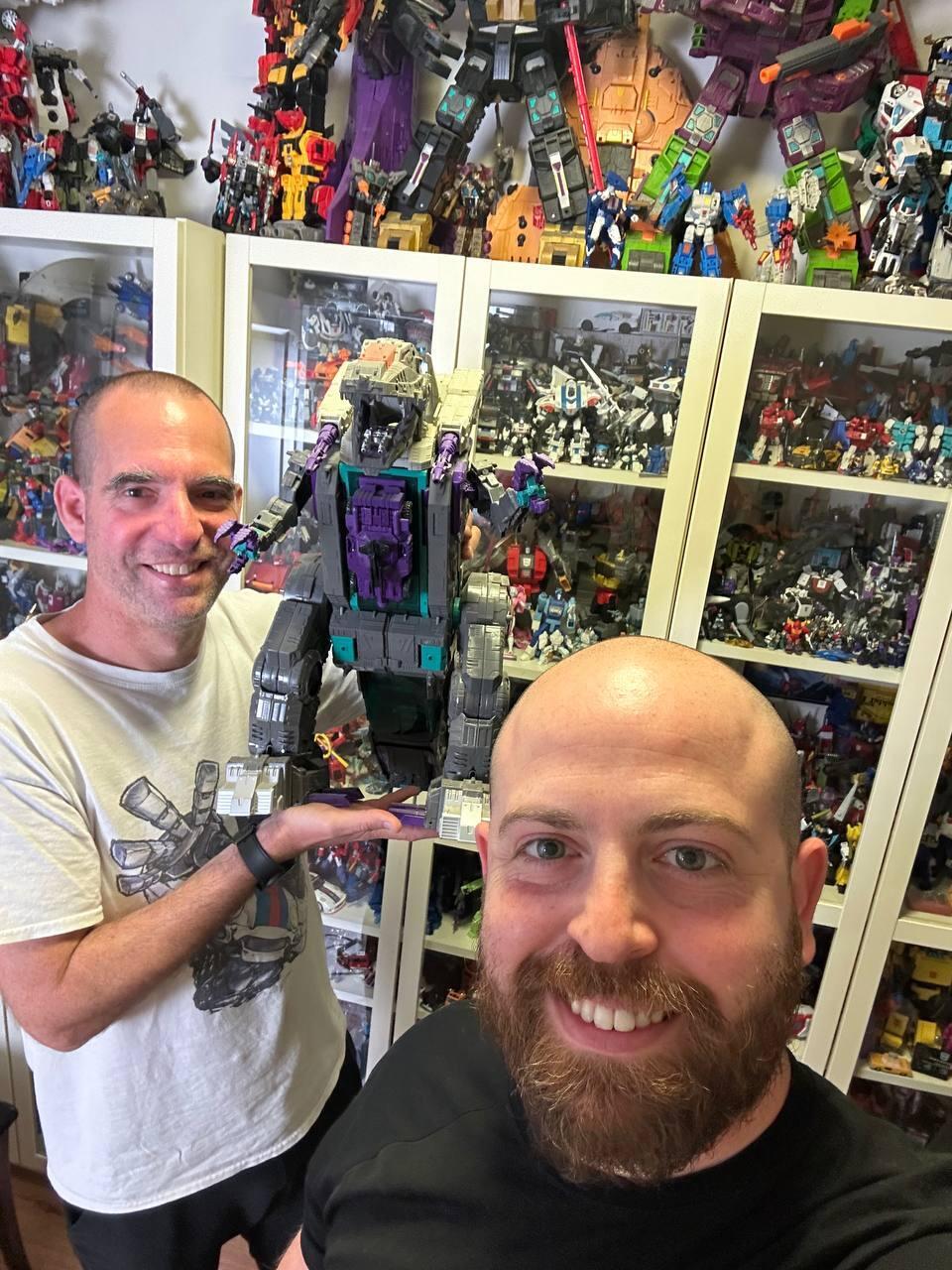
Yaron and Bar Gindy
(Photo: Courtesy)
Yaron’s advice for beginners is simple: “Focus. Choose a character, a series or a style. Don’t try to buy everything. Curate. Let it tell your story.”
He holds up Jazz one last time. “That moment when it clicks—from car to robot—still gives me chills,” he says.
- For more stories from Yaron and other collectors, check out the People and Collectors podcast. The full interview is available with subtitles in English and 50 other languages.