

The Aguda – The Association for LGBTQ+ Equality in Israel published its 2025 Pride Index for local authorities on Thursday, with Ramat Gan, Rishon Lezion and Tel Aviv-Yafo taking first place with a perfect score of 110 points. Jerusalem, Ashkelon and Nahariya joined the index for the first time this year. The findings point to wide gaps between authorities: while some have implemented broad policies and permanent services for the LGBTQ+ community, others have taken little action in the field.
The Pride Index, published for the seventh year, was presented at the President’s Residence to President Isaac Herzog, with representatives of local authorities and the association in attendance. The index evaluates municipal policy toward the LGBTQ+ community in areas including education, welfare, public visibility, culture and organizational infrastructure. This year, 46 local authorities were assessed, with a maximum possible score of 110 points, including bonus questions.
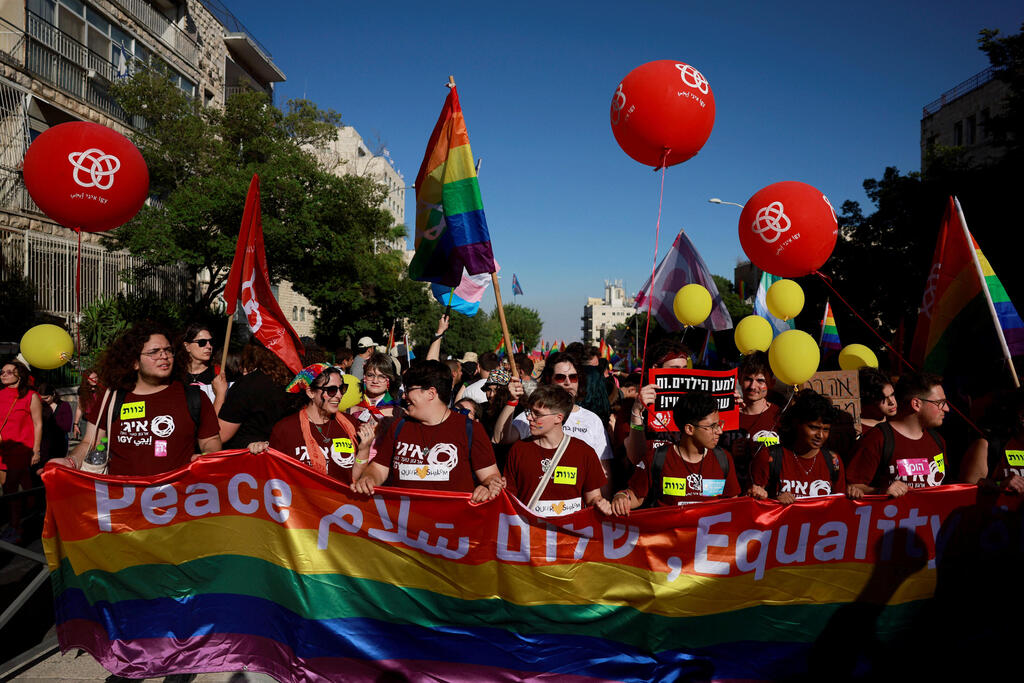
The Pride Parade of Jerusalem - which joined the index for the first time
(Photo: / REUTERS / Ammar Awad)
According to the index, culture — including Pride events and year-round community activities — is the area receiving the greatest municipal investment, while education saw the lowest level of investment.
In the large-authority category (more than 100,000 residents), Ramat Gan, Rishon Lezion and Tel Aviv-Yafo ranked first with full scores of 110 points. They were followed by Haifa with 106 points and Herzliya with 104.
Netanya, which scored 99 points, received a special distinction for a “significant leap,” partly due to expanded activity in education, welfare and community services. In the medium-sized authority category, Givatayim and Ra’anana shared first place with 108 points, followed by Kiryat Bialik with 105 points and Ramat Hasharon with 104.
Among smaller authorities, Hof HaCarmel ranked first with 101 points, followed by Drom HaSharon with 98 points and Binyamina-Giv’at Ada with 86. Eight authorities joined the index for the first time this year: Azor, Ashkelon, Bnei Shimon, Tirat Carmel, Jerusalem, Nahariya, Katzrin and Kiryat Ono. The Aguda said participation itself marks “an important step in building a path and laying the foundations for community action.”
The data show the average municipal score this year stood at about 72.5 points. Alongside authorities that achieved especially high scores, others received very low marks, underscoring significant disparities in policy and services for the LGBTQ+ community across Israel.
Notably, despite the 46 authorities assessed this year, many municipalities in Israel still do not participate in the index at all — a fact the Aguda views as evidence that major gaps in attitudes toward the LGBTQ+ community remain between different local authorities nationwide.
Speaking at the ceremony, President Isaac Herzog said, “The Pride Index reflects the growing commitment of local authorities in Israel to the values of equality and human dignity.” Referring to Jerusalem’s inclusion in the index, he said it carried “special importance,” because “even amid complexity, it is possible and necessary to strengthen every person’s sense of belonging, security and dignity.”
Aguda chairperson attorney Nimrod Gorenstein said, “Local authorities are the community’s first line of defense.” He added: “Every authority has its own character, but all share a common responsibility to lead, set an example and show that it is possible to build a diverse, vibrant and safe society here.”