

Robert Duvall, the Oscar-winning actor known for roles in “The Godfather,” “Apocalypse Now,” “The Great Santini” and “Tender Mercies,” has died at 95.
His death was announced in a statement posted on Facebook by his wife, Luciana Duvall. No cause of death was given.
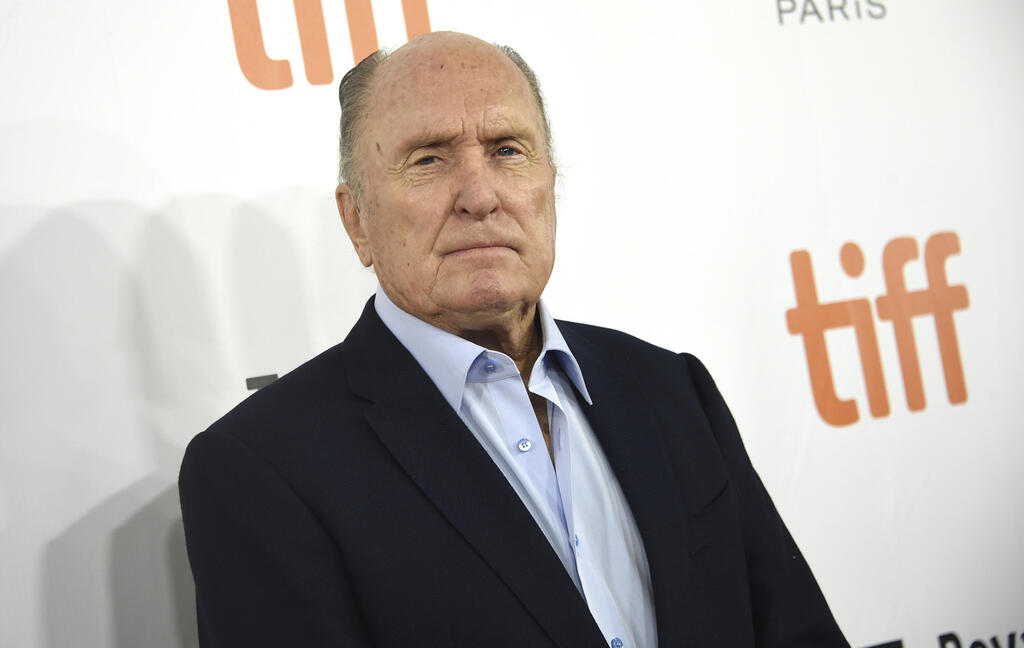
(Photo: Evan Agostini/Invision/AP)
Duvall won the Academy Award for best actor for his performance in 1983’s “Tender Mercies,” a quiet drama written by Horton Foote and directed by Bruce Beresford. Over a career spanning more than six decades, he received seven Oscar nominations and became widely regarded as one of the defining actors of his generation.
Though rarely a conventional leading man, Duvall earned a reputation as an “actor’s actor,” respected by peers and critics for his restrained, naturalistic performances. Director Francis Ford Coppola once remarked that it can be difficult “to say the difference between leading men and great character actors,” a sentiment often applied to Duvall’s work.
Duvall’s breakthrough film role came in 1962 as Boo Radley in “To Kill a Mockingbird.” His career accelerated in the early 1970s with a string of notable performances. In 1972’s “The Godfather,” he portrayed Tom Hagen, the Corleone family’s calm and calculating consigliere, earning his first Oscar nomination. He reprised the role in 1974’s “The Godfather: Part II.”
He received further acclaim for his performances as a ruthless television executive in 1976’s “Network” and as Lt. Col. Bill Kilgore in 1979’s “Apocalypse Now,” delivering the iconic line, “I love the smell of napalm in the morning.” Both roles earned him additional Academy Award nominations.
In 1980, Duvall garnered his first nomination for best actor for “The Great Santini,” in which he played a domineering Marine pilot. He won the Oscar four years later for “Tender Mercies,” portraying a washed-up country singer seeking redemption.
He continued to work steadily in film and television, often in supporting or ensemble roles, including “The Natural,” “Colors,” “Days of Thunder,” “Rambling Rose,” “Geronimo: An American Legend” and “Deep Impact.”
In 1997, Duvall wrote, directed and starred in “The Apostle,” playing a charismatic but flawed Texas preacher. The performance earned him another Oscar nomination, and the film won best feature at the Independent Spirit Awards. He received an additional supporting actor nomination the following year for his role in the courtroom drama “A Civil Action.”
Later credits included “Gone in Sixty Seconds,” “The Sixth Day,” “John Q,” “Open Range,” “Secondhand Lions,” “We Own the Night,” “The Road,” “Get Low,” “Crazy Heart” and “The Judge,” for which he received his seventh Oscar nomination. One of his final screen roles was in 2022’s “The Pale Blue Eye.”
Duvall also built a substantial television career, earning five Emmy nominations and winning twice. He starred in the 1989 miniseries “Lonesome Dove,” the 1992 HBO film “Stalin,” and the 2006 miniseries “Broken Trail,” for which he won an Emmy for his performance and shared another as executive producer.
Born Jan. 5, 1931, in San Diego, Duvall was the son of a Navy rear admiral and grew up primarily in Annapolis, Maryland. After graduating from Principia College and completing military service, he studied under renowned acting teacher Sanford Meisner at New York’s Neighborhood Playhouse.
In New York, he befriended fellow aspiring actors including Gene Hackman and Dustin Hoffman. He worked extensively in theater during the 1960s while taking on film and television roles in projects such as “Bullitt,” “True Grit” and numerous Westerns and crime dramas.
Throughout his career, Duvall was known for his ability to inhabit characters fully, whether playing military officers, lawmen, preachers or patriarchs. His understated style influenced a generation of actors and left a lasting mark on American cinema.
He is survived by his fourth wife, Luciana Pedraza, with whom he starred in “Assassination Tango.”