

Deep tones stir me awake from a sweet, heavy sleep. No, it's not an alarm clock—it’s the didgeridoo. Seconds later, I realize I’m outdoors, surrounded by total darkness. My eyes adjust, revealing hundreds of people lying on individual mattresses, like mine. The playing intensifies, jarring, accompanied by nearby snores. I glance up and find solace in an endless canopy of stars. A cold breeze blows; the didgeridoo’s harsh drone gives way to something soft. I’ll never forget this night.
No, I’m not in an adult summer camp, though the vibe among the Newe Zohar club participants is reminiscent of one. I’m at Meteora—an event that isn’t a concert, festival or party, but an immersive experience of listening and observing. Over 12 hours—from sunset to sunrise—musicians and sound artists, including Mark Eliyahu and Natasha’s Friends, perform live. Attendees are invited to recline, surrender to the sounds and nature and experience music unlike any conventional performance. Yes—sleeping is not just allowed, it's welcomed.
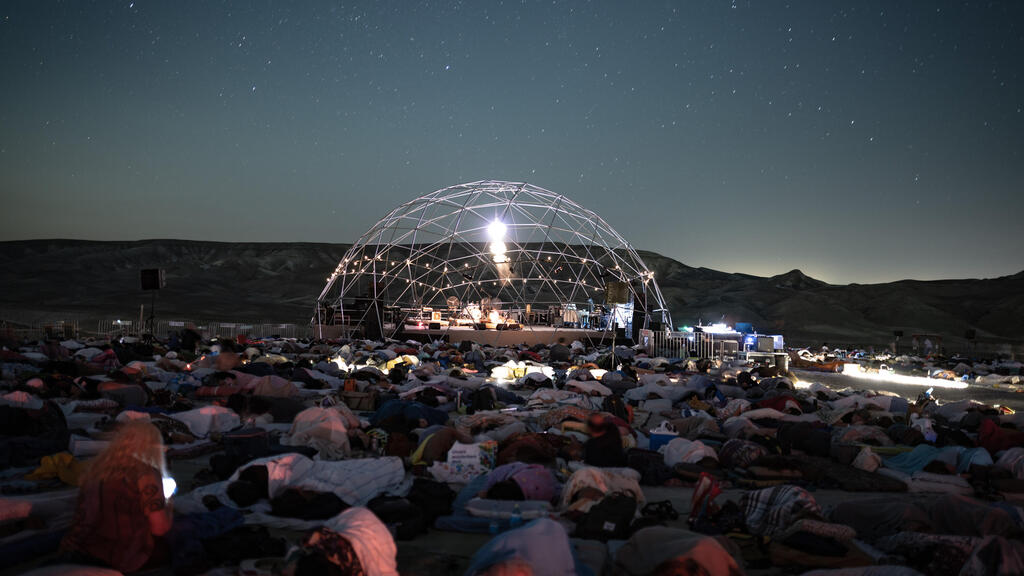
In its fifth year—this edition in the Judean Desert—the event drew a mixed audience: young couples and older groups, some curious newcomers, others returning to recapture a previous magic. Most arrived at early twilight, when the sky blushed pink and orange, and even the camels greeted them to this unique musical experience.
My attention was first drawn to an open metal dome above the stage, surrounded by 1,500 closely placed mattresses. Early arrivals claimed mattresses and covered them with sheets; later ones eased in by guiding paper lanterns with tiny lights. With no moonlight, the only illumination came from a jellyfish-like lamp above the stage and the lanterns. Attendees were asked to avoid phone light to prevent light pollution. With no cellular signal, participants relinquished digital distraction; darkness, stars and a dreamlike soundtrack became the whole programming. It was a rare chance to experience everything differently.
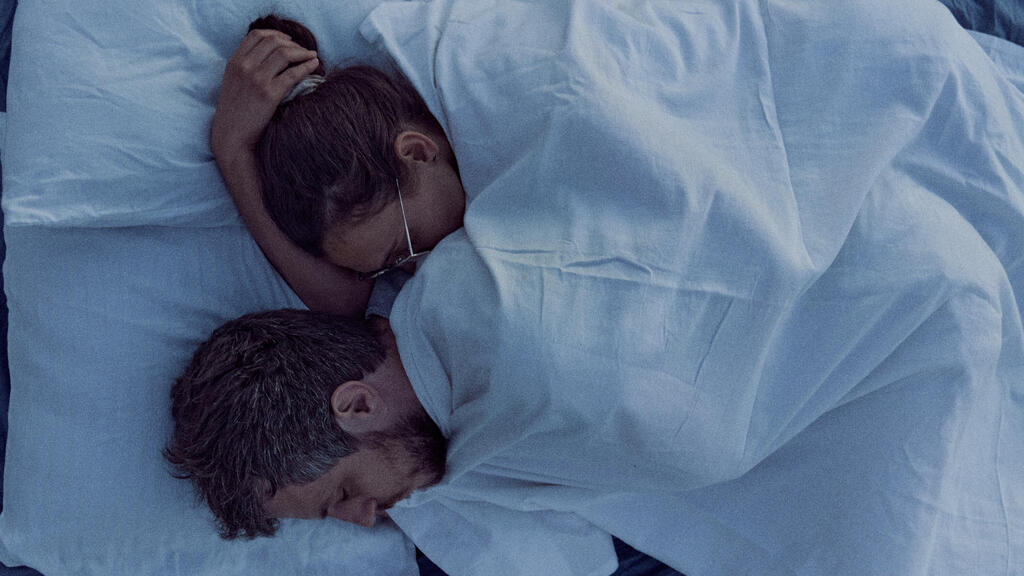
(Photo: Zohar Ron)
Before the live performances began, newcomers received guidelines: respect your space and others, maintain silence and don’t smoke or eat on mattresses (there was a designated area for that). Even the most skeptical latecomers found themselves absorbed into the adventure. Producer Gil Karniel drew inspiration from British composer Max Richter’s eight-and-a-half-hour album SLEEP, intended for—you guessed it—sleeping. “This deep-listening concept has occupied me for years,” he told Ynet. “These events create a space and set‑up that lets people dive into music unlike typical concerts.”
Meteora started at Mitzpe Ramon, and Karniel also runs urban listening events dubbed Shamans of Sound. “But the desert—with its silence and release—truly allows that,” he says. “People can let go of gravity and stretch onto their mattresses.” The simplicity of lying under the stars, listening—without distraction—is exactly what people seem to crave in such a period.

(Photo: Shiran Shostak)
Because the event isn’t a typical concert or festival, the listening is meditative and personal. After DJ Yotam Avni’s relaxed ambient set, a range of live performances followed: Maayan Linik with the Metaorchestra, Mark Eliyahu, and composer Yehezkel Raz offered delicate soundscapes; DJ Dekel led the crowd deeper into the night with ambient beats; and German composer Tabea joined with Ariel Barli on guitar, guiding listeners through the darkest hours until dawn.
Get the Ynetnews app on your smartphone: Google Play: https://bit.ly/4eJ37pE | Apple App Store: https://bit.ly/3ZL7iNv
Under the cover of darkness, these ambient, instrumental and sometimes uneasy sounds formed a surreal soundtrack, detaching listeners from reality. While initially hesitant about lying so close to others, by night’s peak, the proximity created a coherent collective. The night drifted between sleep and wakefulness—but never oppressive—a chance to listen in a transformative way that breaks routine and reconnects us, even with ourselves.
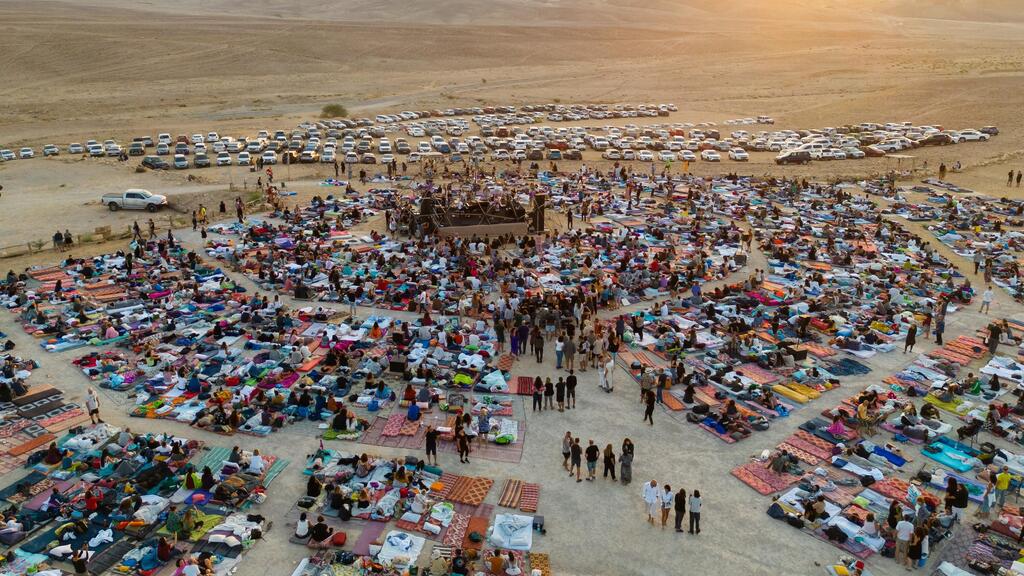
(Photo: Noa Shogonovsky)
In pre‑war years, international musicians were part of Meteora; this year, aside from the German artist, all performers were Israeli. “There’s a limitation in that sometimes you want unique global sounds, but it also pushes me and the musicians to explore new territory,” says Karniel.
With the first light before 5 a.m., Tibetan bowls signaled wake‑up time. Those reluctant to rise were greeted by raw guitar tones from the stage. After delicate ambient sets, a final awakening performance by Natasha’s Friends brought the audience and band together. Frontman Arkadi Duchin joked to the still‑sleepy crowd, “Freddie in the morning! You barely opened your eyes…” Yet many joined in singing the comforting refrain “What will be, what will be?”
(Photo: Zohar Ron)
“At night, you discover artists and sounds you may not otherwise meet—it’s deeply personal. With sunrise, there's suddenly an anchor, something collective and people start connecting to the repertoire as one. You wake in the morning, see familiar faces in the crowd, and it becomes like a tribal fire. That’s unifying at the end,” reflects Karniel. The choice of Natasha’s Friends isn’t incidental. “These were the sounds of my youth—they resonate with so many emotions.”
Karniel sees a deeper connection between the war and the need for this kind of experience. “Since the traumatic events we’ve endured and continue to navigate, people truly need this. It’s sometimes hard—maybe because of the situation—to go out to the desert, to commit to cultural events. There’s so much distraction and pain, but for those who do make this choice, the effect is much more profound. Suddenly, music isn’t just a slogan—it becomes a genuine tool for healing.”
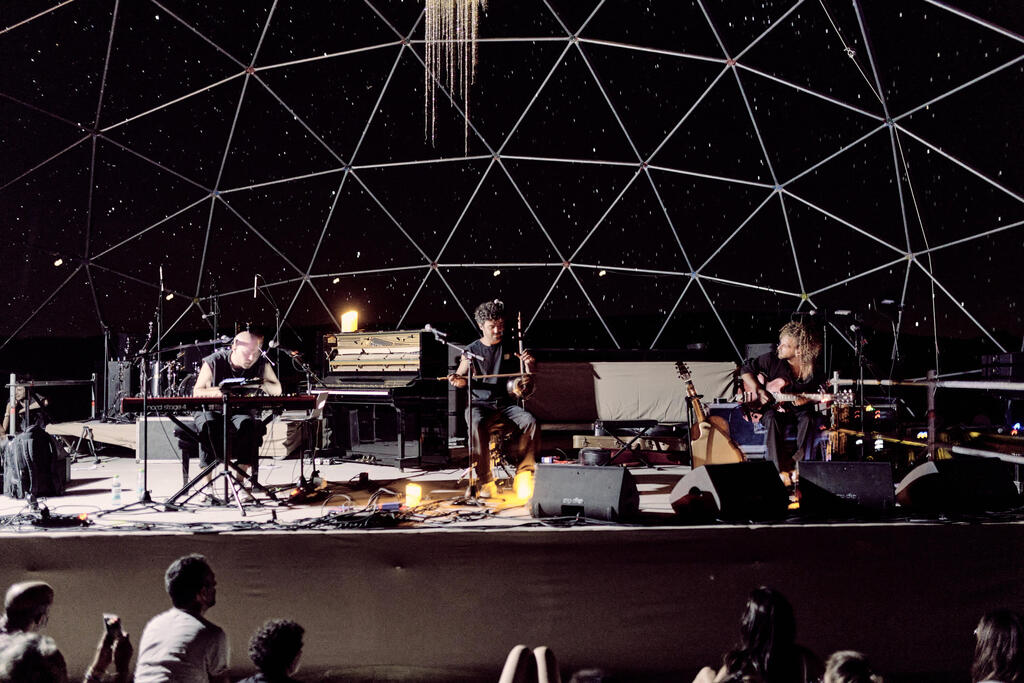
(Photo: Zohar Ron)
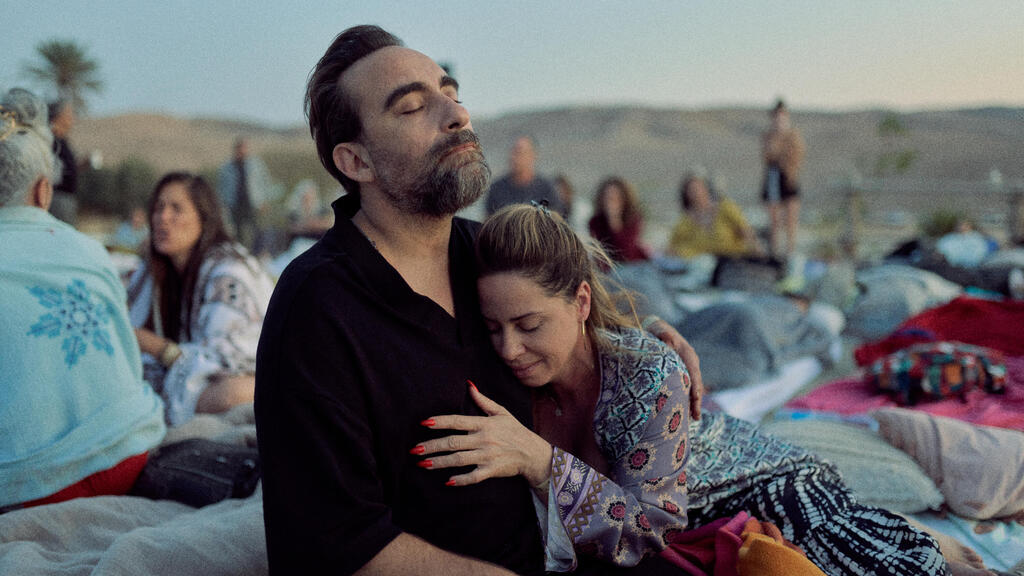
After a night floating between ambient soundscapes beneath a starry sensory haze, the slap of reality from a rock band felt like the perfect awakening. Couples embraced at sunrise, and at one point, guitarist Micha Shitrit hugged Duchin on stage. As the sun climbed over the hills, the heat rose too. Shortly after 7 a.m., the event concluded, and a richly immersive night gave way to a sweet, distant memory. Before the finale of their hit “If Already Alone,” 1,500 people felt a little less alone and a little farther from the chaos.