

Here are the must-see films at the Jerusalem Film Festival screening July 9-19.
Red Rocks
Set against the beautiful backdrop of a French Riviera resort town not far from Cannes, Red Rocks initially appears to be a gentle coming-of-age film about a group of children who spend their days playing, roaming and testing boundaries.
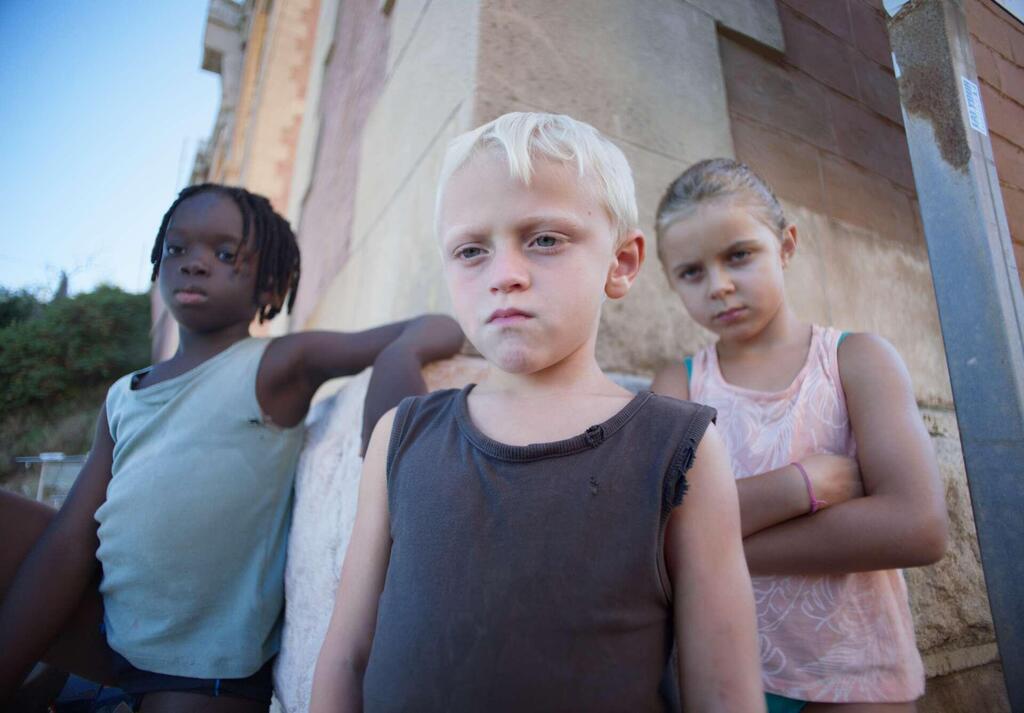
But this is a Bruno Dumont film. The French director, known for the bleak masterpieces The Life of Jesus and Humanity, later turned to eccentric comedies such as Slack Bay and The Empire. Here, too, innocence quickly gives way to something stranger and more unsettling.
The children, led by Kaylon Lancel as Géo, whose angelic appearance carries its own strange unease, spend their days leaping from the rocks into the sea and tearing through town on ATVs. They seem to move through the world with total freedom, with almost no parental authority in sight. One girl’s mother appears briefly at the family mansion, but seems largely indifferent to her daughter.
When Géo falls for a girl who is treated as the neighborhood bully’s possession, a boy his own age, the story turns violent. The result is a bizarre, fascinating film that is anything but a simple tale of childhood, with the reddish rocks of the Mediterranean coast becoming a deceptive stage for erupting desires and impulses.
Their Town
Those who loved Richard Linklater’s Before Sunrise may find much to enjoy in Their Town, a small, charming American film rooted in the early-2000s mumblecore tradition. But where Jesse and Céline’s conversations often drifted toward the philosophical, the dialogue here works more quietly, peeling back emotional defenses on the way to intimacy.
The film was produced and written by Mark Duplass, one of the central figures of the genre. It is directed by his wife, Katie Aselton, and stars their daughter, Ora Duplass.
Their Town
(Photo: Courtesy of Jerusalem Film Festival)
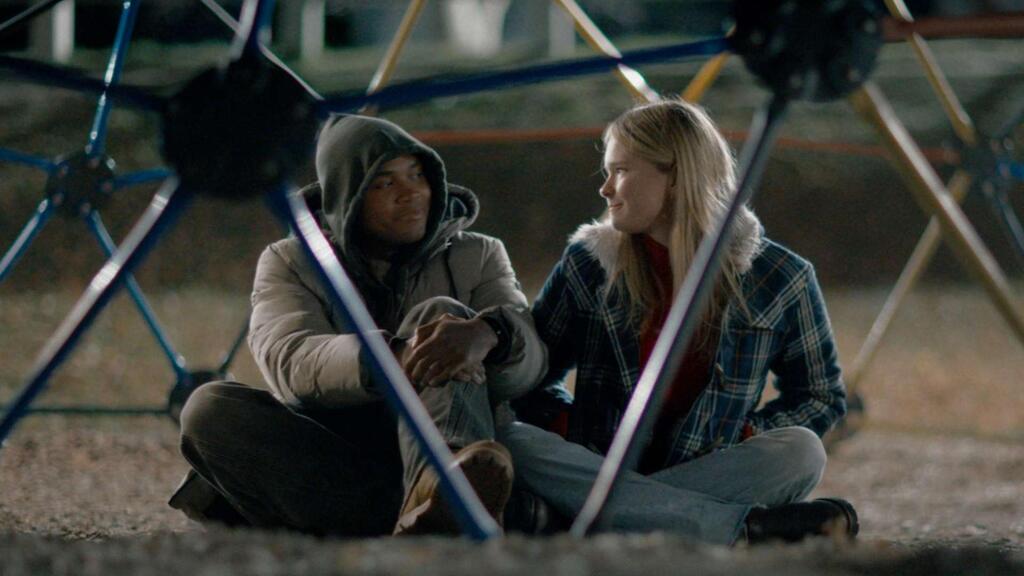
The story brings together high school theater, the process of actors finding their roles, and the gradual bond that forms between two young people. It unfolds over a single day in Bangor, Maine.
Shortly before the premiere, Abby’s boyfriend drops out of the school play in which she has the female lead. The director quickly finds a replacement: Matt, played by Chosen Jacobs, an African American teenager who had been assigned a technical role in the production. Abby invites him to her home to rehearse, setting off an increasingly long day of walking, talking and working through their parts.
The film rests on naturalistic dialogue and the easy chemistry of its two young leads. The plot follows a familiar path, though it reveals a few unexpected details about the characters along the way. Its use of theater to build intimacy works especially well, particularly in a key scene centered on the famous repetition exercise from the Meisner technique. The result is a persuasive illustration of how acting can become a path to emotional honesty and genuine human connection.
Hercules Falling
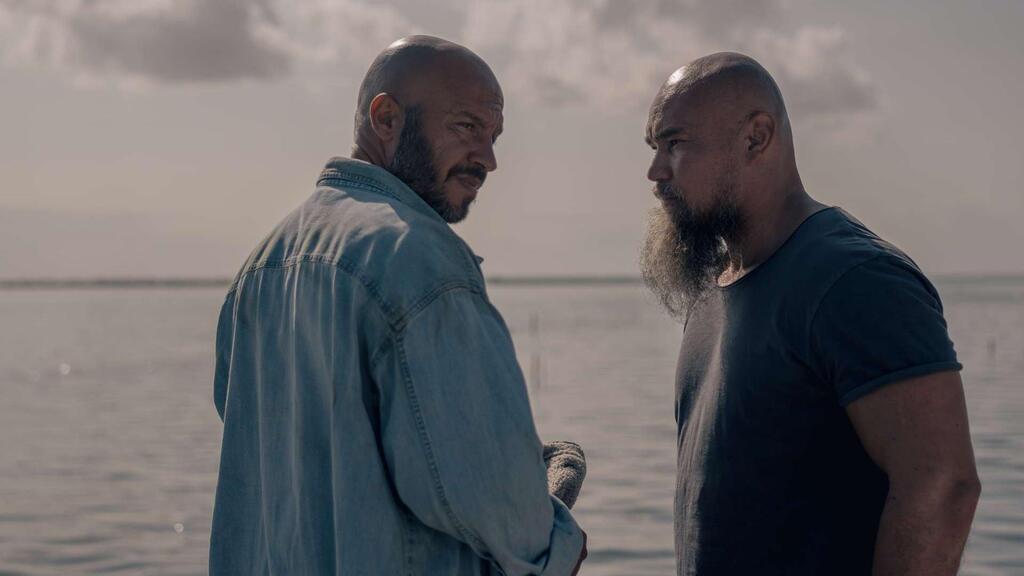
For Israeli viewers, Hercules Falling, the debut feature by Danish filmmaker Christian Bonke, carries particular resonance. The film, which won best first feature at the Tallinn Black Nights Film Festival, follows Youssef, a young Muslim veteran played by Dar Salim, as he returns from the battlefields of Iraq and Afghanistan to his wife and young son. After a violent family incident exposes the depth of his combat trauma, he is sent to a rehabilitation facility, cut off from his family.
There he meets other former soldiers confronting their own wartime experiences. The film uses real soldiers and therapists, many of them essentially playing versions of themselves and drawing on their own trauma. Bonke’s documentary background is evident throughout, and the world he depicts will feel painfully familiar to Israeli viewers aware of the toll of military-related post-traumatic stress.
Hercules Falling
(Photo: Courtesy of Jerusalem Film Festival)
Over the course of the film, Youssef is forced to confront the fact that recovery will be a long and painful process. One of its most moving scenes comes when he returns home on leave for his son’s birthday, only to find that the boy has become afraid of him.
As in several Israeli films from previous decades, the collapse of the warrior image is at the heart of the drama. And while the film may at first seem to tread familiar ground, its close observation of Youssef as he tries to find his way back to his family, only to discover that he can no longer fully leave the battlefield behind, turns it into a deeply moving work.
Iron Boy
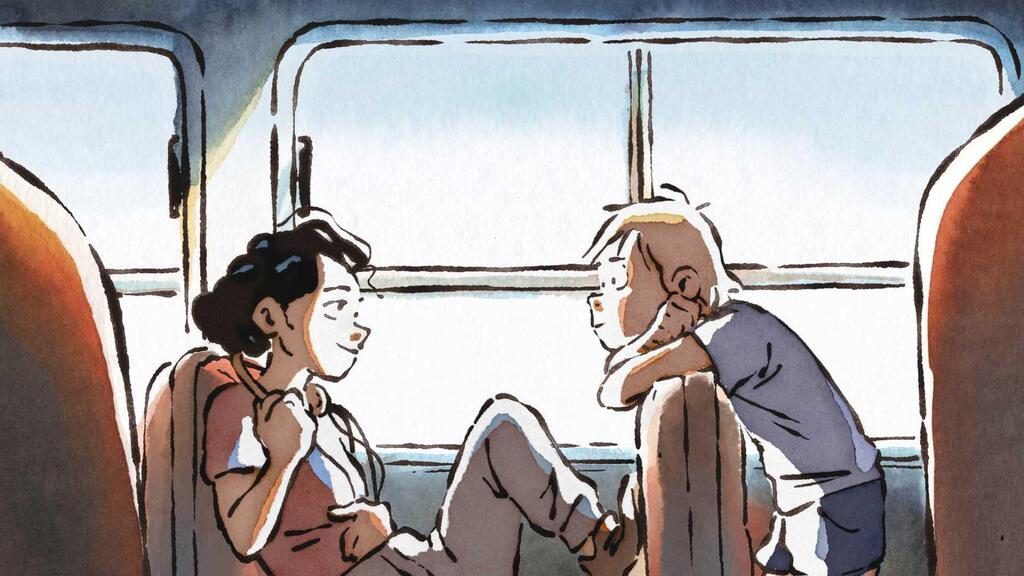
Animation lovers craving a break from slick Pixar- and Disney-style 3D will find much to admire in Iron Boy, a French-Belgian animated film billed as “for the whole family,” but strong enough to resonate with adults as well.
Louis Clichy draws on memories of his own childhood in the 1980s, when he grew up in a farming family in Beauce, in northern France. Like the film’s hero, 11-year-old Christophe, voiced by the director’s son, Gary Clichy, he suffered from scoliosis as a child and had to wear an iron brace for several years.
Christophe must learn to live with the limits imposed by the uncomfortable, cumbersome device. But those limits gradually become an opening for lessons in patience, perseverance and the discovery of unexpected interests. Alongside that journey, the film explores his complex relationship with his father, a taciturn farmer whose own back has been bent, metaphorically, by years of economic struggle.
Iron Boy
(Photo: Courtesy of Jerusalem Film Festival)
Clichy worked as an animator on Pixar’s Up and WALL-E and co-directed two Asterix films. Here, he turns to hand-drawn animation, with thick outlines, watercolors and a restrained color palette. The result is beautiful and moving, both as a story that follows several years in Christophe’s life and as a sensory experience in its own right. The animation gives vivid life to the natural world and to the passage from childhood into adolescence.
Rose
Austrian director Markus Schleinzer’s Rose earned Anatomy of a Fall star Sandra Hüller the acting award at this year’s Berlin Film Festival.
Hüller plays a 17th-century soldier who returns to his village in Germany after a long absence to claim an inherited plot of land. The villagers accept his claim, while overlooking one crucial fact: the soldier is actually a woman.
This is Schleinzer’s third film. His 2011 debut, Michael, drew attention for its depiction of a pedophile’s daily routine. This time, he offers what appears to be a gender-reversed variation on The Return of Martin Guerre, itself based on a true story, about a soldier whose return to his village throws his identity into doubt.
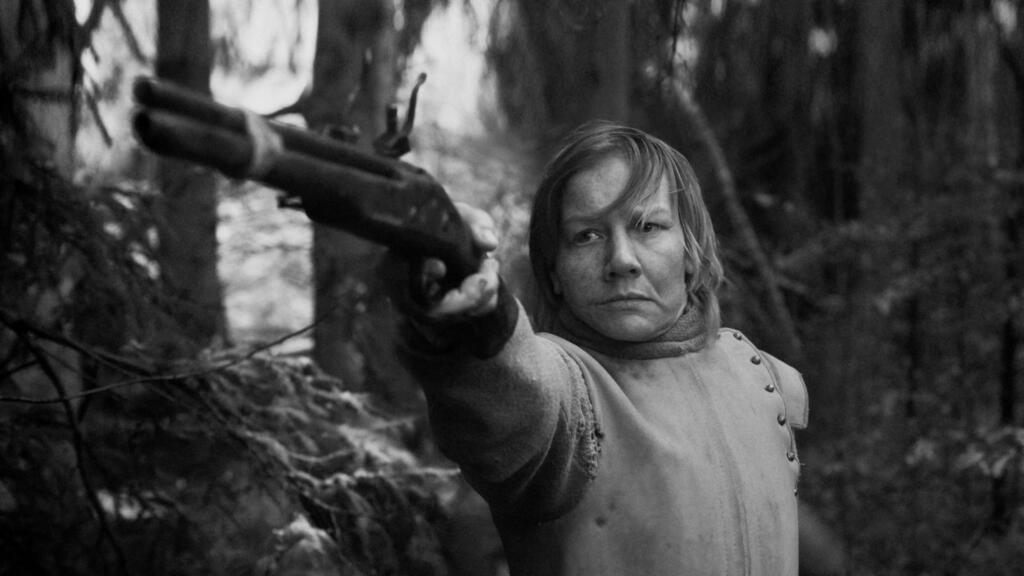
Rose
(Photo: Courtesy of Jerusalem Film Festival)
The new film is also grounded in documented historical cases, this time of women who assumed male identities in order to survive or find a place in a world controlled by men.
But Schleinzer does not stop at questions of identity and deception. His heroine also builds a family with a local young woman, who becomes pregnant under circumstances the film deliberately leaves ambiguous. As rumors spread and suspicion deepens, the story turns into a religious and moral trial, evoking the force of Carl Theodor Dreyer’s The Passion of Joan of Arc and the chilling atmosphere of Michael Haneke’s The White Ribbon.
Those are imposing points of comparison, but the film earns them. It is one of the festival’s highlights.
Roberto Rossellini films
The closest thing to a retrospective at this year’s festival is a program of four films from the rich filmography of the great Italian director Roberto Rossellini.
The first is Germany, Year Zero, a short 75-minute feature shot in 1948 amid the ruins of Berlin. Its protagonist is a 13-year-old boy ideologically and morally corrupted by his teacher. The film offers an extraordinary look at childhood in a time of devastation and a humanist-realist portrait of a victim who belongs to an enemy nation in the immediate aftermath of the war.
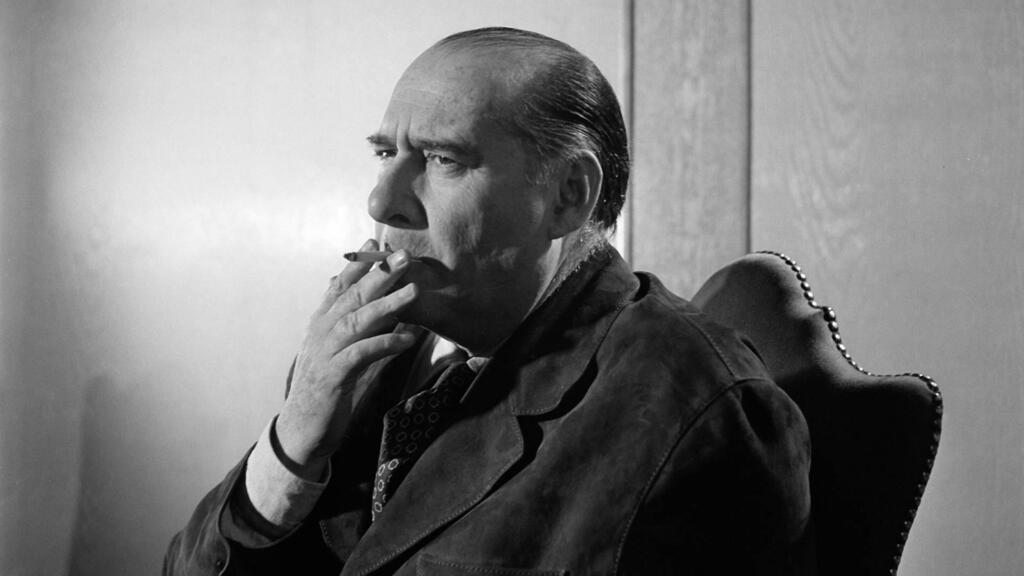
Roberto Rossellini: Living Without a Script
(Photo: Courtesy of Jerusalem Film Festival)
Two additional films in the program, Journey to Italy and Fear, both from 1954, come from the height of Rossellini’s professional and personal collaboration with Ingrid Bergman. Their relationship began the same year he directed Germany, Year Zero and became a global scandal, as both were married to other people at the time.
After their marriage in 1950, Bergman served as Rossellini’s leading actress through 1954, in a collaboration that produced four fiction films and a filmed record of her stage performance as Joan of Arc. The two films screening at the festival are strong examples of the way Rossellini used Bergman to explore emotional distance and alienation within relationships.
Rossellini and Bergman divorced in 1957, sending him into a period of crisis and uncertainty. He found renewed direction while working on the fourth film screening at the festival, the 1959 documentary India: Matri Bhumi.
The film offers a nonjudgmental look at the culture of ordinary people in India and at their distinct relationship with nature and animals. It also includes brief staged segments featuring nonprofessional actors.
To round out the mini-retrospective, the festival will also screen the 2025 documentary Roberto Rossellini: Living Without a Script, which examines the director’s creative process during the filming of India: Matri Bhumi.