



Like any series by prolific creator Ryan Murphy “Based on a true story,” “American Love Story: John F. Kennedy Jr. and Carolyn Bessette” takes considerable artistic license, with little regard for the real people behind the characters. It is no coincidence that members of the Kennedy family reacted with anger. Even for them, long accustomed to Hollywood’s obsession with their clan, this felt like too much freedom at the expense of profound tragedy. At the same time, and to be fair this is also typical of Murphy’s work, the script occasionally produces fictional moments that feel strikingly real. For example, when Bessette’s mother tells her about John F. Kennedy Jr.: “All he knows is who he is supposed to be, the heir to Camelot. That is the only thing the world has ever told him, because if there is no Camelot, then what was the point of all that loss?”
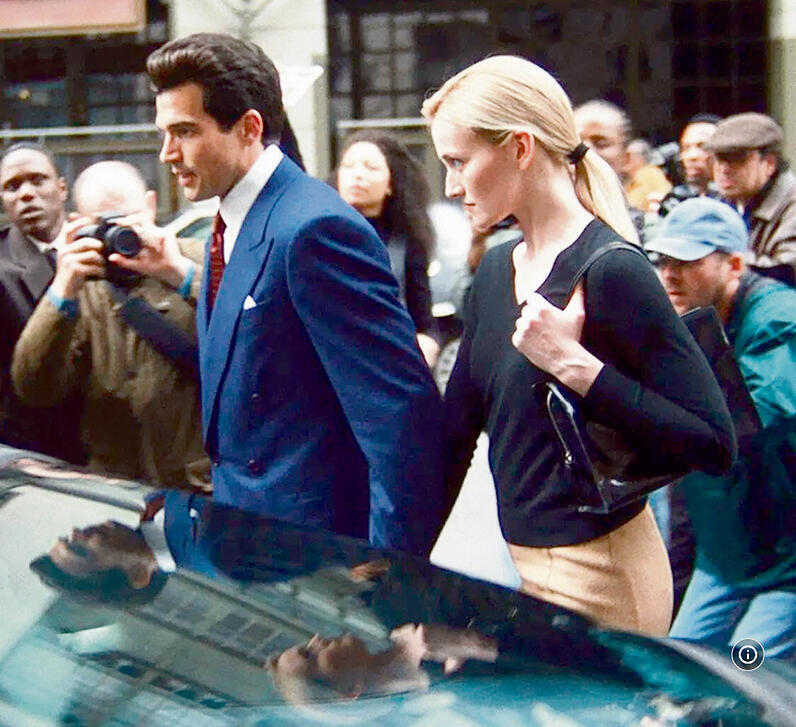
“That loss” refers to the relentless chain of tragedies that has haunted the Kennedy family, while the need to embody “Camelot” is likely both the blessing and the curse of a dynasty that remains the closest thing the United States has ever had to a royal family: beauty, wealth, political power and glamour intertwined with tragedy, conspiracy, curse narratives and a vast cultural myth.
The image of Camelot, the legendary castle of noble and heroic knights, attached itself to the Kennedys after the assassination of President John F. Kennedy in 1963. Jacqueline Kennedy, the most beloved first lady since the advent of television, gave an interview to Life magazine in which she quoted the musical “Camelot,” recalling her husband’s favorite line: “Don’t let it be forgot, that once there was a spot, for one brief shining moment, that was known as Camelot.” Thus was born the myth of Kennedy’s presidency as a brief, luminous era of liberal hope, cut short abruptly, a myth that only deepened with each new family tragedy. And there were many.
The problem with myths of this kind is that they fail the test of reality, yet are impossible to escape. That burden rests on every member of the Irish Catholic clan, which produced a large number of descendants, all carrying the weight of the Kennedy name. America, and certainly Hollywood, has never had enough. Sixty years after the assassinations, five years apart, of President John F. Kennedy and his brother Robert Kennedy, the attorney general and presidential candidate, the Kennedys remain a gift that keeps giving, even if no one is asking.
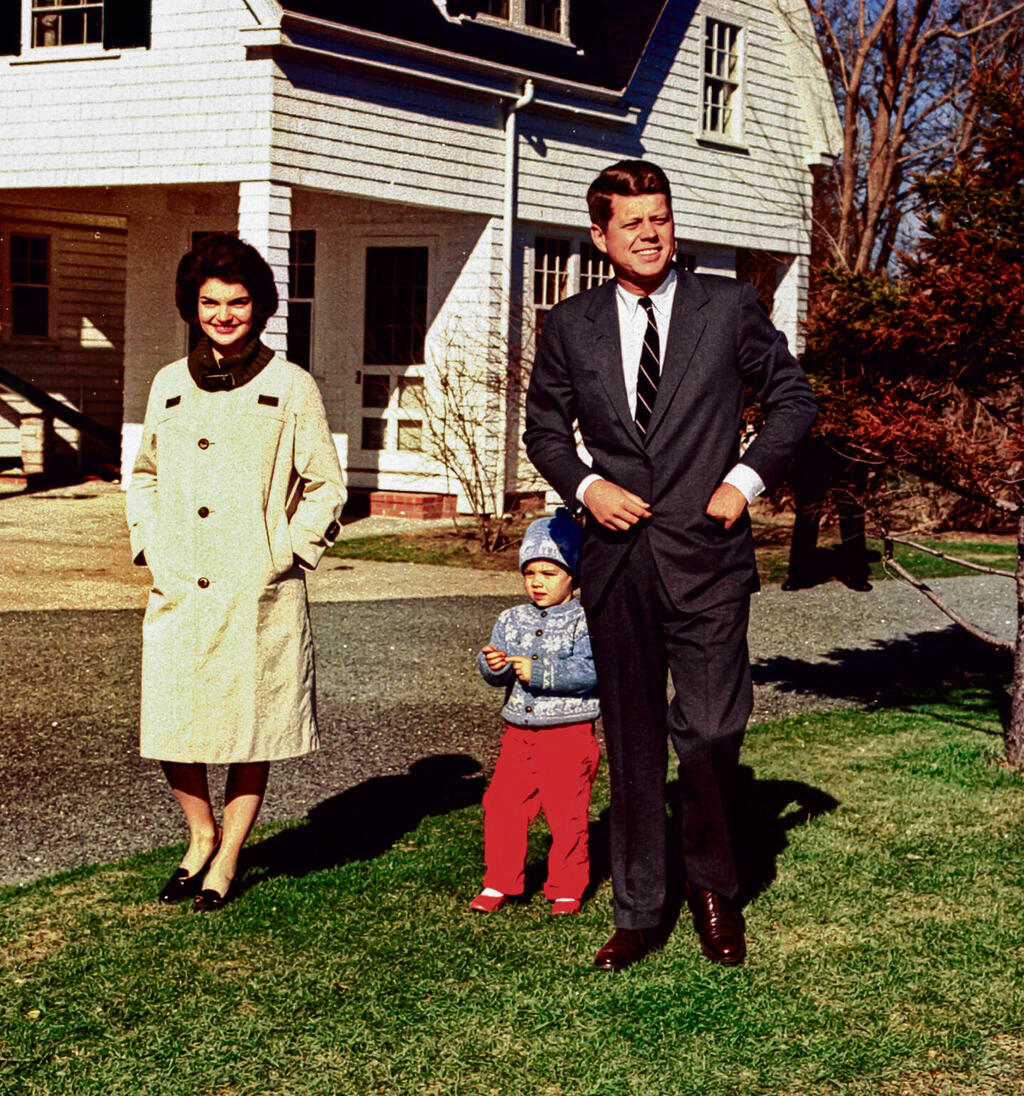
The first political family to live under constant cameras: John and Jackie Kennedy in their home yard
(Photo: AP)
In recent weeks, since the release of “American Love Story” on Disney+, centered on Kennedy Jr. and his partner Carolyn Bessette, the internet has been insatiable. Her iconic fashion, his effortless charm and their electric chemistry leading up to their tragic end have captivated Americans, especially younger generations who were not alive when paparazzi in New York followed the couple relentlessly.
And appetite grows with exposure. In London, Netflix is currently filming a series titled “Kennedy,” focusing on the origins of the dynasty, with Michael Fassbender portraying patriarch Joseph Kennedy. The official description promises to reveal “the intimate lives, loves, rivalries and tragedies that shaped the most iconic dynasty in modern history.” It could describe nearly every cultural work about the Kennedys over the past decades. America remains addicted, and nostalgic for Camelot, whether it ever truly existed or not.
Joseph and Rose Kennedy had nine children. Four died in particularly violent and tragic circumstances, two assassinations and two plane crashes, while the lives of the others were far from easy. Their third daughter, Rosemary, suffered from developmental challenges. She was often volatile, prone to outbursts and sexually active, behavior that deeply troubled her devout Catholic parents. In retrospect, it is clear she suffered from severe mental health issues, but her parents believed she was intellectually disabled, something they could not accept within their version of Camelot.
Jack Schlossberg, the son of Caroline Kennedy, was the most prominent family member to speak out against the series “American Love Story.” He lashed out at the creator “for turning my family’s tragedy into a public spectacle,” yet his own run for Congress is driven largely by being the grandson of a beloved, mythic president, an American prince assassinated at 46, a trauma the United States has never fully overcome.
At age 23, Rosemary underwent a lobotomy, a brutal and experimental brain procedure that left her with the mental capacity of a toddler. She was then institutionalized. Her mother visited once. Her father never did. For years, the family concealed her existence. Rosemary spent her life in institutions and died in 2005 at age 86. Some say the Kennedy family is cursed. If so, many believe it began with this act.
The eldest son, Joe Jr., a staunch antisemite and his father’s great hope, was expected to become the first Kennedy president. He died in 1944 when his plane exploded during a World War II mission. Four years later, daughter Kathleen died in a plane crash while traveling with her fiancé.
Joseph Kennedy never recovered from his eldest son’s death. His second son, John, entered politics largely under family pressure. He narrowly won the 1960 election and became the first Catholic president. His faith was a central issue, forcing him to publicly affirm his commitment to the separation of church and state. He became immensely popular before being assassinated in November 1963 in Dallas. Months earlier, he and Jacqueline had lost their infant son, who lived only 39 hours.
His younger brother Robert Kennedy, whom many considered even more talented, was assassinated in Los Angeles in June 1968 by Sirhan Sirhan, a Jordanian of Palestinian origin angered by Kennedy’s support for Israel during the Six-Day War. He left behind 11 children.
America, and certainly Hollywood, can never get enough. Sixty years after the assassinations, five years apart, of President John F. Kennedy and his brother Robert Kennedy, the attorney general and presidential candidate, the Kennedy family remains a gift that keeps on giving, even if no one is asking for it
Then there was Ted Kennedy, who survived a plane crash in 1964 that killed an aide and the pilot. Five years later, he drove his car into a pond in Chappaquiddick, resulting in the death of Mary Jo Kopechne. He reported the incident 10 hours later and denied intoxication throughout his life. He accepted a plea deal and avoided jail time. Ted died in 2009 at age 77.
Tragedies continued across generations, from overdoses and accidents to fatal incidents involving grandchildren. Yet no modern Kennedy tragedy resonated as deeply as the death of John F. Kennedy Jr. in a 1999 plane crash. Throughout the 1980s and 1990s, he sustained the family myth. The image of him saluting his father’s coffin at age 3 became iconic. As an adult, he was seen as America’s second chance. Kennedy Jr. was named People’s “Sexiest Man Alive,” and his list of partners included, among others, Madonna, Brooke Shields, Sarah Jessica Parker and Cindy Crawford, along with a particularly serious relationship with Daryl Hannah. Hannah later wrote a sharply critical op-ed in The New York Times attacking Ryan Murphy’s series and the way her character was portrayed. “I have usually chosen not to respond to media coverage about me,” she wrote, “but a television series that exploits the tragedy of John F. Kennedy Jr. and Carolyn Bessette depicts a character using my name as annoying, self-absorbed, whiny and inappropriate. Know that most, if not all, of those claiming intimate knowledge of our personal lives are self-serving sensationalists trading in gossip, insinuation and speculation.”
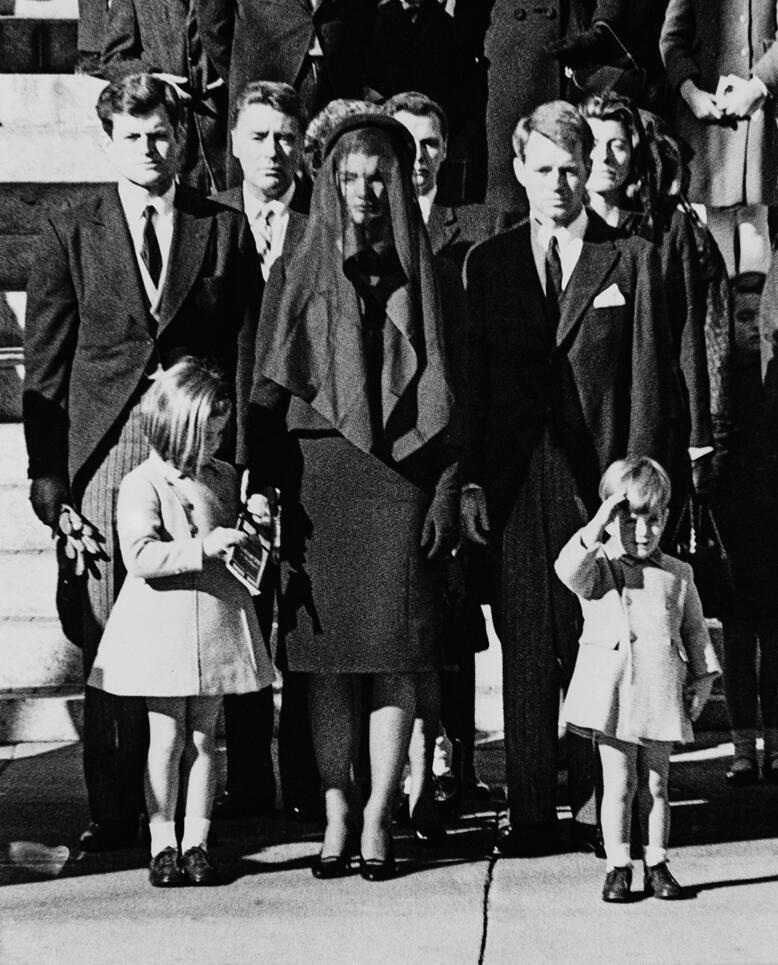
The image every American knows: John F. Kennedy Jr. saluting at the funeral of his father, President Kennedy
(Photo: Keystone, Getty Images)
In any case, in 1996 John F. Kennedy Jr. married Carolyn Bessette, a former model and a public relations executive for Calvin Klein. They were married for barely three years when their private plane, which Kennedy Jr. himself was piloting, crashed into the Atlantic Ocean. Both were in their 30s, and Carolyn’s sister Lauren was also killed in the crash. It later emerged that Kennedy Jr. had not completed his pilot training. The plane went down off the coast of Martha’s Vineyard, the upscale Massachusetts island closely associated not only with the Kennedy family but with the broader Democratic elite.
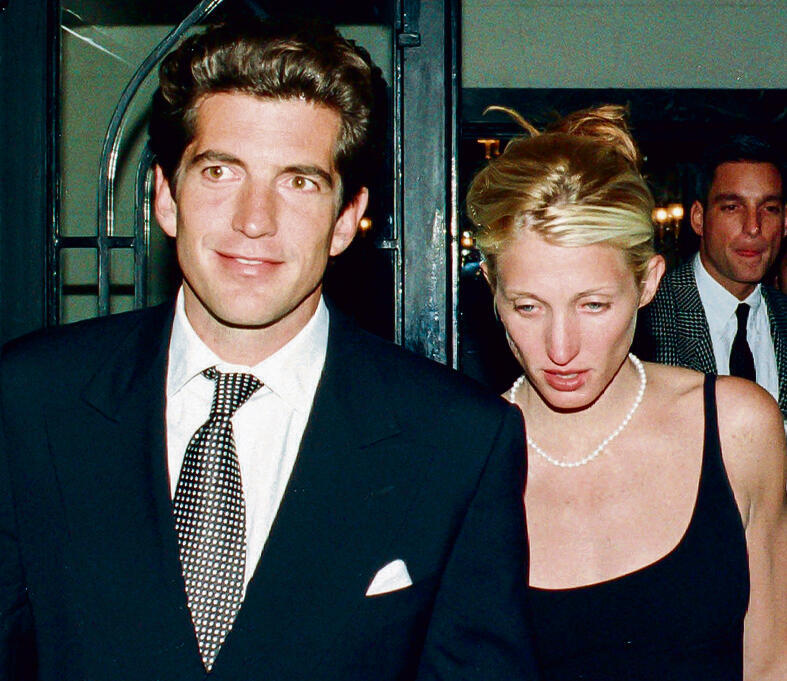
John F. Kennedy Jr. and his wife Carolyn Bessette
(Photo: Douglas Healey, AP)
The Kennedys were the first political family to live under constant media scrutiny. Campaigns, White House life and even funerals were broadcast repeatedly, long before social media. Today, even those who do not remember JFK grow up with a symbolic image of a family that represents both liberal aspiration and moral failure. This duality allows Americans to project hopes and disappointments onto them.
But the Camelot myth has been eroding for years. There have been no true successors to JFK or Robert Kennedy. Joe Kennedy III’s loss in a 2020 Senate primary signaled the end of the political immunity once associated with the name. Then came Robert F. Kennedy Jr. His shift from Democrat to Trump ally shattered two pillars of the Kennedy identity: family loyalty and political integrity.
For decades, the family maintained a brand of attractive liberalism, wealthy and famous, yet committed to helping others. That image has been deeply shaken. Public criticism within the family was rare until now. Caroline Kennedy and other relatives have openly condemned RFK Jr., marking an unprecedented break. Donald Trump has divided many American families, but perhaps his most symbolic impact is the fracture of the Kennedys themselves.
Until recently, two figures represented the family’s future: Jack Schlossberg and his sister Tatiana, both grandchildren of JFK. Schlossberg, 33, is now running for Congress. Tatiana died in December at age 35, just a month after revealing she had terminal cancer in a deeply personal essay in The New Yorker. “Now I’ve added another tragedy to our family,” she wrote. “And there is nothing I can do to stop it.” Schlossberg has criticized Murphy’s series for exploiting family tragedy, yet his own political rise is inseparable from the Kennedy myth.
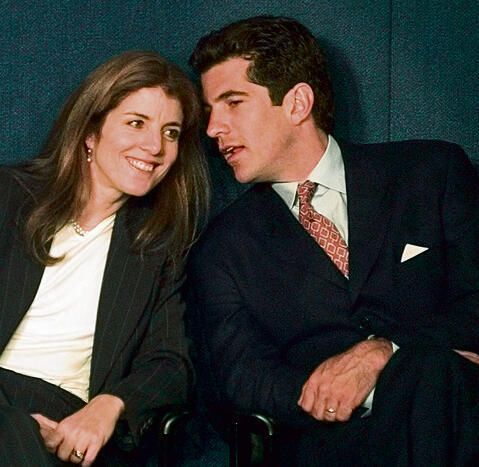
John F. Kennedy and his sister Caroline
(Photo: Elise Amendola, AP)
America wants to believe in the Kennedys because it wants to believe in itself, especially at a time of national uncertainty. The narrative is so powerful that even Trump sought to associate himself with it, attaching his name to the Kennedy Center. He did not remove Kennedy’s name, but placed his own first.
For a family long associated with myth, tragedy and legacy, there may be no clearer sign of a curse than the words “Trump-Kennedy Center.”