


One of Silicon Valley's tech moguls — a difficult, lonely visionary — is preparing for one of the most important days of his career. At company headquarters, he undergoes coaching and rehearsals with a team of assistants and sycophants getting him ready for the big moment.
Suddenly, a voice from the past emerges at the back of the room, shouting that the emperor has no clothes. It belongs to a former friend and business partner of the revered billionaire, who has chosen this momentous day to make an appearance. At first, the two speak amicably, but the barbs quickly escalate into a massive, bitter confrontation, bringing to the surface all the insults and resentments between two men who once built an empire together.
'The Social Reckoning' — Trailer
(Credit: Courtesy of Forum Film)


This is one of the finest scenes ever written by Aaron Sorkin, arguably the greatest living screenwriter working in Hollywood today. And we're talking, of course, about the confrontation between Steve Jobs (Michael Fassbender) and Steve Wozniak (Seth Rogen, who has never been better) toward the end of "Steve Jobs," the underappreciated 2015 film that consists of a succession of verbal clashes between Jobs and the world around him.
One memorable line: "You know, when people used to ask me what the difference was between me and Steve Jobs, I would say Steve is the big picture guy and I like the solid workbench. When people ask the difference now, I say Steve is an asshole." Sorkin at his best.
The gifted writer may have figured, quite reasonably, that not enough people saw that movie. So guess what? In his new film, "The Social Reckoning," he includes essentially the same scene over and over. And over again.
This time, Sorkin is also directing, and the subject is Facebook and another tech mogul. Mark Zuckerberg (Jeremy Strong, delivering a mashup of all his characters from "Succession" onward) is preparing not for a product launch but for a Senate hearing. From the back of the room emerges a former partner who has bad-mouthed him in the press (Bill Burr, who always looks ready to insult someone). The insults are there, as are the witty comebacks, but everything feels second-rate: the acting, the directing and even the screenplay.
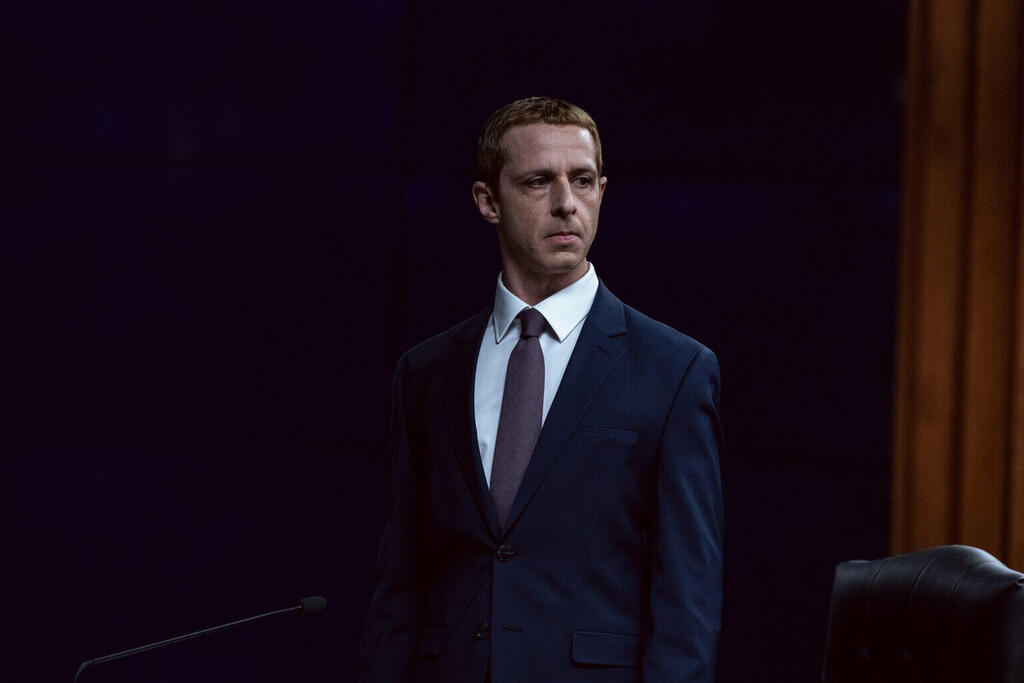
Second-rate. A scene from 'The Social Reckoning'
(Photo: Courtesy of Forum Film)
On paper, "The Social Reckoning" is a sequel to 2010's "The Social Network," the masterpiece that earned Sorkin his only Oscar. That film chronicled the founding of Facebook and, under David Fincher's masterful direction, used a business story to tell the tale of the collapse of the friendship between a young Zuckerberg (Jesse Eisenberg, who declined to return for the sequel, and now it's clear why) and his partner Eduardo Saverin (Andrew Garfield).
The man who created a website designed to connect everyone ends up losing his only friend. Brilliant and simple at the same time, and, in retrospect, prophetic about the disintegration of human society as a whole. That film, criticized at the time for unfairly targeting a seemingly likable young businessman, was actually generous in its portrayal of Zuck as a villain in the making.
And the sequel? Mostly a missed opportunity, thanks for asking.
Zuckerberg is now a full-fledged villain, and he knows it. The film convincingly portrays him as a king working tirelessly to protect his empire, surrounded by a legion of admirers and sitting in an office protected by bulletproof glass — and even a bulletproof chair, if the movie is to be believed.
But he is only a supporting character. Most of "The Social Reckoning" focuses on Frances Haugen (Mikey Madison, the Oscar winner for "Anora"), a corporate employee who became convinced in 2019 that Facebook was doing more harm than good in the world.
Haugen leaked internal documents to Wall Street Journal reporter Jeff Horwitz (Jeremy Allen White of "The Bear," who, in my opinion, grows more irritating with every movie I see him in). Those documents became the basis for a series of investigative reports, and Haugen later testified before Congress.
And ... that's about it. That's the movie's plot. Facebook is still with us, the whistleblower wrote a book about the affair and the journalist won a Pulitzer Prize years later. Well, I certainly didn't see that coming.

What a surprise. Except not really. A scene from 'The Social Reckoning'
(Photo: Courtesy of Forum Film)
Sorkin was supposed to be the man who could turn this thin story into something interesting. He is a master at transforming dry business disputes into verbal, cinematic and ideological duels. Not just in the tech films that now form a trilogy ("The Social Network," "Steve Jobs" and now "The Social Reckoning"), but also in the masterful "Moneyball," which explored the financial strategy behind recruiting baseball players and somehow convinced me for two hours that nothing in my life mattered more.
Sorkin has an enviable ability to turn office discussions into works that reveal something about human nature, ego and passion.
On a human level, if there's anything interesting about "The Social Reckoning," it's that this is a story about three people who all appear to be on the autism spectrum. All three are brilliant and socially awkward, the smartest people in the room, each guided by a moral compass pointing in a different direction.
But Sorkin already explored this type of character thoroughly the first time around, with Zuckerberg in "The Social Network." Worse still, there isn't a single moment when any of the characters questions the path they have chosen.
Sorkin presumably taught my screenwriting teachers what they taught me: Conflict is created between two positive values. In good drama, a character must agonize over their choices because their journey comes at a cost. Even the villain always has a point worth hearing: the Joker in "Batman," the suitors in "The Odyssey" who want Penelope to move on and so forth.
But in "The Social Reckoning," the heroine may initially say she loves Facebook and believes the platform is doing good in the world, yet neither she nor anyone else in the film truly believes it.
As far as Sorkin is concerned, Facebook is the devil and Zuckerberg is Lucifer, whose greed has driven the world toward political extremism, bullying and increasingly brutish behavior. The company should be shut down immediately, and the sooner the better.
That's a legitimate position to take at a party convention or an academic symposium. Less so in a movie in which audiences expect to see characters develop.
This leads to the realization that the real motivation behind the film is neither cinematic nor human, but political.
If there's any courage here, it lies in Sorkin's refusal to conceal his views. They belong to the liberal side of the political spectrum, of course, but they are expressed with a ferocity that could make anyone who has ever shouted their political opinions in a Facebook argument uncomfortable. Which means all of us.
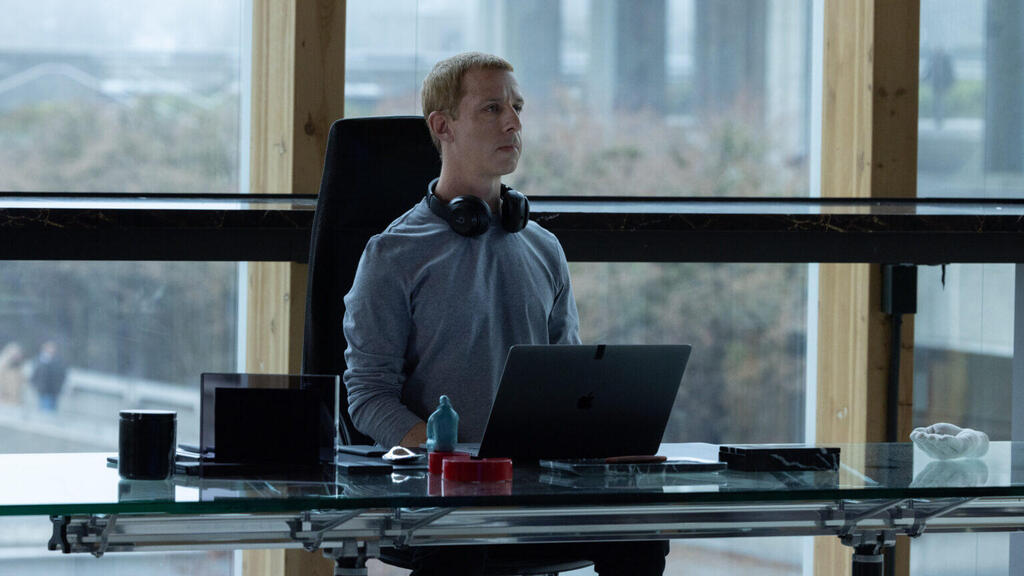
Hello, Lucifer. Jeremy Strong in 'The Social Reckoning'
(Photo: Courtesy of Forum Film)
Along the way, Sorkin also settles scores with anti-vaxxers and Trump supporters. He shows how the culture of "I read it on Facebook" and "Someone sent it to me on WhatsApp" is no longer a democratic debate in the public square, but the product of a machine designed, for lack of a better word, to make millions of people stupid.
It promotes outrage-inducing content while boosting dangerous populist politicians who, in return, ease regulations on the platform and protect its profits.
This is a legitimate position for Sorkin to take, and the film articulates it well. But it's a lecture, and an especially preachy one.
The movie gradually builds toward the January 6, 2021, Capitol riot, portraying it as the most terrible day in American history. Fair enough, except that Sorkin is essentially screaming his opinion into the audience's ear.
The name "Trump" is never mentioned in the film, but he is, of course, its great "absent villain." And that, too, has become a transparent device: talking about Trump without ever naming him.
Another problem, and a particularly unfortunate one, is Madison. She is an excellent actress with genuine star charisma, but I'll risk saying that she falls into the "too beautiful for the role" trap.
Not because nerdy women can't be stunningly beautiful, but because Sorkin insists on portraying Haugen as a social outcast, friendless and uncomfortable with human interaction, while simultaneously filming his star in revealing outfits more suited to the red carpet.
At the same time, the film places a strong, intelligent woman at its center yet still scatters a few outdated and baffling sexist jokes throughout.
Sorkin, it seems, has gotten a little old. Creatively speaking, that is.
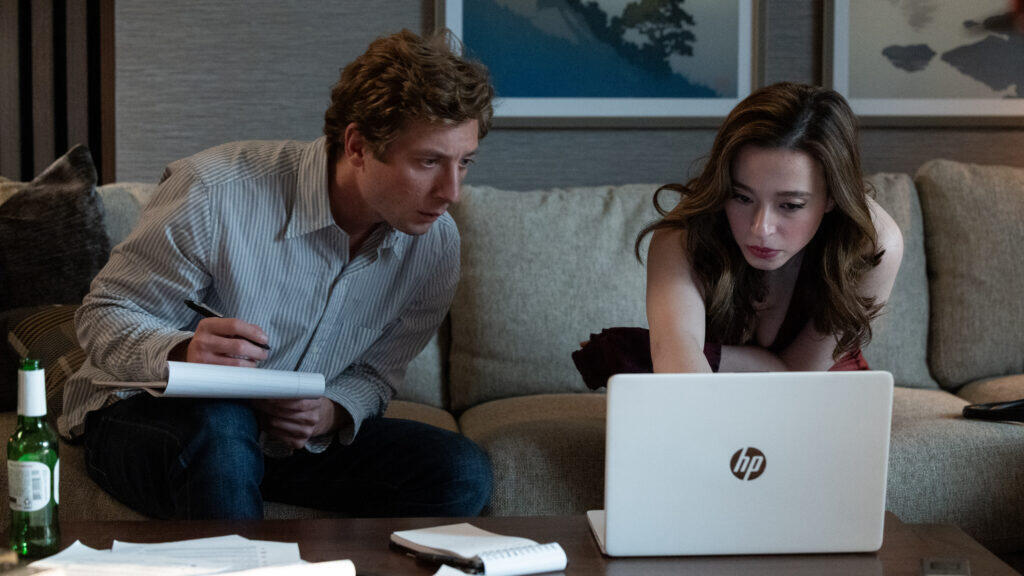
We loved you in 'Anora.' Here, they're doing you no favors. Mikey Madison alongside Jeremy Allen White in 'The Social Reckoning'
(Photo: Courtesy of Forum Film)
By every measure, this is Sorkin's weakest work in the subgenre he created with his own hands.
It's easy to blame his decision, in a fit of ego, to direct the film himself this time. He has always been a better screenwriter than director, although "Molly's Game" and "The Trial of the Chicago 7" were both far better than his latest effort.
But even if you put Fincher, Danny Boyle or the late Rob Reiner in the director's chair, polished the verbal sparring and brought in actors a notch above the current cast, it's doubtful the result would have been brilliant or memorable.
Which raises the question of whether Sorkin is credited as director this time not only because he really wanted the job, but perhaps also because the industry's leading candidates received the screenplay and realized that, this time, he simply didn't have it.