

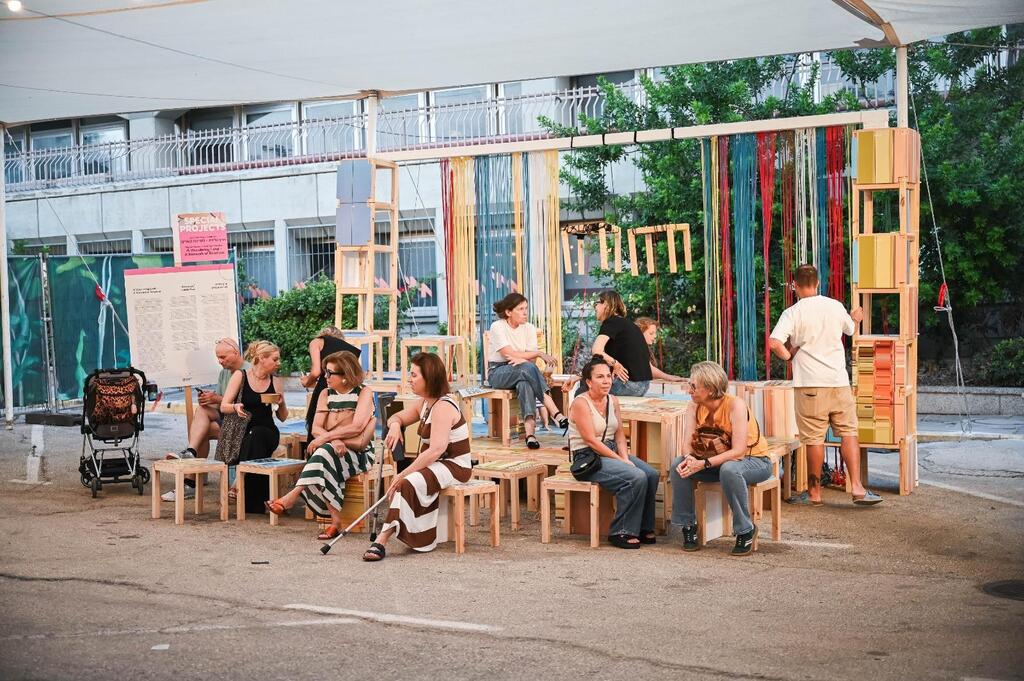
A special installation shown at Freshpaint 2026, Tel Aviv’s annual art and design fair that closed Monday, turned a functional seating area into a collaborative artwork about borders, belonging and the possibility of shared life.
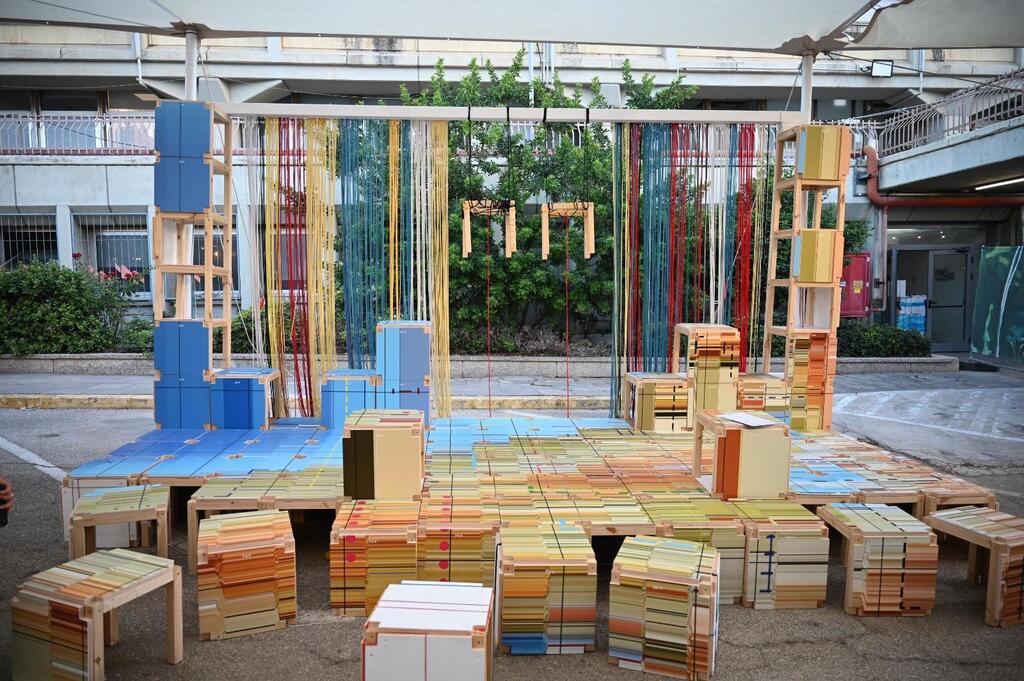
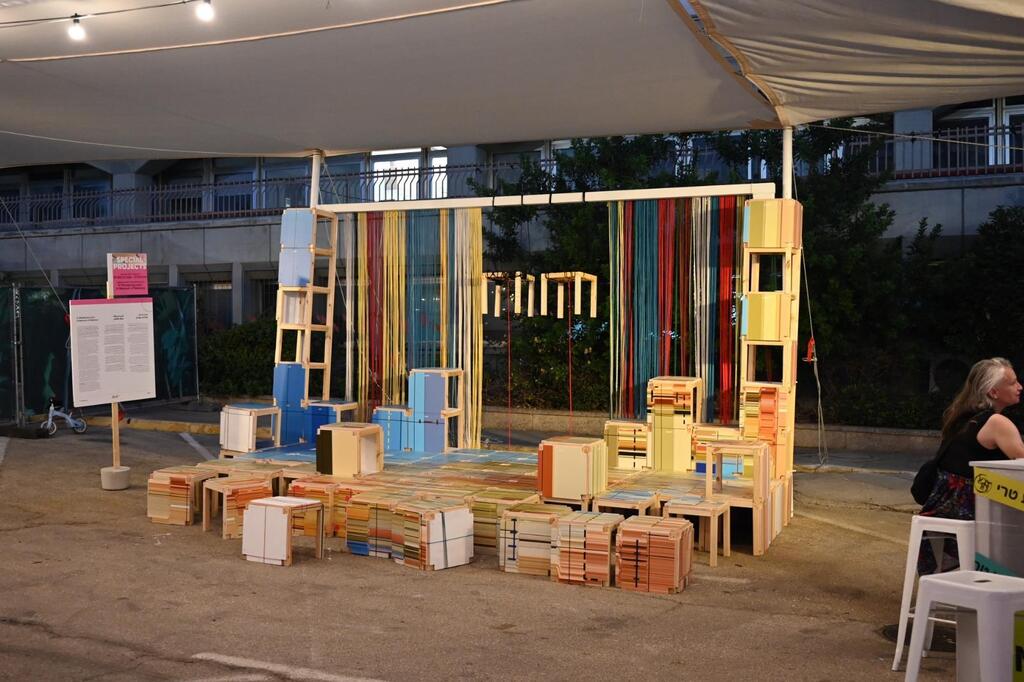
The installation, titled “A wandering land – a network of relations”, curated by Yaara Raz Haklai, was presented at the fair as a special Jewish-Arab artistic collaboration. Artists Raghad Sawaed and Asaf Gam Hacohen were selected to work on the modular stool units that made up the installation, which was planned and designed by architects Or Haklai and Enrico Chinellato of Quizepo collective.
(Photo: Freshpaint PR)
The project was initiated and produced in collaboration with Hedonism Group. The stools were built at the group’s workshop near Kafr Qasim, where people from different sectors of Israeli society work side by side, guided by the belief that a shared society is the key to a better life. The initiative is expected to continue at future Freshpaint fairs through similar Jewish-Arab artistic collaborations.
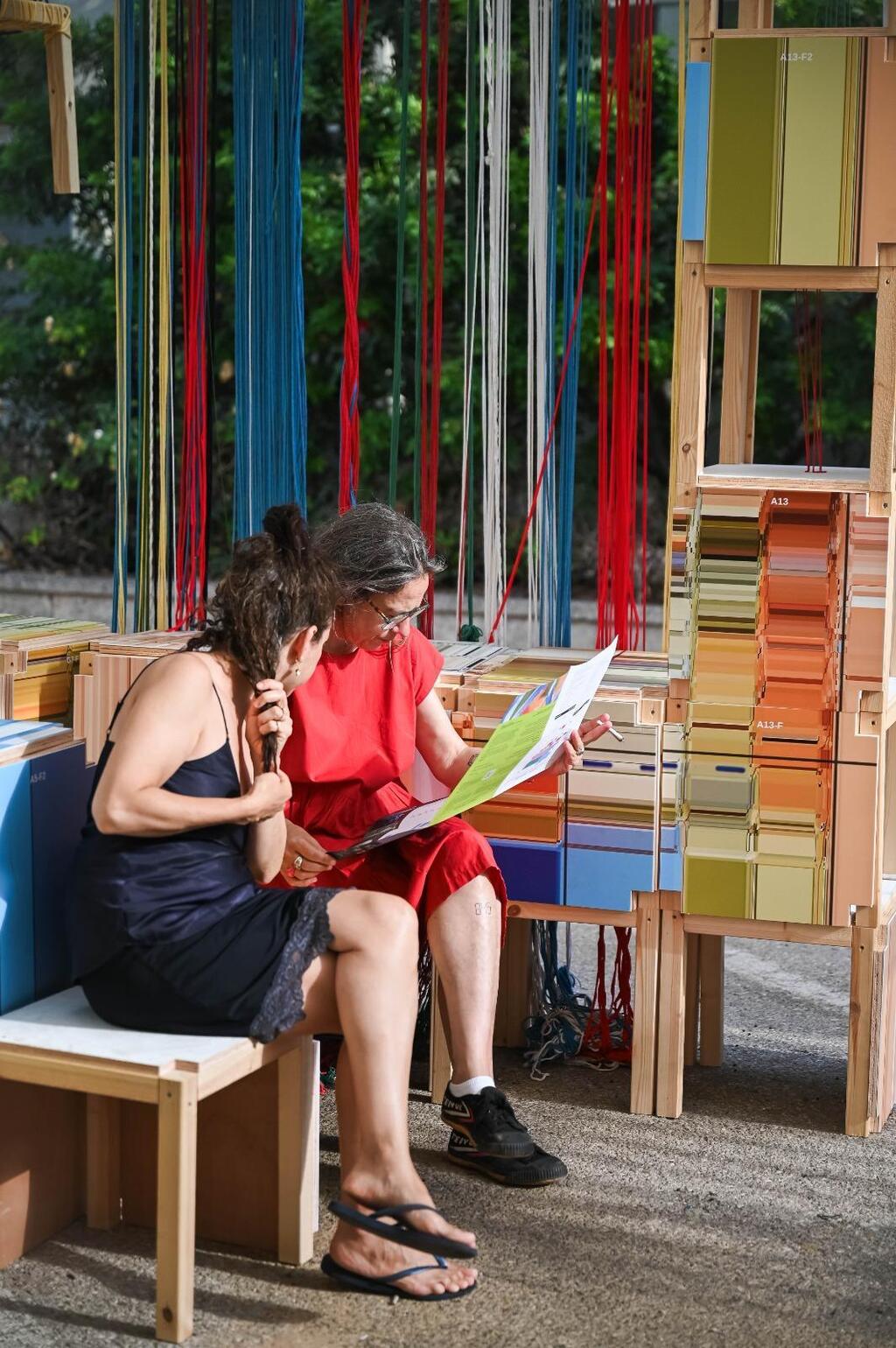
Freshpaint, one of the most prominent events on Israel’s contemporary art calendar, brings together artists, designers, collectors and the wider public. Against that backdrop, “A wandering land – a network of relations” functioned not only as an artwork but also as a place where visitors could sit, gather and experience the fair through a shared physical space. The installation created a changing environment that invited visitors to pause, sit and take part in a communal setting. At the same time, it used the simple act of sitting together to raise broader questions about the spaces people share, the borders they inherit and the relationships that hold communities together.
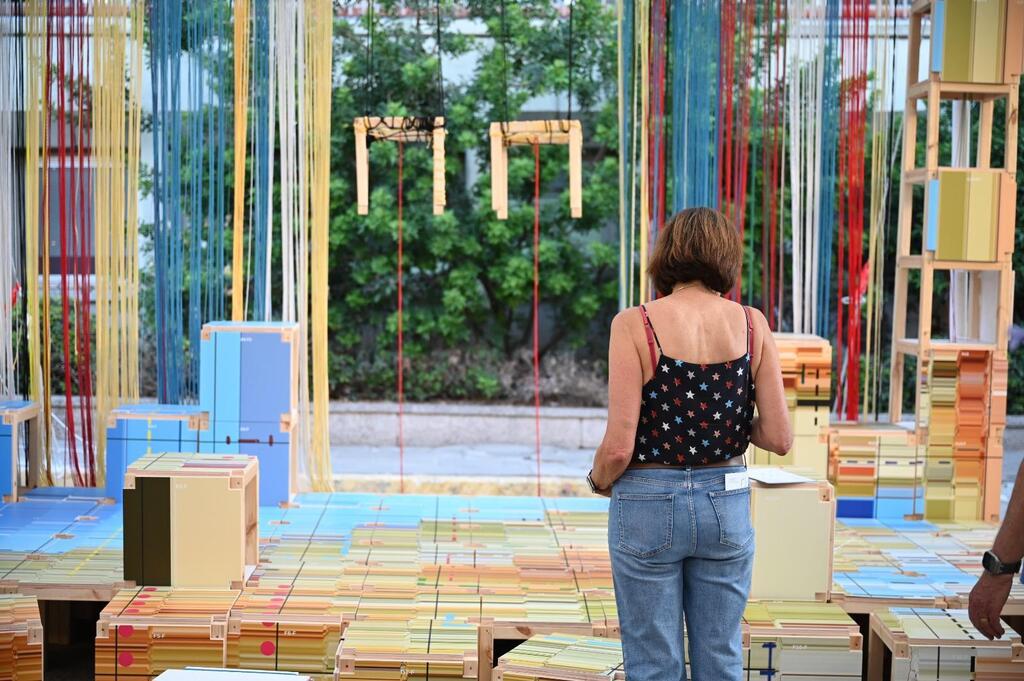
Sawaed’s work refers to organic systems in the human body. She draws inspiration from the body as a complex system in which different parts operate in harmony. While relationships between individuals and groups in human society are often marked by tension and conflict, the body offers another model: one in which mutual dependence is essential to wholeness.
(Photo: Freshpaint PR)
(Photo: Freshpaint PR)
Gam Hacohen’s work visually engages with the map of Israel and offers a renewed look at the concepts of “place” and “border.” In his approach, borders are not fixed lines but dynamic entities, shaped and reshaped by human action and presence. The familiar map is broken down visually, turning known topography into fields of color and movement. Through that process, the border stops functioning as a rigid line and becomes a zone of passage, open to interpretation, encounter and change.
Together, the two artists examined the possibility of shared life within a network of connections and relationships. That network can act as a force that brings people together, but it can also limit and define them. The work echoed the family and social systems in which people live and raised questions about the delicate balance between connection and separation, independence and belonging.
The installation invited viewers not only to look at the work but also to remain inside it, use it and help form the space through their presence. In doing so, it blurred geographic and political boundaries and proposed a space for conversation, encounter and creation. At its center was an invitation to imagine a society that shares a common space without partitions.
More than an artwork
(Photo: Freshpaint PR)
(Photo: Freshpaint PR)
The installation was based on “Take place,” a 2019 project by Or Haklai and Enrico Chinellato of Quizepo collective, showcased in Ferrara, Italy. That earlier project invited collective action and treated sitting and lingering as basic conditions for developing shared awareness of a place and a sense of identification with it.
The central building block was a modular stool, which could be arranged in countless spatial combinations according to the nature of the activity, meeting or gathering taking place around it. The project sought to connect the built environment with the people who use it, creating a sense of belonging to the urban space.
In a fair built around seeing what is new, “A wandering land – a network of relations” asked viewers to consider what must be rebuilt: not only the spaces people inhabit, but the relationships that allow them to share those spaces.